Category Archives: Uncategorized

Due Dates, Deadlines, and Late Work

Standard

This is a topic that if you ask 10 different art teachers, you would get 10 different answers.  Some teachers are very strict about due dates.  Some teacher follow what is set forth by their district or campus.  And some teachers don’t care at all about them, accepting work until the last possible moment before grades are due to the registrar.

I want to say I have struggled with due dates and deadlines over the years, but I think that is not the case.  I am a teacher that does have due dates.  Most of the time, my due dates are flexible.  If a class is working hard and clearly needs more time, I am willing to move that due date and give an extension.  I also give the students a week of time to come in on their own to finish work and turn it in for a small late penalty.  This is more than the district tells me I am obligated to do.

But what about due dates when it comes to kids that sit around and do nothing?  Is it wrong that I have no sympathy for those kids?  Is it wrong that I don’t want to give them more time?  I feel there is a difference between planning and doing absolutely nothing.  I have students that do sit and plan and do some research and appear to the untrained eye that they are doing nothing.  But, on the other end of the spectrum are the kids that sit and do nothing and expect me to give them extra time.

Am I doing a disservice to the the artistic process or is it a good learning experience?  I feel that in the real world there are “due dates”. There are deadlines.  There is no “late work” penalty…well, maybe there is a some kind of penalty for consistently turning in late work–perhaps they will get fired or get bad evaluations.  So, should I give them some practice to help prepare them for college and the “real”world?  Or should I continue to coddle them and leave them to find out on their own there are consequences for their actions, or lack there of.

I am constantly torn on this issue.  I am not sure there is a right or wrong answer to this issue.  Maybe next year when I move to a modified choice classroom and kids hopefully will be more invested in their work, I will have less of an issue with this.  Maybe with the snapshot grading system, I won’t really have as many issues because as they see when they do nothing and they have nothing to post on their blogs, that might help them.

I read this blog post on accepting late work.  It is interesting.  Do I believe in the concept?  I don’t know.  Will it work for me and my student population?  Maybe.  Will I change my policy?  Probably not right now, but maybe in the future.  Will my kids take advantage of it?  Who knows.

I looked for a good quote to end this.  Then I saw this.

So what do we do? Anything. Something. So long as we just don’t sit there. If we screw it up, start over. Try something else. If we wait until we’ve satisfied all the uncertainties, it may be too late.”  -Lee Iacocca

What is wrong with this print?

Standard

In my art 1 class, we are working on creating block prints.  I talk about it being the reverse image from the block to the print. I asked the students not to do letters because I really wanted them to concentrate on learning the process, not dealing with making sure that the letters are the mirror image.  I thought I had it all covered.

I was wrong.  Neither the student nor myself caught it until another student saw the proof print and mentioned it.

Can you tell what is wrong here?

Image

A Touching Moment

Standard

I had moved my glazed clay boxes out of the kiln room into the classroom during 7th period today.  I noticed a boy that for the most part was just meh about art class, except for the week that we worked with clay, checking them out.  Earlier this year I told him that he should take ceramics next year because I had never seen him so into class like he was while working with clay–he was like a completely different student–he had completely come alive.  I thought he had forgotten or changed his mind when it came to sign up for classes as I never not talked with him about it since.  I quietly asked him today if he had signed up for the class.  He said Yes.  My heart jumped inside.  He is one of those kids that school doesn’t really mean anything to him and I am sure he will just get by and get out.  So, if I can get him hooked and interested in something.  I just know that he will love it.  I just know it..  I thought he had forgotten when it came to sign up for classes as I never not talked with him about it since.  I quietly asked him today if he had signed up for the class.  He said Yes.  My heart jumped inside.  He is one of those kids that school doesn’t really mean anything to him and I am sure he will just get by and get out.  So, if I can get him hooked and interested in something.  I just know that he will love it.  I just know it.

Cinquain Poems and Illustrations

Standard

I’ve been told it is National Poetry Month, so this lesson couldn’t have been planned at a better time.  In art 1, students are learning how to create CINQUAIN poems and then will create illustrations based off their poems.  I am very excited about this project.  A cinquain is a 5-line poem that follows certain guidelines.  You can find out more here.    Here is the worksheet I am giving my students.

After the poems are written, students will then create thumbnail sketches of illustrations that relate to their poem.  Things students should consider when creating illustrations are making images close-ups, cropping images some parts go off page, and details.

The final illustrations will be on 4″X4″ paper.  Students will have the choice of completing their drawings with pencil, colored pencils, or a combination of the two.  Illustrations will be mounted, along with a printed out copy of the poem, on black paper.

Teacher example:

Image

Art 1: Informal Balance: Wrap-up and Review

Standard

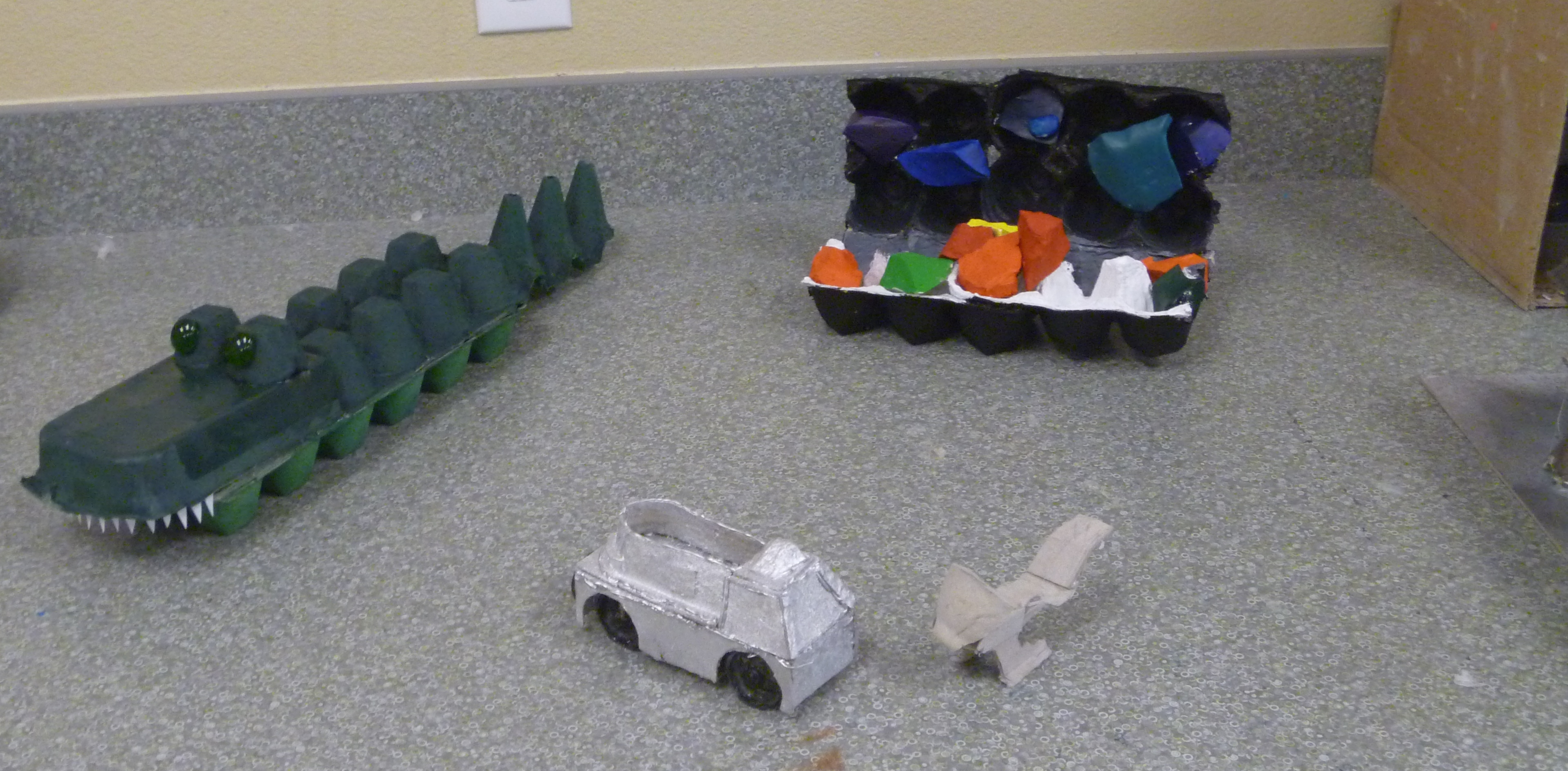
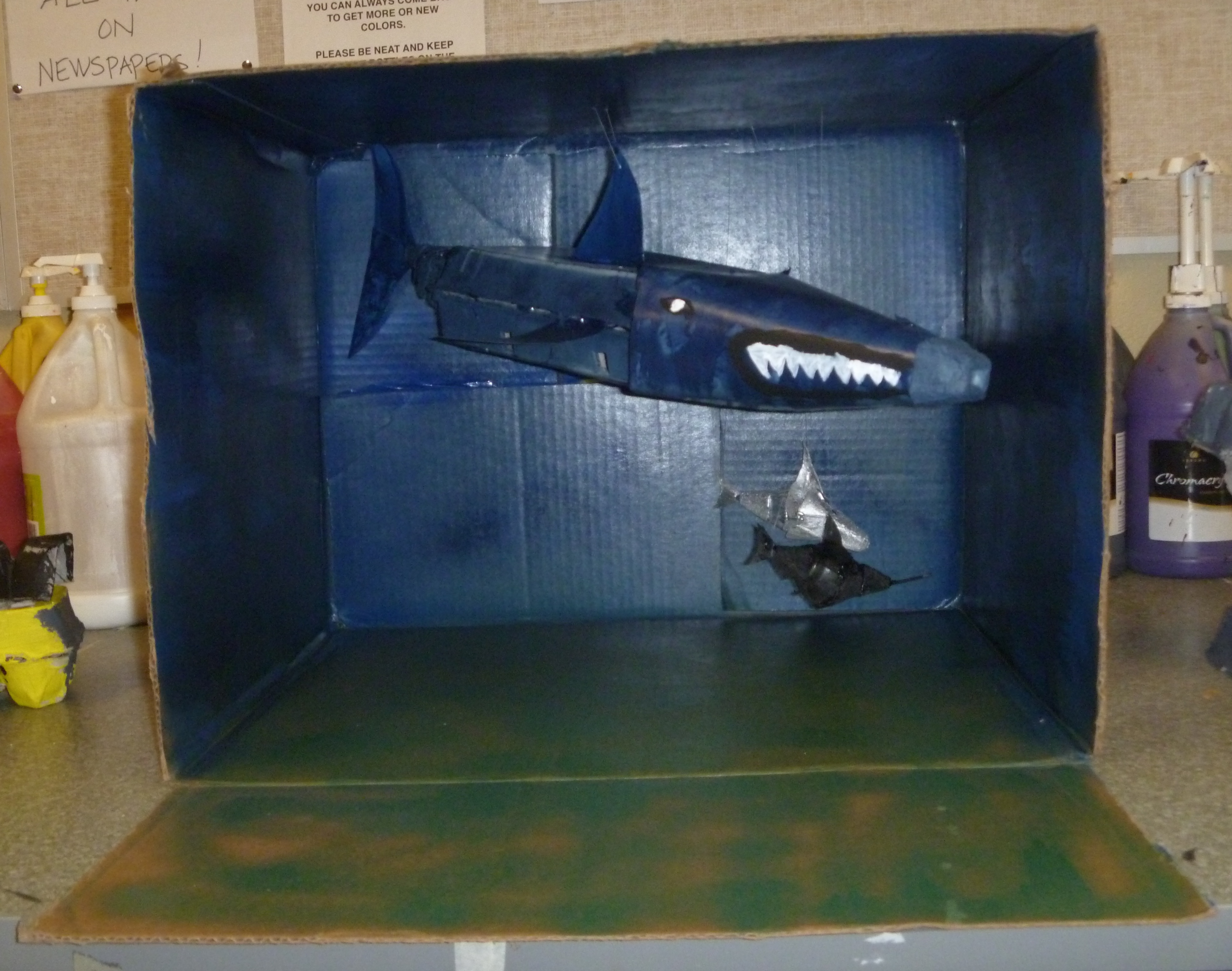
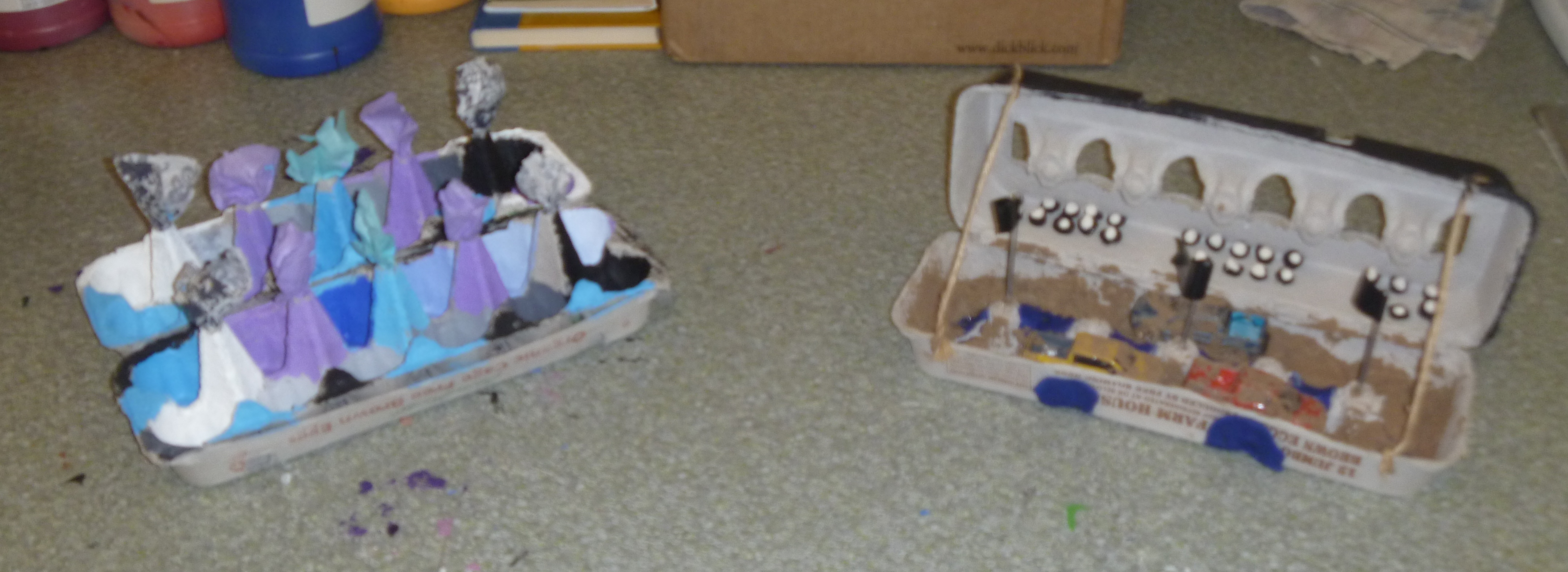
Think back to this post where I talked about bringing in some choice to my art 1 students.  They were able to work in groups and were each given an egg carton to which they could do whatever they liked as long as their final artwork had informal balance.  We worked on the project for about 2 weeks, then we took a week’s break (spring break), and finished up in about 2 or 3 days.  During spring break, I decided not to grade them on the outcome of their project, but instead to grade them on the process and what they had to say about that process.  I had created a list of questions for them to answer.

When it came time to actually figure out a grade, I really had no idea what to do about it.  I didn’t really have a rubric on how to grade what they had written.  They had never done anything like this before, so they had no idea what I was really looking for.  They were honest in their answers.  In the end I gave each student a 100, unless I specifically recalled them spending days not working (which one child did and his partners said something about it in their answers) or they failed to answer all the questions.  The grades ranged from 85-100.

It has taken me a long time to write about the project/process; I’ve been reflecting about it…a lot.  What had I really hoped to gain from this “experiment” of throwing so much choice at the students?  I mean, really, it was all for me.  Yes the kids learned about informal balance.  And I truly believe that many did understand it by the end.  And, of course, there were some that didn’t, but I am not sure they would have gotten it anyway, if I am being honest here.  I had been reading so much about choice that I really wanted to try it out.  I felt the only way to see if I liked it and how I could implement it in my classes was to do a trial run.   I felt this unit was really more for me then for them.  Part of me feels like I shouldn’t admit that, but how am I to know what works and what doesn’t if I don’t try.  Many things look good on paper…

I learned a lot about choice and how to make it work in my classroom and how to make it work for me.  I admittedly am a sort of small control freak.  It is hard for me not to know an outcome.  But, I rolled with this.  I think I need to do some sort of a modified choice.  I think that leaving it so broad was hard for me and for the students.  (Many did say they they didn’t like not knowing what it “should” look like, and that it was hard to come up with an idea.)  I think I would have to slowly bring them into the “choice world”.  It was too much at once.  I think to make it work well, I would need to limit choice to either 2-D or 3-D.  (I have done some choice things in my 2-D and 3-D classes and it has been successful.)  Maybe I should spend some time on different techniques, then go from there where they could expand, explore, and build on things we have already discussed.  I still have a lot to think about.  I like giving them freedom, but I need some sort of control.  I need to find a balance that benefits us both. We (my students and I) need to have a symbiotic relationship if we are all going to thrive.

Overall, it was a fun time in the art room and there was lots of good conversation and exploring going on.  They were doing what I had told them was my motto for the year (stolen from the Frizz of course) “Take Chances, Make Mistakes, Get Messy!”

P1030715

P1030714

P1030713

P1030711

P1030710

P1030707

P1030706

P1030704

P1030703

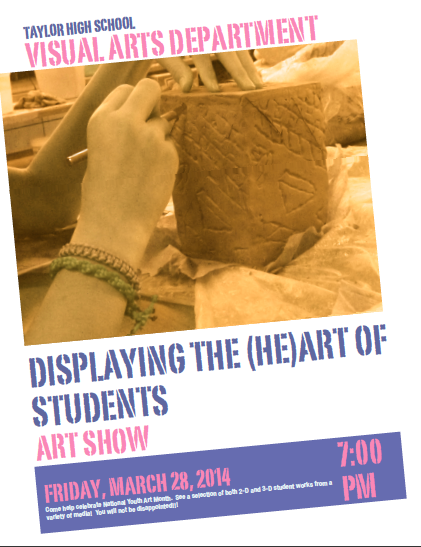
Displaying the (He)ART of Students

Standard

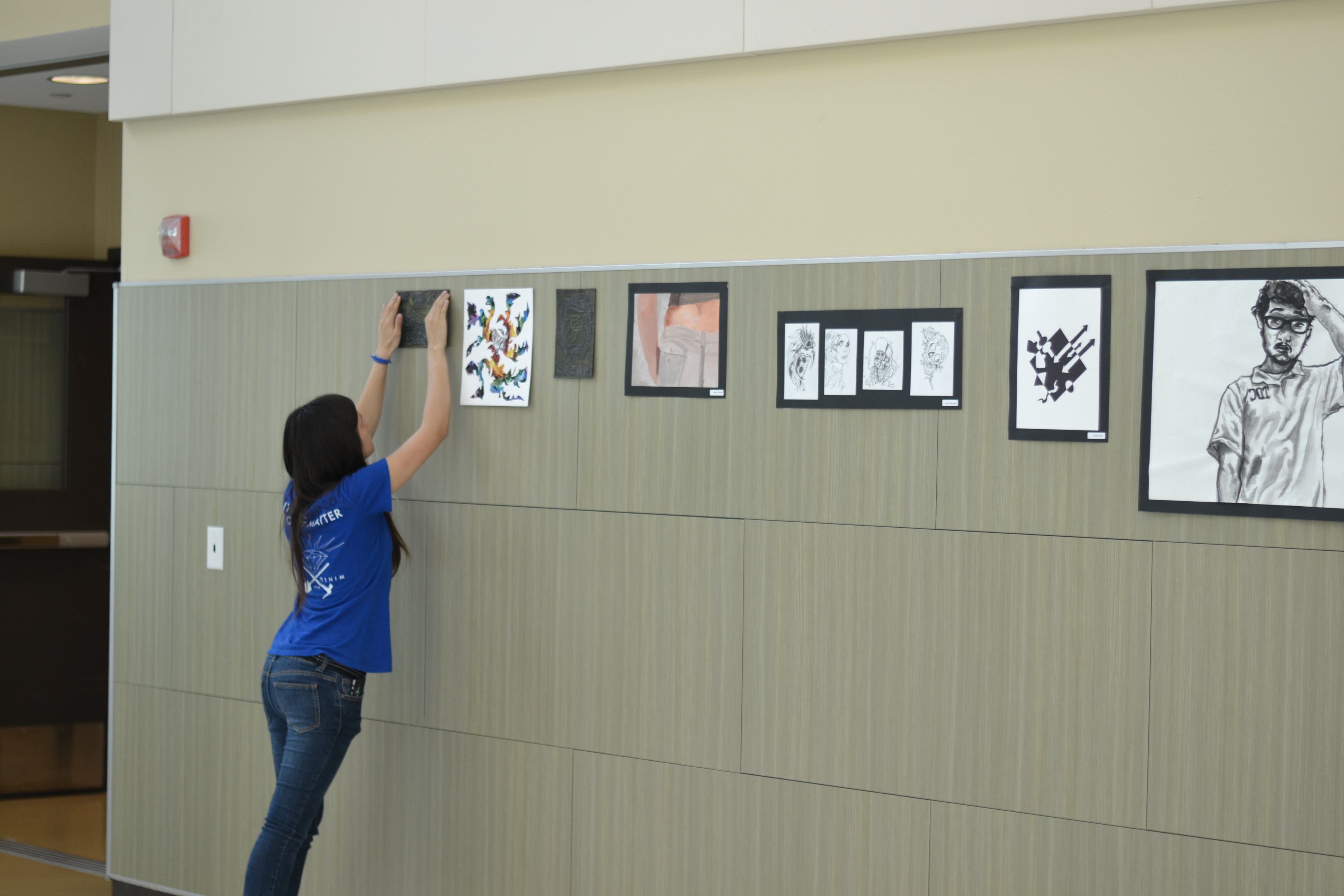
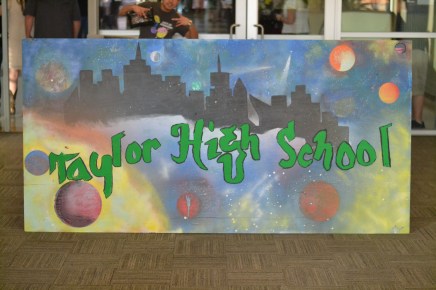
Taylor High School Visual Arts Department proudly presents the inaugural Art Show.  March 28, 2014 at 7pm the doors opened and the show began.  That morning I arrived at school at my normal time of 8am.  Then the madness began.  I gathered up my thoughts and set up camp in the front of the school outside the main office.  Students came to help at various points in the day, and several students “skipped” their classes and helped all day.  And, for that I am grateful.  They gladly hung work and dealt with me and my blabbering and my orders and my annoyances and all the rest.

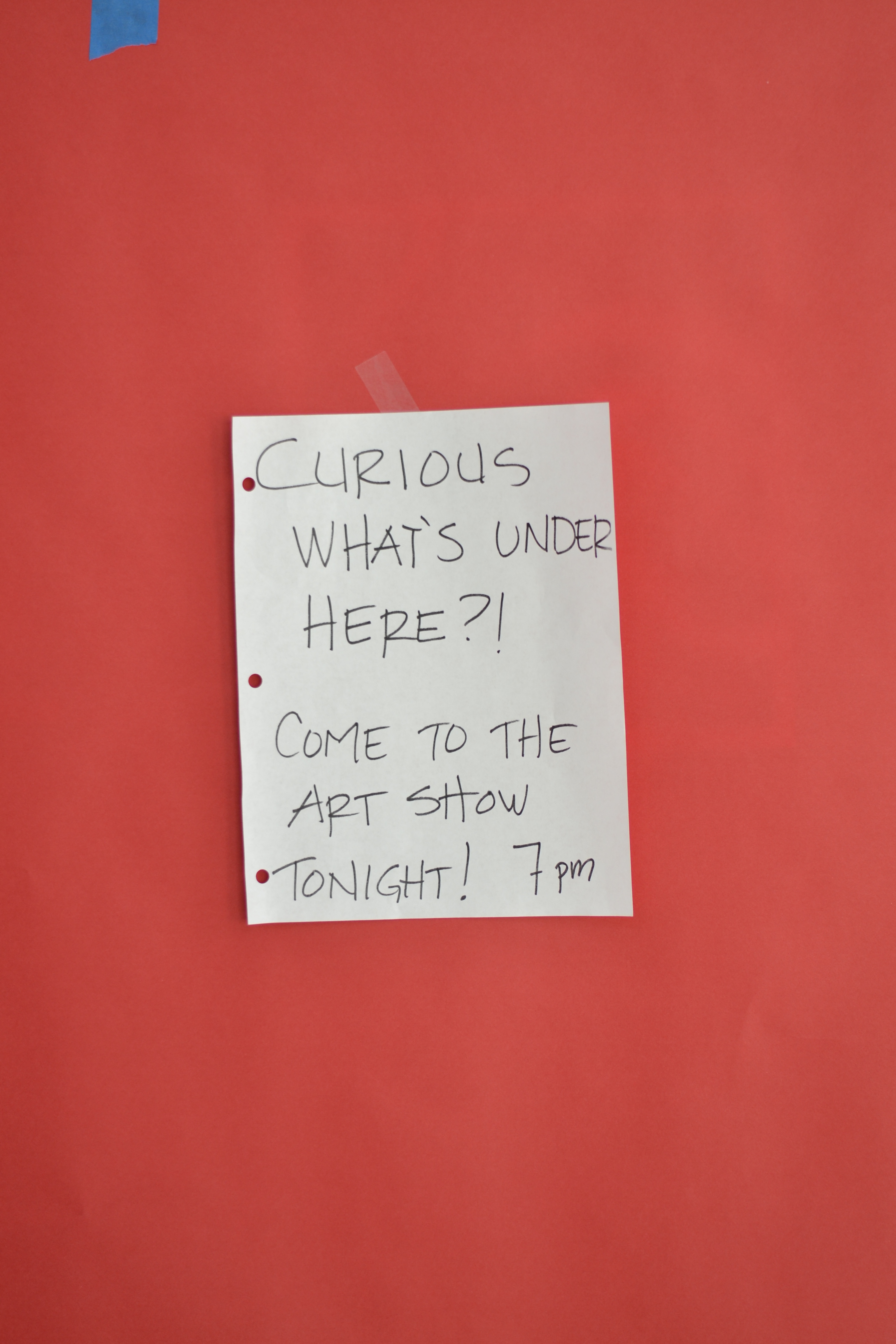
As walls became filled, we covered the work with red, green, and black paper to cover it from prying eyes.  Flyers were hung, hopefully enticing students and teachers to come back tonight to fill their curiosity about what was behind the paper.

ImageImageImage


At 6:45 I was ordered by my students to go and change.  They knew I needed a break, and they were anxious to see me in a dress.  When I came back, people were starting to arrive.  It was a beautiful site.  Image

ImageImageImageImageImage


I was glad to see the QR codes that showcased the Senior Artists were being utilized.

Image


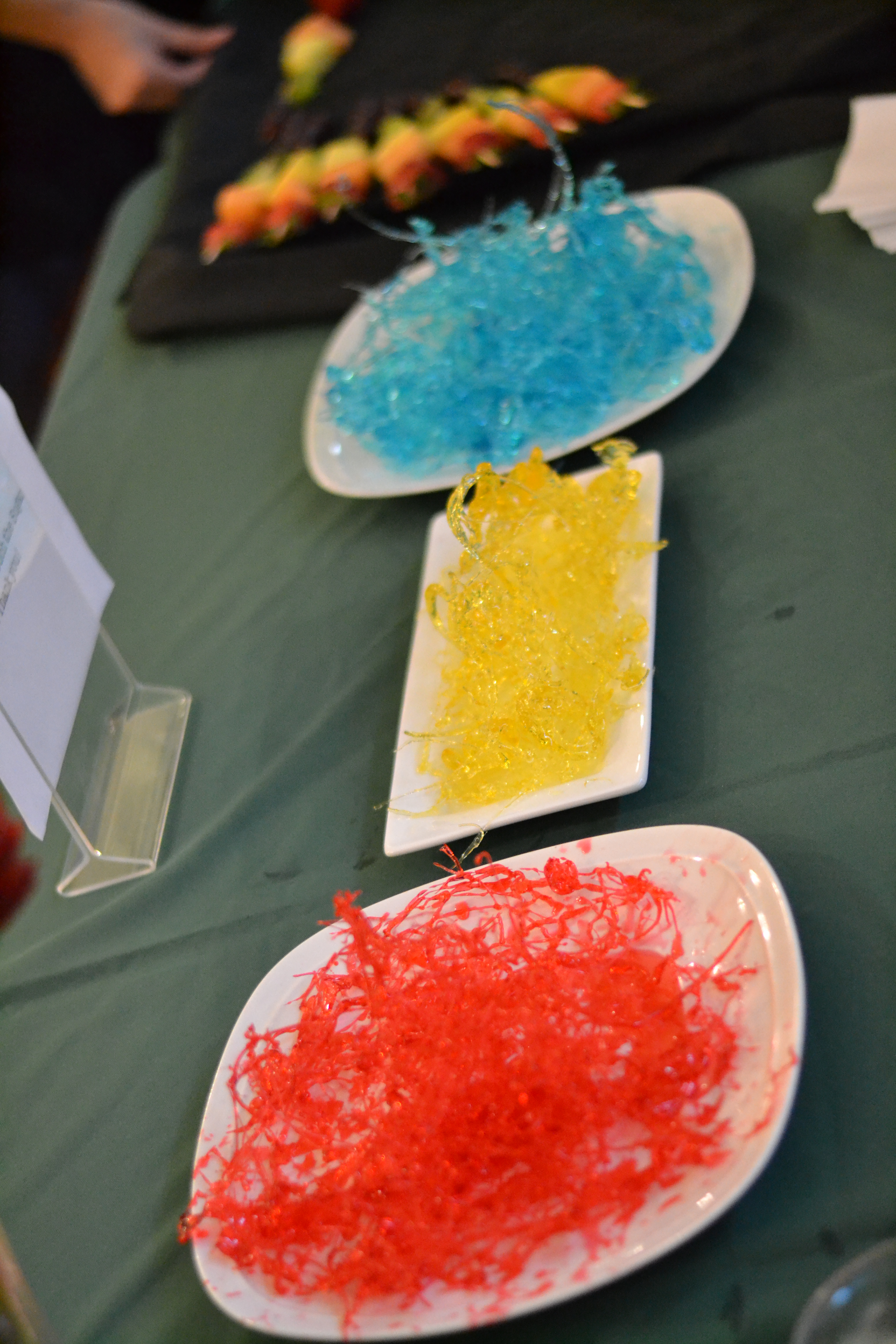
The culinary department made some wonderful treats and decorations.ImageImage

The show lasted about an hour and a half or so.  By the end I was so overwhelm by the support I felt.  I felt support from the students, from the teachers, from my administrative staff, my principals, and most importantly, the community.  It felt really good and to know that what my students create is supported by all these people.  A parent told me in both English and Spanish that I touched her heart because of the inspiration I give her son.  It almost made me cry.  I am still overwhelmed days later, and it makes my already awesome job that much more worth it.

I have created a youtube video/slideshow of the art show.  It is long–coming in at 31 minutes.  There were over 400 pieces of art submitted to the show and each one is showcased in the slide show.  So, if you have some to spare, take a look.  Slideshow


Prepping for the art show

Standard

In August I decided I wanted to celebrate National Youth Art Month.  I thought what a better way to celebrate than to put on an art show.  In September I asked my principal if I could and he said Yes!  So, for the next few months it was kind of slow going.  Now that March is here and the show is in a week, things are finally starting to make me anxious.  I am worried that I might not pull it off.  I am worried that I will in fact pull it off.

Things that I had to do for my show:

  • collect student art…check  (this should be done through out the year and by both art teachers)
  • mount student art…check
  • get written up in local paper…check
  • print and “mount” labels for all artwork…check
  • get culinary students to help with refreshments…check (now this was a tough one to figure out how many people to figure for.  I said 100.  I feel that is high, and that makes me a little sad.)
  • send invitations to parents of those students with work in the show…check
  • figure out tables and table coverings…check (I had a ton of burlap, so that’s what I’m going with)
  • figure out how to hang work in a place with no walls that will take tacks…check (I bought a bunch, and probably not enough, sticky tack for the lighter pieces and I plan on hanging the framed pieces around the stairway columns.  Let’s hope it all works.)
  • make a poster and announce the show…check (it’s on the website, in the lunch announcement powerpoint, an all-call is going out to parents on Wednesday evening, and the principal will announce it in the morning announcements)
  • spotlight the Senior artists…check (for this I created a google form that asked the seniors a few short questions.  From there I found a free QR code program and made codes for each student.  I will hang a code by one of the senior’s artworks and guests can scan the code and find out a little artistic tidbit about that artist.  I think this will be a great interactive addition for the show.)
  • set up the show during the day…  not there yet.  Friday is the day.  I took the day “off”, but I will definitely be working.  I plan on pulling students from various classes to help me set up.  I hope it goes smoothly.  Who knows.

I hope I can pull it off.  It all comes down to Friday.  I don’t know who will show up.  I hope at least half of the students with work in the show will come.  Many students have said their parents have expressed an interest in seeing their child’s work.  As I said before, I am nervous that I might not pull it off.  And, I am nervous that I might.  Wish me luck.

Screen shot 2014-03-23 at 1.42.25 PM

Rubrics

Standard

Ah….grading rubrics.  I have a love/hate relationship with grading rubrics.  I love them because they help me to “level” the playing field when trying to grade something that is so subjective.  But I hate them because they are hard to design.

Over the years I have worked with many different rubrics.  I love looking at other people’s rubrics to see if it is something I can work with or steal from to create my own rubric.  I want to include things that are important, but can keep me objective.  I’ve tried some that are wordy and explains every little detail.  I’ve tried different numbering scales.  I’ve got different rubrics for different types of projects.  I don’t know if it is best to have one general one or to be specific for each project.  Is it okay to have a different one for each level of class?  What do you do?  What works best for you?

Standards, standards, and more standards

Standard

Just like every other subject in school, the arts also have standards that we, as art teachers, use to help us plan curriculum.  Each state, or almost each state, has their own set of standards.  Texas follows standards called TEKS (Texas Essential Knowledge and Skills).  The Fine Arts TEKS are currently being revised as they haven’t been revised since 1997.  The world has changed a lot since then, but what is thought we should teach in art has not.  It is an exciting time.  These are slated to go into effect in 2015.

The National Core Arts Standards are also being revised.  Currently, until March 1, art teachers can go and review the standards.  http://nccas.wikispaces.com/