Author Archives: missjaybar

Artistic Process Reflections

Standard

Our current project in Art 2 is an altered book.  This is one of my favorite projects every year because it introduces some techniques and ways of art making that students may not have thought of.  It really makes them think and make connections.  They have to plan around a theme.  They have to be creative and interpret.  This year I have many kids that are super excited about this project, which makes me super excited about this project.

And, because of the nature of this project, I figured it was a great opportunity to try out a new way of grading…grading the process instead of the product.  I blogged about this in previous posts–here and here.  We are on our third week of altered books, so that means we have reflected twice.  I typed in the questions that Apex HS graciously shared into Socrative.  I asked my students to answer 2 of the questions based on what they did that week in their book.

I finally got around to reading them (I was a little busy with the art show).  I have learned a lot about my students and how they think.  I was nervous that they would just bullshit their way through the questions, and surprisingly I only got a few responses like that.  For the most part, students were very honest about their work and how they get their ideas, what they learn, how they collaborate, etc.  I have never asked many of them before to talk about their art or their choices.  I know I should.   Most jumped right in.  I am proud of them.

Student Response: “My mother nature drawing symbolizes my depiction of what she’d look like. I wasn’t able to add a masquerade mask like I wished I could have. No mask seemed to fit with the face so I just scrapped it. Mother nature is meant to be mysterious and beautiful. All in one. ”

Student Response: “Well my theme is emotions. I’m trying my best to focus more on the happier emotions rather than the sad ones. Because I am one of those “Negative Nelly’s” and with this project im hoping it’ll bring out the positive side of me in some way.”

Student Response:  “Yeah, I always seem to ask James because he sort of see’s things more imaginative/abstract. I usually see the obvious, but I guess thats because I’m a serious person.”

Student Response: “I wanted to convey an image of chaos through unity of concepts on some pages and an image of peace through random markings and chaotic techniques. I had few issues and this mirrors me because I am both peaceful and chaotic.”

Student Response: “I’ve been trying to step back and analyze my work every time I try to add something new to it. I have been really thinking about how to layout each scene in my book. It’s been a little difficult to work on the backgrounds of each scene without having any real plan on where I’m going to put everything.”

I look forward to reading the responses in the upcoming weeks.

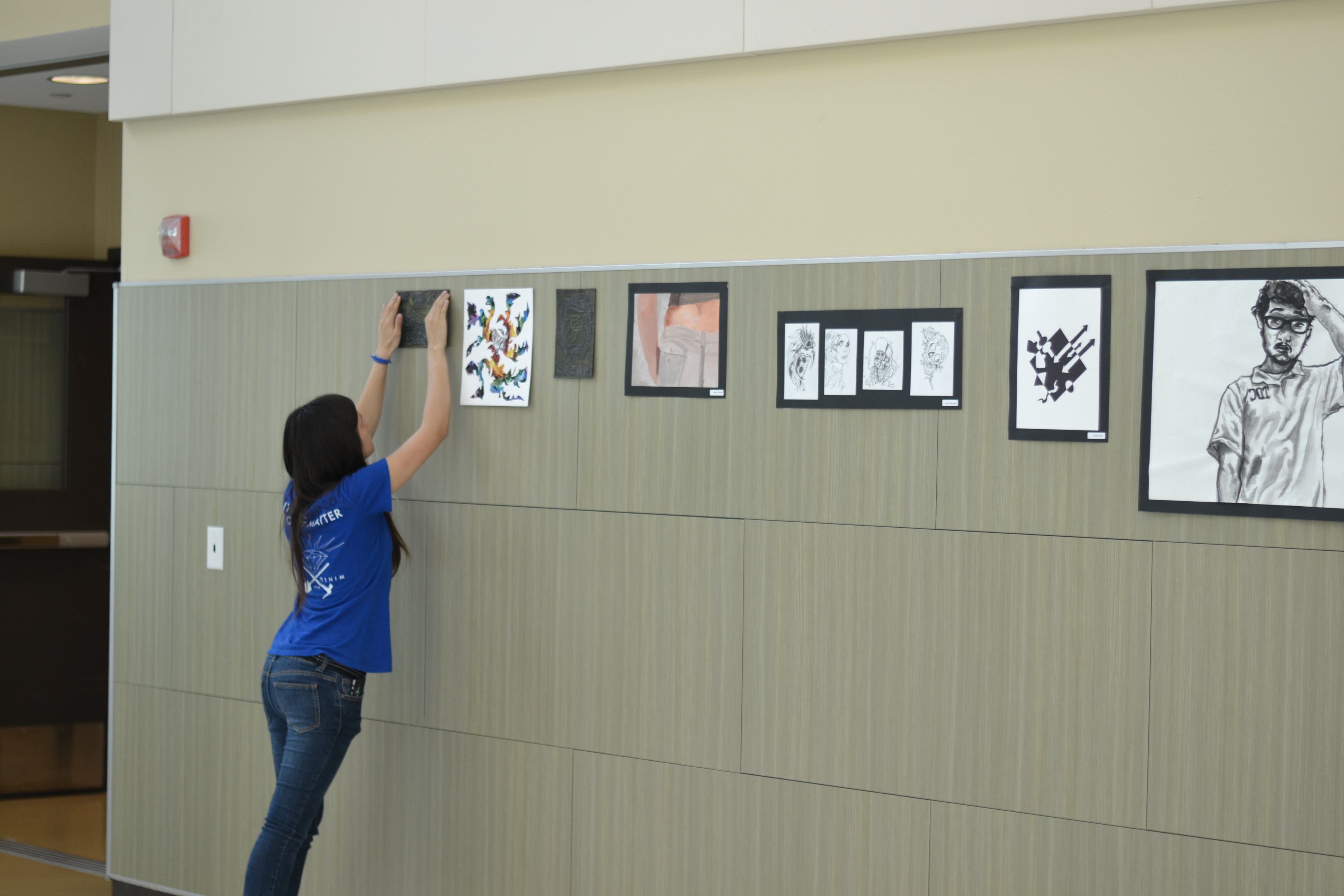
Prepping for the art show

Standard

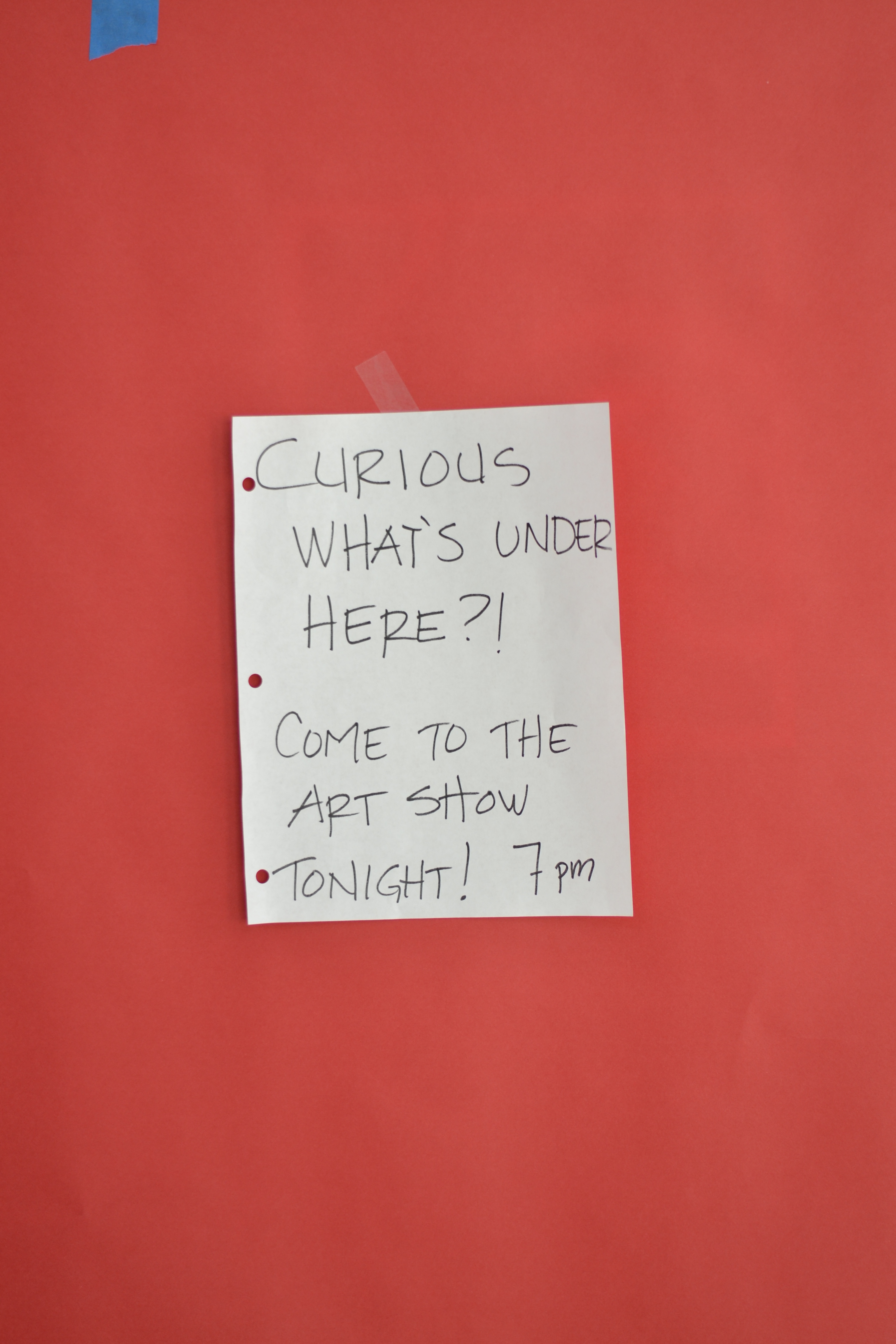
In August I decided I wanted to celebrate National Youth Art Month.  I thought what a better way to celebrate than to put on an art show.  In September I asked my principal if I could and he said Yes!  So, for the next few months it was kind of slow going.  Now that March is here and the show is in a week, things are finally starting to make me anxious.  I am worried that I might not pull it off.  I am worried that I will in fact pull it off.

Things that I had to do for my show:

  • collect student art…check  (this should be done through out the year and by both art teachers)
  • mount student art…check
  • get written up in local paper…check
  • print and “mount” labels for all artwork…check
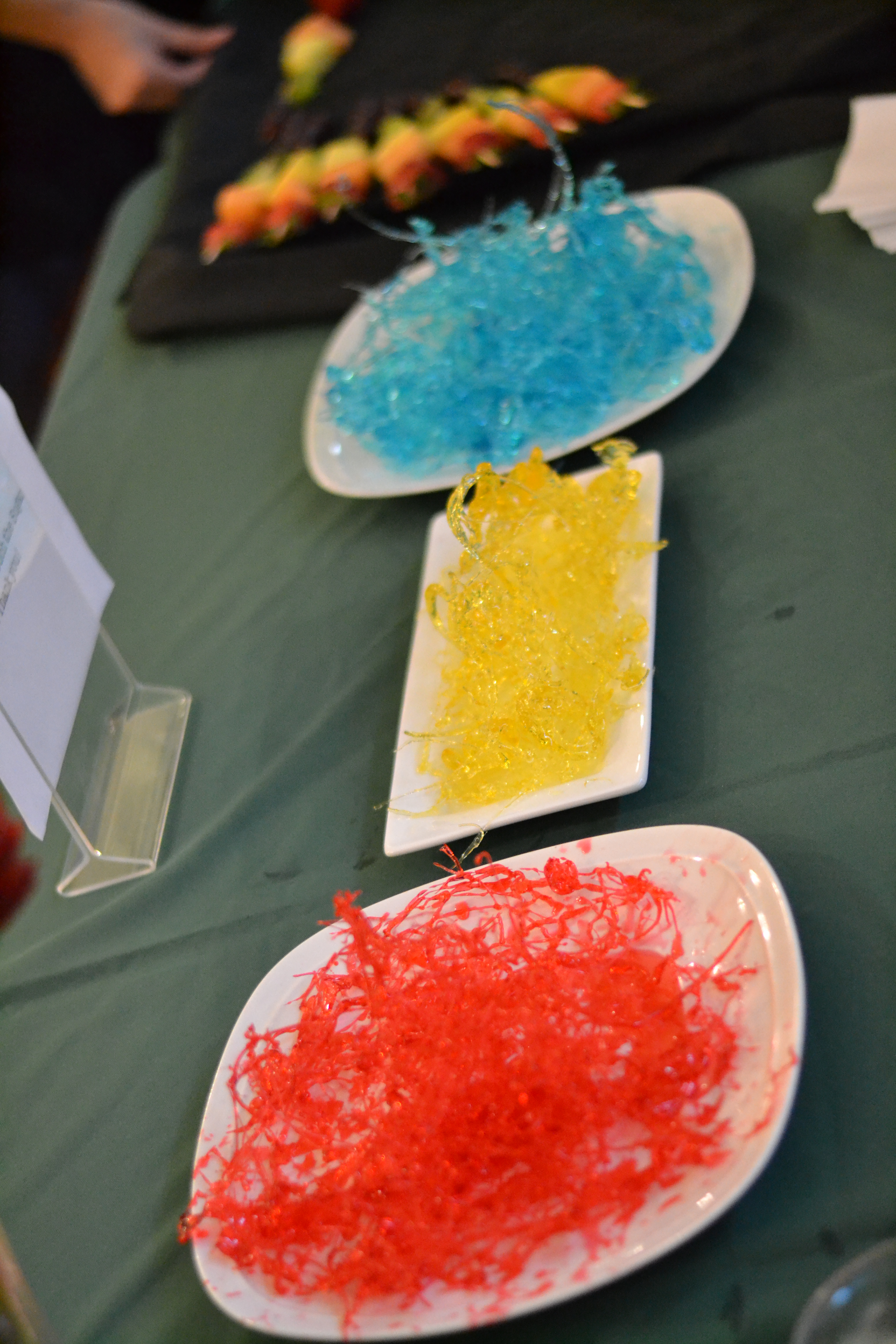
  • get culinary students to help with refreshments…check (now this was a tough one to figure out how many people to figure for.  I said 100.  I feel that is high, and that makes me a little sad.)
  • send invitations to parents of those students with work in the show…check
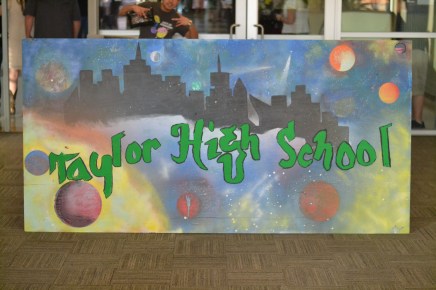
  • figure out tables and table coverings…check (I had a ton of burlap, so that’s what I’m going with)
  • figure out how to hang work in a place with no walls that will take tacks…check (I bought a bunch, and probably not enough, sticky tack for the lighter pieces and I plan on hanging the framed pieces around the stairway columns.  Let’s hope it all works.)
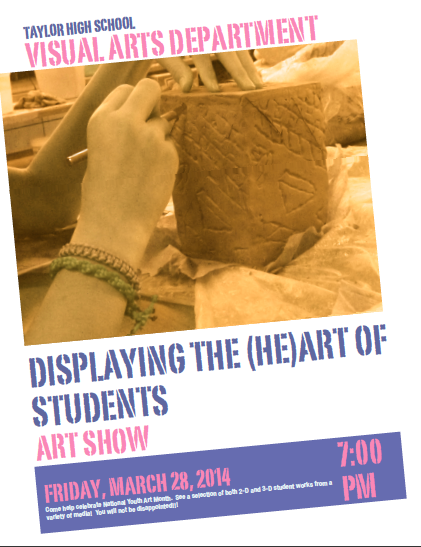
  • make a poster and announce the show…check (it’s on the website, in the lunch announcement powerpoint, an all-call is going out to parents on Wednesday evening, and the principal will announce it in the morning announcements)
  • spotlight the Senior artists…check (for this I created a google form that asked the seniors a few short questions.  From there I found a free QR code program and made codes for each student.  I will hang a code by one of the senior’s artworks and guests can scan the code and find out a little artistic tidbit about that artist.  I think this will be a great interactive addition for the show.)
  • set up the show during the day…  not there yet.  Friday is the day.  I took the day “off”, but I will definitely be working.  I plan on pulling students from various classes to help me set up.  I hope it goes smoothly.  Who knows.

I hope I can pull it off.  It all comes down to Friday.  I don’t know who will show up.  I hope at least half of the students with work in the show will come.  Many students have said their parents have expressed an interest in seeing their child’s work.  As I said before, I am nervous that I might not pull it off.  And, I am nervous that I might.  Wish me luck.

Screen shot 2014-03-23 at 1.42.25 PM

Altered Books

Standard

Art 2: Painting and Drawing have started their altered books.  It is a project I have been doing for 5 years and every year is a completely different experience.  Every year I don’t know what to expect.  Every year I say I am not going to do them again next year; and you know what, I don’t listen and I do them again.

Our school library removes books from its circulation every year and they are free for the taking.  So, in the spring time, I load up on books that I think will be good canvases for next year.  I pick the books carefully.  They are always hard covered.  I pick based on size, both width/height and thickness.  I look at titles that might be interesting to the kids.  For, when I choose books to alter for myself, these are the things I base my choice on.

I introduce the project by talking about how the books are being expelled and we are going to recycle and reuse these books.  I talk about how the book will provide many canvases in one place for the artist to work on one theme.  I tell them that many artists work around a single theme on several artworks and that this is good practice for that.  I also mention that it is good practice for those who will be going to AP Art and will have to come up with a concentration.

From there we talk about the book expectations and the prompts.  I expect each book to have a minimum of 6 pages.  I expect each book to have a cover and a table of contents (listing which prompts were used for which artworks.)  I expect the book to have a theme.  I expect each page to have originated from one of the prompts.  Other than that, there are no other “rules”.

I am sure what you are asking is what are these prompts?  Here is the list of prompts.  The prompts are a way to help the students get their juices flowing.  They are a starting point, or a jumping off point.  They are a beginning…but NOT an ending.  I stress this. They are to take a prompt and use it to help them create an artwork around their theme.  They can interpret the prompt any way they want.  There is not a right or wrong answer. (Unless they are wanting to use copyrighted or trademarked images of course.) Prompts include drip paint and make a print, layers, texture, sew page, and many others.  I ask students to use a prompt once and only once as their jumping off point.  I want them to explore different ways of making art…adding materials they may not have thought of or doing things they may have at one point shrugged off.  And again, I stress the prompts are starting points, not ending points.  And this year, I think they are really understanding that.

This year I decided to try something different.  After talking with several teachers about process over product, I decided to have that be the emphasis on this project. Normally I grade each page individually.  And normally, I hate that process.  I could not come up with a better way to grade the book though.  I even told the students that I would be grading the book that way on the first day of the project, a Monday.  On Tuesday I walked in and said I had changed my mind and we were going to concentrate on the process instead.  I said that I would rather them try 10 new things and work really hard and have their book fail, but having learned something over having a fabulous book where they learned nothing new, took no chances, and didn’t grow as an artist.  I told them on Fridays we would have a reflection on what they did that week and how they acted like artists and did what artists did.  They seemed to be okay with that.   You can read about what I set up in the second half of this post.

And, that Friday we had our first reflection.  I have yet to open the document with their responses. I am scared to see what they wrote.  I don’t know why.  I am excited, but nervous.

In any case, I have watched as half of one class is invested in this and becoming excited at the prospects of what they can make. And I have watched the many of my other class bring their book home with them and back the next day or stop in during morning tutorials to work on their book.  I love it that they are excited about it.  It is a great feeling when a student shyly comes to you and asks if it is okay if they do this or try this.  And then to see their face light up when I gladly say yes.

Process Over Product?

Standard

A couple of months ago, I joined an art teacher’s forum on facebook.  It was a great find–a great use of social media.  I am in contact with hundreds, if not thousands of art teachers from around the globe.  It has really got me to thinking about how I run my art room, what is important, what isn’t important, what is art, what is craft, should we have more choice, should technique be the main focus, should, should, should.  In short, it has made me think, learn, and grow…3 things that are important to stay a relevant and qualified teacher.

It is through this group that I was introduced to TAB or choice-based art.  It is through this group that I have been introduced to this group of teachers from Apex, NC at Apex High School.  They have been experimenting with choice this year, and recently they have  brought to the front of my mind the question of process over product.

Is the artistic process more important than the product produced?  I don’t know.  Is the process just as important than the product?  I also don’t know. But as I begin to explore this topic and experiment with it in the classroom, I find I might lean more towards them being equals.

As I began to think about stressing the process in art making and really trying to have my students participate more in the process and making decisions regarding their art just like artists do, I began to think about how do I assess this?  Unfortunately, assessment is always towards the front of my brain. (It’s hard not to think about it when you have to have a minimum of “X” grades per marking period without question, complying with district policy, blah, blah, blah.)   I want my assessment to be fair and meaningful.  I want my assessment to be as objective as can be in a very subjective area like art.  I create rubrics for almost everything.  I have to. Otherwise, I feel like I am grading on a whim.

But back to assessment.  How does one grade process?  How does an artist think?  What actions does an artist do?  Fortunately for me, the very nice people of Apex have sort of figured that out and are willingly sharing their work here.  The questions/artistic habits that Melissa Purtee designed are wonderful and so helpful.

This week I participated in a video art chat and the topic of process over product was the topic.  Ian Sands, a teacher at Apex, discussed how he and the teachers at Apex HS are having the students do what they call a “snapshot”.  Bi-weekly the students go into blogs that they have created and they write about their process.  They must pick 3 of the artistic behaviors and add pictures.  It is a really interesting way to be able to assess the process and to see how the kids are working, thinking, and growing as artists.  The teachers are also discussing using the snapshot as their grades and not grading the final product.

This is where I become unsure.  This is where I veer off.

I decided to give this focus on process a try.  On Monday, my Art 2: P/D students started altered books.  For me, this is a project for the students to really focus working around a theme and trying new ways of making art. (They have prompts to jump off from.  Prompts include things like draw with glue, layers, glazes, burn the page, etc.  I want them to think about doing things other than just “traditional” drawing/painting. )  I have always graded the altered book in a way where each page was graded and then the book as a whole was graded.  I had a rubric that I had created for the assignment, but I wasn’t in love with it.

However, the project has always been more about the process of art making.  Why not then assess it more about the process?

I walked in to class today and told the kids we were trying a different approach to grading this time around.  I told them to disregard everything I talked about regarding the rubric and individual page assessments.  I have decided to have the students do a weekly reflection for the duration of this process instead.

I borrowed the artistic habit domains and wrote up the questions in Socrative. (No time to really set up blogs at this point.) They will answer 2 of the domains each week…their choice.  (I do think I will tell them that they can’t always answer the same two.)  Then that will be their grades.

However, I will still give them an overall product grade based on some basic questions that I outlined for them yesterday…more of did you fulfill the requirements of the altered book type things.   I can’t walk away from the product completely.  I think the product is equally as important.  I think it is important to see things through to the end, even if it is not successful.  Then you can reflect back on the artwork to see what worked and what didn’t.  But this is a conversation for another post.

I am excited to see how it goes.  I am excited to see what students will write. Many are already excited about the altered book, and I think this focus on process over product will let them be more free and willing to try new things.

I will update as we continue with this process process.  (See what I did there?)
Monthly Newsletter

Standard

I put together a monthly newsletter that I send out to my parents/guardians, principals, and some colleagues.  You can find links to them on the right column.  I use a program called Smore.  I have a section for each of my classes–art 1, art 2, etc.  I have wanted to keep in touch more with parents about things that go on in the classroom.  I want them to know what their kids are learning in my room–that there is more than just “art” or “fun” happening.  I want them to know I plan carefully and that I have high expectations for my students.  I include pictures and some carefully worded explanations of what is happening.  I have received return emails from some parents complementing me and thanking me for keeping them updated.  I also received a very nice card from the district instructional technology coordinator, the man that introduced me to Smore, about my use of the program and recognizing my effort.

Lately, the newsletter have been a bit more difficult to write.  I have been exploring new things and trying out some things in the classroom as I grow as a teacher.  I believe in being transparent about what I am doing.  But it is scary.  I worry that someone is going to question why I am changing things, question my decisions, not agree with what I am doing, or worse, ask me to stop and go back to what everyone thinks art should be.

I know I shouldn’t worry and I should be confident in what I am teaching my students–I do have their best interest in mind.  I guess only time will tell if my worries are for nothing.

Update on Giving Choice

Standard

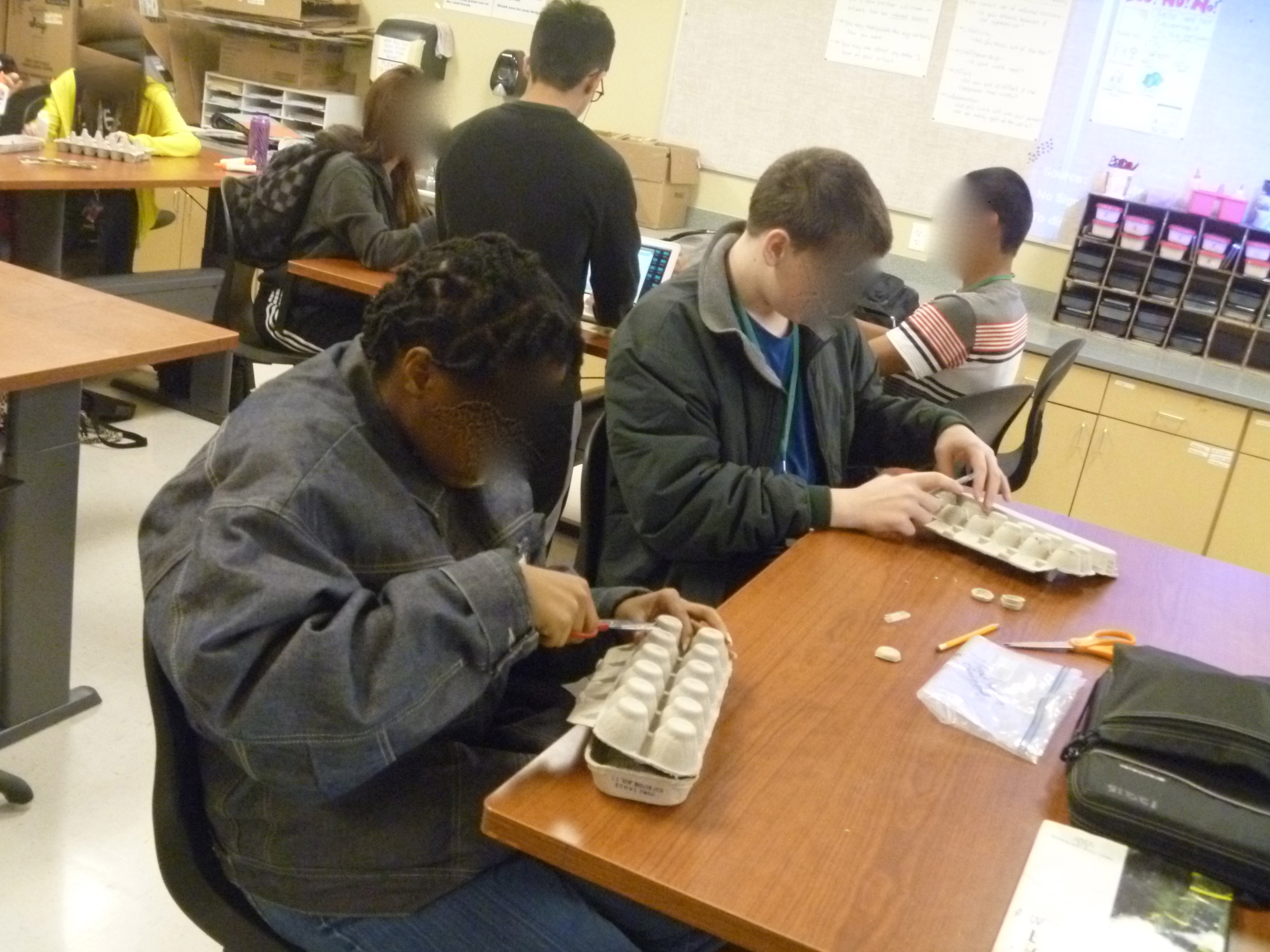
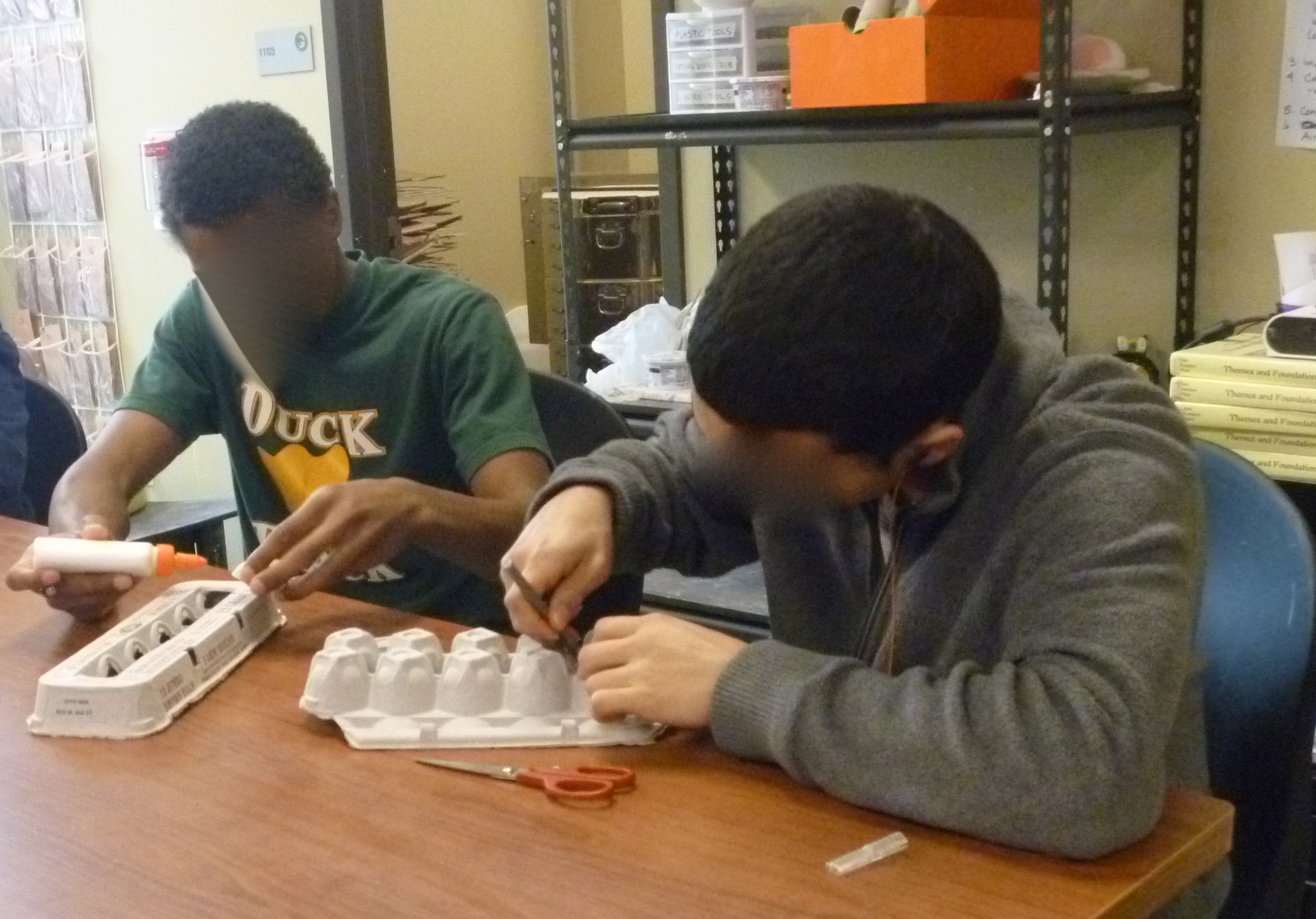
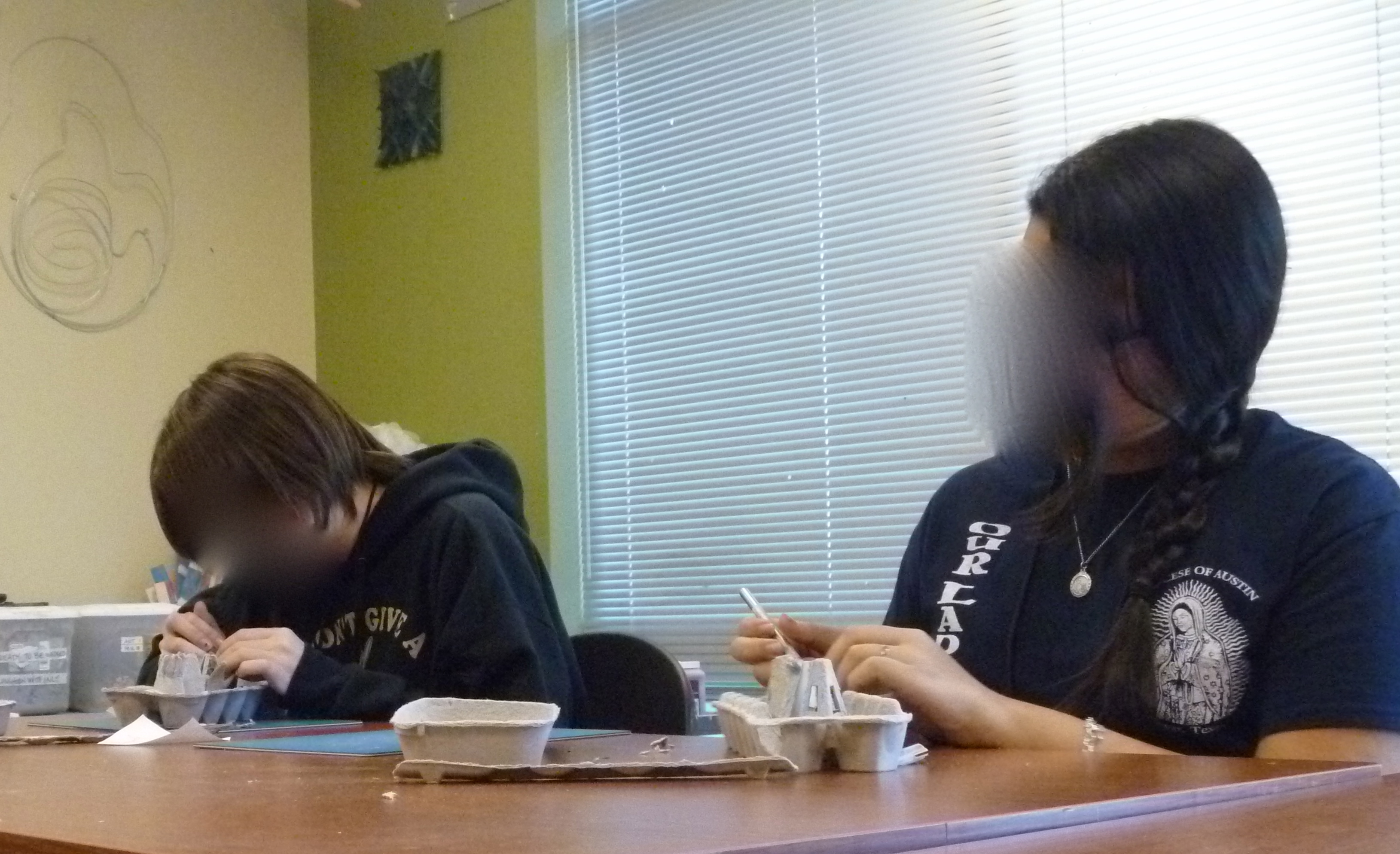
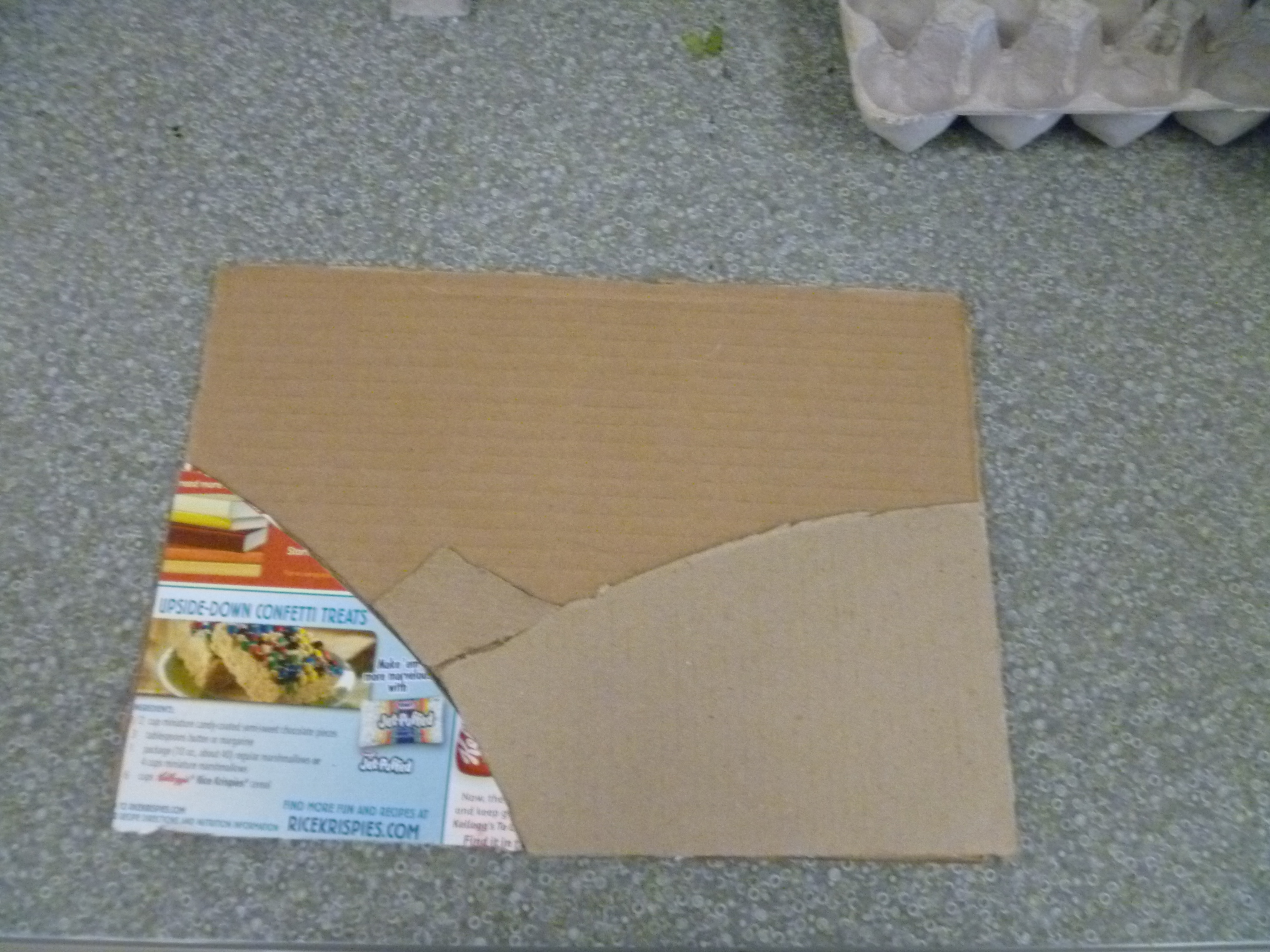
We are starting on our second week of choice in Art 1 when creating a project about informal balance.  Today I walked around and talked with the different groups to check in on their progress and to make sure they are on the right track.  I want to say that about half understood informal balance and are able to incorporate it into their artworks.  About a third of those who didn’t understand it and were not consciously addressing are now able to once talking through things with me.  And, well, out of those that are left, some just are making things out of egg cartons, and one group basically said they weren’t going to do anymore, and to just give them a 70.  At least they were honest about it.

I am excited and surprised by many.  I have to be honest that there are some students that are surprising me in their art.  Some that I thought would be the ones making the egg carton alligator are thinking outside the box.  While others that I thought would nail this are the ones making the alligator.

Choice hasn’t been easy for me.  Not knowing the outcome is hard for me.  But, I have to learn to go with it.  I will update once the unit comes to an end.

STUDENTS WORKING HARD 🙂

P1030628             P1030631 P1030632            P1030634 P1030639              P1030645P1030643

PROMISING ARTWORKS AND OUT OF THE “CARTON” THINKING

shark

shark
beginnings of a truck

beginnings of a truck

plan on using texture to balance

plan on using texture to balance

P1030650

using the egg cartons to make a 2-d work (bas relief)

using the egg cartons to make a 2-d work (bas relief)

will balance with color

will balance with color

Trees

Trees

ARTWORKS THAT ARE “PREDICTABLE” AND NOT OUT OF THE “CARTON”

P1030654        P1030655 P1030656        P1030657

Giving it up to the students

Standard

Art 1 started a new unit this past week.  They are learning about informal balance and ways that artists can created a balanced image that is not symmetrical.  We likened it to being on a see-saw as a child with your much bigger older brother and how much better it would be if both sides weighed the same.  How could you balance out the see-saw if you were stuck with your bigger older brother and not someone your size?  We learned that warm colors are heavier than cool colors, dark values weigh more than light, rough textures over smooth textures, and many others.

From there I introduced the project.  Each student was to be given a cardboard egg carton that I had been saving over the past 2 years.  Then they were to form a group of 2 or 3 students.  Their problem to solve in their group artwork was to create something that was balanced, but not symmetrical.  They needed to use any and/or all of the different techniques that we talked about.

A student asked me, “Is this 2-D or 3-D?”  I turned to him and said, “I don’t know, you tell me.”  I could see the the wheels and gears in their heads start to turn.  I see that some of them were excited.  I could see that some were scared.  I was both.  What would the end products look like?  Would I be able to pull off a choice-based project?  Would the kids be receptive to this?  (I am sure that perhaps you are asking what is choice-based?  You can find out more here and here.  The second  link is to the first part in a 5 part series about choice-based art in the high school classroom.  I invite you to read all 5 parts.)

Today was a crazy day in the art room during my first session of art 1.  I had kids cutting and painting (both traditionally and with spray paint) and gluing and planning.  It was chaos and it was awesome.  Everyone was working (with the exception of one student.)  Their artworks were all different.  They were exploring different things.  They were collaborating.  They were behaving like artists.  I am tired, but I loved it.  Tomorrow I do need to start to walk around and talk with the groups about their plans to make sure they are keeping the problem of informal balance in mind with their artworks.  But until then, I will have a smile on my face as I think about the awesomeness that occurred during period 2 today.  I hope periods 6 and 7 are the same.

Rubrics

Standard

Ah….grading rubrics.  I have a love/hate relationship with grading rubrics.  I love them because they help me to “level” the playing field when trying to grade something that is so subjective.  But I hate them because they are hard to design.

Over the years I have worked with many different rubrics.  I love looking at other people’s rubrics to see if it is something I can work with or steal from to create my own rubric.  I want to include things that are important, but can keep me objective.  I’ve tried some that are wordy and explains every little detail.  I’ve tried different numbering scales.  I’ve got different rubrics for different types of projects.  I don’t know if it is best to have one general one or to be specific for each project.  Is it okay to have a different one for each level of class?  What do you do?  What works best for you?

Additive Texture Forms

Standard

One thing that I love about working with clay is being able to add texture.  There are so many ways to add texture…stamping, carving, texture glazes, and additive texture.  I never had to be told to add more texture to anything I have created in clay.  I am very particular about it.  But, not all my students have it come so naturally.  So, our next project will be all about adding texture.  We will talk about repetition and how it can be used to create texture.  We will talk about what kind of textures there are–smooth (which unfortunately is not allowed on this project), bumpy, spiky, etc.  We will explore different ways of adding the textures; and we will talk what kinds of textures are created by the shapes or forms used.  Two people could use the same form to add, but the way in which they add it will make the over feel of the form different.

Students will create a form from any of the hand-building techniques we have learned and from there, add texture by repeating a shape or form.

This is my piece based on the lesson.  My students who have watched me work on it over the past 2 days have describe it as a sea anemone, a bunch of cereal like fruit loops, and a mop.  They all want to touch it.  It is fabulous to get them talking about it and asking questions.

ImageImageImage

Link to grading rubric.  This is a new rubric form that I have been working with.  This is the second time I will be working with it.  I am experimenting with different rubrics to find one that works for me and my students.