Tag Archives: TAB

My week at the TAB Institute in Boston, 2015.

Standard

IMAG3187

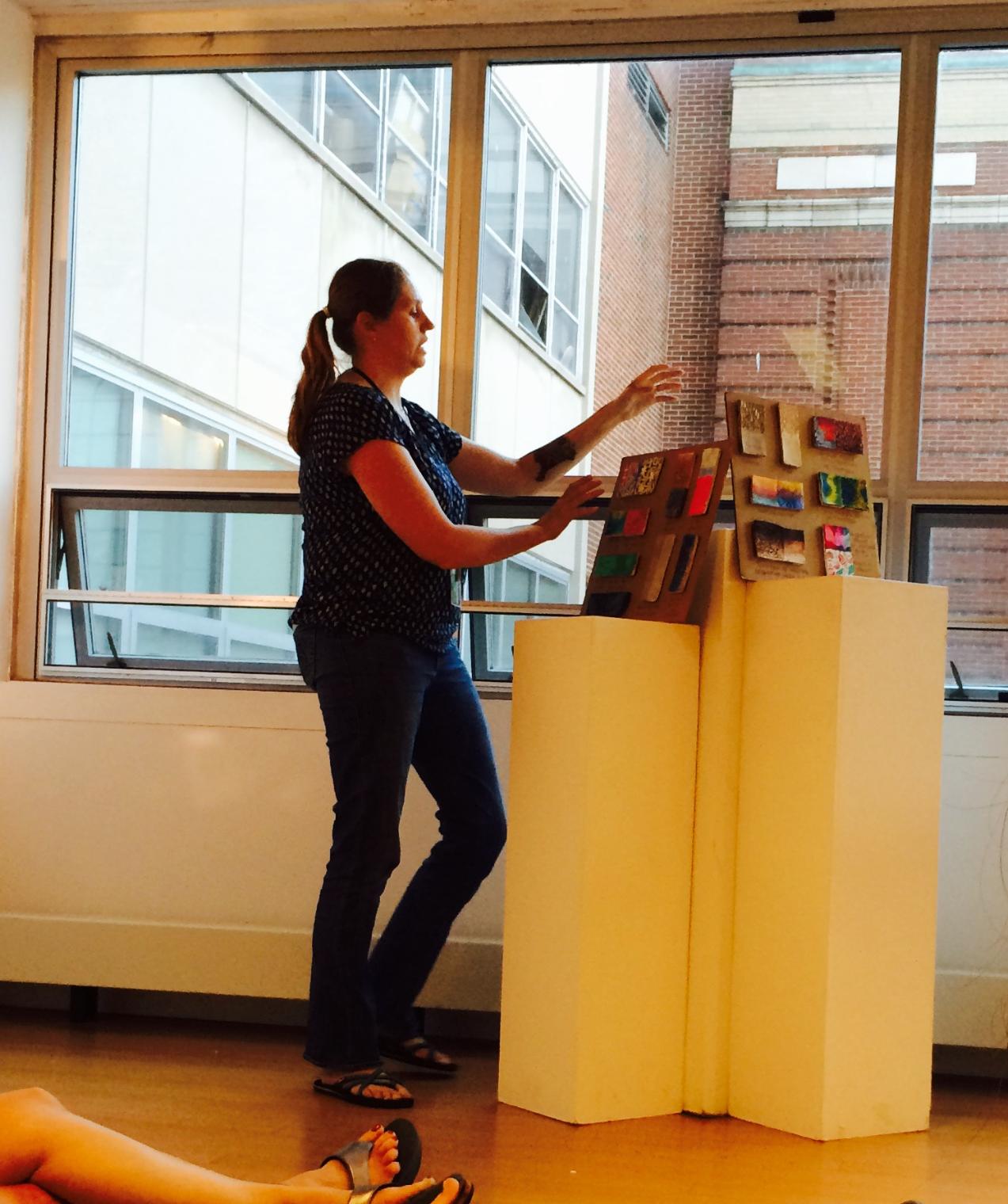
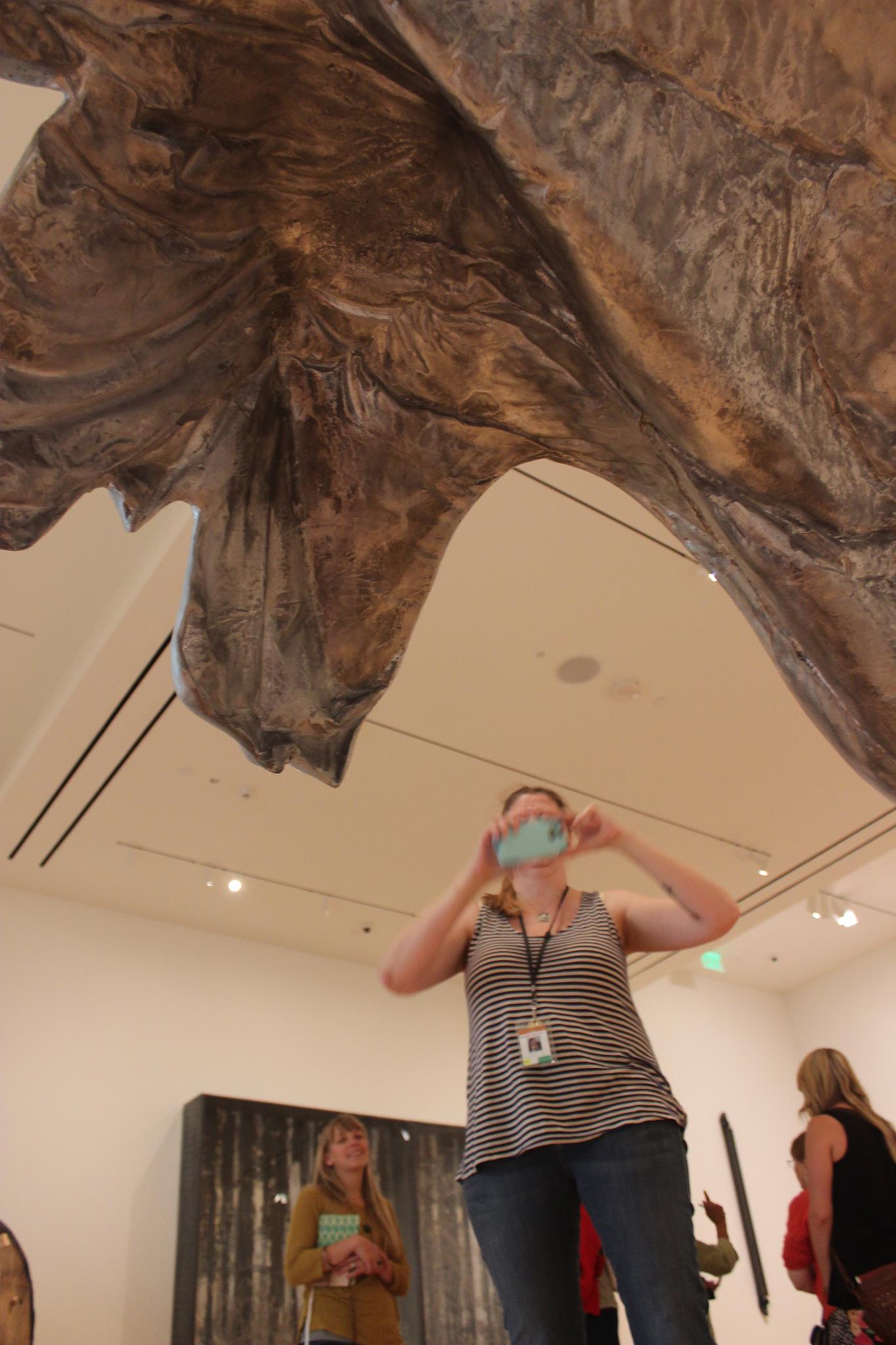
On July 12, I woke up at 4 am to get things ready to board my flight to Boston, MA so I could attend the 2015 TAB Institute.  I would be in Boston for 6 days–living, breathing TAB (Teach FOR Artistic Behavior), surrounded by others who felt the same as me.  It was a week-long intensive look into the world of TAB–what TAB is, how TAB came to be, how to implement, how to assess, how to advocate, I could go on.

IMAG3101

Our “Treehouse” home for the week

Treehouse at night

Treehouse at night

By Monday night, I knew I had found my tribe.  We all knew it.  It was the most amazing thing to me to be surrounded by others who just got it; who just felt the same way I did.  I had talked to some on the interwebs, but to meet them and talk face to face…it was a whole other thing.  A better thing.

I got to meet several of my mentors.  In particular, Kathy Douglas and I finally got to meet face to face.  And, if it wasn’t for her suggestion of me going to Boston this summer, I probably wouldn’t have made it.  So, thank you Kathy for the suggestion.  I also got to meet Ian Sands.  Granted we met briefly in New Orleans, but this week in Boston, I really got to meet Ian.  Ian (and his colleague Melissa Purtee) have had major influence on me and my switch to TAB.  I am so grateful to have stumbled upon them.  So, for me to converse with Ian and work through things TAB related, and to become (dare I say it) friends with him, is a big deal to me.

Kathy, Diane, Clyde, Julie, and Ian

Kathy, Diane, Clyde, Julie, and Ian

IMAG3301 IMAG3302IMAG3313_1

Our other faculty members included Julie Toole.  She is so much fun and if you want to know how to advocate for your TAB program, she is the woman to go to.  Clyde Gaw was there.  His Facebook profile picture makes him out to be this scary guy. He is the complete opposite of this.  He is fun and a big child and has this amazing way of connecting his vast knowledge with what/how artists act and the choices they make.  Lastly, the woman that made it all come together, Diane Jacquith was a wealth of knowledge.  The week ran so smoothly and she had set up an amazing group of mentors, guests (including George Szekely and his daughter, Ilona) and wonderful places to visit, like the Museum of Fine Arts and Fenway Studios.

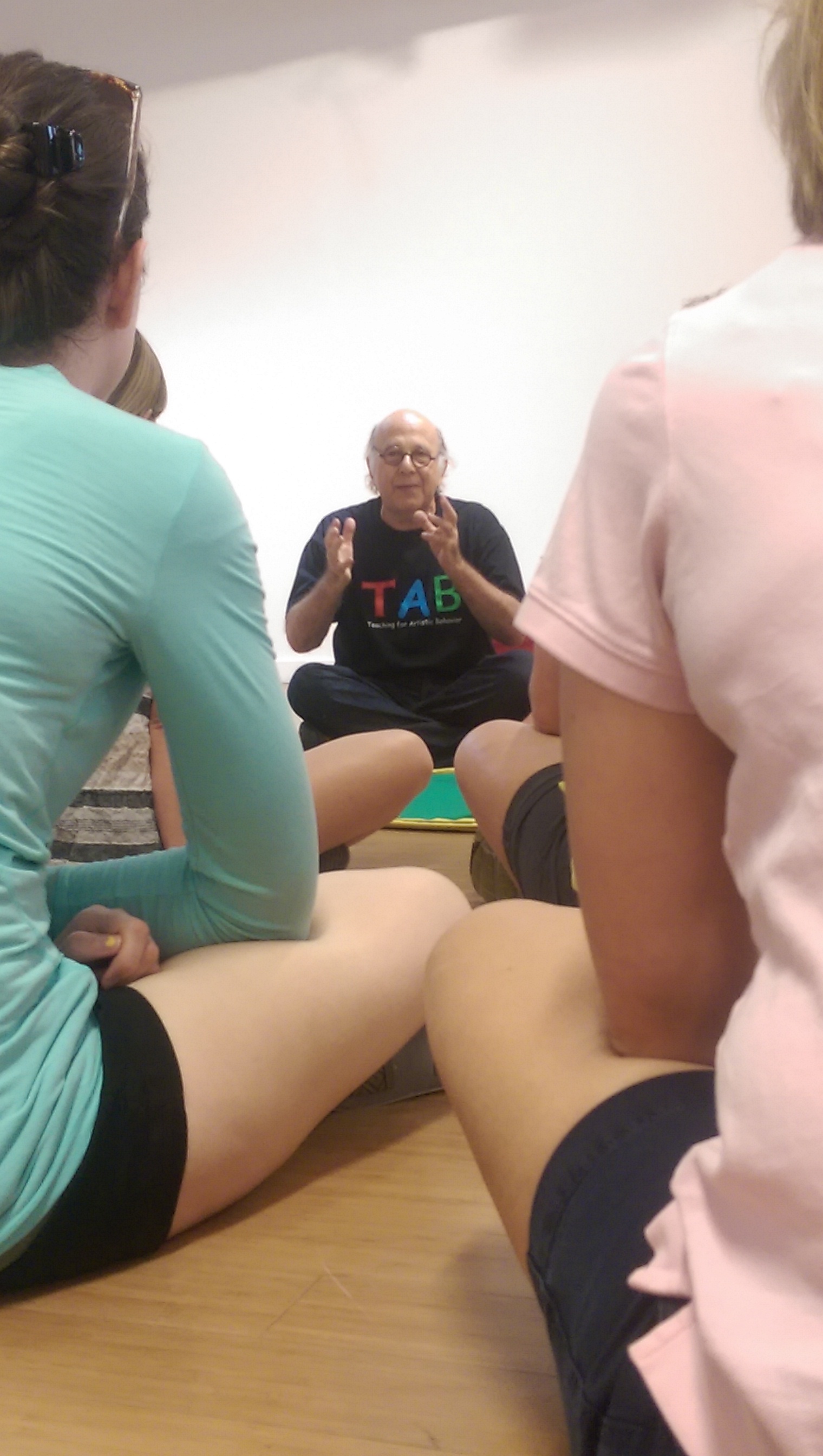
George Szekely talked to us about play

George Szekely talked to us about play

Fenway Studios

Fenway Studios

Studio of Mae Chevrette

Studio of Mae Chevrette

Studio of Ed Stitt

Studio of Ed Stitt

Studio of Peter Scott

Studio of Peter Scott

I can’t leave out the people who I came to love while I was there.  While I clicked with everyone, I want to give a shout out to my crew that just made the trip over the top—Liz (Leg Day), Andy (Canadia), and Hillary (iPad).  Thanks guys.  You accepted me for who I was and celebrated it.  I am normally a shy person around new people, but you guys made me feel at home.

IMAG3279 IMAG3278 IMAG3280

Enough with the mush.

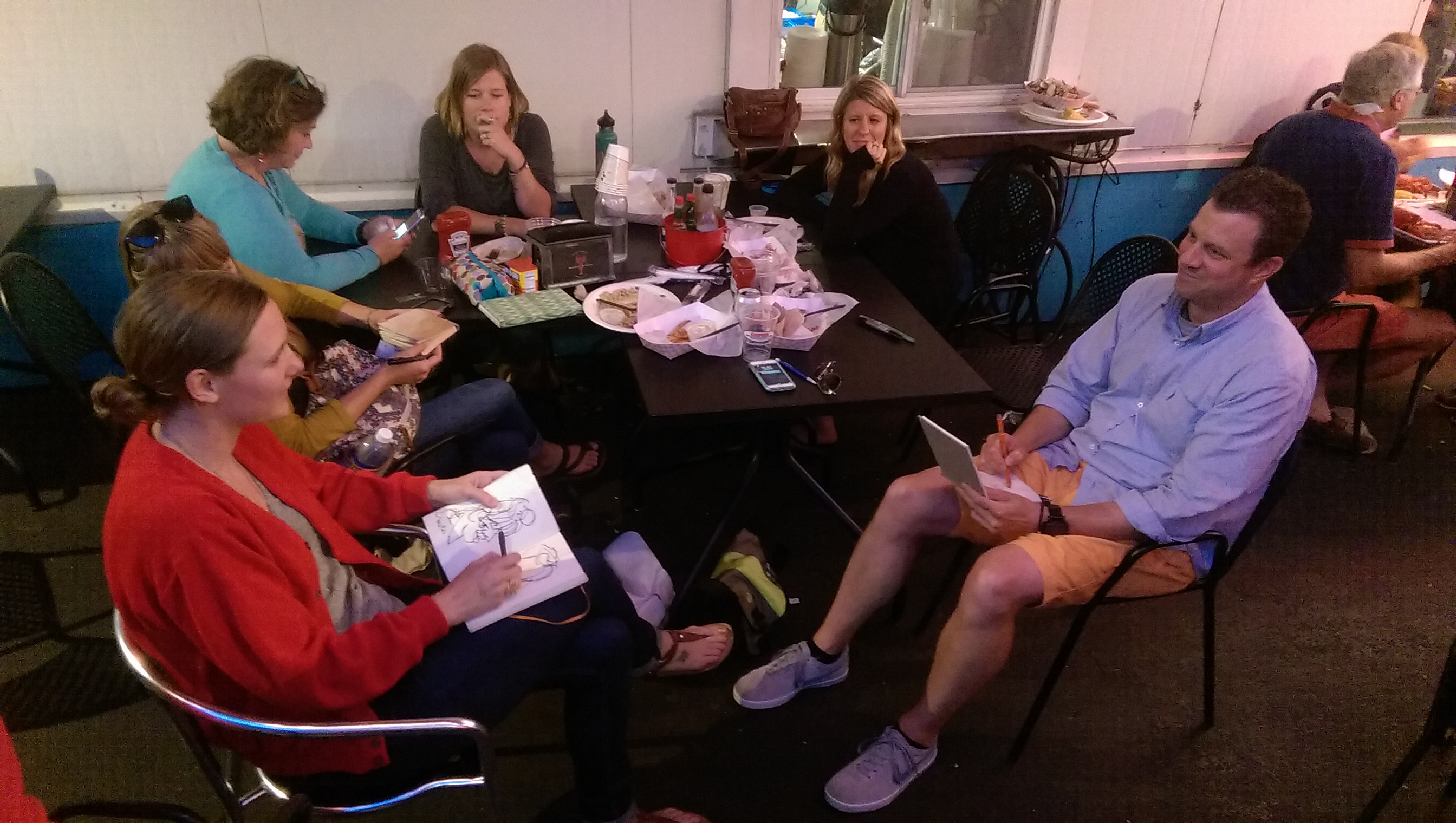
Breaking into two groups, we met in tracks first.  Track 1 was for those completely new to TAB.  Track 2 was for those that had practiced TAB for at least a year.  This is where I was.  We also met as grade levels–elementary, middle school, and high school.  My HS group was made up of 4 of us, Liz, Meta, Kathy, and myself.  Of course, Ian was our guide.  This was most helpful to me.  The conversations were lively and honest.  We talked about assessment and grading and how we set up an open studio without centers.  Sometimes we didn’t even notice how long they went on.

IMAG3136

Ilona Szekely

  IMAG3129IMAG3322

  IMAG3324IMAG3323

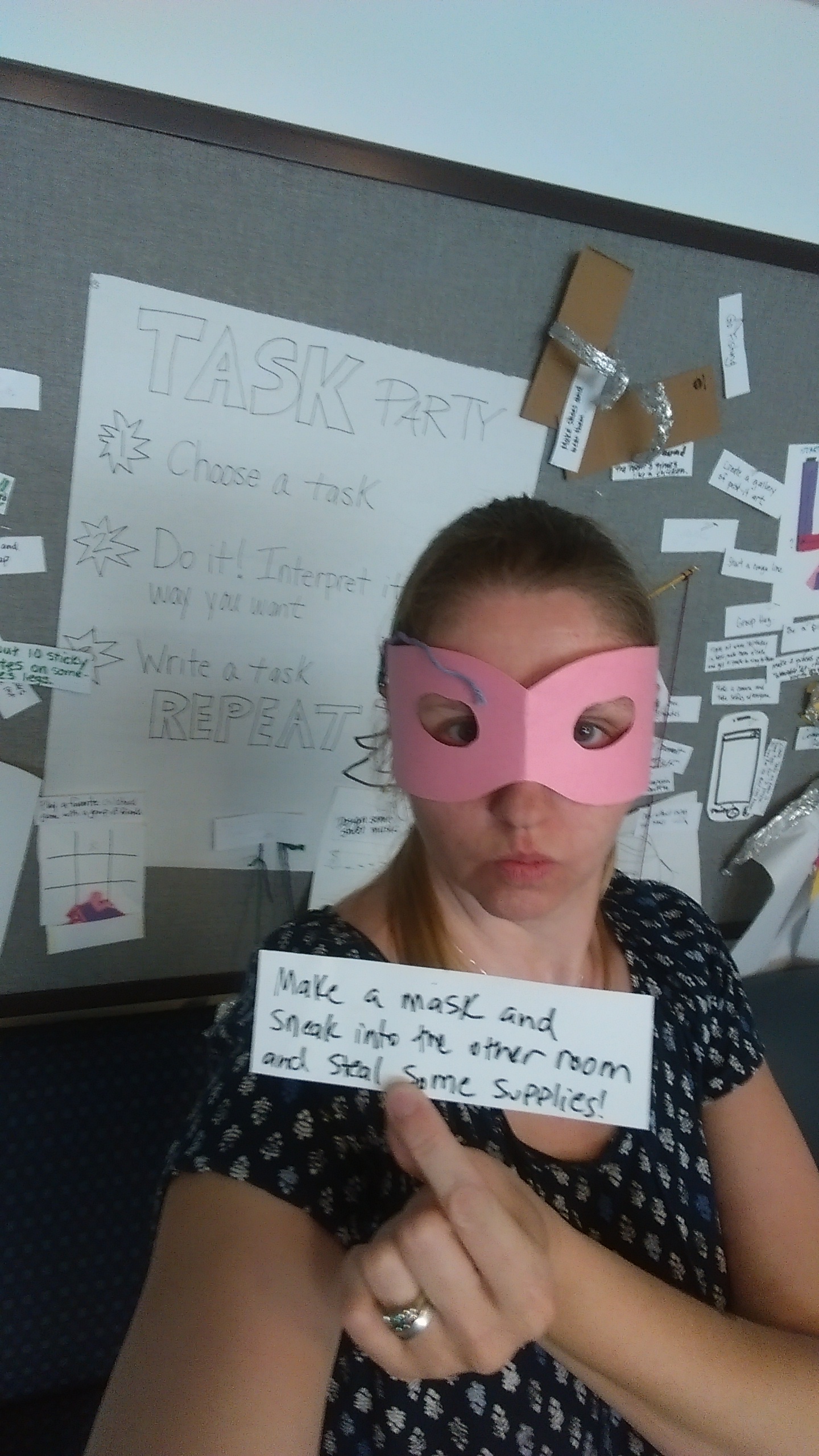
Tasks from our Task Party

  11223510_10207101237312795_2599071851688382480_o IMG_5920

I have come to point in this blog post where I just don’t know what to say.  I have been trying to decompress it all once the haze of the TAB utopia wore off.  I have been trying to figure out how to sum it all up and write about it for over a week now. And, honestly, I just can’t.  So, instead I will end the post with some pictures of this amazing PD.

IMAG3121     IMAG3123

IMAG3193IMAG3197
IMAG3202

 IMAG3203   IMAG3206

IMAG3211

 11705534_10207092161645909_3012587526943471394_o 11108961_10106412590858390_4896973808123872875_n

        IMAG3217IMAG3224IMAG3220IMAG3227 IMAG3234IMAG3249IMAG3283IMAG3284IMAG3287IMAG3238IMAG3298IMAG3319IMAG3327_1

20100_10207094072213672_364082503752064828_n (1)

Say Yes to Drawing Tests in Art!

Standard

A concern that I have heard about having a choice-based or TAB art studio is that students don’t ever work on skills–including observational drawing skills.  I would like to address this particular concern.  My students work on observational skills…every 2 weeks.  How do they do this you might ask?  Well, let me tell you…with a drawing test.

Several years ago I went the TAEA (TX Art Ed Assoc) State conference somewhere and I attended a session on creating workbooks.  In that session, the two teachers mentioned drawing tests. I was intrigued so I asked for more information.  They gave me the run down and I have been implementing them in my classes ever since.

I thought the drawing test was such a great way to have the students spend a few moments of uninterrupted time to concentrate on observational drawing.  And, now that I am in a TAB room, I find this time even more beneficial.

Here is the low-down:

MATERIALS:

  • many class sets of objects.  I went to the dollar store and bought a ton of crap over the year that would be good for drawing–spoons, forks, ramekins, ornaments, salt shakers, etc.  For me a class set is 24.  I also bought a bunch of cheap bins from the dollar store to hold each set.  It is an investment, but worth it.  If you can find sets of things…like the forks came in groups of 3, ornaments come in packs of 12. Each box is labeled so it is easy to find and pull out.
  • squares of lightweight drawing paper. I have a ton of 60# white drawing paper.  I cut the paper down to 5.5-inch squares.  I cut a bunch at a time…enough to get me through a few weeks of testing for 4 classes.  I keep it all in a bin.
  • white poster board or railroad board. This is used to mount the tests for the book at the end
  • silver rings. I use the binding rings.  This holds the books together and makes it easy for the students to flip through.
  • white labels. to be used to label the pages of the book
  • double-sided tape. to attach drawing tests to the railroad board
  • timer. the tests are timed

HOW TO:

  • Each student gets a piece of paper and the week’s object.
  • We start off with easy things like Legos and work towards more complicated things.
  • Each test is timed. Art 1 starts with 5 minutes and works up to about 10 minutes at the end of the year. Art 2 starts at about 7 minutes and work up until 13 minutes.
  • Every week I tell the students things I want them to concentrate on when they are drawing.  I usually start with 3 things and as we move along, the easier things get removed and harder things to observe and concentrate on get put in.
    • shape
    • line quality
    • use of 3-d
    • surface quality
    • no lines
    • shading/shadow
  • There is no talking during the test
  • They must draw the entire time.  This means they either need to draw again or try to improve what they have done.
  • I also don’t let them listen to music.
  • I type up a sheet and post it on the screen during the test.  The sheet has the date, the drawing time, and what I am looking for.  Also, the reminders about drawing the whole time and talking are at the bottom.  I save all these because they give me the information for the labels later on.

Before we start, I give reminders and tips to drawing from life and observing things like shadows and planes.  I talk about making connections to help with proportion.  I point out things they should notice…like the salt shaker top is not as wide as the glass part.  During the test, in a quiet voice, I give reminders about how to observe and things to notice.

When time is up, I have the kids sign their work.  The first test they write their names on the back for my reference. The second time we talk about signatures and how artists sign their work.–I show some famous examples like Picasso, Monet, Durer, and myself.  After this, they then can write their name on the back and/or sign the front.

From there I take up the tests, grade them, and put them away for safe keeping.  Sometimes the kids ask about them, but mostly they kind of forget about the tests themselves.  I don’t hide them and if they want to see them, I let them see them. What do I do with them?  This is where a good aide comes in.  Each test gets mounted on a 6X9 piece of railroad board.  Each board gets a label with the date, the test time, and what was the concentration areas.  At the end of the year, each board gets hole-punched twice and put on rings.  I make a cover page for each book and hand them back the last day of classes (well most of them anyway.)

The students like to look through and see how far they came.  They remember which items were hard, why things were hard, which they hated, which were easy, and which they didn’t try on.  Many cherish the book for years to come.  Several years ago, Ethen left his book behind.  I kept it because it was good, Ethen was one of my favorites (don’t tell nobody), and I could use it to remember what objects I used when, etc.  This year Ethen was a senior and he saw I still had the book.  He wanted it back because he didn’t have any of his drawings.  I was sad, but silently happy that his face lit up when he looked through it and remembered our awesome class.

Anyway, this past year I stumbled upon an article that talked about some of the things my students question me about–the main one is the silence/no music thing.  Here is an excerpt from the article.

1. What if I told you, you talk too much?

Talking and drawing don’t mix.
The main problems associated with drawing is when you talk you engage your logical, language dominated left side of the brain. This side of your brain is keen on knowing an objects name, labelling it, and organising it.
Often when learning to draw, you need to temporarily hold off judgment and try not to second guess what you think the object should look like, rather than what the object actually looks like.
When you are trying to learn to draw something realistically, you have to engage your right hand side of the brain, which is keener on images and spatial perception.
It’s very hard to do both at the same time.

Why?

Because it causes mind freeze.
Have you ever been in a creative zone of absorption, a state where time travels quickly and you are in what psychology professor Mihaly Csikszentmihalyi calls ‘flow’.

How Does It Feel to Be in Flow?

  1. Completely involved in what we are doing – focused, concentrated.
  2. A sense of ecstasy – of being outside everyday reality.
  3. Great inner clarity – knowing what needs to be done, and how well we are doing.
  4. Knowing that the activity is doable – that skills are adequate to the task.
  5. A sense of serenity – no worries about oneself, and a feeling of growing beyond the boundaries of the ego.
  6. Timelessness – thoroughly focused on the present, our sin to pass by in minutes.
  7. Intrinsic motivation – whatever produces flow becomes its own reward.

Flow is the mental state when you are fully immersed in an activity, a feeling of full involvement and energy.
You can get to this stage of involvement whilst drawing… until you get interrupted.
The combination of left and right battling against each other makes trying to draw tricky.
You can learn to talk and draw at the same time but it takes practice.
It all starts by understanding how your mind works, and how you can be subconsciously sabotaging your best efforts.

This excerpt is from an article by Will Kemp called “The 3 reasons why you can’t draw, (and what to do about it)”.  You can find the remainder of the article here.

I posted the excerpt on the students’ art blog.  Next year I plan on having them read the article as part of class, instead of just stumbling upon it.

Like I said, I think having these “tests” are important.  I think most kids think they can’t draw and this helps to show them otherwise.  Furthermore, it is good to have a time set aside for the students to work on these exercises.  Using the word “test” is mean, but I think it somehow gives the exercise a sense of importance in their minds.

Here are some examples from this past year.  It is a mix of art 1, art 2, and life skill students.

This slideshow requires JavaScript.
Year in Review: Part 2: Things Learned and Things to Learn

Standard

In this part of my reflection on the 2014-15 school year, I decided that I would look back over the changes that took place by bringing TAB/CBE into my classroom.  While I have offered modified choice in my room for a while, this was the first year to fully implement the TAB pedagogy. It has been a huge learning experience, both for my students and for me.

I had heard and read about all the wonderful things that have an open studio could do, but to be honest, I was still skeptical.  Could my student population really do well with such freedom?  The answer is yes.

Let’s start with some positives from this year:

  • P1050661Kids worked through artwork until they were satisfied…at times starting a new piece because it just wasn’t working.  This just amazed me.  I’ve had kids work hard on things before, but never with the fervor I’ve seen this year.  They pushed themselves. And it paid off.
  • Kids learned from other kids on how to do something I didn’t teach them.  They would see something someone else had discovered and asked how to do it.
  • Kids tried new things, even when previously saying they didn’t like such-n-such medium. Some would try out a material, such as clay, just to discover they still didn’t like it.  Others would finally break away from what was known to the, only to find a new love.
  • Clean-up/ownership of materials and tools.  I have to clean a lot less than in previous years.  I am not seeing a mis-use of materials (paper, paint, etc.–except for ez-cut.) Trusting my kids to be responsible with tools and materials was probably my biggest hang-up when moving to full choice. But, I was pleasantly surprised when tools got returned, when I still had erasers at the end of the year, and when the majority of brushes were cleaned.  I think that giving the students trust to maintain the studio was a big factor in this area.
  • I am noticing I use the word kids a lot.  My students are in high school and probably wouldn’t want to be called kids, and they aren’t related to me, but they feel like my kids.  This year I have had the most comfortable relationships with students.  I know more (and some things I would like to forget..can you say tmi?) about my students this year than I ever have before.  I think thP1060155is stems from a combination of reading their blog posts and the type of conversations I was able to have with my students.  Because I wasn’t focused on them creating a certain thing or following a specific rubric, I was able to go deeper with them into their work and their lives.
  • Lots of growth happened this year.  Not every student grew.  Some kids are just there for the credit.  They don’t care one way or another, and no matter what you say/do or don’t say/do isn’t going to change that.  There were classes I took in both HS and at my first college where I felt the same.  It’s normal.  It’s okay.  And I accept that.  But, for the majority of students, they did care.  I saw them push themselves.  Some grew in drawing skills.  Others in painting.  Some grew in meaning put into their artwork.  I had a couple that finally stopped copying things from the interwebs and began making their own.  One student who did the bare minimum for 90% of the year finally came alive at the end once he realized he could things in an anime style if that is what interested him.  He didn’t pass, but he promised me that the flame I saw at the end would be there for the whole time next year.  I have a hundred stories to tell about student growth.  It makes me smile when I think about them.P1040736
  • The art making didn’t always stop with just creating the theme artwork.  Many students just kept going.  They wanted to create this or that, so I let them.  Why stop the creativity?  Why make them sit there and do nothing?
  • My school is a 1:1 macbook, and this year I felt I really had the students using the computers in a positive way.  We weren’t using it just because it was an expectation.  We were using it to communicate and reflect.  The website/blogs created by the students and by myself were a great thing, even if their writing needs some help.

While I did change things during the year to better meet the needs of the students, I still have areas that need addressing over the summer.  And of course, there are areas I feel that if I just changed it up a bit, students would be more successful.

  • Helping the students to understand why we do the blogs.  We started out with artist behaviors.  The students wrote about what they were doing and addressing the behaviors.  I thought P1040846they were moving along and understanding things.  So, we moved to artist statements after winter break. Nope. Most students weren’t there yet.  I then gave them the option to either do an artist statement or pick 2 behaviors like we did previously.  After reading their end of year surveys, I know they didn’t really see the point of them.  A handful of students did (and by handful I mean like 5), but the majority couldn’t see the point of writing in art and thought it was just busy work or for a grade. This is good to know.  I know my student population has an issue with writing, and I am sure that our state testing is partially to blame.  They are not good at writing, sad to say.  But, what I gleam from all this is that need to help them to see that artists write about what they do.  That reflecting on the actions they are doing can help them grow as an artist.  And, that writing is not just for English and History class.
  • I did well creating demos for the students, but I feel I could do more.  I feel that I left some things up in the air…like color mixing…and some kids never explored that on their own.  Perhaps if I give them a taste of what color mixing could do…it could bring more life to their artwork.
  • The students have the ideas, they just need a bit more help as to what is possible oP1050608ut there–both in image, media, and technique.  How do I get them to see beyond the typical art room materials?  How can I encourage them to try something new?  How can I get them to go deeper and think further beyond the obvious? I need to address my line of questioning, the way images get shown to them for inspiration, and helping them to make more dynamic composition decisions.
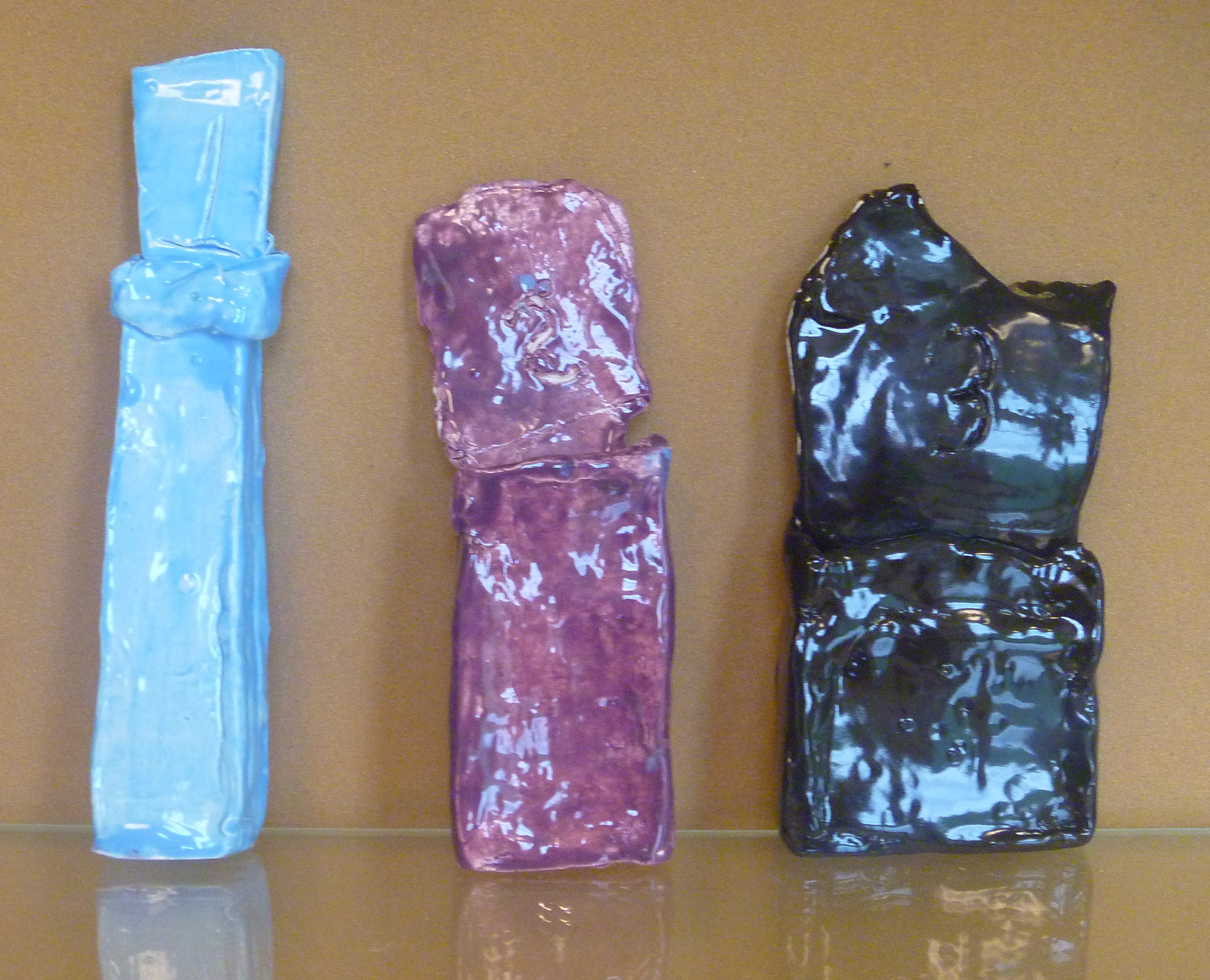
  • This is the first year I had all 3 sculpture levels doing ceramics.  It was a lot of trial and error. While the students were happy with how things ran, it could be better.  I haven’t figured this out yet, but I will…even if every year we change some things to make it better.
  • Themes were tricky.  Ones that I thought would be killer…dropped dead.  I like working with the themes and I think, especially for my art 1 kiddos, they worked well.  Feedback said the students liked to have a starting point for their artwork.  Things I have been considering for next year…giving the entire list of themes and having them pick as they please…but then how would our padlet brainstorming work with that method.  Having the students suggest themes and then having a vote.  Something else?P1060109
  • Feedback and critique needs to change…big time.  I give personal feedback as I walk around, but I feel I miss students or I hit them too late in the process and they have yet to fully understand things can still be changed and you can go back to an earlier stage.  I want to do critiques more…especially mid-project. (And definitely mid-project in ceramics.)  I am hoping that this topic will be brought up at the TAB Institute this summer so someone can help me to suss this out.

I have more questions, but this has gone on long enough.  I feel that I will always have questions and that is a good thing.  I can’t become stagnant and complacent in my art studio.  No one will benefit from that. All in all, it was a fabulous year.  I mean, there wasn’t one day this year where I woke up and said I didn’t want to go to work.  That says something…don’t you think?  And I know that things will just get better and better if I keep putting my students first by helping them to think like artists and behave like artists and create like artists.

Big changes are on the horizon at my school.  Our entire admin staff is changing.  We are getting a new principal and moving from 4 assistant principals to an assistant, an associate, and a dean of curriculum. And, they will all be new people.  I’ve had a chance to sit and chat with our new principal.  He is very easy to talk to.  I told him about all the changes that I’ve done this past year.  I talked aboP1050334ut TAB and choice and the pedagogy.  He thought it was wonderful and that it aligned with something that was talked about at some principals/superintendents conference.  That made me happy and feel that I was doing the right thing.  And, surprisingly, when I said my final good-bye to our current principal, he said something I never thought he would.  We didn’t always see eye to eye, and sometimes I thought he just didn’t notice and didn’t understand.  But, he told me to keep doing what I was doing.  To keep my expectations high and keep pushing the students.  He said that that is what they will remember and what they will appreciate.
And to that, I say, they do.  And I will.

Day to Day in My TAB Classroom

Standard

DSC_0154

A post on my art teacher’s fb page asking about how a TAB classroom works at the high school level got me to searching my blog for a post on how I do it.  I found numerous posts on why I do it, the themes we have used, and organization of my room.  While those are very helpful, they don’t really talk about how my classroom is run–the day to day.

I have said in the past that my classroom is a living entity, and that is as true today as it was when I wrote about it; and it will be true tomorrow and for years to come.  I have to ebb and flow with the needs and wants of my students.  Otherwise, I am taking away something important from the students and not living up to the pedagogy I believe in.

The basics of running my classroom include: introduction of theme, brainstorming, inspiration, demos, time to plan and work, due date, reflection.

  • INTRODUCTION OF THEME:  This is just that…I tell the students the theme.  At the start of a unit, I turn to the kids and tell them the theme. simple. easy.  Themes we have used this year include:  man/machine, interior/exterior, power, pressure, home, environment, light, sound, surrealism, self-portraits.
  • BRAINSTORMING: A few of our themes have not needed brainstorming–like self-portraits.  But, for the most part, we brainstorm as a class.  We are a 1:1 school with MacBooks, so I have the students use a program called Padlet to help them develop ideas.  This helps in several ways…it allows for multiple points of views, it helps to give a voice to those who are shy, and I can link the brainstorm board for those that need to go back and review.
  • INSPIRATION: Currently I am helping my students get some inspiration.  Many of my students haven’t been exposed to much art, so thinking outside of the box is often difficult for them.  I like to help them see what could be possible within a certain theme.  I create pinboards with a myriad of examples for my students.  I hope in the future to change this by having my students find the inspiration and creating the pinboards.  I’m just not there yet.
  • DEMOS: Part of running the TAB classroom includes giving short demos on various materials, tools, techniques for the students.  When I introduce something new, I do a quick 5-8 minute demo and I record it.  I took a page from Apex High School and created my own media portal.  I post all the videos here so students can go back and reference if they were sick or if they need a refresher.
  • TIME TO PLAN AND WORK: The majority of time spent in my classroom is dedicated to this.  At the moment, I don’t require students to plan by sketching or the like because it is not something I always do.  Some students plan on their own, while others don’t.  I am seeing that the reason for this is that they don’t know how.  This is something I am working on and planning on adding in the future (as soon as I figure out how…).  Many of my students experiment as they go, working through ideas and finding solutions–just like many artists do.
  • DUE DATE: I’m going to be honest here, I like having due dates.  I think they are important.  They help to keep my students with wandering minds on-task.  They are important for future endeavors.  I think it is something they have to learn.  I use a soft due date and a hard due date.  There is a week between the two due dates.  Basically, the day after the soft due date I introduce the next theme and we brainstorm.  During that week, those that have finished with the current theme can move on and start planning/working on the new theme; those that need a few more days can finish up working while thinking about what they want to do on the new theme.  I have found the soft/hard due date works for my student population, and it helps keep me in compliance with a few district/campus policies.
  • REFLECTIONS: During the first semester, each student created a website using Weebly.com.  As a class, we talked about 8 different behaviors that artists have.  Every 2-3 weeks, the students chose 2 behaviors and wrote about how they were or weren’t showing that behavior.  It didn’t matter where they were in the process of an artwork.  It was helpful for them to see that the processes they were going through were what was changing them into artists.  When the second semester started, I introduced the artist statement, and the students reflected at the end of each unit, writing an artist statement about what they just created.  I realized that many were not ready to move on to this and were producing better reflections about themselves and their work talking about the behaviors.  I give them a choice at the end of the unit about how they want to reflect now.

MEDIA CHOICE:  I have set up my classroom so that almost all media is out in the classroom and easily accessible for the students.  We started off the year with b/w drawing media.  From there I added color media.  Next was printmaking, then painting and collage.  Starting in the second semester I opened sculpture and clay.  At this point in the year (10 weeks to go), students are allowed to choose whatever media they want.

I know that not every TAB classroom works like this, but this is what works for my student population and for me.  I hope as I continue with the TAB pedagogy, I am able to allow even more freedom to my students.  I keep a list of running notes of things I think will make it run better next year.  What demos did I miss this year that would have been good?  What if I spent more time on each behavior individually?  How can the students get more out of blogging?  Things like that.

There are never two days alike in my classroom.  In fact, even when I do an intro day, no two classes are ever the same.  It’s a good thing.  It keeps it interesting to me.  It keeps me on my toes.  It keeps me happy.

Let There Be Light?

Standard

Light:    

  1. the natural agent that stimulates sight and makes things visible.  
  2. understanding of a problem or mystery; enlightenment.
  3. (of a color) pale.
  4. of little weight; easy to lift.
  5. gentle or delicate.
  6. (of entertainment) requiring little mental effort; not profound or serious.
  7. (of persona) good; vs. evil (dark)

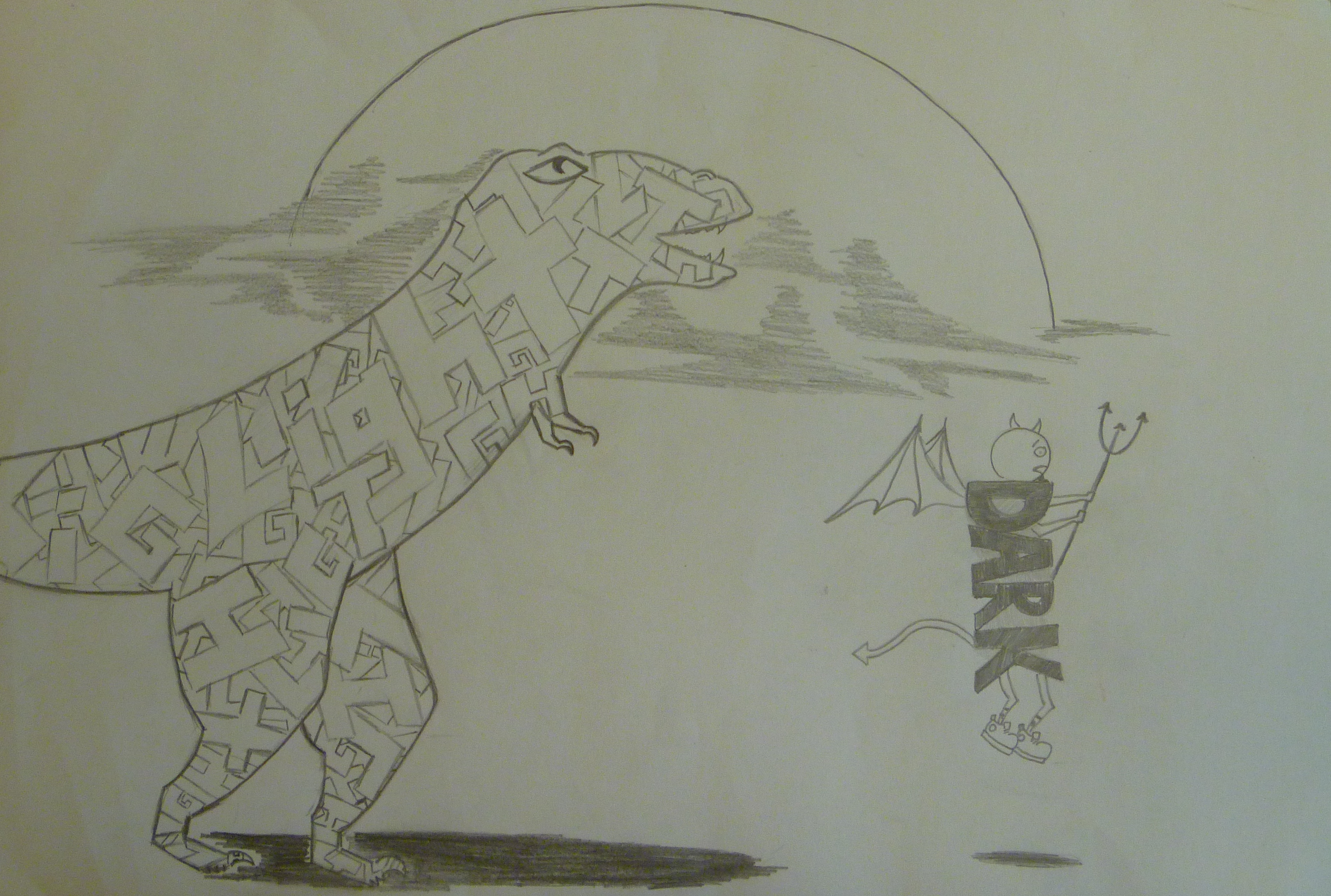
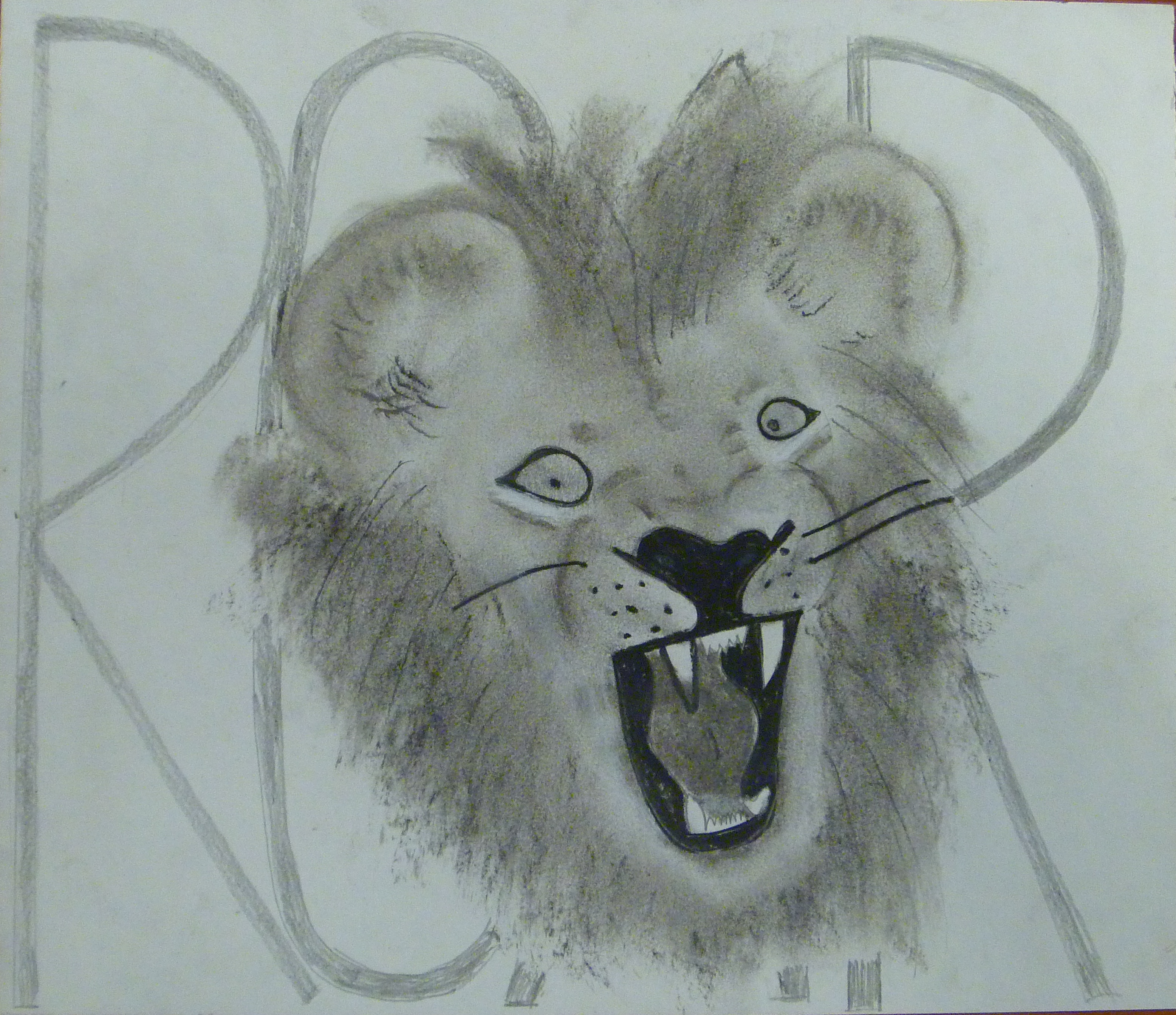
This was our theme.  Seems like there could be a myriad of possibilities.  I thought it would be “easier” that our previous theme of “Sound“.  Unfortunately, it was much harder than I thought it would be for my students.

I don’t know if it was the theme or if it is just that time of year.  (To be honest, I have hit that proverbial wall that often shows it face in February as we are just on the cusp of beginning the last 2 marking periods of the school year.  But, I digress.)  While a few knocked it out of the park and had some deep thinking and meaning to their artwork, many just went through the motions.

Not everything that came out of this unit was bad.  It helped me to realize some things about my students, myself, and the atmosphere in the room.  My students need a break from computers.  Enter our next theme of surrealism where they will rely on their minds for ideas.  I need a break.  I know we just returned to school, but I feel like I am about to start up this huge mountain of responsibilities and I won’t get to the top until mid-April.  And, finally, my room has become too comfortable.  It’s a double-edged sword really. It’s what I wanted.  I wanted my students to want to be here.  I wanted my students to want to make art.  I wanted my room to be a living thing.  And it is all of these and it is not all these things.  I don’t know how to explain it.  I like the chaos of art making and several of my classes deliver.  But what I don’t like is just general chaos–which other classes are becoming.

So, see, this unit has brought reflection and thought for me.  This is a good thing.

Here are a few more good things that were brought about by this unit.

P1050806 P1050811 P1050814 P1050837 P1050839 P1050844 P1050874 P1050879 P1050882 P1050913 P1050914 P1050923 P1050925 P1050927 P1050974 P1050978

Picturing Sound

Standard

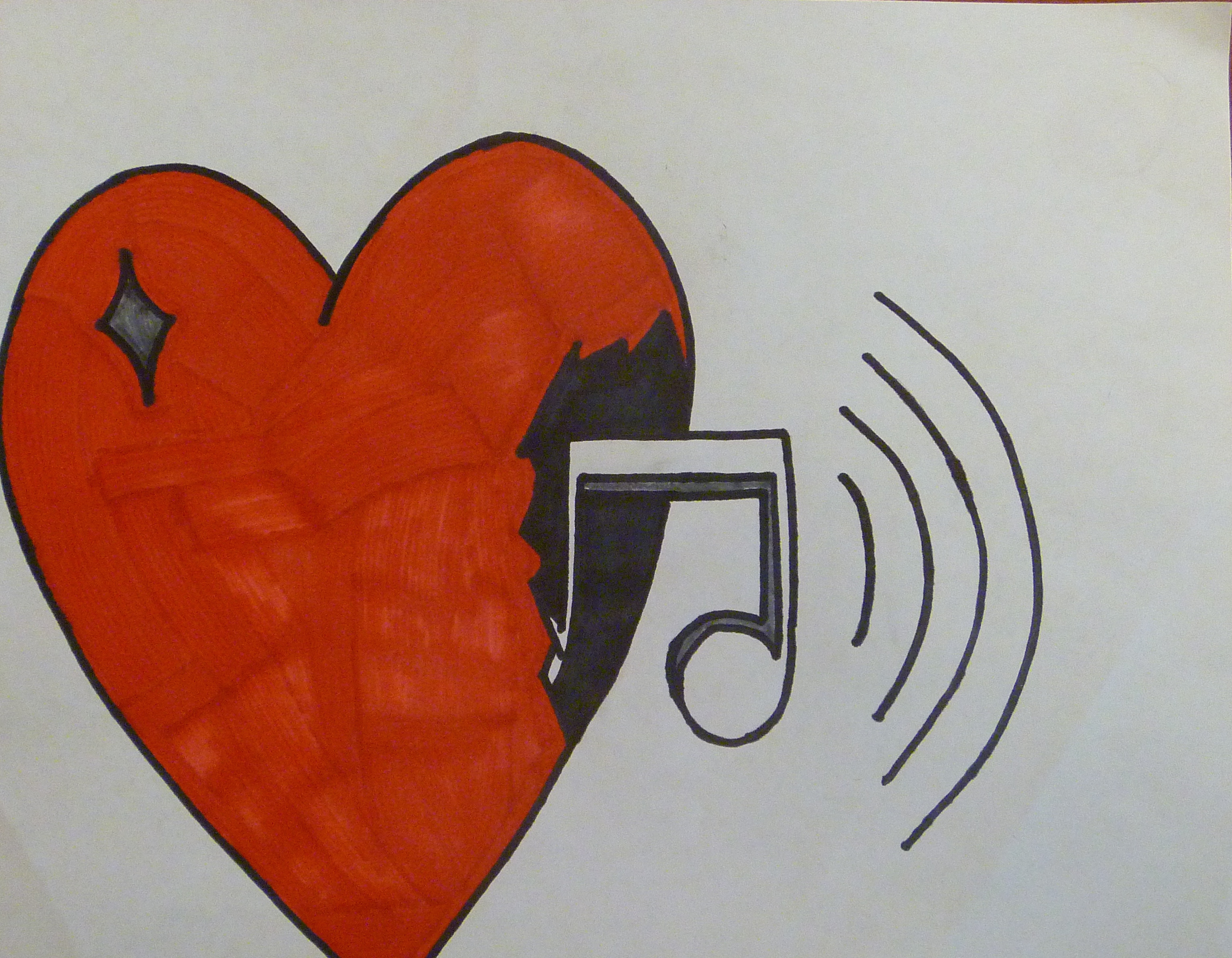
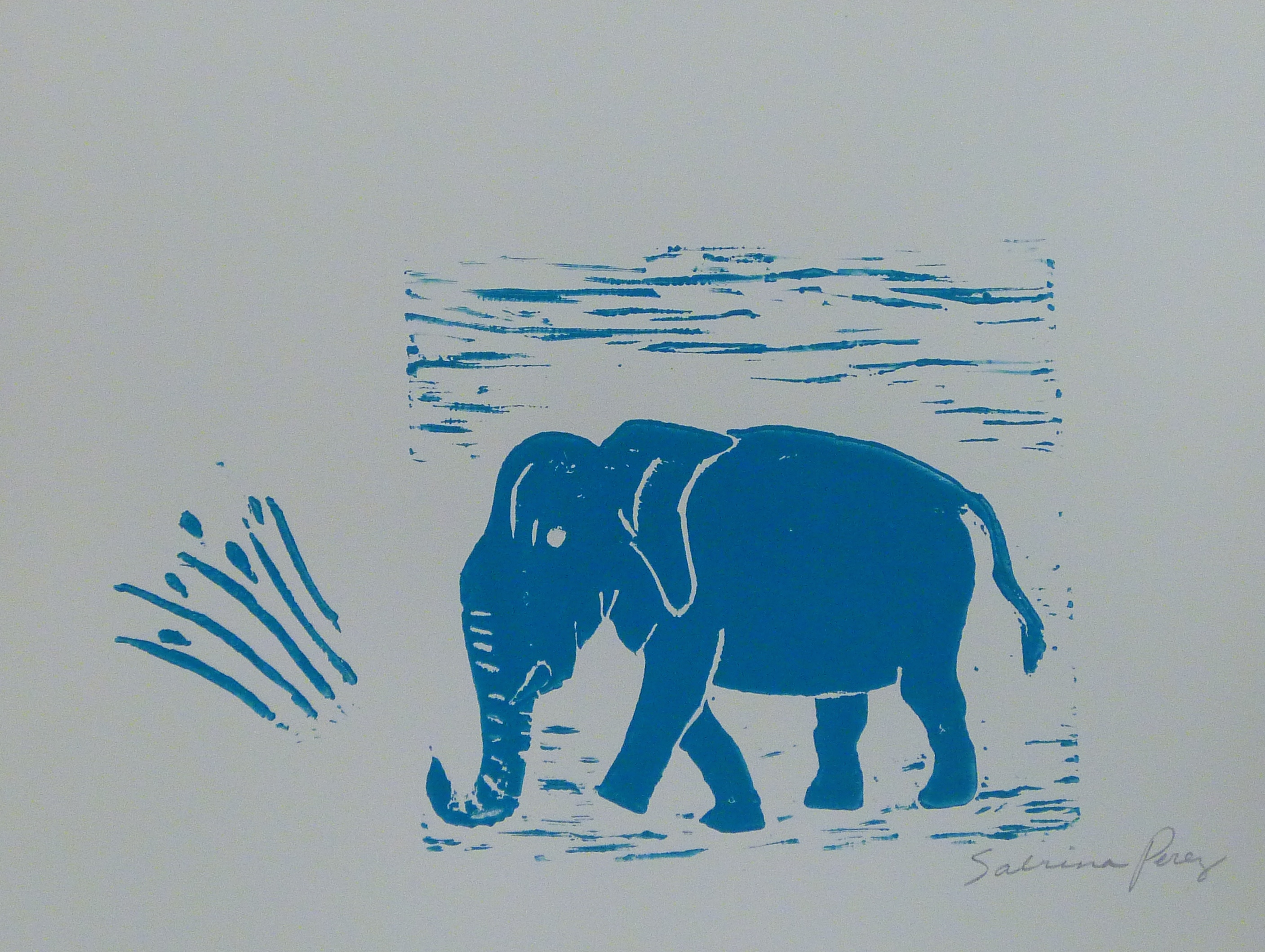
Sound.  Visualize it in your mind’s eye.  It’s not easy is it?  Well, that’s what my art 1 students were tasked with.  They were asked to take something that is not concrete and turn it into something that is.  And, they did just that.  They picked images that remind you of certain sounds…tires screeching, wind chimes in the wind, the quietness of peace, speakers booming, the vibration of bass, the crack of a baseball bat or thunder.

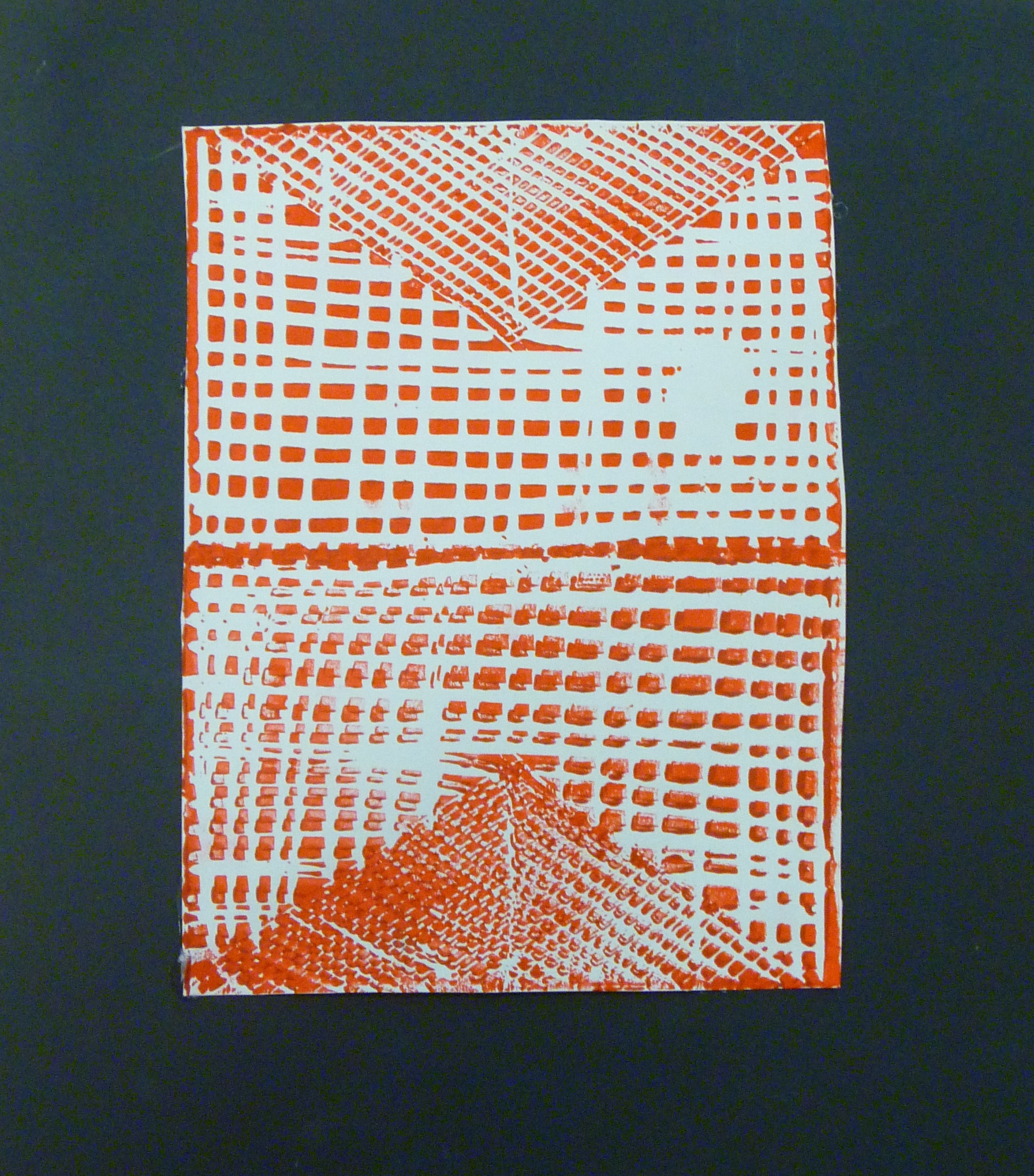
In this unit I introduced block and collograph printing.  Of course, tons of kids wanted to try block prints. I think they did well for their first try.  It was difficult to get them to understand placement of the print on the paper, but luckily I had a template they could use to help them get it right.

I am so pleased with their solutions.  There is so much thought put into these works.  Check out their artist statements telling of their intent and processes.  This is definitely a theme I will use again.

P1050503 P1050508 P1050511 P1050513 P1050518 P1050520 P1050536 P1050537 P1050539 P1050547 P1050565 P1050568 P1050574 P1050575 P1050577 P1050621 P1050625 P1050626

How Do My Students Feel About Choice?

Standard

If you have read any of my posts, then you know exactly how I feel about Choice in my artroom.  And in case you are new…I love it!!!  Love it, love it, love it.

But all too often we talk about what we as teachers want and how something made us feel or if we made the right decision.  We don’t ask the students, the most important people in our teaching world, what they think.

So, I did just that.  I asked them on their midterm exam what the experience of having choice in their classroom was like.  Here are some responses.

“This effected me a lot because last year we were very limited on the materials we had to use, and we all had to do the same art work in  the same manner everyone was doing it. It was a good idea for you to change it to were we can all do different types of art work but with the same theme, for example we were able to carve, paint, draw, and a lot of types of work. i think that method should stay because you can see what each person likes, and what their good at.”   ~Aharon, art 2 student

“I was really appreciative of the opportunity to get to pick what I wanted to do and how I would do it.  Having little restrictions was really helpful in expanding my creativity and giving me more choices.”    ~Edward, art 2 student

“We had a variety of things to use and how to use them. I personally think that some of the projects shouldn’t have been so optional with such a variety of things. That the assignments shouldn’t have been so open to do what those of such wanted. Some should of been open to pick to choose their material used, but some also should of been told what to use and work with that and grow on that to know how to use it and get used to using it. When starting a project it took me awhile to pick what I wanted to do and what I wanted to use due to all the options we had. I am the type of person that I’m more comfortable to be told what to use and then go from there. So it was a challenge adjusting but I got it done. ”  ~Kalisha, art 1 student

“I liked the new way of teaching/learning you introduced because it gave me a lot of liberties. In my school (in Germany) we have more defaults and the pictures look similar. Here everybody can draw and interpret the theme his/her own way. That way everybody draws something different and unique.”  ~Dania, art 1 foreign exchange student

“I felt like it really effected me because if you wouldn’t have given us the choice to really be creative i wouldn’t really try and make something really boring just something easy. I feel like it honestly did help me because i am actually interested and feel like i could do something with my art one day in the future. I am honestly really happy i stayed in this class and you gave me freedom because without that i probably wouldn’t see how much i enjoy art and really see i can do a good job when i put actual effort into it.”  ~Casey, art 1 student

“I loved that we got to choose what our artwork was this year. It’s given me a lot more freedom and has actually made me care about my artwork because I’m doing what I want to do, instead of something that i have no connection to.”  ~Ryan, Art 2 student

“This was effective to me by, letting me use the things that i needed and allowing me to have the things i need to make my artwork be great, and make it to where i don’t just slap something on a piece of paper and turn it in. I can actually give it character.”  ~Zoe, art 1 student

“I remember last year in ceramics when we had to make a certain piece, but use the method our art teacher wanted us to use. This year, we have theme that our pieces must revolve around, and we may use which ever method of building we like. Personally, I love this new method our teacher has been using for this year. I feel this allows us to continue to use a method we enjoy and focus on improving our skills using that method. Instead of constantly changing which method we have to use and using a method some students might dislike more than others. For example, say we are assigned to make usable containers, one student could use the slab method while another might use coils. There could also be a student who wants to use his or her own method to build a container. They each can find a way they like to sculpt and continue to learn more and more about whatever method they choose. We also have the privilege to try and improve our skill in a method we are not yet comfortable with.”  ~Joseph, intermediate ceramics student

Far and wide, almost all of my students (with the exception of beginning ceramics because I have not moved that class to choice…yet–it is coming next semester) really like having the choice.  They like being able to experiment and try new things and start over with another medium when the first they chose isn’t working.  They like being able to interpret themes as they wish.

I appreciate Kalisha’s perspective as well.  I know for some it is really hard to not be told how to do something, especially when you have been told how to do it for most of your young life.  She is a fabulous artist who spends time thinking about how she will interpret things and trying new mediums.  She works hard and has created some fabulous work.  I think that one day she might change her mind about having such freedom because from my perspective, it is working for her.

For more reading my students’ responses, go here.  I would also like to thank the teachers of Apex High School (for the umpteenth time) for sharing what they have done in their TAB classrooms.  I “stole” their exam questions to use with my students.


Teaching to Think Like an Artist

Standard

The following was posted in the feed of an art teacher group I am part of.  I completely agree with the message.  We need to be teaching our students how to think like artists.  We need to teach them how to problem solve.  We need to teach them that mistakes are okay.  That exploration leads to artistic growth.  That, as Cindy Foley implies, ambiguity is okay.

You Can Go “Home” Again

Standard

Our third theme in Art 1 this year was “home”. This proved to be a harder theme than anticipated…and one that many thought was uninteresting. I knew some students wouldn’t be able to get past doing a drawing or a painting of their house, no matter how much we discussed different things that “home” could mean.

I challenged them to look beyond the obvious and look into their lives and show me what home meant to them. Many took this challenge. Many succeeded. But, many fell short. However, that doesn’t mean they didn’t learn anything.

A new “station” was opened on this unit. I introduced them to paint. We looked at watercolor pencils and watercolor paints. We also looked at acrylic paints. I could see the sparkle in the eyes of the few that explored the world of acrylics. I watched the frustration. And I saw the perseverance of the few that kept working and working until they were satisfied.

While I am unsure if I will use the theme of “home” again, I am pleased with the results. Here are some of my favorites.

P1040790

To see all the artwork, visit The Barnett Blog.

Setting the Stage…The Paint Stage

Standard

One of my biggest fears/concerns this year when moving to a TAB/Choice-Based classroom was the addition of paint into the mix.  Paint is always a scary thing. Kids don’t always wash brushes out and acrylic dries in them. Trays get left behind for me to clean. So much paint gets wasted because no matter how many times you say, “you can always get more”, the kids take enough to cover an elephant.  And don’t get me started on those pumps for the half gallon bottles that are always clogged.

Since this year I have everything out for the kids to access, I thought paint, both acrylic and watercolor, should be out too.  And, not to toot my own horn too much, since I had put so much thought into organization (and it is working very well), that the paint should get the same consideration.  I bought a bunch of clear, empty ketchup bottles for my acrylic to try and combat the too much paint/clogged pump issue. I looked through all the stuff I had and found a couple of racks I could use. And, I appropriated several Xerox paper box lids from the work rooms.
I made 2 areas–one for watercolors, and one for acrylics.  So far, so good. Kids have access to it all, except they do have to ask for the canvas boards. They have been taking only the paint they need.  They close the caps on the paint bottles.  Almost all brushes are washed well.  (They have been following the brush washing video I made for them.) The paper paint palettes help so much with giving them less to clean and more time to work.

It seems my fear of introducing paint was unnecessary. Let’s hope they keep up the good work, and good clean-up.

image

Watercolor station. Includes paint trays (not pictured), brushes, paper, salt, resist medium.

image

Canvas board size choices, on the wall near

image

Acrylic paints in their new bottles. There is a small spice rack stand that holds the neutral colors.

image

Acrylic paint set-up. Brushes, other tools, paint trays, paper palettes and brushes. There is a towel in the brushes box top so wet brushes can dry and not destroy the cardboard.