Category Archives: Classroom Management

Let’s Go? Advice from almost 2 decades of teachering.

Standard

I’m about to start year 19, and man have I had an interesting career. I’ve taught high school for 18 years, AND I’ve done it all in the same place. I can retire in 11 years, but plan on doing at least 12 so I can retire on an even number. But, that’s just an arbitrary date. I’ll see the state of education when I get there. I may be done, I may not be. Who know’s. ::shrug:: But this post isn’t about when I’ll retire. This post is about a few things from my journey that helped to get here…to today…a week and a half before I walk into day one of in-service for year 19.

When I look back on everything, there are a few key things I’ve learned that keep me going, keep it relevant, and have made me into the force I am today. Yes–I said it, I am a force. I haven’t always been so confident in my abilities, but today I am. I am a good, nay, an amazing teacher. I am really good at what I do. Do I have some areas I can work on? Of course–who doesn’t? What makes me so different is that I know there are things I lack and I reflect on that and I learn and continue to grow in this ever changing, but not really changing, world of art education.

I want to share some of what has motivated me, and helped me to believe in my abilities over the years. It always hasn’t been sunshine and puppies (although I don’t really like puppies–come at me bro–so maybe that phrase for me should be sunshine and art supplies. Just sayin’.) I’ve had my fair share of crap days and considering moving districts and not wanting to go to work, but in the end, I show up because deep down, I love teaching and I looooove teaching art to teenagers.

So here we go!

It takes 3 years to build a program. I was told this by Ian Sands at the beginning of my TAB journey. And, he was right. I now say it to everyone who is new to a role or implementing TAB for the first time or even starting at a new school. You may think you have it in the bag and that it’s going to be easy peasy, and that attitude is great. But, as you go along the first year, you will hit bumps and things won’t work. You’ll be learning how your population reacts to you, your goals for both you and them, and your systems that you are trying to implement. You will fail, and THAT IS OKAY. Learn from those failures and revise the next year, or even as you go along that year. Teaching is like making an artwork–we have an idea, we research, we develop plans, we try to implement those plans, we revise, we fail, we reflect, we try again, then we start the whole cycle again. By that third year, you really do understand the relationship between you and your population, and you can see the growth that you’ve made and your program has made. It’s easier in year 4 and beyond. That’s not to say that you stop reflecting and revising, but at that point it’s different. So, don’t give up. Give yourself grace. I needed this “3 -year build” advice when I jumped into TAB. Then I needed to remind myself again when I switched up my sculpture program to a purely ceramics program. Rome wasn’t built in a day. Just sayin’.

Administrators come and go, but good teachers stay. One of my favorite co-workers, and a great friend of mine, said this to me about year 4 when I was struggling with my principal and the differences of opinions we had. And she was right. That principal left, finally, and left space for one of the best principals I have worked under. He wasn’t perfect, but he was perfect for me. He took time to understand me and my program. He knew what I needed both professionally and personally. He supported me. Unfortunately, he had to move onto another district, and my current admin isn’t him, but I know that some things are temporary. When you find your place and find what feels right, even when admin and you just don’t mesh, you stay. I love my program (which I helped to build from very little), and I love my population. I love that I’ve taught all the siblings in a family or am going to. I don’t always agree with my district or the town I teach in, but I know that being a constant in the district is important to what those families love about being ducks.

Remember your why. I know all you reading this just totally cringed at that phrase. I hate it too. I’m not talking about when admin asks you to try and placate you because they aren’t giving you a raise or there is some other stuff thing they are doing. This is super TAB specific. I said this to my secondary cohort this summer at the 2025 TAB Institute. I saw the eye rolls. But then I went on to explain. What are you trying to achieve by implementing a TAB philosophy? What do you want from your students? This isn’t about the methodology and how you will do this, but why you CHOOSE to believe the philosophy? This is my why: Yes I am hoping to make artists, that is my dream goal that everyone of my students will be an artist. And yes, that drives all the decisions about how I implement TAB–from the choice continuum, to themes, to the supply buffet. But let’s be realistic. That is not my population–they are not all going to go to art school and become artists. And while yes, I am trying to make artists, my why is really is about helping my students become creative and become independent thinkers. I am helping them to be able to make choices, informed choices. I am helping them to have an open mind and to see that things do not live in a vacuum and things are cross-curricular. That is my goal. Art making is my vehicle to get there. TAB allows me to do that more than any other art education philosophy I’ve explored. And it allows me to do it in my own way, using my strengths. So, when I am having those days full of doubt and questions, I think of my students and the ones that I have impacted well after they’ve graduated and the ones that are currently making a mess in my office, and it all makes sense again.

I’ll leave you with this. As you go into this new school year, whether it’s your first, your fifth, your nineteenth, or beyond, have confidence in yourself and your ability as a teacher. You’ve got this. I am already facing challenges this year, both personally and professionally. I can go in with an eff this attitude, or I can focus on what is important to me, inside my classroom with my students. I will take what they throw at me and try to see their point of view, but in the end, while I will be compliant with their requests (for the most part–iykyk), I will just do me. I know my program is strong. I know I am strong. I know my students will thrive because of what I am setting up for them. I know I’m not perfect and that I have things to work on, but I don’t have to be perfect, because clearly no one is and the conditions we teach in today clearly aren’t either. I just need to shut my classroom door, have fun, be present for my students, remember my why, and be imperfectly me. Everything else is just noise and in the end doesn’t matter. Have a wonderful year.

Typical Days in the HS TAB Studio

Standard

As we get closer and closer to the start of the year, many people are asking what a typical day in the high school TAB studio/classroom is like. And well, it’s anything but typical. Just kidding. TAB classrooms are just like any other art classroom, just there is more independent thinking happening and less teacher-led projects. But, other than that, it’s pretty normal. We have routines just like any other classroom.

I thought I would create a small post outlining my day and my week as a high school TAB teacher. I see my students daily, all year long. This year we are back up to 50 minute classes. Woo hoo!! I teach Art 1, Art 3, and beginning through advanced Ceramics. Sometimes I teach AP or an Art 4, but those are on case by case bases. Unless it’s AP 3D, then that’s definitely me.

I like to have a routine that my students get used to, so they are comfortable and there’s not huge chaos every day. I have a white board, which when my room is not under construction, the students pass by as they come into class and they are encouraged to read the board so they know what they need to get out.

Mondays start off with either Artist Monday or Style/Movement Monday, for all my classes. We come in, watch a video and then the students answers questions, either in their sketchbooks (art 1) or on a slide deck (everyone else). That generally takes about 15 minutes of class total. After that, we go into one of 2 things, we get back to notes/practice of skills or studio time. Every other Wednesday, in art 1, we have a drawing test. Then, similarly to Mondays, the students pick up where they left off the day before. In my upper classes (art 3 and ceramics 2 & 3), I designate a day (usually every other Friday) for digital portfolio time.

Beyond those few fixed things, I typically don’t like to take much of the time away from arting. Kids will ask me what are we doing, and I say to look at the board. At some point, whether they need their sketchbooks or not, art 1 students will come in and grab it before sitting down. It has become a habit. Sometimes I address the class right at the beginning to do some house keeping, like reminding students of who I still need to go over ideas and development or when the last studio day for a unit is. Other times, I just let them get to work and don’t address the whole class until about 7 minutes left when it’s time to come to a convenient stopping point to begin clean-up.

When we do need to learn new skills (composition, perspective, facial features, etc.), we sit and take notes in our sketchbooks. After there is usually a small assignment in their sketchbooks to practice the new skills. New media explorations take about a week, while other smaller skills assignments take between 2-3 days (notes and practice time together.) When I do demos, where we (students and I) aren’t doing them simultaneously, I try to keep them under 10 minutes. That way, they still have at least a half hour of arting time.

There you have it. The biggest difference in my experience between when I was a more “traditional” teacher and a TAB teacher is that there is much more independent art making and exploring time. I circle the room more and talk to students more. There is not magic secret or formula. This is what feels right for my students and for me. It’s relaxed and safe and successful.

Classroom Protocols in the Time of Covid

Standard

I know it’s been a while since I last wrote. It’s been, well, it’s been a semester–interesting, frustrating, at times apathetic, and at other times guilt-ridden. I am sure most of you know what I’m talking about. I thought I would start off the new year with trying to look at the positives, with hopes that I can help some people. We spend 2/3 of the first semester doing both in-person and asynchronous. Like other in-person art teachers, I had to figure out material procedures that worked within restrictions handed down from on high–no group work, no sharing, single-use if possible.

I run my TAB studio in a very self-serve type of environment. Unfortunately this year, that wasn’t feasible and I didn’t set up the studio as normal. ::sad face:: Fitting the expectations set out for me to work into an open studio was frustrating, but over the 3+ months I’ve had students in my room, I’ve been able to come up with strategies to make it work. I do have less than half the students I would have normally in my room, and my largest class was 12 (half my normal cap BUT it was a ceramics class, so that made things interesting.) Fewer students does make some things easier, I will admit, however, I did need to order a bunch of supplies that I wouldn’t normally order–more new brushes, lots of extra tools, extra sets of some media, single-use condiment containers, mesh bags. But in the grand scheme of things, it will help out in the future as there are some things I think I will continue using and doing after we return to a more “normal” school life.

Let’s do this…

Time Out area:

  • I got this idea from another Texas TAB teacher, Lori Wallace. Not sure if it was her idea or not, but it’s a super awesome idea.
  • It’s an area on my counter that I marked out as the time out area with some tape. (A student thought we needed a fun zone too, so there is that section next to it labeled as such.)
  • Students put all used tools and materials there, so at the end of the day I can sanitize spray them.

Clean Cups and Dirty Cups:

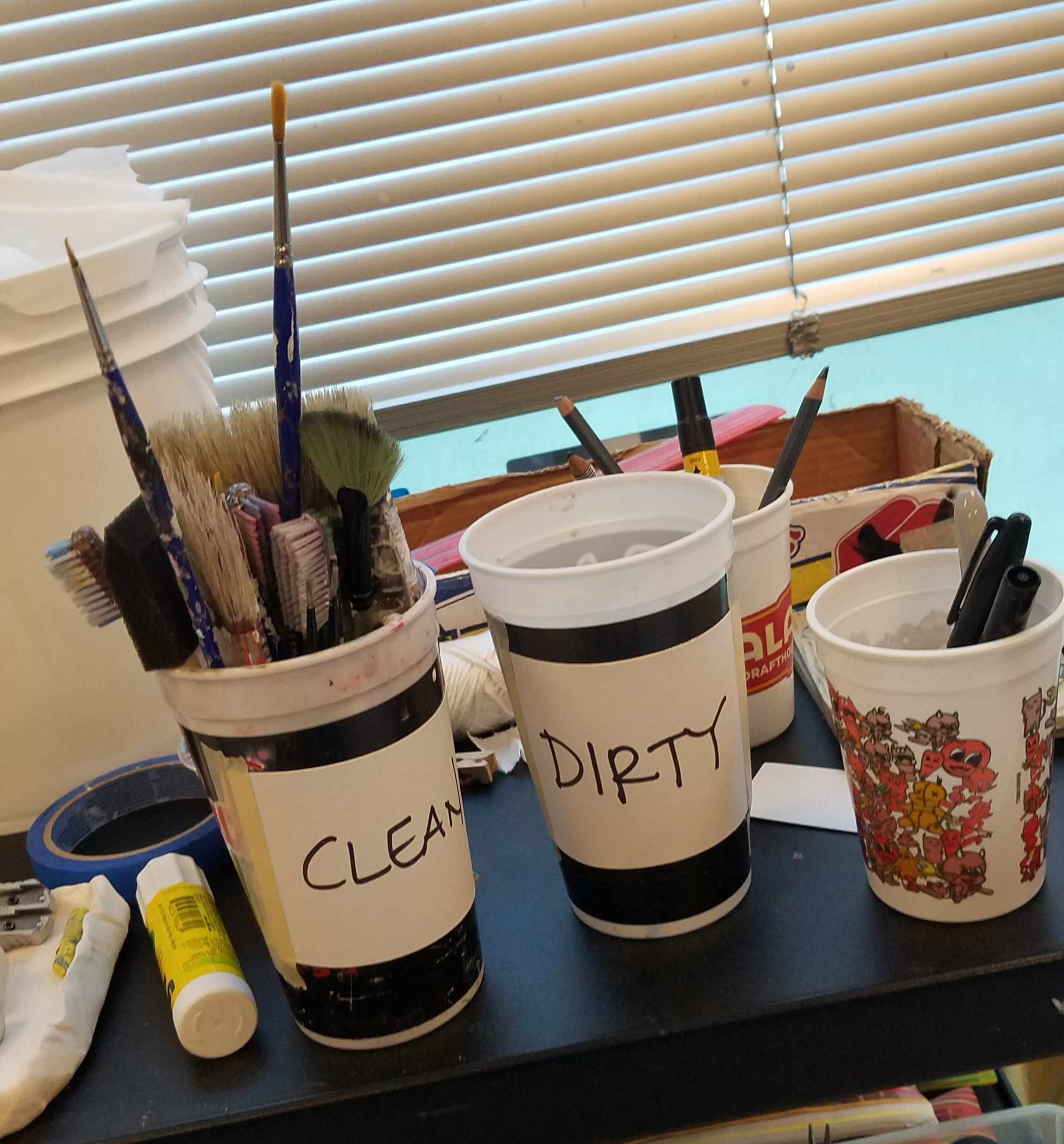
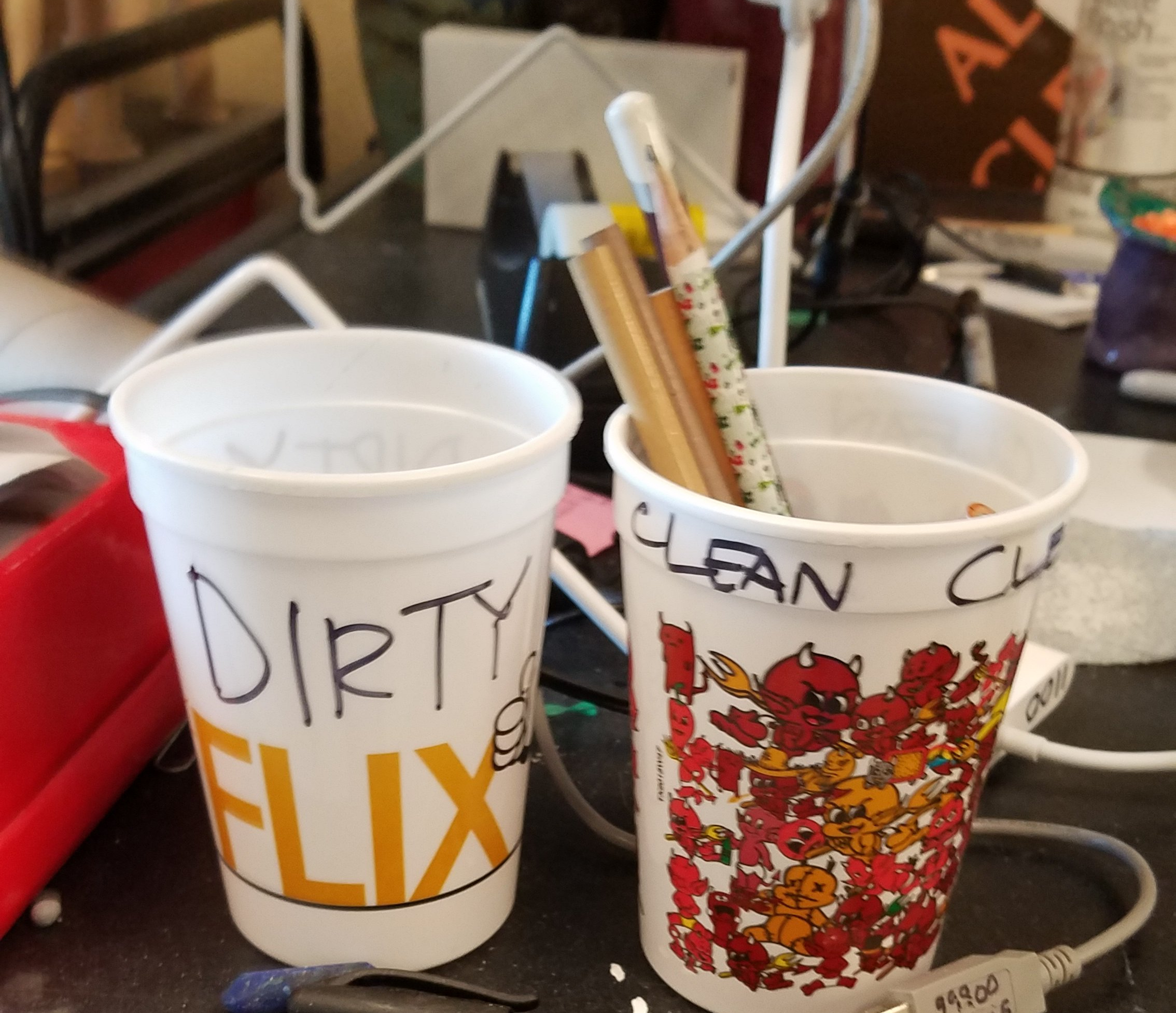
  • In a few different places, I have 2 sets of plastic cups–some labeled clean, and some labeled dirty.
  • Cleaned tools (pencils, sharpies, skinny paint brushes, etc) are in “clean” cups.
  • After student use, they put the tool in a dirty cup (this includes hand sharpener and erasers).
  • I wipe down the hand tools with the provided sanitizing wipes at the end of the day, and then put them back into the clean cup.

Mesh Bags:

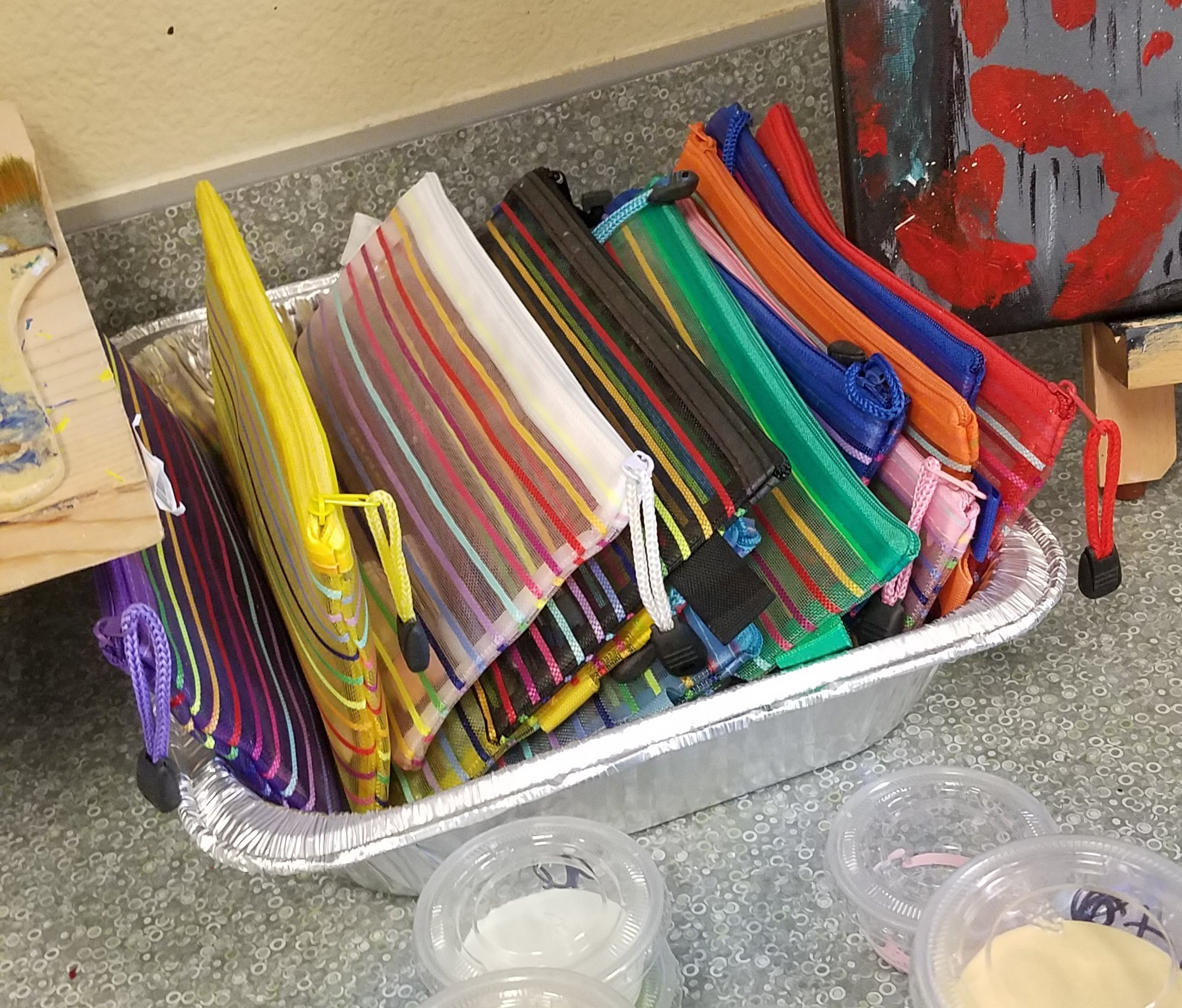
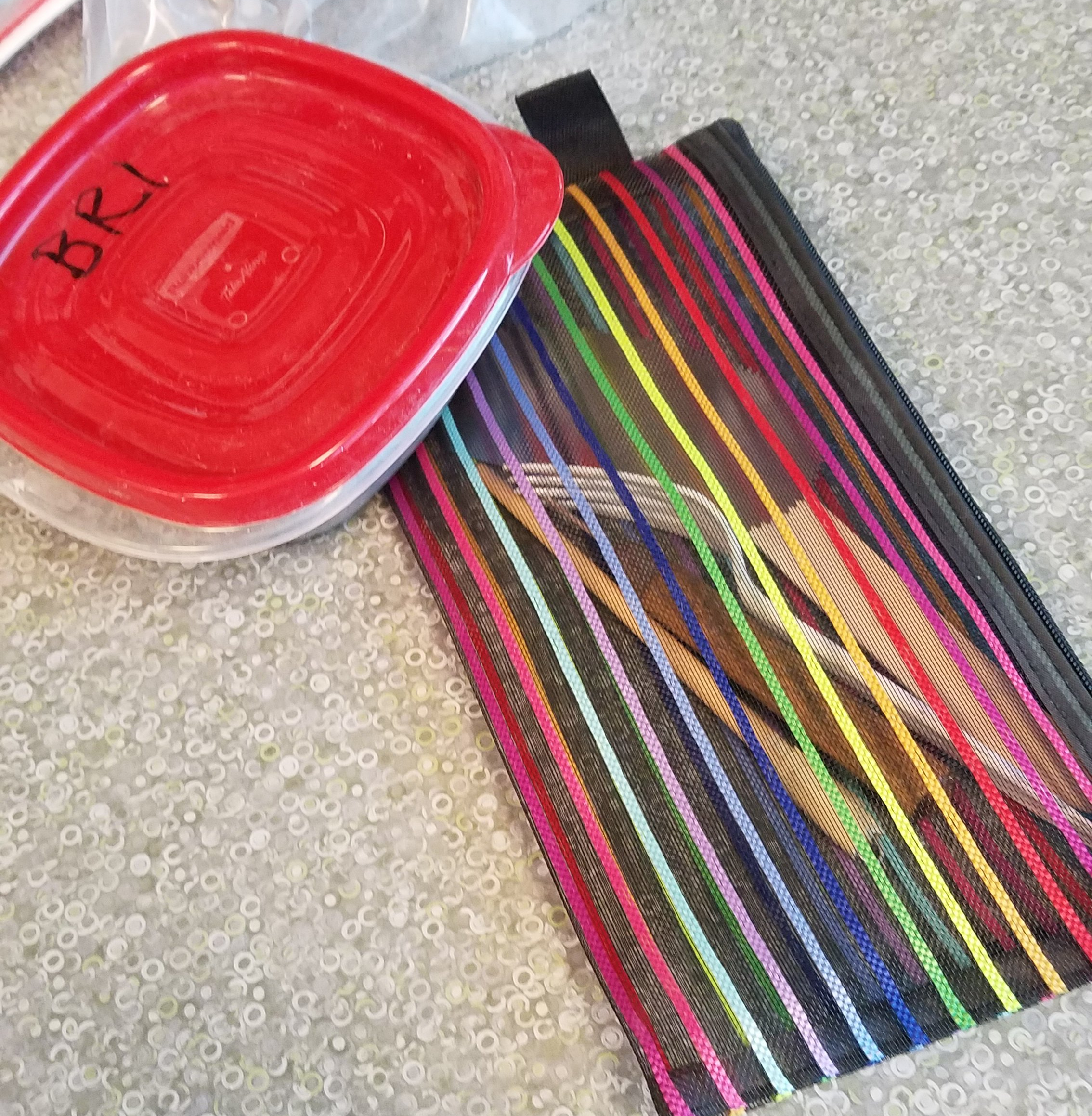
  • I bought these mesh bags with a local grant, about 80 or so of them. I use them for many things: sets of acrylic brushes, sets of watercolor brushes, ceramic students individual tools, sets of brush markers.
  • What makes them nice is that after the students use whatever is in them, they can put the bag in the time out area, and I can just spray the bag, turn it over, and spray the other side. The bag is mesh and plastic, so it gets the inside contents and allows for drying.
  • This will be something that continues next year…using the bags for sets of things.

Materials List/Paint Color List:

  • I made a list of all the different media I had to offer and a swatch of all the acrylic paint colors I have. I then laminated them and taped them down–one on each desk
  • Students can tell me what medium they would like and I can get it for them.
  • Students can tell me what paint colors they need, and I get those too.
  • This lessens the amount of hands touching things–I wear gloves to get the different media.
  • I don’t have to worry about sanitizing the paint bottles after each use because I am the only one touching the bottles.
  • I put a piece of copy paper on each paint tray (cafeteria type trays), squirt on the selected colors, and give the students their paint. They throw out the paper and put the tray in the time out area.

Individual Student Tool Sets:

  • This is mostly for my ceramic classes. This was costly, but there wasn’t really any other way. Tool kits were made; some sent home (and they come back when kids come back), and some stayed for in-person.
  • Each student has their own cubby where they keep their tool bag. I repurposed my cubby since I didn’t set up the studio as normal.
  • Each kit has a needle tool, a serrated metal scraper, a wide paint brush, a home-made sgrafitto tool (that each student made themselves), and a piece of canvas. I also bought a ton of wooden dowels (which I cut down to size to save money) and those longer, thicker paint stirrers. This allows for all to be able to use at the same time or for some to sit for a few days without being touched. These purchases will help out in the future with full classes.


Damp Boxes:

  • I have enough shoe box size to give each of my upper students their own box–both for in person and remote.
  • I walk around with large, under the bed size or sweater size ones, for my beginning students. I just go down the line, with gloves on, and give out each project. I do the reverse for clean-up.


Single Use Condiment Containers with Lids:

  • I originally bought these to send home underglaze to my ceramic students.
  • They come in handy for passing out regular ceramic glazes.
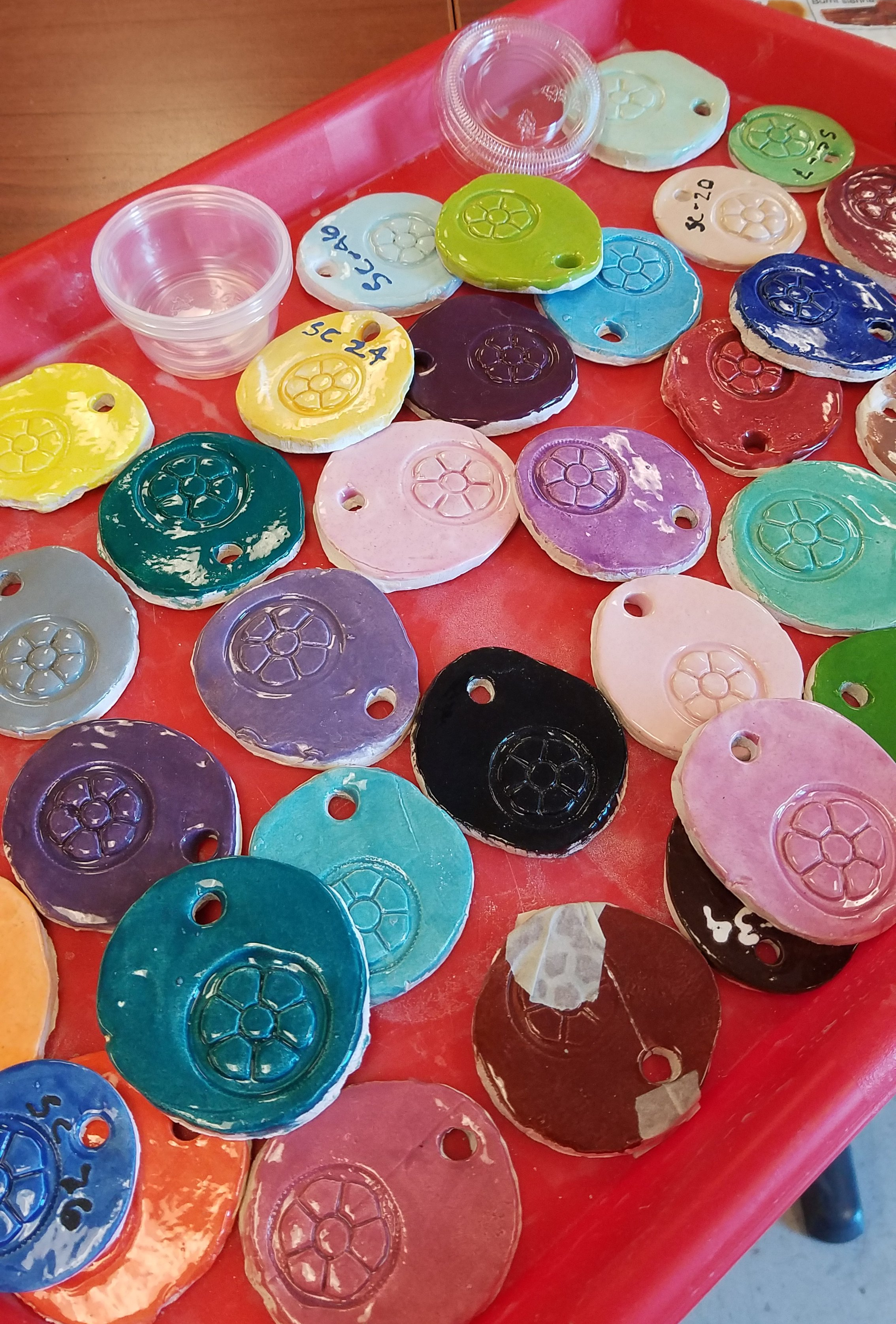
  • I took all my glaze tiles and put them on a tray. Kids can point to the color, and I then mark the cup with the glaze number in a sharpie, and then return the lidded glaze-filled cup to them. They also know what number glaze they had so they can ask for more.

A Zillion Washcloths:

  • Washcloths really are the best way to clean-up clay tables and paint spills. Those school paper towels suck.
  • I bought over 100 of them from Walmart.
  • Each one is “single” use. Student take one from the clean pile and go clean-up their table.
  • They then put the used washcloth in the bucket by the sink after they are done with it.
  • At the end of each week I was the washcloths for next week. I am lucky that I don’t have to take them home–I was given a key to the washers/dryer in the girls athletic area.
  • It’s a little more work, but it is actually cleaner than when we would share the rags–so many less cloudy tables because kids don’t understand to rinse and ring the towels first before wiping the table–because more than likely, the person before didn’t rinse it.

Gloves:

  • The district does supplies me with gloves and I go through 10 pairs a day maybe.
  • Gloves do help to pass out supplies and whatnot to the students…and you will need to pass out a lot. You’ll feel like a waiter, but it is what it is. Lol

I think that is all. I know this is long, but I hope it is helpful to those of you that struggled first semester with having an open studio or those going back to in-person for the first time. Like I mentioned, I sometimes feel like a waiter, and it is tiring many days. My kids like to remind me when I don’t hand out table wipes at the end of the day, and they laugh when I yell that I’m about to take my gloves off so it’s last call for supplies for a while. Undoubtedly, I get someone that needs something like a minute later. ::shrug::

Corona and Remote Teaching

Standard

I see it has been over 2 months since my last post. And, quite frankly, I’m not surprised. I had some ideas in the works for new posts on the exciting stuff and things happening in the Duck Art Room since January, but then Corona hit, and my spirits plummeted.

I tried with all I had in me to look the “new normal” in the eye and take it on. And by new normal, I mean remote teaching or distance learning or “homeschooling” 🙄🙄🙄. (Don’t get me started on how none of this is homeschooling. I know people that homeschool for a living, and this is not it folks. But I digress.) It was hard. I wanted to be the best teacher I could be, but in truth, I wanted to just paint and drink coffee and play with clay. And I’ve done all that. In fact, by the end of this, I will have a full kiln load of just stuff I made.

One week away from school turned to two weeks; then to three weeks. And now, I’m pretty sure we won’t be back this school year. And at this point, while I want to see all my kids more than anything, I don’t know how we could make the switch one more time with 7 weeks (in my district anyway) of school left — 3 of which we are definitely out for Shelter-In-Place orders.

My district has been remote teaching/distance learning for 3 weeks now. I feel it has all been one big trial and error session. My district finally came to a decision about grading and GPA and class rank–which for those of you who teach high school know that these things are currently important in the world of education and higher education. I won’t go into everything, but we are going to a pass/fail system for the second marking period of the 2019-20 school year. Grades will be assigned with “prominent emphasis on completion and effort”. So, that sounds good right. It sounds as about as equitable as they can get. We are trying very hard to make sure we can meet accommodations and reach students without internet and give grace to those struggling with home issues (siblings, work, etc.) that affect them being able to do school work. Could more be done? Probably. But I know we are trying.

What does this all have to do with Art and Teaching for Artistic Behavior and Duck Art? A lot actually. I said that my spirits had plummeted, and that included my spirit for facilitating meaningful art making situations for my students. Instead, I assigned what I felt was going to be the easiest thing for me to do. Currently, I have about 50-65% participation from my students–some do all of it, most pick and choose and turn in a thing here or a thing there. It made me sad to say the least. I was missing seeing my kids make and create and all those other things that go with being artists.

Earlier this week, I was looking at Facebook, like all who are at home do, and I finally clicked on my friend Melissa Purtee’s post about what she was doing remotely with her kids, and it sparked something in me. I was then reminded of a post another friend had put in the main TAB Facebook group about not forgetting our purpose as TAB teachers–those 3 main tenets of the philosophy. I knew I had to change what I was doing. I couldn’t sustain it anyway. So, I borrowed from Melissa, as she so graciously lets us do, and made a new website for my students–all of my students, no matter the level or the class type. It gives them choice. It lets them decided how to spend their time during the week–instead of a daily assignment, they know what they need to do for the week on Monday and can plan their schedule to meet their needs. It makes them think and decide and research and plan and all those behaviors we have been talking and learning about for months or years. I have full belief in my students and I am hoping that it is what is right for them, and for their situations. I hope they can see art making not as a thing they have to do, but they want to do–because the freedom is in their hands now.

I’ll leave you with this. I’m not sure how I feel about our “New Normal”. I just hope I am bringing a sense of comfort to my students thru art and choice as we navigate this together.

Screen Shot 2020-04-11 at 10.08.03 AM

Click image for website

Talking With Students

Standard

Teachers like to say that they talk to their students.  Secondary art teachers especially like to say that.  But, what does that mean– talk TO your students.  Furthermore, shouldn’t that say talk WITH your students?

In a TAB classroom/studio, it is very important that we talk with our students.  Talking TO them is like me just going on and on and on and not making any sense or relating to them in any way.  That’s a monologue…not a conversation.  If we talk WITH  our students, so much more is going to happen.

So, what does it look like to talk with our students

  1. You get to know your students…what they do outside of your room, what teachers they like, whom they are dating, what they do in their free time, what their home life is like, etc.  This is really important if we want to help them to create meaningful artworks.  Knowing these things can help spark ideas when they are stuck in an artwork or getting started.
  2. Asking questions that don’t have an answer.  The open-ended question gets them thinking about things on a deeper level.  It can be about their art or it can be about society or some other issue that you think has nothing to do with art.  You never know how the way a student contemplates answers to those questions is going to show up in an artwork.
  3. Art history on the back-end.  When we talk with students about what they are creating, it can open up the student to artists they may have never know about.  Hey, I see you are into drawing patterns–let me show you the work of Britto.  Your work reminds me of an artist named Mondrian.
  4. Relationships are built by talking WITH someone.  This means listening as well.  We like to think of the art room as a safe place for students, a place where they feel comfortable.  Well, to build that type of environment, we want to build relationships.  We want to build trust.  Trust can lead to some amazing things happening in our classrooms.
  5. Letting them have opinions on their artwork and the work of others around them.  Yours, the teacher, is not the only authority on artwork.  Giving students an equal footing helps to validate what they are thinking.  They need to know their opinions matter.
  6. Making the students feel comfortable to ask questions.  If the students feel you are unapproachable, they will never ask questions and their artistic growth will more than likely be stunted.

I would be amiss if I didn’t list a few things that talking WITH doesn’t include.  It doesn’t mean telling them not to do something, like a corner sun.  It doesn’t include telling them their artwork doesn’t meet your expectations of how much contrast or values it should have.  It doesn’t mean only saying hello to them or just talking about the day’s assignment.

I love to build relationships with my students.  I love having open and real conversations with them.  I love getting to know them and having them get to know me.  I love when I can show them new things because I listened to what they had to say.  And I love when I can see that they thought about things we talked about because it shows up in their artwork or their other conversations they have.  Talking WITH them is so important because the art studio is about so much more than just making art.

Communication leads to community, that is, to understanding, intimacy and mutual valuing.
~Rollo May

2018 Texas TAB Lab

Standard

One would think that by now I would be sitting in the sun, sipping margaritas and enjoying my summer.  One would think that if one didn’t know me.  I have 2 kids and the Texas sun is way to hot to sit under all day.  Now sipping margaritas…that’s another story for another day.

Screen Shot 2018-06-18 at 2.06.10 PM

My third week off for summer was spent doing some very important and exciting professional development–the Texas TAB Lab (#TxTABLab).  Lori Wallace and Julie Bates20180613_0938451693010827.jpg honored me months ago by asking me to help out with this year’s mini-conference, by heading up the secondary portion of the conference.  This year was our second event.  At our first meet-up, there were about 30 of us tops in this small conference room in a hotel in Waco, TX.  Ginger Tapia set the whole thing up and it was wonderful.  It was there that an event was born.  This year, TAB Lab was definitely the place to be, as we more than doubled the attendance with 67 teachers.  And, I am happy to say that the secondary peeps went from about 7 or 8 to almost 20.  It’s a good time to be a Tx TAB teacher.

20180613_0952401374525972.jpg

Let’s get to it.  Our main meeting hall was the Frank Fickett Center  (FFSTC).  The hotel suggested it because the conference room was not going to hold us all.  It was a wonderful space to be in for 2 days.  The conference kicked off with one of our keynote speakers, Katherine Douglas.  She was unable to make it to Austin, so she spoke via interwebs.  Among the many fabulous things Kathy spoke of, she told us in regards to child art that “adult eyes need to learn appreciation for it”.  She also shared her 7 goals for her TAB studio and her students.

  1. Have an idea20180613_100200859648563.jpg
  2. Get materials and tools to explore idea
  3. Explore/Make idea, with false starts, change directions, mistakes
  4. Know when it’s finished
  5. Put away materials/tools properly
  6. Reflect/Share ideas
  7. Think about what’s next

Thank you Kathy so much for joining us.

That afternoon we went to visit some classrooms.  The elementary teachers broke into 2 groups–visiting both Julie’s and Lori’s classrooms in Pflugerville.  The secondary teachers made the long drive to Taylor to visit my classroom.  I am so happy they made the journey.  In spite of the 80+° room temp, it was an amazing experience.  I talked briefly about my journey, then we toured my room and how it was set up.  We talked about daily activities and classroom flow.  There was much conversation…conversation that lasted well past when I thought we would leave.


We went to dinner at Rudy’s BBQ and went back to the FFSCT for some more art chat and some Paper Smaché with the one and only Clyde Gaw.  Paper smaché is like paper maché, but Clyd-i-fied.


Our second day opened up with our second keynote speaker, Clyde Gaw.  I bet you thought he was just here for Smaché.   He was also here for the cardboard. In 20180613_092720-1358794459.jpghis presentation, he told us of his journey–his life journey–from the train tracks by where he grew up to his current job as a high school TAB teacher in Indiana.  It was interesting to me to hear how and when he met people I know (or know of), like Clark Fralick, Diane Jacquith, Kathy, NanHathaway, and John Crowe.  My biggest take away from Clyde that morning was the rhizome.  He likened things to it and called us rhizomatic. (def 1 def 2).  If you were’t at TAB Lab, but you are meeting up with Clyde at some other TAB event this summer, I’m sure he’ll talk about it.


The rest of the day included a working lunch, small group sessions, mini-presentations from attendees and 2 guest speakers, Priscilla Lamb and Manuel Gamez.  Priscella presented on Autism and Special Ed.  Manuel is the Fine Arts Director for PfISD.  It was interesting to hear the perspective of a non-teacher, someone in admin.  He very much supports the arts and really likes TAB.  Bonus for Lori and Julie. We ended the day with some gelli printing with Lori and some faux screen printing led by yours truly.  Unfortunately, after testing the screen the night before, I didn’t wash it fully and the prints weren’t as clean as I would have liked.  But, my fellow teachers were cool with it and didn’t complain.


After dinner, many of us met back at the hotel conference room and had some cookies, milk, chat, and arting.  It was a fun way to end the day.


20180615_1215441732492350.jpg

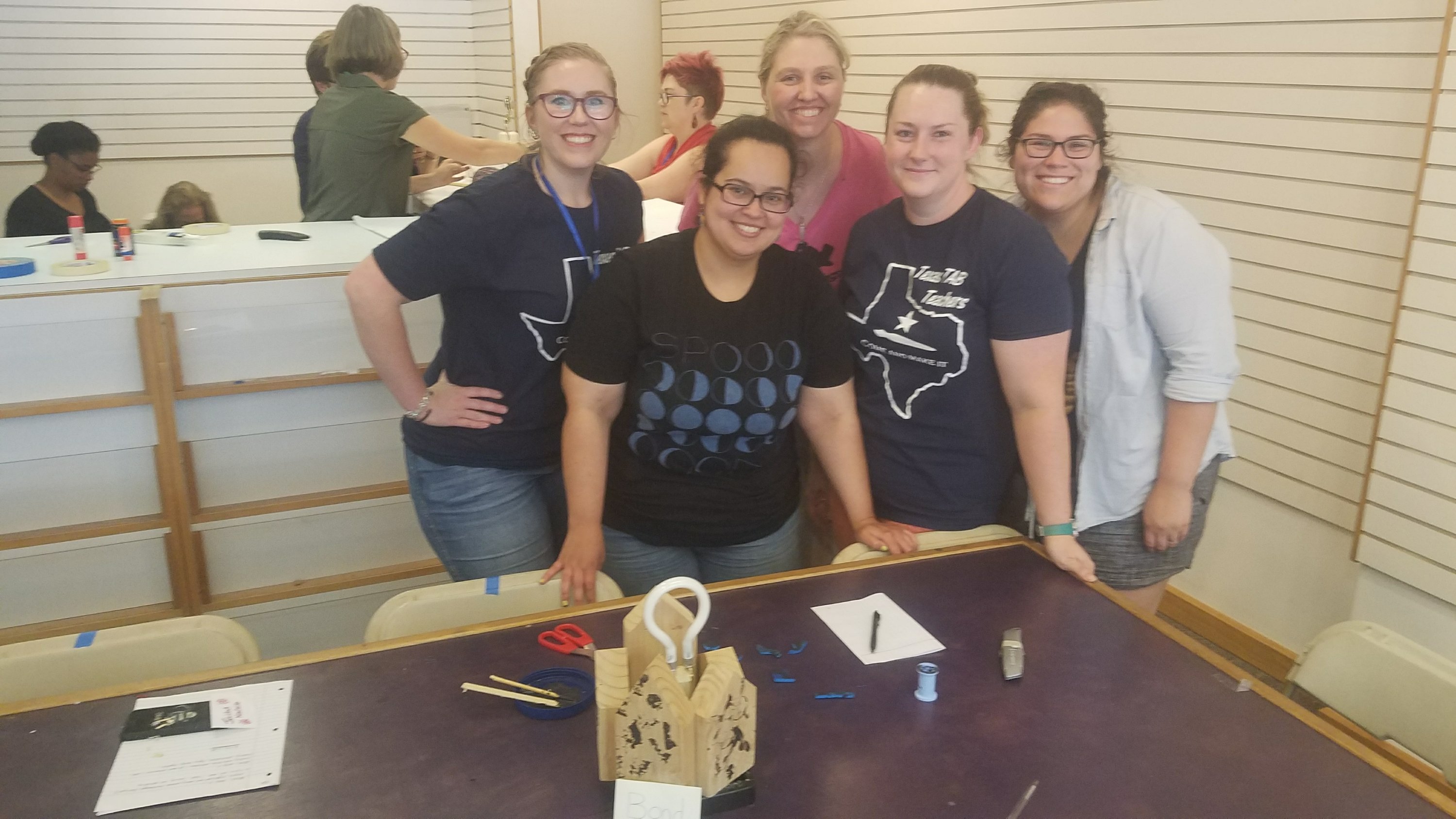
Friday was our last day and Lori had set up a great activity at Austin Creative Reuse.  ACR is a store that is supplied by donations.  It is a TAB teacher’s dream.  Well, and it’s the dream of artists and crafters and people that are into reuse.  We met in the classroom at ACR and split into 2 groups.  Those with the late birthdays went to the store first.  I have already been to ACR, so I knew what was up.  The others were new and were in amazement.  After shopping time, we went back and we participated in what was essentially like “Chopped”, but with art materials. We worked in groups of 4/5.  We were given a theme of “represent”.  And we went from there.  I was fortunate to get with a group where we all just flowed and worked well together.  Our sculpture was called “Bond”.


All in all it was a fabulous conference.  I am so glad that I was able to go and that I was enable to pass on my knowledge to others.  I know that I didn’t provide much of what I learned at Tx TAB Lab, but if you are curious as to what was shared, visit out Padlet.  It has links to almost everything.  I look forward to next year when I hope we go even bigger…it is Texas after all…Go Big or Go Home!  Until then, I have Facebook to be able to talk to my new TAB friends.


Top 9: 2015-16 Year in Review

Standard

It’s been a week since the 2015-16 school year ended.  I have taken a week off from doing any work, but it is now time to take a moment to reflect on the year. And, what better way to do that than to do a top 10, well, a top 9…close enough. Normally, a top 10 would only be the best things, but I thought I would add some of the not-so-good as well.  I mean, we all like things to be puppies and rainbows all the time, but let’s get real folks…it ain’t.

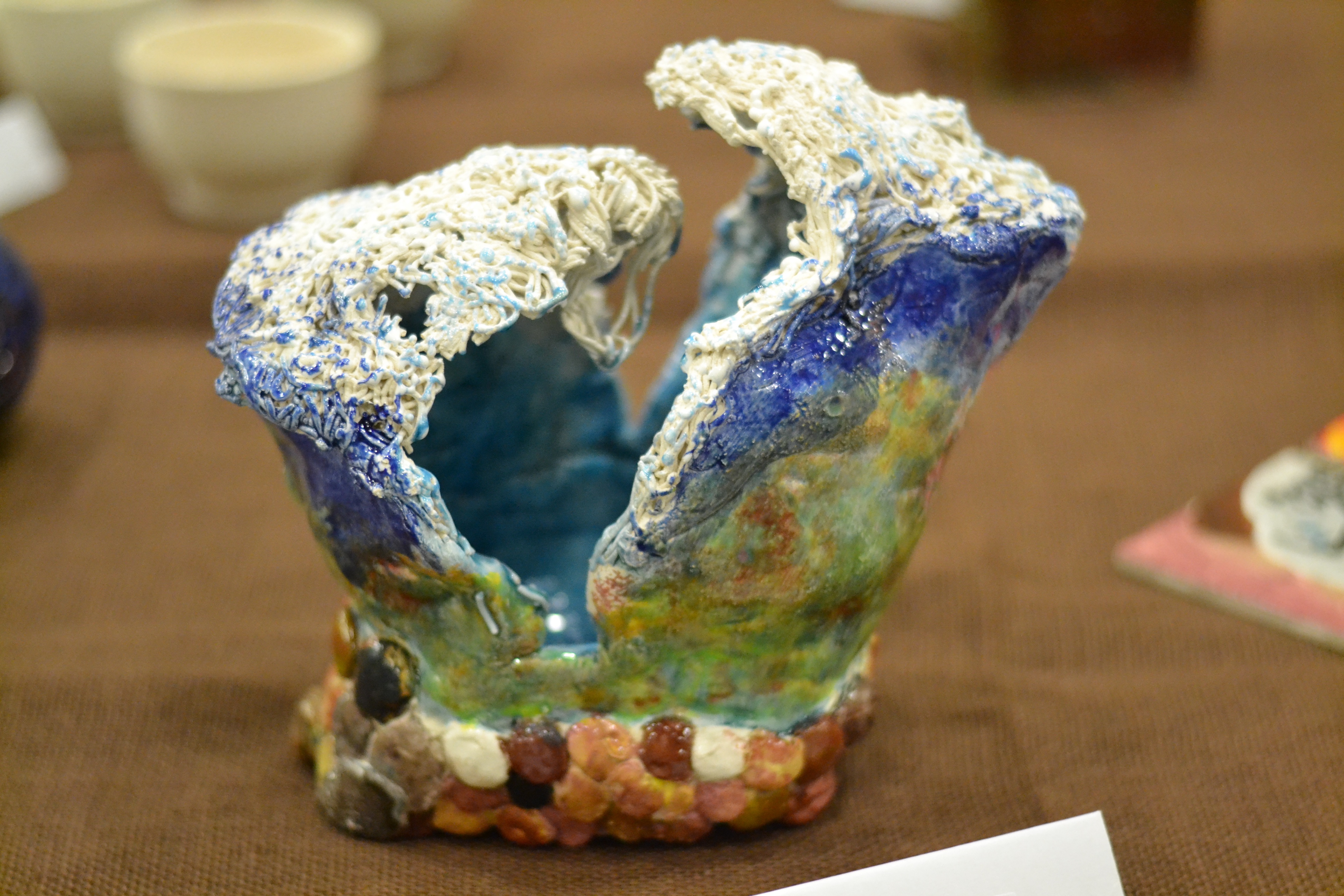
9. New Ceramics Curriculum…or should I say lack there of.  I decided to go balls to the wall and go full-on TAB with my ceramics students.  This is the last year I will have had any students that were part of my sculpture program–from before I made the switch to “all clay, all day”.  And, if you were to walk into that intermediate/advanced class, you could tell which kids those were.  But, I digress.  For the most part, for my intermediate and my advanced students, they were given complete freedom.  They were allowed to work on what they wanted, in the time frame they needed.  I did have some themes with guiding questions to help them if they were stumped, but they were in no way “forced” to follow those themes. If you are wondering how to do a single-media TAB class….read this!

img_20160526_113212.jpg

The Ceramics Graveyard and Senior Totems Sculpture Garden at THS

I think this was a great decision.  It allowed the students to move at their pace and do what interested them.  Are there some kinks to work out concerning the structure of the class? Of course.  I plan on doing a “Technique Tuesday” type of thing.  I will have a demo day once a week to show different things they could use in their work, like sprigs and molds and glazing techniques.  I also am revamping their technical reader and going to incorporate that more into the class.

8. Braeden, The Beginning Ceramics Student Who Learned More Than Me.  I was fortunate enough to have that student this year that many teachers dream of having.  That student who falls in love with your subject matter so much, that he or she just becomes a sponge and soaks up everything.  Who during their free time spends it watching videos and reading about the subject.  Who is in your room working and learning and creating at all times of the day.  I had that student this year, and his name is Braeden.  I had Braeden in art 1 his freshman year, but for some reason, he decided to stop taking art for 2 years and finally returned to me his senior year for art 2: beginning ceramics.  I often wonder where he would be if he hadn’t taken that time off.   He started off as a normal ceramics student, doing the required beginning projects.  Then all of the sudden, he changed.  He found a passion.  He found what he wanted to do with his life.  He would come in whenever he could to practice throwing. He learned to make his own clay.  He learned about glazes and different types of firing and their temperatures. He attempted to make his own wood ash glaze.  It was amazing to watch his lust for learning about all things clay.  I eventually had to tell him to stop learning because he knew more than I did.  Of course this became a running joke, and I love it when he teaches me new things.  I loved being able to have those conversations about ceramics with him. I will miss that next year.

7. Starting Over, again, and again… Sometimes you think you have a great plan. And sometimes that plan, no matter how awesome YOU think it is, sucks.  This was the case with my art 2: painting/drawing class this year.  I won’t go into too much detail, as I wrote about having to start over with this class here.  But, I will say I learned a lot from that class.  It is okay to stop and rewind.  You HAVE to do what is best for your students, and if that means if what you are doing isn’t working, then try something else.  However, if you are going to “start again”, you have to keep your students informed about what you are doing and why.  I had that tough conversation with them.  I told them I wasn’t feeling it, and that I thought they weren’t where I had thought they should be.  That we needed a new direction, and this is what we were going to try.  They looked at me with puzzled looks, but they were willing to try.  I think in the end we started over twice.  But, they say third time’s a charm for a reason.  By the third start, we figured it out.  We figured what worked for them, what they needed to grow and be successful.

Like my ceramics classes, I do have some things to tweak, like the timeline for the artistic behavior units, the digging deeper sections, and how we get to full choice by the second semester.  I wish I could open the studio to full choice sooner, but seeing as my co-worker isn’t TAB, and my art 2 classes are a combo of his and my students…I have to do a little work to make sure all students understand the TAB studio.  It’s all good though….my kids could probably use a refresher anyway.

6. Two Wonderful Opportunities.  I work hard, both at my job and as an advocate for TAB.  So, it is nice when someone else recognizes what I am doing.  This year, not one, but two different people recognized this.  First I was asked by my friend, Betsy Murphy, to come and speak about TAB at the T(exas)AEA High School Division meeting at the 2015 conference. I was honored that Betsy, once my mentor, now my friend, thought of me in this way–that I had something important to share with my colleagues.Screen Shot 2016-06-05 at 10.37.47 AM

Second, I was asked to present at the AOE Winter 2016 Online Conference.  I presented about the assessment model I was working on.  It, again, was an honor to think that something I was doing would be of interest to other teachers.  I hope that it helped people make a connection between assessment and grades.

5. Speaking of AOE…Blog Finalist Here.  That’s right, Me, Jean Barnett, author of Art
Class by Mrs B, was a finalist inRisingStarFinalistHI the Art of Education, Blog of the Year, Rising Start category.  I didn’t win, but I think it is pretty cool that I made the list.  I even got a nifty badge to display on the blog.  Oh yeah!  I write my blog with the hopes of not only documenting my journey, but also of helping another art teacher by sharing with I have learned along the way.
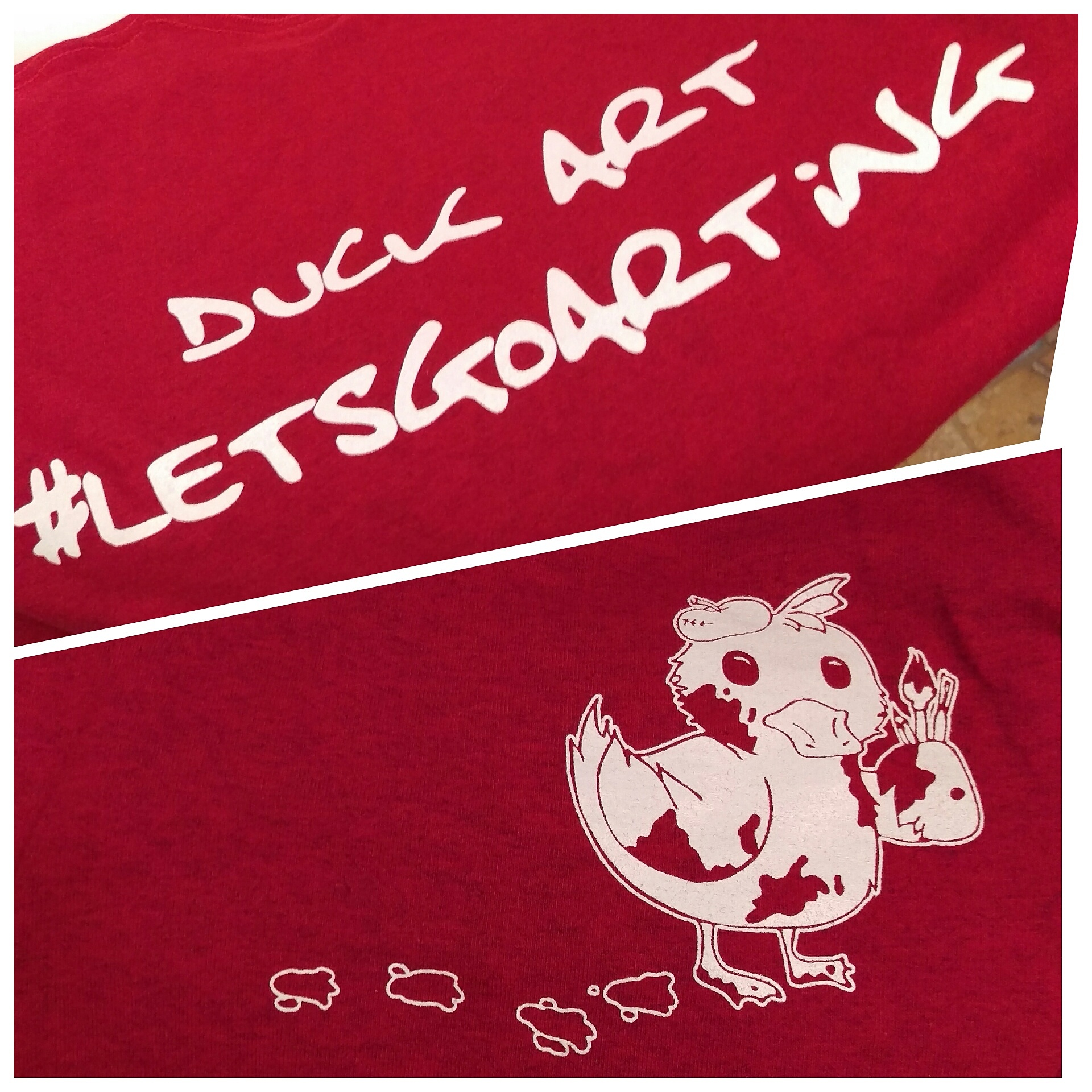
4. Art Club I have been at my school for 9 years.  For 8 of those years, my co-worker “ran” the art club.  Well, I wouldn’t really call it running an art club.  I’m not really sure what it was. This img_20160211_220850.jpgyear I took over art club.  I can’t remember the exact reason why he was willing to give it up, but he did, and finally it was mine.  When we started, the club had no money (in fact the account had been closed due to inactivity), and they hadn’t done anything in years.  I advertised the club.  We met every Friday morning during tutorials.  We elected a president, a vice-president, a secretary, and a treasurer.  We sold popcorn, made Duck Art t-shirts and sold them, and even held a painting party.  Was it the best art club?  No.  Did we do a whole lot?  No.  But we did paint a mural in our computer lab, and I am glad to say that we did have a few hundred dollars in the art club account by the end of the year.  Furthermore, we still had members returning to meetings at the end of the year. So, I call it a win!  Small steps people!  I am so proud of the kids.  Next year will be even better.  I know it.

3. I am Not Invincible, But At Least My Admin Believes in Me. I like to think that I am invincible.  That nothing is going to bring me down, except for maybe myself.  And, that was definitely the case this year.  I won’t go into details, but I did have an incident this year that caused me to pause.  I can’t change what happened, but I can say that students can be unpredictable and retaliate in damaging ways.  Luckily for me, I have some students that know who I am, what I stand for, and what my students mean to me.  They were honest and I commend them for that.  I also learned that I have an administration that believes in me and what I do in my classroom.  My principal understands the climate of the art room, and how it differs from an academic class.  We had a long talk about it, and when I left his office, I knew that finally, I had an administrator that finally understood.

2.  School Art vs. Authentic School Art vs. What the Student Really Wants to Make Art This was something that I had not had a ton of thoughts about until I attended a session by Justin Clumpner at NAEA16 in Chicago.  He was talking about an AP student he had who wasn’t making the work or getting anything done.  Then one day he saw her sketchbook and asked her why she wasn’t creating works like her sketches.  Her reply, “I didn’t think I could.  I didn’t think this was ‘school art’.”  I thought that was an interesting concept…school art.  In TAB, we talk a lot about “authentic art”, and what our students are making is authentic art.  And, I thought that I encouraged authentic art and that my kids were making what THEY wanted to make.

That was until the end of April this year.  I happened to come across a tweet by one of my art 1 students of a painting she had just finished at her house.  I tweeted back to her that I thought she should do that in class.  When I talked with her about it the next school day, I asked her why she didn’t do this stuff in class.  She said she couldn’t figure out how to work it into the themes we were doing.   That’s when the lightbulb went off.  As much as I thought I was empowering my students to bring their own life into their artwork, and as much as I encourage authentic art…maybe I wasn’t doing all that I could.  I don’t have an answer yet as to how to really encourage it more, but I have an idea to work through over the summer.

screenshot_20160605-121236_1.jpg

The Twitter Painting

P1080720

The Final Artwork

And, just as an aside, while this girl in particular worked hard all year, I never saw her work like the way she did on that final painting.  She learned so much and was so proud, and I could tell she was a little sad (but still proud) when I said I wanted to keep it to display in August when we returned to school.

1. Knowing You’re on the Right Track  Deep down in my heart, I know that TAB is what is best for my students.  It keeps them engaged.  It really helps them to grow artistically. And, it makes them think and reflect.  My years of running a TAB studio have been my favorite years of teaching.  But, sometimes, it is hard.  Sometimes you feel like the kids just aren’t getting it.  You feel like maybe the “others” are right, and you aren’t really teaching them anything.  You doubt yourself and your program.

But, then something happens. You assign a completely open final artwork for your art 1 students.  You see 90% engagement. You see growth at its peak. You see that they have been paying attention all year.  You see the research and the planning, the trials and errors, the experimentation, and the pushing forward all come out of the students.  Yes, I was physically exhausted for the last 2.5 weeks of school.  Yes, my room was a constant mess, for which I apologized to Connie, my custodian, on a daily basis.  But, I was happy.  I was proud.  I knew I didn’t need to doubt.  I hope to remember this next year when I will more than likely doubt myself again.  I can’t wait to display all this wonderful art in August.  I did include a few pieces from my art 2 class’ final work, Artists Work in a Series, in the slide show.

This slideshow requires JavaScript.

Hope your year was as good as mine.  After I finish recharging over the summer, I will look forward to implementing what I learned from this year.  And I do want to take this opportunity to say thanks to my tribe for helping me and encouraging me along the way.

FB_IMG_145836013793120100_10207094072213672_364082503752064828_n (1)

TAB and the Single Media Art Class

Standard

From time to time, I come across the question of how to run a class that has a single focus such as painting, printmaking, or ceramics following a TAB pedagogy.  It seems as if people think it isn’t possible to be fully TAB because the students don’t have 100% choice of everything.  I mean, the medium is already chosen for them.

DSC_0375.jpg

Well, I think it is possible, and I have been running my ceramic classes that way for the past couple of years.  It has evolved into the almost fully student-led class it is today, but there is always room for improvement.

As we know, TAB isn’t just about giving the students free reign over things. It’s about a way of thinking and about the process of going from conception through to end product and all the steps in between. So, since it isn’t about a product so to speak, that leaves room for lots of exploration, skill building, and concept growth.

DSC_0360.jpg

I have three levels of ceramics…beginning, intermediate, and advanced.  My program is small, so intermediate and advanced meet at the same time.  I think that is better anyway.  Our classes run for a full year.  I start off my beginners with a bunch of “have to” projects. Yes, I know, not very TAB, but I think this lays the ground work for moving to full student driven work.  We spend the first semester learning basic hand-building techniques: a slab box with rolled in texture, a carved pinchpot sphere, a carved tile, and a coil built vessel with some kind of additive texture.  We also spend some time on the wheel. The students do have some choice aesthetically, but in the end, I have picked the project for them and I know the outcome.

DSC_0372.jpg

Once we get passed that, we move to themes.  I came up with a bunch of themes and put them on the class’ website.  Under each theme, I asked some questions to help them begin thinking about how they could interpret the theme.  From there, they can pick a theme that speaks to them and begin the creative process.  They decide how to build.  They decide size.  They decide clay type (we have low-fire, mid-fire for the wheel, and porcelain).  They also decide their time schedule.  They work at their pace.  No longer is the class all together in the same place working on the same thing.  My intermediate and advanced classes work in the same way, but without the have-to projects at the beginning of the year.  We do start together with the same theme–just to get back into the flow and shake off the summer, but after that, they can move into their own groove.  If a student wants to repeat a theme, they can.  If a students doesn’t like any of the themes, they can come up with their own.  Once pieces are bisqued, they also get to choose surface treatments.  Not all students like to glaze, so I have tried to show and display many other non-glaze treatments.  This really gives a lot of variety to the pieces my students create.

DSC_0314.jpg

Another great thing about keeping the class student-led is that it really allows for mistakes and taking risks.  Students don’t have the looming deadline over them of a piece they may not even want to be doing.  If a piece blows up in the kiln because I rushed it or it falls apart because they didn’t score/slip properly, the kids have been okay with that. They move on to the next thing and figure out what went wrong so they don’t do it again.  If something they are building isn’t coming out right, they are more willing to fix it or take it apart and try again because they know their project isn’t being graded and that I am instead looking at their artistic process, habits, and growth.

As for assessment, I do follow the same thing I do for all of my classes.  Each student has a blog and has to write about artistic behaviors every other week to let me know what they are doing and how they are progressing and thinking like artists.  However, for the past 6 or so weeks, we have been playing with a combination blendspace and the blog.


As my class evolves, I am working on changing up the ceramic reader I have created to be more helpful to the students.  I am also going to implement what I plan on calling “Technique Tuesday”.  I have created a list of things I think the students should know how to do and what they are, such as press molds, sprigs, 2 part molds, different tools, glazing techniques, etc.

imag5890.jpg

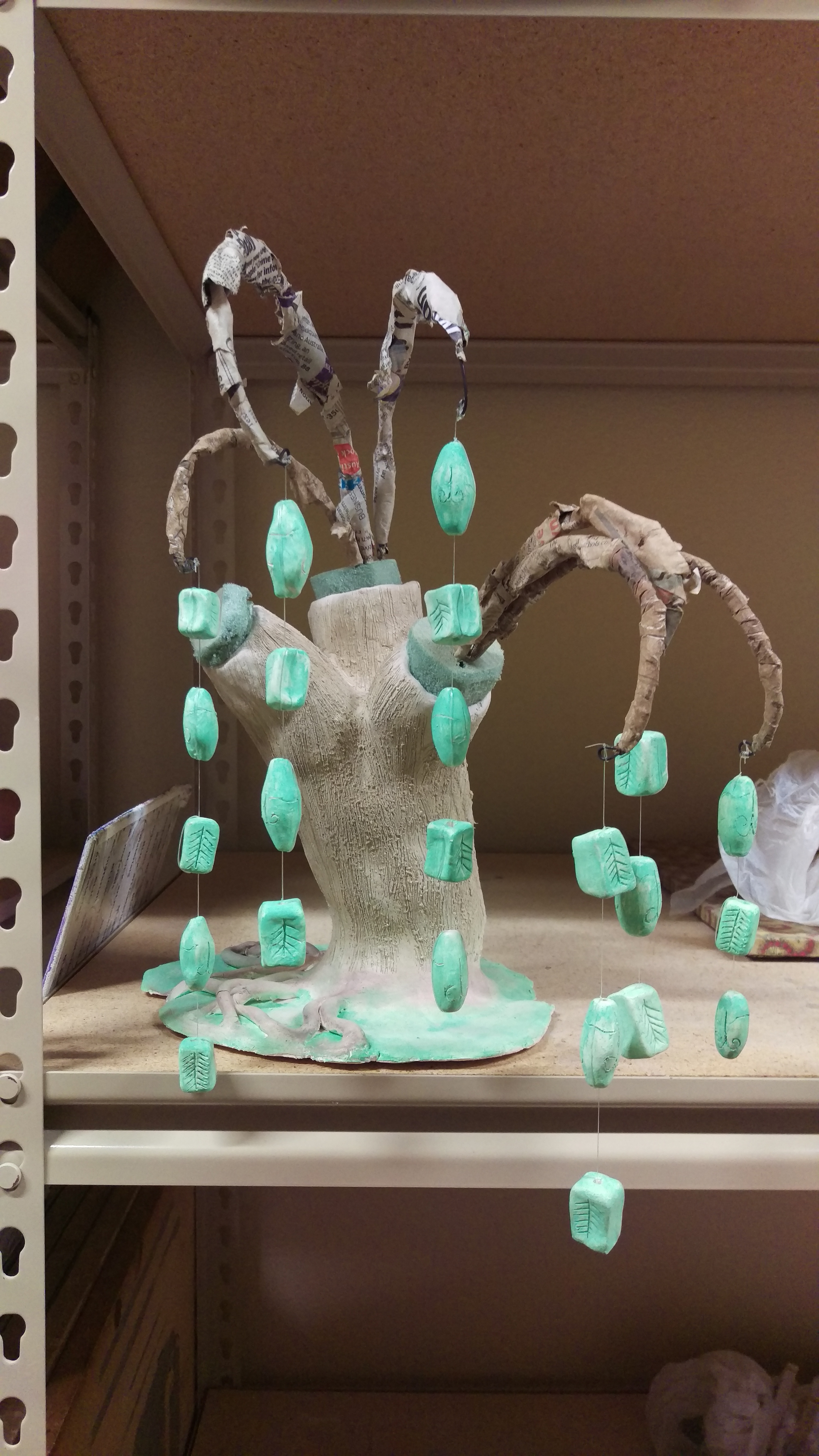
I really enjoy running my ceramic classes under the TAB pedagogy.  My students have really began to flourish.  I can see them applying the techniques they have learned.  They are creating pieces that are important to them.  It allows them to be always working and not waiting on classmates to finish in order to move on.  It allows them to stop a project for a while and come back to it later.  One of my intermediate students, Julia, is working on a willow tree.  She has been all year.  But, she also has worked on other pieces when she tires of it.  She comes back to it with more interest each time.  It is a fabulous piece. Another student, Frank, has been able to work in a more “make it up as I go” type fashion…which is where his work flourishes and becomes fabulous.  Having “projects” wouldn’t work for him.  A beginning student, Braeden, has completely blown me away this year because the TAB atmosphere has allowed him to follow his path.  He has learned how to make his own clay, how to create his own wood ash glaze, and he is close to surpassing me on the wheel.  If I made him to projects, he wouldn’t have realized that working in ceramics is what he wants to do with his life after high school.DSC_0383.jpg

I am writing about my experience, but I think this can be done in any single-medium class. It’s all about giving them the reins to drive what interests them.  They will learn the process as they go along.  It’s about learning through exploration.  Because it is single-media, they really get to know the ins and outs; therefore, since so much time isn’t spent learning multiple mediums, they can really focus more on message, process, and content. Which, in my opinion, leads to higher quality work.

Tired of Traditional Wedging?

Standard

I hate wedging.  There I said it.  My name is Jean, and I hate wedging.  I have no upper body strength.  I don’t have a wedging table that is the correct height for me.  And I don’t like spending my spare time wedging.  Earlier this year one of my ceramic students came upon this video that showed him how to “Slam and Stack Wire Wedge”.  He said it would be easier for me, but of course, I didn’t believe him.  And, well, it seemed like a lot of work…I would have to have him teach me and set up a make shift wire cutting station.  I was very busy. (Yeah, I wasn’t busy, I was just lazy and wanted him to do all the grunt work for me.)

I finally told him that if he would make a tutorial video for me, I would watch it over the summer and use it next year.  He said okay.  Then, about a week ago, a video appeared on a Facebook group, Clay Buddies, showing exactly what my student had been talking about. The method looked easy enough, so I thought I would try it out.

So, I had my student take some our reclaim and spread it out onto our plaster wedging table to dry out some.  We left it overnight, and the next morning, he set up the make-shift wire cutting station for me.

Game on.  We cut the clay into 4 “smaller” sections, so it was easier to work with.  I took 2 pieces and slammed them together 4 times, flipping over each time.  Next I cut the “new” piece in half with the wire cutter.  Then I put the 2 pieces on top of each other and slammed again 4 times, flipping over each time.  Wash, rinse, repeat for 30 times.

The result?  My clay is wedged.  My students can get back to hand-building.  My arms aren’t so tired.  I am a little sweaty, but I did get a lot of frustration out with all that clay slamming.  And, it saved me so much time.  I call this a win.

imag5985.jpg

The clay after 30 stacks and slams. You can see it is uniform and ready to be used.

Does this mean I don’t have to wedge traditionally anymore?  Yes.  Of course I will wedge my clay before I throw, and of course my students will wedge before they throw.  But, that will be smaller quantities. This is good for all that clay I have in my reclaim buckets.  Now I have 2 methods to help me with all that “old” and reclaimed clay I have just cluttering up my classroom and kiln room.  (Other method for larger blocks of clay.)

Here is the “Stack and Slam Wire Wedging with Michael Wendt” video:  

What to do with all that dry clay

Standard

I have been teaching ceramics classes for about 4 years now.  And before that I taught sculpture classes and we would always have at least 2 projects with clay during those classes.  Now, as students work, clay dries out and because “unusable” for awhile.  Clay dries out because as you work with it, you hands and the air take out the moisture, kids build things that they don’t want or need, they fail to wrap up their pieces correctly and instead of trying to work with it, they move on, or they rip holes in the bags that hold the clay.  So, due to all of these reasons, I have a ton of extra clay.  Seriously…it is just so.much.clay.

Normally, I reconstitute my clay by putting the pieces in a 5 gallon bucket and then fill the bucket with water.  Eventually the clay softens and becomes slurry-like.  From there, I pull some out, put it on a plaster bat, and let it dry enough so I can wedge the clay back into a usable form for my students.  Quite frankly, this is a pain in the ass.  I hate wedging with a passion.  It reminds me how weak and out of shape I am.  Not to mention it is time consuming.

Recently it was brought to my attention that our district has a grant program.  I thought great, I can apply for a grant, talk to the principal to see if the district will help with the cost, and add in the money that ceramics club has raised, and with all that I can purchase a pugmill to help me on my “mission” to get all this dried clay usable again.  I asked a group of potters on a Facebook group I am part of for a pugmill recommendation.  That is when a woman told me this method of reconstituting I had never heard of.

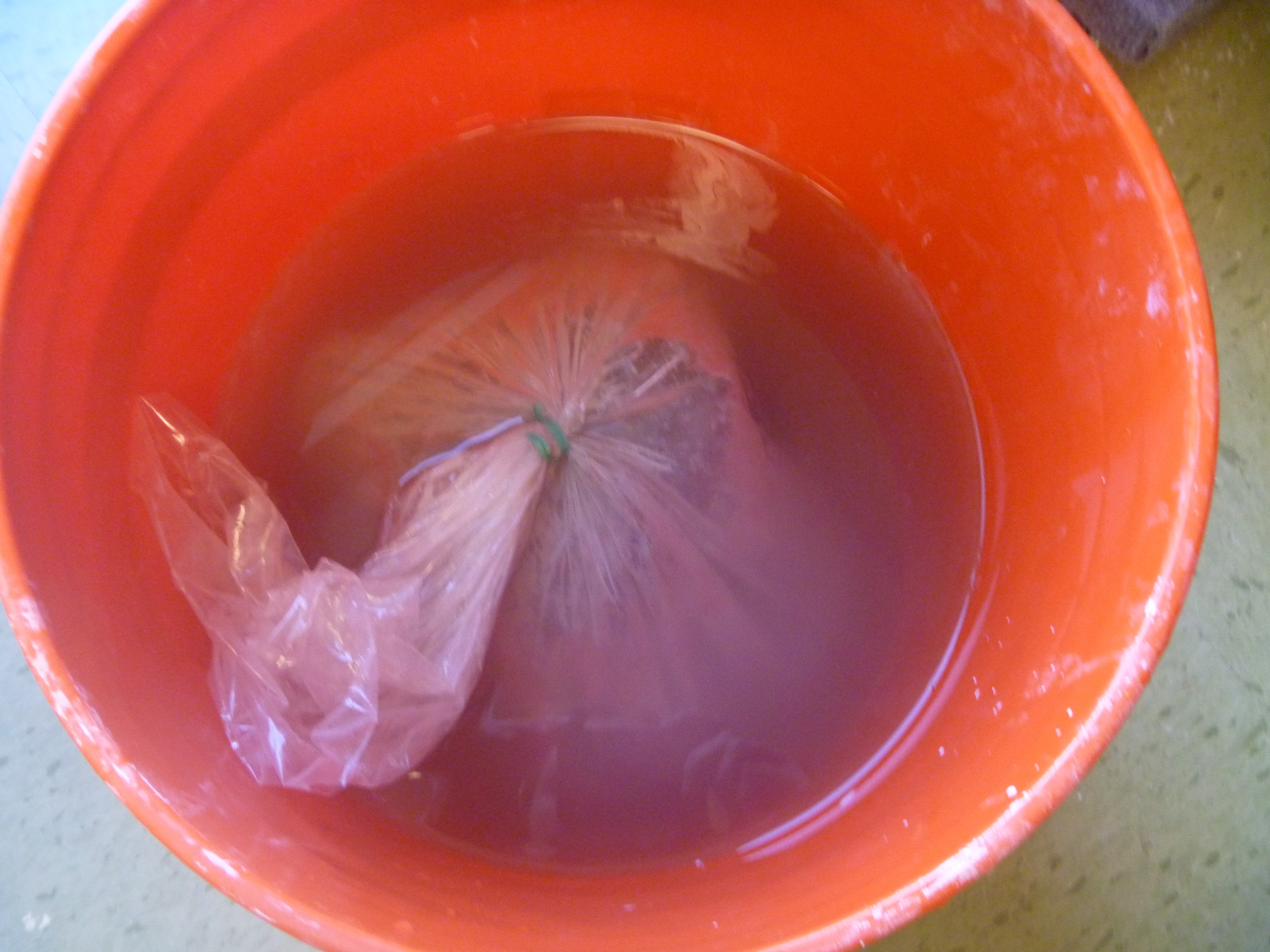
She told me to put no more than 2 cups of water into the bag with the dried out clay.  Next put the clay bag in a big bucket–like a 5 gallon one, and fill the bucket with water until the bag of clay is covered.  Finally, let it sit for a week or so.  The theory is the pressure from the water outside of the bag will push the water in the bag back into the clay and soften the clay so it can be used again.  I’m gonna be honest here, I was a little skeptical.  But, I did it anyway.  P1080085

Well, after about 5 days I checked the bucket.  Almost all of the water I had put into the bag was gone…it had soaked into the clay.  I took the bag out of the bucket and opened to see what the clay felt like.  It was a little slimy on the outside, but the clay it self was wet all the way through.  It was as if it was brand new from the store.  And bonus, because this was a bag of clay that was solid and not a bunch of pieces left over, I don’t have to wedge it.  I was able to re-bag it and put it with the other clay for my students to use.IMAG5300

I am so excited that this worked.  I went through all my clay and pulled all the bags where the clay was one big giant block like this and put them aside.  I loaded up my bucket with a new block and water, and in a week I hope to have another bag ready to go.  I still have the other buckets with scraps the kids create, and that will have to wedged, but this new method will really help me out, and I can save the ceramic club’s money for something more fun for us to use it on.