Author Archives: missjaybar

Art 1: Final Project 2014 (Part 1)

Standard

Originally, I planned on being able to have one last project in art 1, spending a day or two reviewing for final exams, and then having a written test.  Not exciting, but it is what it is.  Then STAAR happened.  I didn’t really take into account that state testing would take kids out of my room for 3 days (and me for one to administer), thus having me lose almost a whole week and pushing back my plans.  There wasn’t really much I could do that could be done in less than 2 weeks that was meaningful.  And, I couldn’t just let them do nothing for 2 weeks.  Plus, I really didn’t want to write an exam.  It’s not my favorite thing to do.  So, I came up with a final project that would also become their exam grade.  I call it “”.

Over the next few posts I will document our exploration through the multimedia process.  I am not sure of the outcome, but I am excited about the journey.

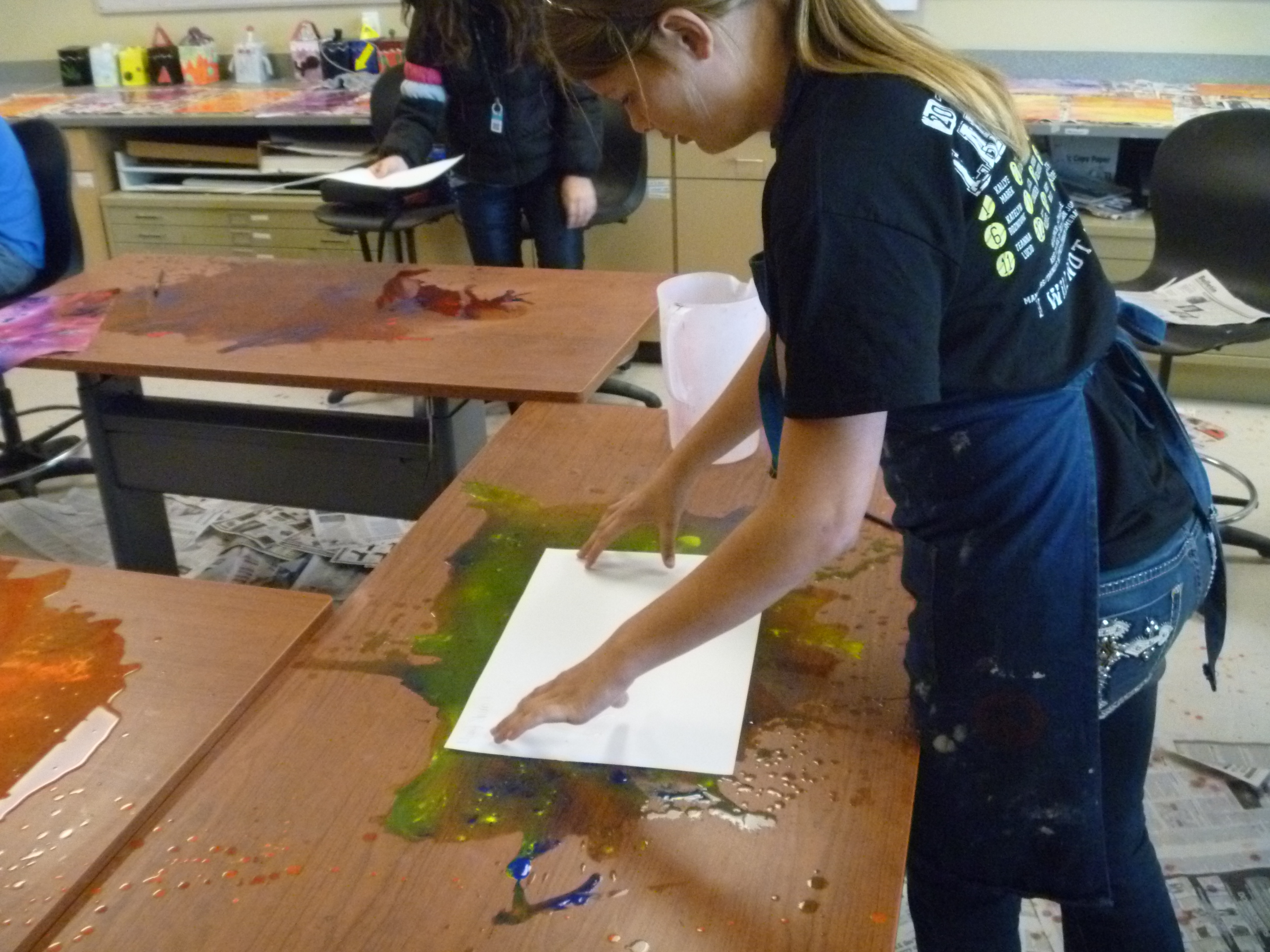
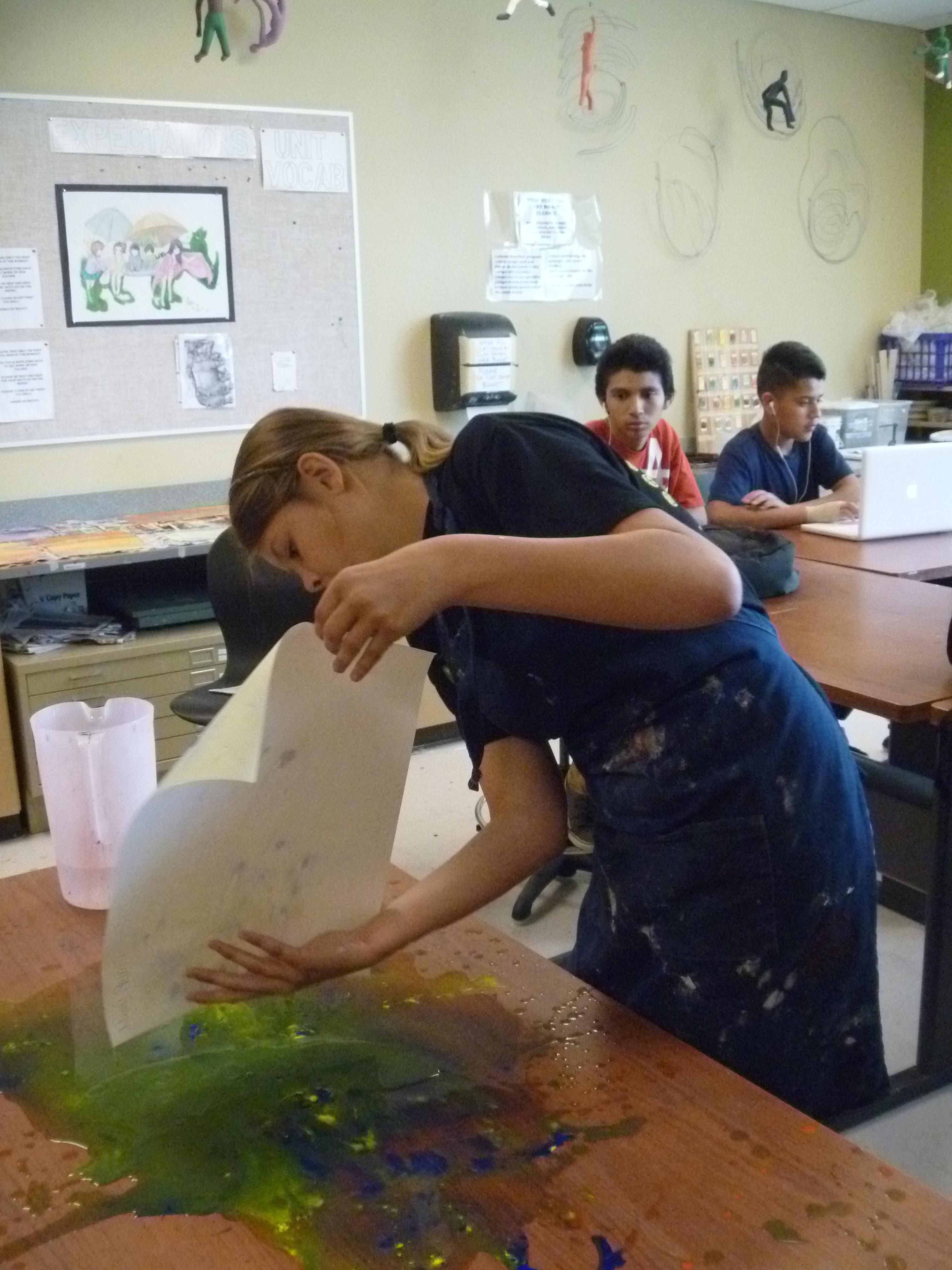
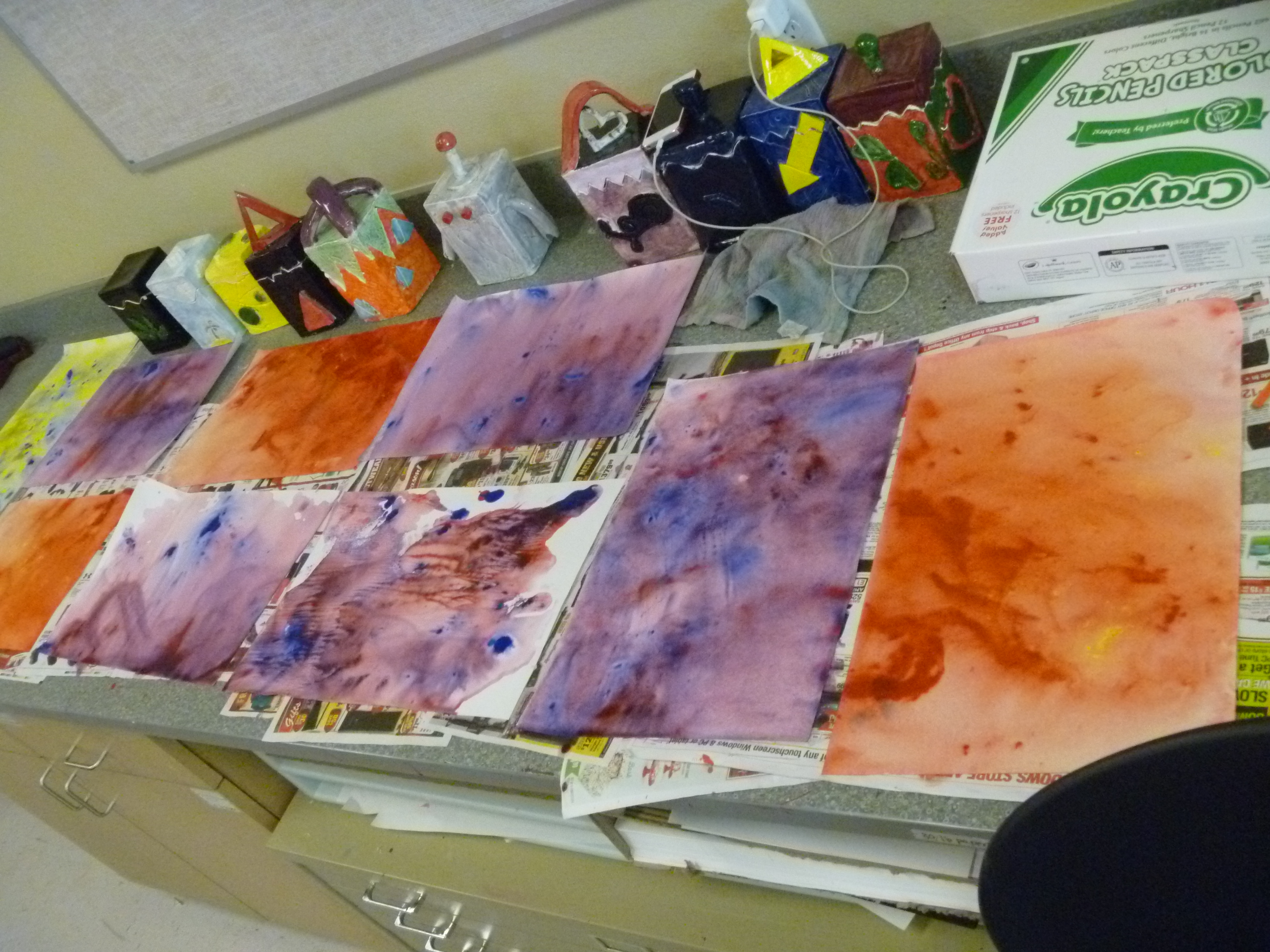
First we will create monoprints using tempera and water.  I have done these before, albeit 6 years ago, for a project on symmetry and the art of Moko Tattoos.  This will become the “ground” or base for the artwork.  I have found that often students are intimidated by the white surface.  It’s so clean and error free.  Hopefully having this monoprint background will help break that fear.

Second students will find several images from magazines.  I suppose if a student really wants a certain image from the interwebs I will allow it.  They image will then be in b/w unless the student has a color printer at home.  I am hoping to halt images at 3 or 4 so it doesn’t become too crowded.

While I was out administering the STAAR test, students did 2 Arts & Activities reading about composition and leading the viewer through a composition. Here and here.  We will review the major concepts from the readings and I will expect them to create their artwork with the concepts in mind.

Students will then be asked to add more to their collages using a variety of other media: pencil, colored pencil, marker, sharpie, pen, paint, and well, I guess anything else we have used this year.  I am hoping they will had additional layers of depth and interest with the additional media.  I have created a pin board for them with some collages, but I really am unsure what to add to the board.  I don’t know what to search for to find examples to show.  But, maybe that is good as it will leave the door wide open and they won’t have preconceived notions of what this “should” be.

Pack your bags and join me on the journey to places unknown and unfamiliar.  My art 1 kids are always surprising me, I hope they do here as well.  (And I hope they will be able to work in our short time frame–this is the most nerve-racking part of this.)

This Book I Read…

Standard

Lately I’ve had several issues on my mind that seem to revolve around the same similar topics:  copying, tracing, originality, etc.  I feel these are in the same vein, if you will, of something that we as artists need to understand what is acceptable and what is not.  I also feel we as art teachers need to teach our students the same things.

Several months ago I “started reading for free” this book by Austin Kleon called Steal Like an Artist.  In other words, Kindle let me read a small amount of the book for free to see if I wanted to buy the book.  I never bought the book for my Kindle.  However, last week I needed something to fill my cart on Amazon so I could get free shipping.  I put this book in because it was 40% off.  I AM SO GLAD I FINALLY PURCHASED THIS BOOK!!!

I thought it would just be just a cute book.  It’s a quick read, but one full of lots of food for thought about these topics that have been on my mind lately. I am sure that not everyone will feel about this book like I do, but it really resonated with me and the ideals I want to teach my kids about making art, or just being creative in general.  I highly recommend it.

Some of my favorite parts include:

“What to copy is a little bit trickier.  Don’t just steal the style, steal the thinking behind the style.  You don’t want to look like your heroes, you want to see like your heroes.  ~page 36.

“Imitation is about copying.  Emulation is  when imitation goes one step further, breaking through into your own thing.”  ~page38.

“Remember ‘Garbage in, garbage out’? You’re only going to be as good as the people you surround yourself with.” ~page 102

I want my students to read this book.  Not all of my students, but my art 2 and higher students.  I think it will help them to think deeper about what they are creating and HOW they create it.  Or, at the very least, it will give pause when they begin to create that next artwork for class or themselves.

Due Dates, Deadlines, and Late Work

Standard

This is a topic that if you ask 10 different art teachers, you would get 10 different answers.  Some teachers are very strict about due dates.  Some teacher follow what is set forth by their district or campus.  And some teachers don’t care at all about them, accepting work until the last possible moment before grades are due to the registrar.

I want to say I have struggled with due dates and deadlines over the years, but I think that is not the case.  I am a teacher that does have due dates.  Most of the time, my due dates are flexible.  If a class is working hard and clearly needs more time, I am willing to move that due date and give an extension.  I also give the students a week of time to come in on their own to finish work and turn it in for a small late penalty.  This is more than the district tells me I am obligated to do.

But what about due dates when it comes to kids that sit around and do nothing?  Is it wrong that I have no sympathy for those kids?  Is it wrong that I don’t want to give them more time?  I feel there is a difference between planning and doing absolutely nothing.  I have students that do sit and plan and do some research and appear to the untrained eye that they are doing nothing.  But, on the other end of the spectrum are the kids that sit and do nothing and expect me to give them extra time.

Am I doing a disservice to the the artistic process or is it a good learning experience?  I feel that in the real world there are “due dates”. There are deadlines.  There is no “late work” penalty…well, maybe there is a some kind of penalty for consistently turning in late work–perhaps they will get fired or get bad evaluations.  So, should I give them some practice to help prepare them for college and the “real”world?  Or should I continue to coddle them and leave them to find out on their own there are consequences for their actions, or lack there of.

I am constantly torn on this issue.  I am not sure there is a right or wrong answer to this issue.  Maybe next year when I move to a modified choice classroom and kids hopefully will be more invested in their work, I will have less of an issue with this.  Maybe with the snapshot grading system, I won’t really have as many issues because as they see when they do nothing and they have nothing to post on their blogs, that might help them.

I read this blog post on accepting late work.  It is interesting.  Do I believe in the concept?  I don’t know.  Will it work for me and my student population?  Maybe.  Will I change my policy?  Probably not right now, but maybe in the future.  Will my kids take advantage of it?  Who knows.

I looked for a good quote to end this.  Then I saw this.

So what do we do? Anything. Something. So long as we just don’t sit there. If we screw it up, start over. Try something else. If we wait until we’ve satisfied all the uncertainties, it may be too late.”  -Lee Iacocca

What is wrong with this print?

Standard

In my art 1 class, we are working on creating block prints.  I talk about it being the reverse image from the block to the print. I asked the students not to do letters because I really wanted them to concentrate on learning the process, not dealing with making sure that the letters are the mirror image.  I thought I had it all covered.

I was wrong.  Neither the student nor myself caught it until another student saw the proof print and mentioned it.

Can you tell what is wrong here?

Image

Dealing with Disappointment

Standard

Recently one of my classes took on the monumental task of creating a cardboard “city”.  I had shown them a photo I found on Pinterest.  I asked them if they were interested in this and they said they were and were excited to try and build something in the same vein.  I knew that it would be difficult.  I save cardboard for ever it seemed.  I also knew the skill level of my students.  I would never had expected them to rise to this level.  But I did expect more.

My students originally thought they would make a ship, but somehow they changed it to a castle.  I thought, that is going to be great.  They will cut out brick and make it look like a bas relief.  Wonderful.  One of the students even said she would make a dragon to go with it.

As time went on and I checked on their progress, I grew more and more disappointed with the castle.  It had a great basic shape, but other than that…it looked like something I would order out of one of those catalogs for prom.  The covered the whole thing with craft paper and drew squares.  These were my seniors, my advanced sculpture students, and they had over 2 months to work on this.  How could this be what they created?

Now it is over a month later and I have had time to think about it.  I still don’t know how to deal with the disappointment of this project.  Should I consider it a project flop that Ian Sands could put in his book?  Should I just brush it off as a early case of senioritis?  Was I expecting too much?  Did I not push them enough to do more?  I know they learned a lot about creating something so large and working in a group. As a teacher, I appreciate what they learned from this project.  But shouldn’t sometimes the product be important too?

I don’t know.

How do you deal with disappointment in projects?  What do you as a teacher learn from it?

By the way, the dragon head turned out awesome.

thumb-30fc4846cbf57529d2276c64a905fcdd

The Umlauf Sculpture Garden

Standard

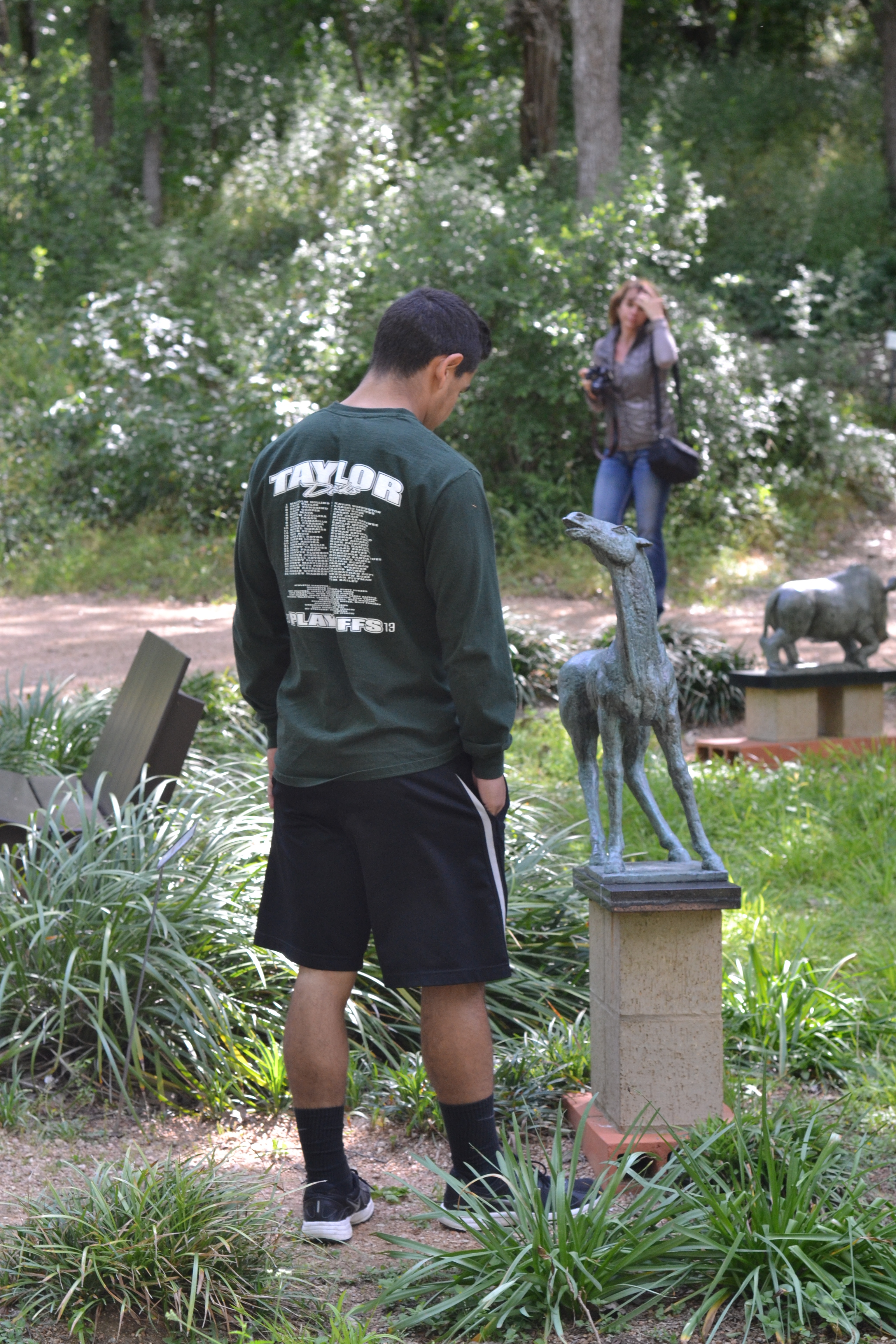
Last week I took my senior (and one junior) sculptors on a field trip.  Field trips at my school don’t happen very often, so when my principal said I could go, I didn’t hesitate in making the plans.  I picked a day in April when I thought it would be a great time to visit an outdoor sculpture museum.  And, man did I pick a good date.  It was sunny and mild.  The flowers were blooming.  The trees were green.  And the air was fresh.  It was a spring day in Austin.  And, it was a great day to visit the Umlauf Sculpture Garden.

I am not sure how many of my students had actually been to a museum before.  Perhaps they had been to the historical museum in their town, but that isn’t really the same.  At first my kids seemed bored.  But as we watched them, I think they were more unsure how to act.  What did they know of a docent and what a museum tour would be like.  I was worried that the trip would be a bust.

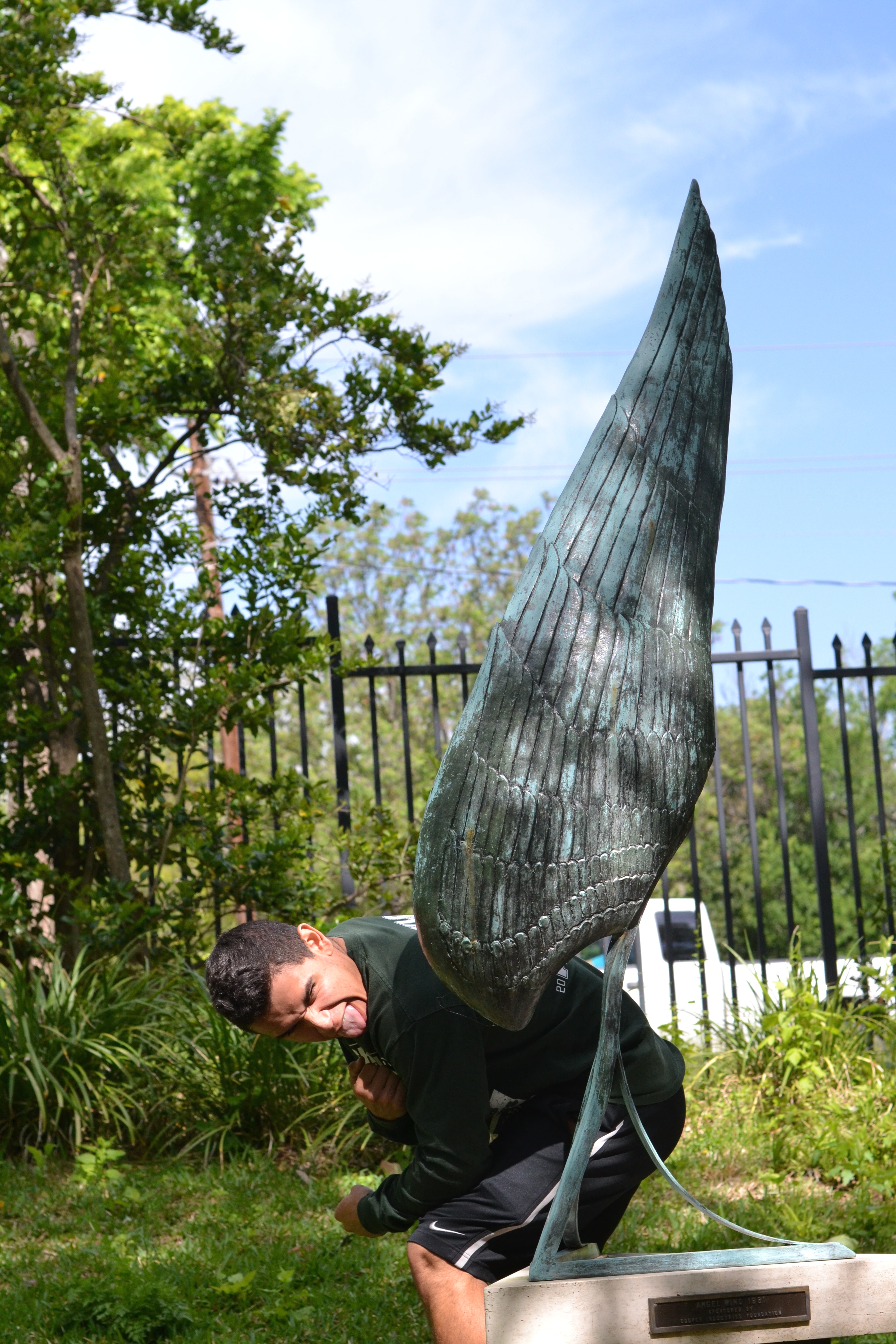
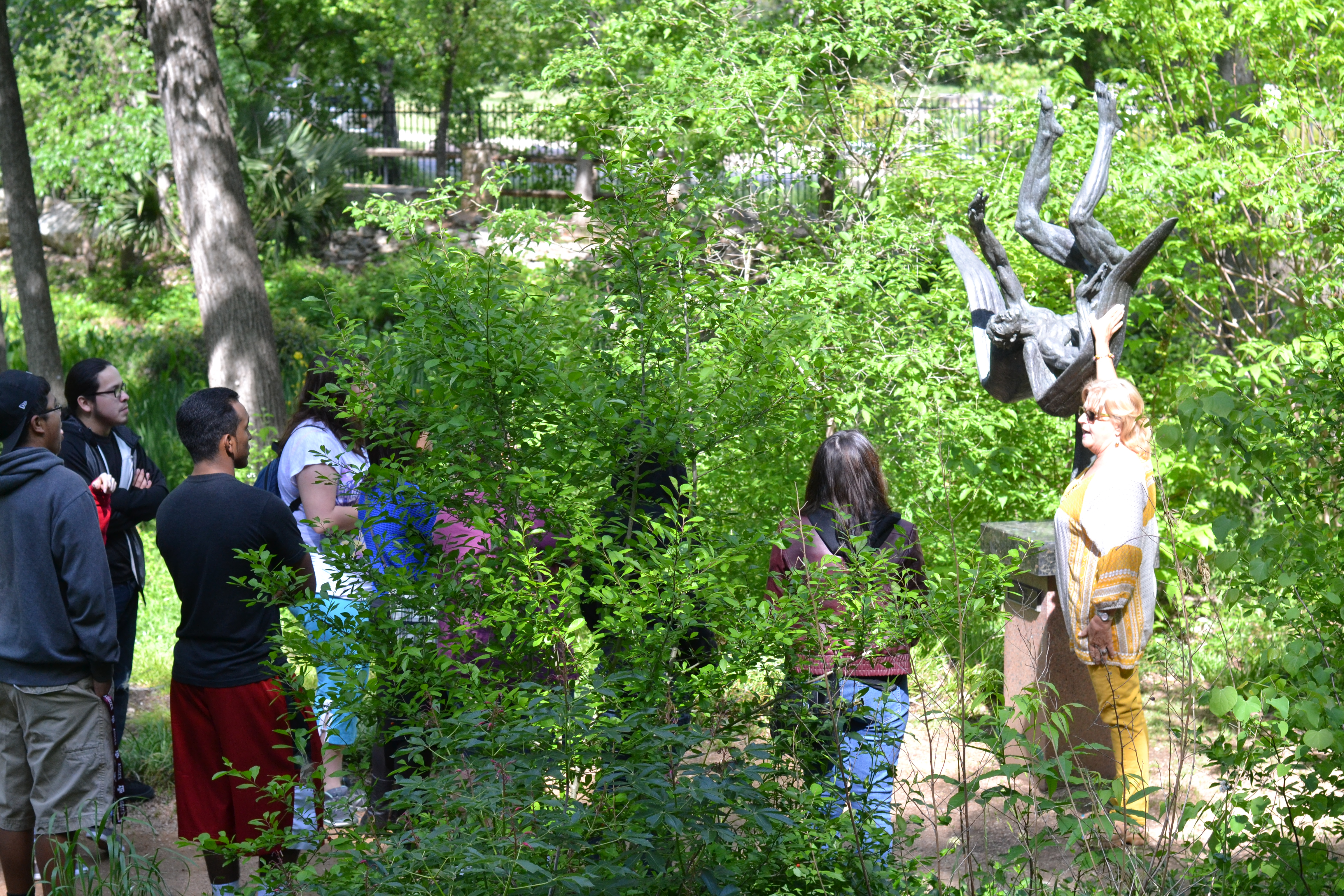
But then we moved off the patio and went over to see St. Michael and Lucifer.

Image


Our guide told the students they could touch the sculptures…and oh man, it was a whole new ball game.  My kids started to liven up.  They impressed me at every turn.  They were so well behaved.  They were genuinely interested.  It was one of the best days of the school year.

Student: “I liked that the Sculptures were surrounded by nature. It was something I haven’t seen before. I also like that they were very realistic and had stories behind them.”

Student: “I liked the way everything was placed in the garden, everything was placed according to the art piece. Like the pope was placed on higher ground overlooking the animals. How the lovers piece was in front of a pond with lots of lilies and it looked beautiful.”

Student: “They all had sentimental value and meaning to Umlauf. I really enjoyed how he made his sculptures with so much detail.”

Student: “I liked the second sculpture of the lovers series. I really liked the one where the man was lifting the woman, because I really liked the way her feet were curved, and to me it was a better pose than the first one we saw.”

Student: “My favorite sculpture was one of the sculptures outside. It was one figure with an arrow or spear, going in to stab to be what looked like the devil. It’s a religious piece and I just really enjoyed it because I grew up around a very religious granny.”


DSC_0037  DSC_0052
  DSC_0053

DSC_0083

DSC_0064

DSC_0063

One of my personal favorites by Umlauf.

One of my personal favorites by Umlauf.

DSC_0105

THS Sculpture 2013-2014


A Touching Moment

Standard

I had moved my glazed clay boxes out of the kiln room into the classroom during 7th period today.  I noticed a boy that for the most part was just meh about art class, except for the week that we worked with clay, checking them out.  Earlier this year I told him that he should take ceramics next year because I had never seen him so into class like he was while working with clay–he was like a completely different student–he had completely come alive.  I thought he had forgotten or changed his mind when it came to sign up for classes as I never not talked with him about it since.  I quietly asked him today if he had signed up for the class.  He said Yes.  My heart jumped inside.  He is one of those kids that school doesn’t really mean anything to him and I am sure he will just get by and get out.  So, if I can get him hooked and interested in something.  I just know that he will love it.  I just know it..  I thought he had forgotten when it came to sign up for classes as I never not talked with him about it since.  I quietly asked him today if he had signed up for the class.  He said Yes.  My heart jumped inside.  He is one of those kids that school doesn’t really mean anything to him and I am sure he will just get by and get out.  So, if I can get him hooked and interested in something.  I just know that he will love it.  I just know it.

Cinquain Poems and Illustrations

Standard

I’ve been told it is National Poetry Month, so this lesson couldn’t have been planned at a better time.  In art 1, students are learning how to create CINQUAIN poems and then will create illustrations based off their poems.  I am very excited about this project.  A cinquain is a 5-line poem that follows certain guidelines.  You can find out more here.    Here is the worksheet I am giving my students.

After the poems are written, students will then create thumbnail sketches of illustrations that relate to their poem.  Things students should consider when creating illustrations are making images close-ups, cropping images some parts go off page, and details.

The final illustrations will be on 4″X4″ paper.  Students will have the choice of completing their drawings with pencil, colored pencils, or a combination of the two.  Illustrations will be mounted, along with a printed out copy of the poem, on black paper.

Teacher example:

Image

Art 1: Informal Balance: Wrap-up and Review

Standard

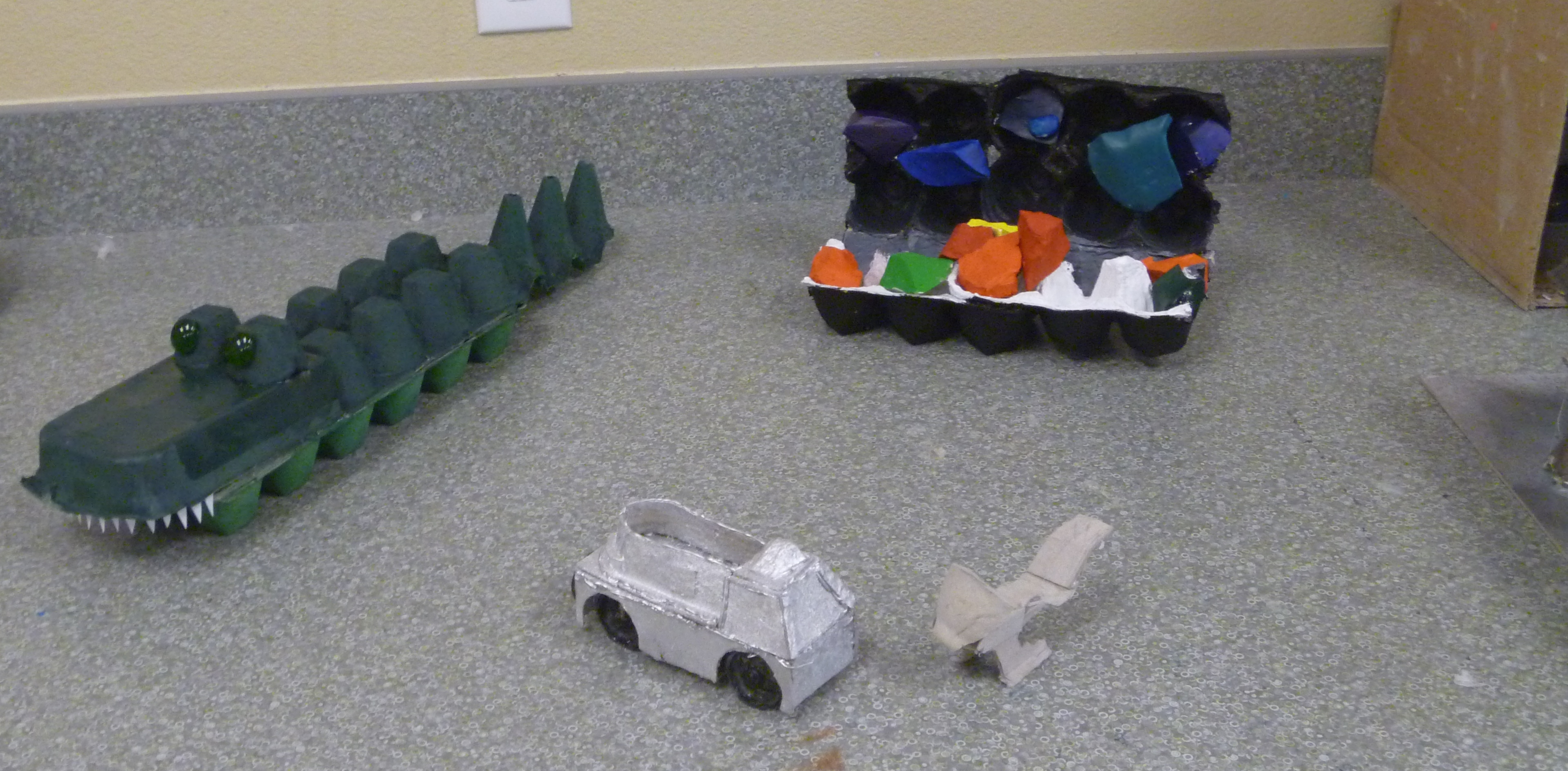
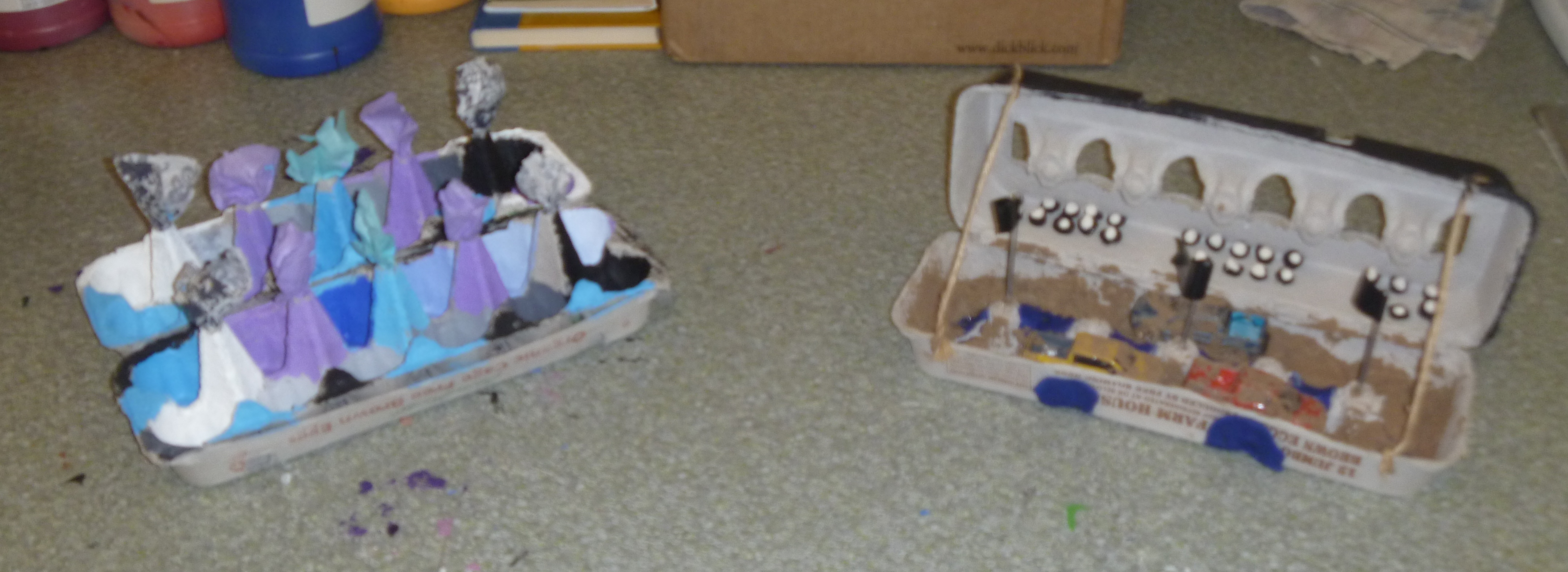
Think back to this post where I talked about bringing in some choice to my art 1 students.  They were able to work in groups and were each given an egg carton to which they could do whatever they liked as long as their final artwork had informal balance.  We worked on the project for about 2 weeks, then we took a week’s break (spring break), and finished up in about 2 or 3 days.  During spring break, I decided not to grade them on the outcome of their project, but instead to grade them on the process and what they had to say about that process.  I had created a list of questions for them to answer.

When it came time to actually figure out a grade, I really had no idea what to do about it.  I didn’t really have a rubric on how to grade what they had written.  They had never done anything like this before, so they had no idea what I was really looking for.  They were honest in their answers.  In the end I gave each student a 100, unless I specifically recalled them spending days not working (which one child did and his partners said something about it in their answers) or they failed to answer all the questions.  The grades ranged from 85-100.

It has taken me a long time to write about the project/process; I’ve been reflecting about it…a lot.  What had I really hoped to gain from this “experiment” of throwing so much choice at the students?  I mean, really, it was all for me.  Yes the kids learned about informal balance.  And I truly believe that many did understand it by the end.  And, of course, there were some that didn’t, but I am not sure they would have gotten it anyway, if I am being honest here.  I had been reading so much about choice that I really wanted to try it out.  I felt the only way to see if I liked it and how I could implement it in my classes was to do a trial run.   I felt this unit was really more for me then for them.  Part of me feels like I shouldn’t admit that, but how am I to know what works and what doesn’t if I don’t try.  Many things look good on paper…

I learned a lot about choice and how to make it work in my classroom and how to make it work for me.  I admittedly am a sort of small control freak.  It is hard for me not to know an outcome.  But, I rolled with this.  I think I need to do some sort of a modified choice.  I think that leaving it so broad was hard for me and for the students.  (Many did say they they didn’t like not knowing what it “should” look like, and that it was hard to come up with an idea.)  I think I would have to slowly bring them into the “choice world”.  It was too much at once.  I think to make it work well, I would need to limit choice to either 2-D or 3-D.  (I have done some choice things in my 2-D and 3-D classes and it has been successful.)  Maybe I should spend some time on different techniques, then go from there where they could expand, explore, and build on things we have already discussed.  I still have a lot to think about.  I like giving them freedom, but I need some sort of control.  I need to find a balance that benefits us both. We (my students and I) need to have a symbiotic relationship if we are all going to thrive.

Overall, it was a fun time in the art room and there was lots of good conversation and exploring going on.  They were doing what I had told them was my motto for the year (stolen from the Frizz of course) “Take Chances, Make Mistakes, Get Messy!”

P1030715

P1030714

P1030713

P1030711

P1030710

P1030707

P1030706

P1030704

P1030703

Displaying the (He)ART of Students

Standard

Taylor High School Visual Arts Department proudly presents the inaugural Art Show.  March 28, 2014 at 7pm the doors opened and the show began.  That morning I arrived at school at my normal time of 8am.  Then the madness began.  I gathered up my thoughts and set up camp in the front of the school outside the main office.  Students came to help at various points in the day, and several students “skipped” their classes and helped all day.  And, for that I am grateful.  They gladly hung work and dealt with me and my blabbering and my orders and my annoyances and all the rest.

As walls became filled, we covered the work with red, green, and black paper to cover it from prying eyes.  Flyers were hung, hopefully enticing students and teachers to come back tonight to fill their curiosity about what was behind the paper.

ImageImageImage


At 6:45 I was ordered by my students to go and change.  They knew I needed a break, and they were anxious to see me in a dress.  When I came back, people were starting to arrive.  It was a beautiful site.  Image

ImageImageImageImageImage


I was glad to see the QR codes that showcased the Senior Artists were being utilized.

Image


The culinary department made some wonderful treats and decorations.ImageImage

The show lasted about an hour and a half or so.  By the end I was so overwhelm by the support I felt.  I felt support from the students, from the teachers, from my administrative staff, my principals, and most importantly, the community.  It felt really good and to know that what my students create is supported by all these people.  A parent told me in both English and Spanish that I touched her heart because of the inspiration I give her son.  It almost made me cry.  I am still overwhelmed days later, and it makes my already awesome job that much more worth it.

I have created a youtube video/slideshow of the art show.  It is long–coming in at 31 minutes.  There were over 400 pieces of art submitted to the show and each one is showcased in the slide show.  So, if you have some to spare, take a look.  Slideshow