Sounds interesting, right? Well, my good friend Ian Sands nominated me earlier this summer to go “no-grades” this year. And, after much consideration, I have accepted his challenge…well, mostly. There is no way at the high school level, with the GPA reward system we have going in America right now, that I can not grade. My kids need to have some numerical grade…for UIL purposes (pass to play), for college applications, and for the “ever important” class rank–which if you live in the great state of Texas like me, it is important to those kids in the top 10% (or for some colleges like UT–Hook “Em!!–it’s the top 7 or 8%) for automatic admission to state schools.
Anyway, I have accepted his challenge and plan on grading as little as possible this year. I know I am pushing it, and it my admin gets wiff of it, I may be up sh*ts creek. But, if I am going to start a change and get people talking and thinking about change in the grading arena and the education realm, I need to start somewhere.
Now, don’t confuse what I am doing in so far as grading with what I am doing in terms of assessment. THEY ARE NOT THE SAME THING!! And, you better believe that I am going to assess the hell out of my students. In fact, together we, my students and I, will asses their learning and growth like there is no tomorrow. It will mostly be informal and occur through dialogue between us–the students and myself. And, that is what an ideal classroom, at least in my opinion, should be like. It should be about growth and understanding how to think and move forward in the thinking. And, in order to do that, things need to be assessed. Grades have no part in that.
Now comes the part where you say, but how will you do that? You have to grade. Why not put numbers to your assessment levels? Then you can be in compliance and all that jazz. I answer you with, I’ve done that. And it works well, but I feel it is truly not a good showing of what a student in my studio has learned or how they have grown artistically–either in skill or thinking or both. It doesn’t really show growth over time.
Last year I read the book “Hacking Assessment” and I have taken a few things from the book about assessment, like having conferences with the kids and letting them be part of the conversation. I also went to a fabulous session at NAEA-Chicago with Justin Clumpner who at one point talked about grades and what they mean to each individual student. I think at one point he even said, I ask the kids what grade they want. Those things really resonate with me right now. Students need to be involved in their assessment of their learning. It is a 2-way street.
Now, if you know anything about the program I run, I like to have my kids reflect on their learning and their journey. We have done that through blogs and, more recently, BlendSpace. So, it occurred to me, why not combine all these things and thus my answer to the “no-grade challenge” was formed.
I do have to have at least a grade every 3 weeks…one a progress report time and one at report card time. (Technically I am supposed to have more, but don’t tell my admin, okay?) My plan is to have my students reflect on their learning and art making processes to help them determine their grade for that time frame. Of course, I have final say if I feel they have either graded too high or way too low. But, I think this will help shift the focus away from grading and back onto their learning, which is what it’s about….or should be. (Do I say that a lot, because I feel I do.)
Here are some screen shot of the google form they will fill out for this reflection process.


Will this work? I don’t know. Will it need to be tweaked? I am sure. What document is perfect from the get go? I am confident in what I am about to embark on. I think that it will make a difference; a difference even bigger than when I stopped grading artwork and focused on the processes only. Keep your eyes out for updates as the year progresses. And who know, maybe soon you too will also be up for the challenge.
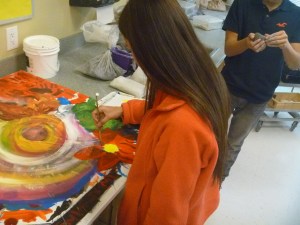 Kids worked through artwork until they were satisfied…at times starting a new piece because it just wasn’t working. This just amazed me. I’ve had kids work hard on things before, but never with the fervor I’ve seen this year. They pushed themselves. And it paid off.
 is stems from a combination of reading their blog posts and the type of conversations I was able to have with my students. Because I wasn’t focused on them creating a certain thing or following a specific rubric, I was able to go deeper with them into their work and their lives.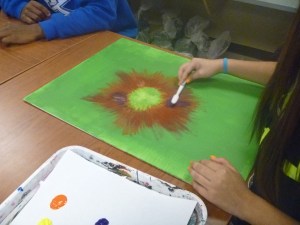
 they were moving along and understanding things. So, we moved to artist statements after winter break. Nope. Most students weren’t there yet. I then gave them the option to either do an artist statement or pick 2 behaviors like we did previously. After reading their end of year surveys, I know they didn’t really see the point of them. A handful of students did (and by handful I mean like 5), but the majority couldn’t see the point of writing in art and thought it was just busy work or for a grade. This is good to know. I know my student population has an issue with writing, and I am sure that our state testing is partially to blame. They are not good at writing, sad to say. But, what I gleam from all this is that I need to help them to see that artists write about what they do. That reflecting on the actions they are doing can help them grow as an artist. And, that writing is not just for English and History class.
 ut there–both in image, media, and technique. How do I get them to see beyond the typical art room materials? How can I encourage them to try something new? How can I get them to go deeper and think further beyond the obvious? I need to address my line of questioning, the way images get shown to them for inspiration, and helping them to make more dynamic composition decisions.
 ut TAB and choice and the pedagogy. He thought it was wonderful and that it aligned with something that was talked about at some principals/superintendents conference. That made me happy and feel that I was doing the right thing. And, surprisingly, when I said my final good-bye to our current principal, he said something I never thought he would. We didn’t always see eye to eye, and sometimes I thought he just didn’t notice and didn’t understand. But, he told me to keep doing what I was doing. To keep my expectations high and keep pushing the students. He said that that is what they will remember and what they will appreciate.












 TAB Studio with Mrs. B