Tag Archives: lessons

Altered Books

Standard

Art 2: Painting and Drawing have started their altered books.  It is a project I have been doing for 5 years and every year is a completely different experience.  Every year I don’t know what to expect.  Every year I say I am not going to do them again next year; and you know what, I don’t listen and I do them again.

Our school library removes books from its circulation every year and they are free for the taking.  So, in the spring time, I load up on books that I think will be good canvases for next year.  I pick the books carefully.  They are always hard covered.  I pick based on size, both width/height and thickness.  I look at titles that might be interesting to the kids.  For, when I choose books to alter for myself, these are the things I base my choice on.

I introduce the project by talking about how the books are being expelled and we are going to recycle and reuse these books.  I talk about how the book will provide many canvases in one place for the artist to work on one theme.  I tell them that many artists work around a single theme on several artworks and that this is good practice for that.  I also mention that it is good practice for those who will be going to AP Art and will have to come up with a concentration.

From there we talk about the book expectations and the prompts.  I expect each book to have a minimum of 6 pages.  I expect each book to have a cover and a table of contents (listing which prompts were used for which artworks.)  I expect the book to have a theme.  I expect each page to have originated from one of the prompts.  Other than that, there are no other “rules”.

I am sure what you are asking is what are these prompts?  Here is the list of prompts.  The prompts are a way to help the students get their juices flowing.  They are a starting point, or a jumping off point.  They are a beginning…but NOT an ending.  I stress this. They are to take a prompt and use it to help them create an artwork around their theme.  They can interpret the prompt any way they want.  There is not a right or wrong answer. (Unless they are wanting to use copyrighted or trademarked images of course.) Prompts include drip paint and make a print, layers, texture, sew page, and many others.  I ask students to use a prompt once and only once as their jumping off point.  I want them to explore different ways of making art…adding materials they may not have thought of or doing things they may have at one point shrugged off.  And again, I stress the prompts are starting points, not ending points.  And this year, I think they are really understanding that.

This year I decided to try something different.  After talking with several teachers about process over product, I decided to have that be the emphasis on this project. Normally I grade each page individually.  And normally, I hate that process.  I could not come up with a better way to grade the book though.  I even told the students that I would be grading the book that way on the first day of the project, a Monday.  On Tuesday I walked in and said I had changed my mind and we were going to concentrate on the process instead.  I said that I would rather them try 10 new things and work really hard and have their book fail, but having learned something over having a fabulous book where they learned nothing new, took no chances, and didn’t grow as an artist.  I told them on Fridays we would have a reflection on what they did that week and how they acted like artists and did what artists did.  They seemed to be okay with that.   You can read about what I set up in the second half of this post.

And, that Friday we had our first reflection.  I have yet to open the document with their responses. I am scared to see what they wrote.  I don’t know why.  I am excited, but nervous.

In any case, I have watched as half of one class is invested in this and becoming excited at the prospects of what they can make. And I have watched the many of my other class bring their book home with them and back the next day or stop in during morning tutorials to work on their book.  I love it that they are excited about it.  It is a great feeling when a student shyly comes to you and asks if it is okay if they do this or try this.  And then to see their face light up when I gladly say yes.
Update on Giving Choice

Standard

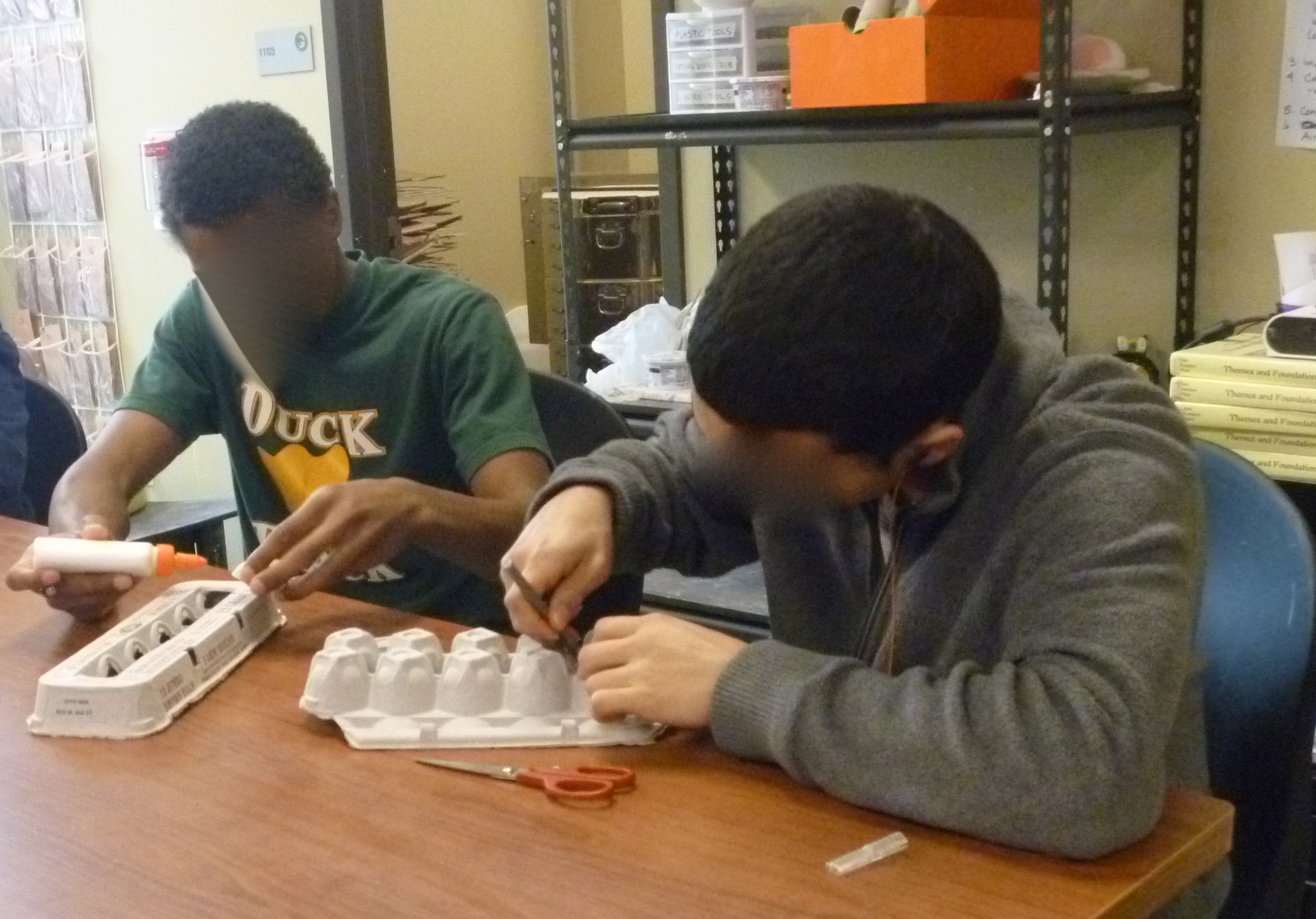
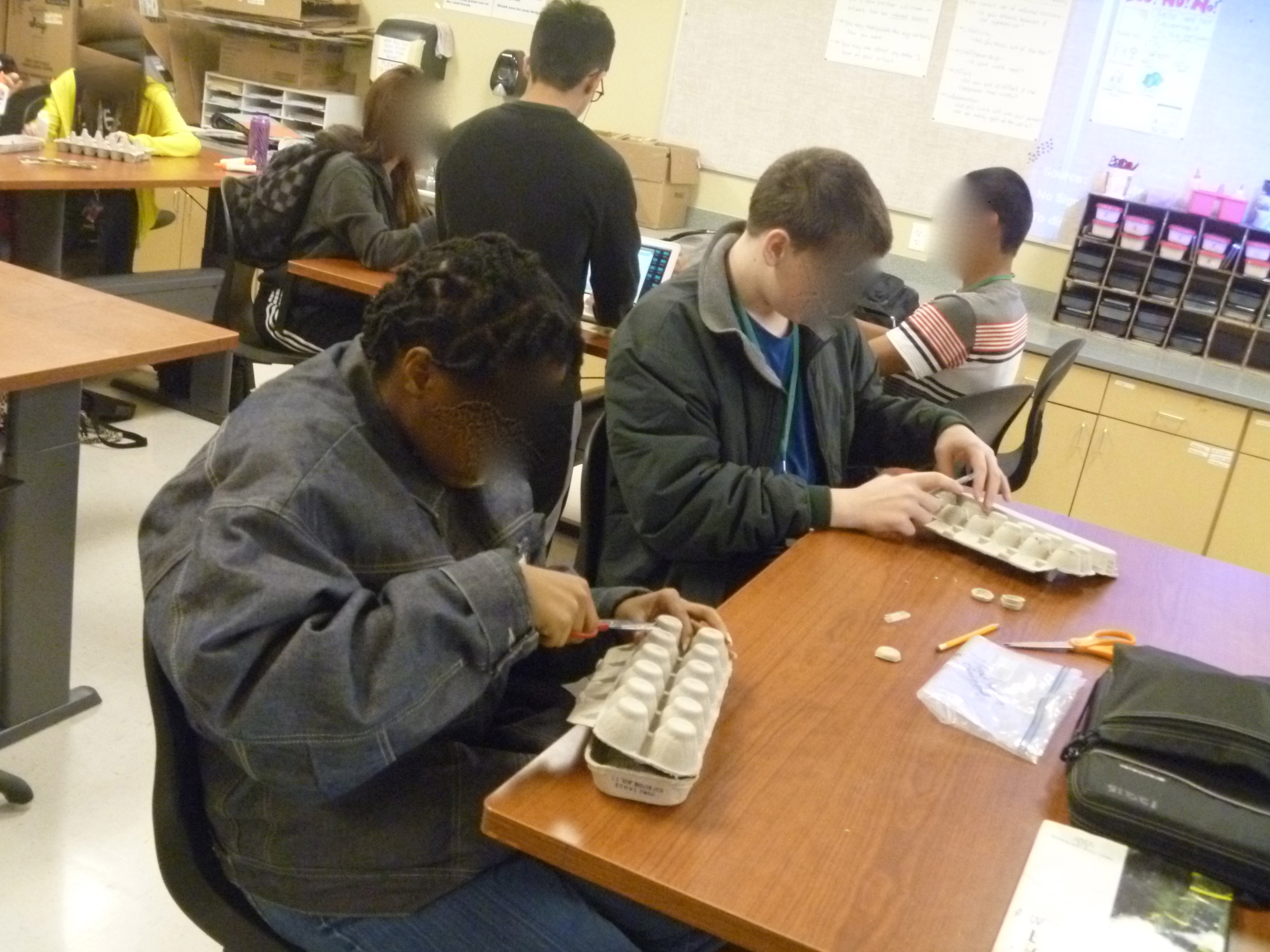
We are starting on our second week of choice in Art 1 when creating a project about informal balance.  Today I walked around and talked with the different groups to check in on their progress and to make sure they are on the right track.  I want to say that about half understood informal balance and are able to incorporate it into their artworks.  About a third of those who didn’t understand it and were not consciously addressing are now able to once talking through things with me.  And, well, out of those that are left, some just are making things out of egg cartons, and one group basically said they weren’t going to do anymore, and to just give them a 70.  At least they were honest about it.

I am excited and surprised by many.  I have to be honest that there are some students that are surprising me in their art.  Some that I thought would be the ones making the egg carton alligator are thinking outside the box.  While others that I thought would nail this are the ones making the alligator.

Choice hasn’t been easy for me.  Not knowing the outcome is hard for me.  But, I have to learn to go with it.  I will update once the unit comes to an end.

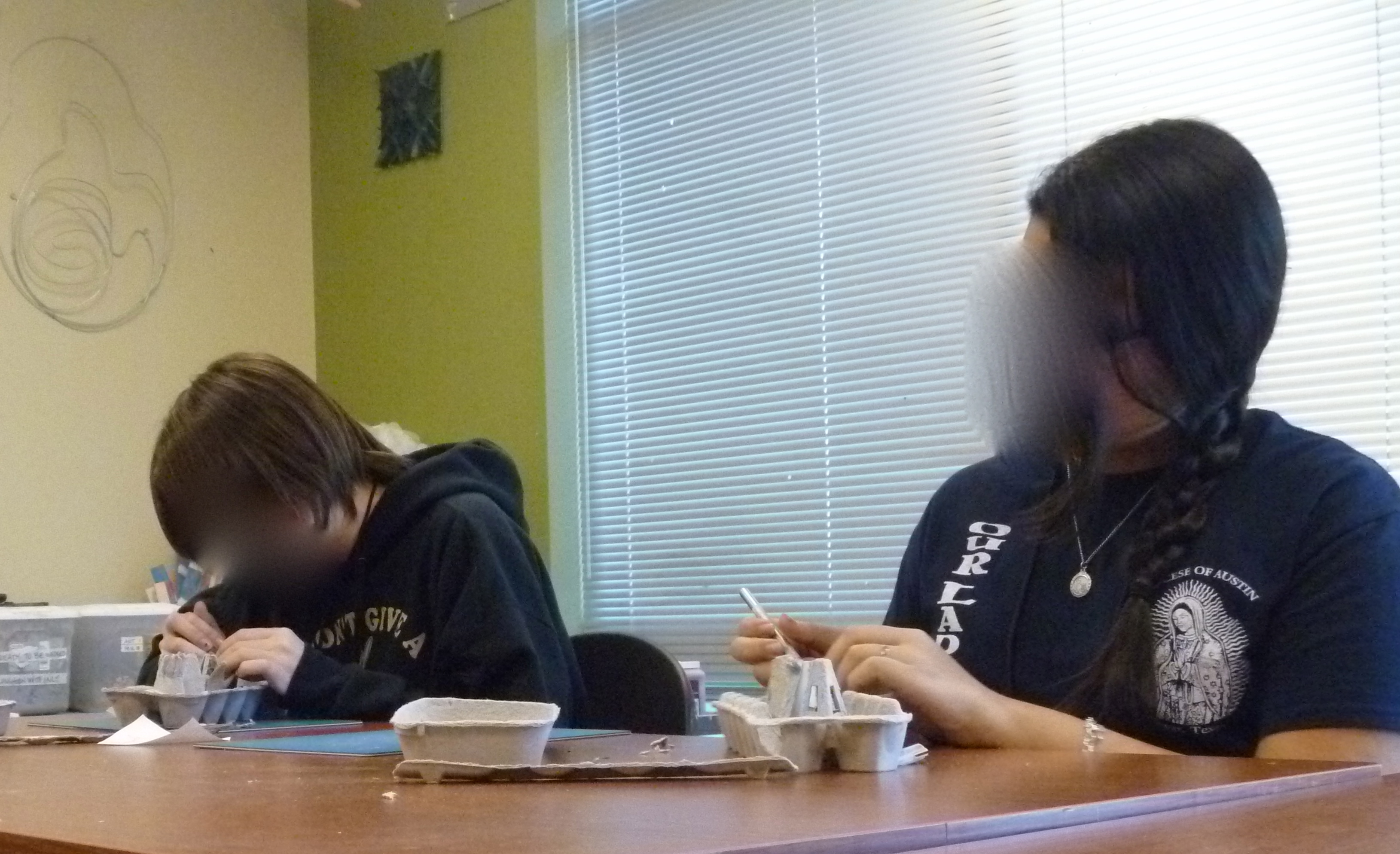
STUDENTS WORKING HARD 🙂

P1030628             P1030631 P1030632            P1030634 P1030639              P1030645P1030643

PROMISING ARTWORKS AND OUT OF THE “CARTON” THINKING

shark

shark
beginnings of a truck

beginnings of a truck

plan on using texture to balance

plan on using texture to balance

P1030650

using the egg cartons to make a 2-d work (bas relief)

using the egg cartons to make a 2-d work (bas relief)

will balance with color

will balance with color

Trees

Trees

ARTWORKS THAT ARE “PREDICTABLE” AND NOT OUT OF THE “CARTON”

P1030654        P1030655 P1030656        P1030657

Giving it up to the students

Standard

Art 1 started a new unit this past week.  They are learning about informal balance and ways that artists can created a balanced image that is not symmetrical.  We likened it to being on a see-saw as a child with your much bigger older brother and how much better it would be if both sides weighed the same.  How could you balance out the see-saw if you were stuck with your bigger older brother and not someone your size?  We learned that warm colors are heavier than cool colors, dark values weigh more than light, rough textures over smooth textures, and many others.

From there I introduced the project.  Each student was to be given a cardboard egg carton that I had been saving over the past 2 years.  Then they were to form a group of 2 or 3 students.  Their problem to solve in their group artwork was to create something that was balanced, but not symmetrical.  They needed to use any and/or all of the different techniques that we talked about.

A student asked me, “Is this 2-D or 3-D?”  I turned to him and said, “I don’t know, you tell me.”  I could see the the wheels and gears in their heads start to turn.  I see that some of them were excited.  I could see that some were scared.  I was both.  What would the end products look like?  Would I be able to pull off a choice-based project?  Would the kids be receptive to this?  (I am sure that perhaps you are asking what is choice-based?  You can find out more here and here.  The second  link is to the first part in a 5 part series about choice-based art in the high school classroom.  I invite you to read all 5 parts.)

Today was a crazy day in the art room during my first session of art 1.  I had kids cutting and painting (both traditionally and with spray paint) and gluing and planning.  It was chaos and it was awesome.  Everyone was working (with the exception of one student.)  Their artworks were all different.  They were exploring different things.  They were collaborating.  They were behaving like artists.  I am tired, but I loved it.  Tomorrow I do need to start to walk around and talk with the groups about their plans to make sure they are keeping the problem of informal balance in mind with their artworks.  But until then, I will have a smile on my face as I think about the awesomeness that occurred during period 2 today.  I hope periods 6 and 7 are the same.

Additive Texture Forms

Standard

One thing that I love about working with clay is being able to add texture.  There are so many ways to add texture…stamping, carving, texture glazes, and additive texture.  I never had to be told to add more texture to anything I have created in clay.  I am very particular about it.  But, not all my students have it come so naturally.  So, our next project will be all about adding texture.  We will talk about repetition and how it can be used to create texture.  We will talk about what kind of textures there are–smooth (which unfortunately is not allowed on this project), bumpy, spiky, etc.  We will explore different ways of adding the textures; and we will talk what kinds of textures are created by the shapes or forms used.  Two people could use the same form to add, but the way in which they add it will make the over feel of the form different.

Students will create a form from any of the hand-building techniques we have learned and from there, add texture by repeating a shape or form.

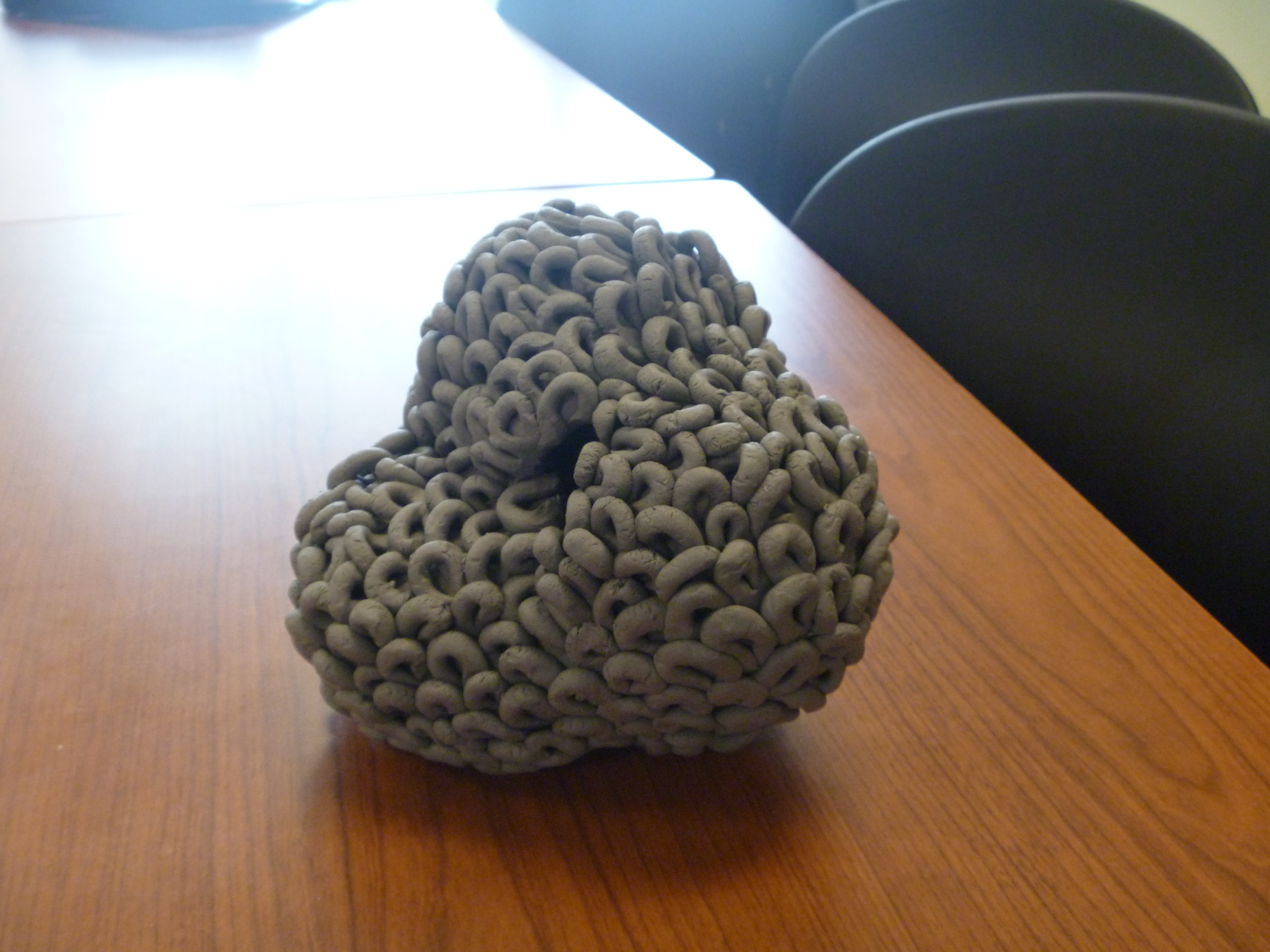
This is my piece based on the lesson.  My students who have watched me work on it over the past 2 days have describe it as a sea anemone, a bunch of cereal like fruit loops, and a mop.  They all want to touch it.  It is fabulous to get them talking about it and asking questions.

ImageImageImage

Link to grading rubric.  This is a new rubric form that I have been working with.  This is the second time I will be working with it.  I am experimenting with different rubrics to find one that works for me and my students.