My “New” TAB Classroom

Standard

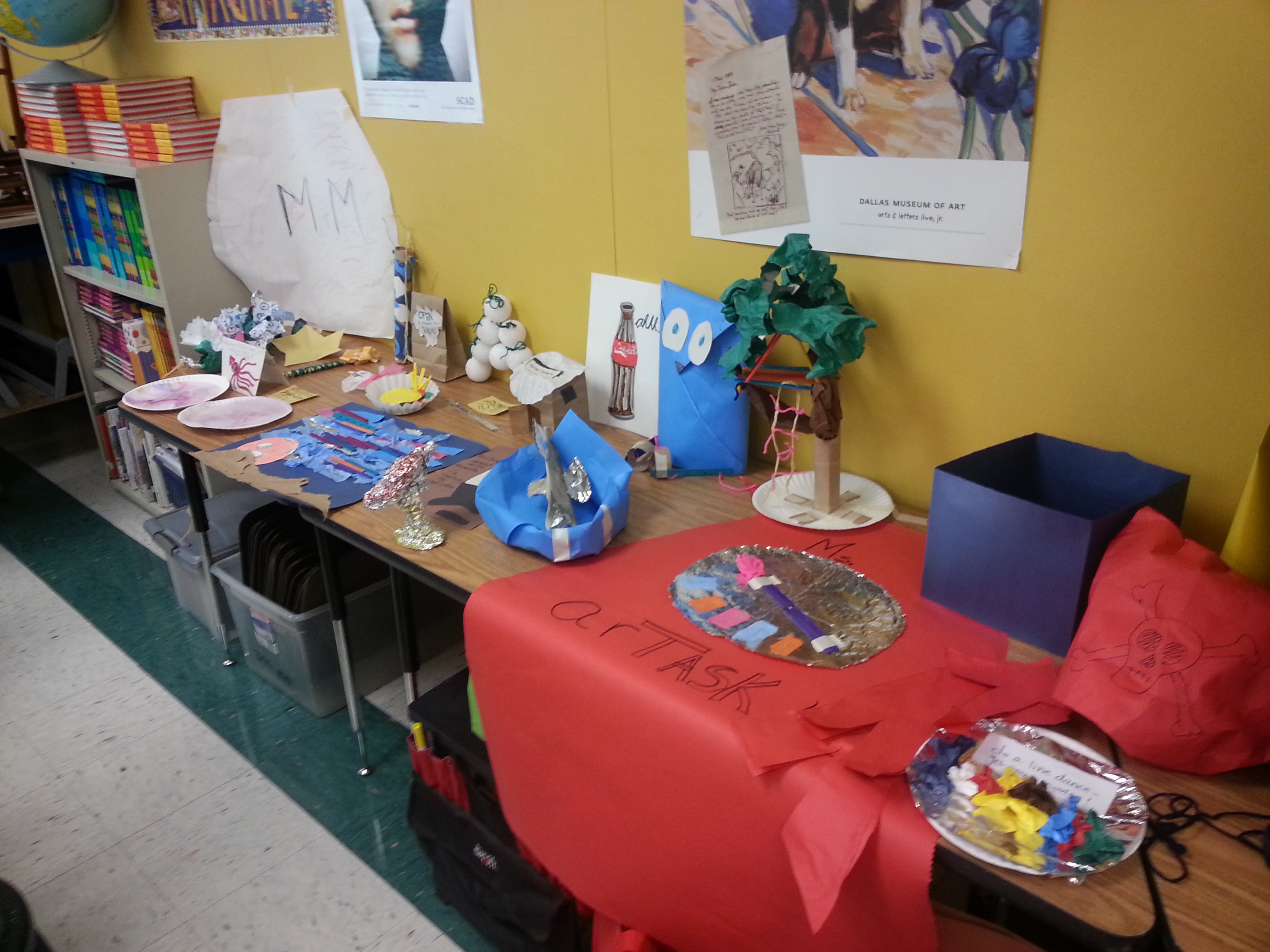
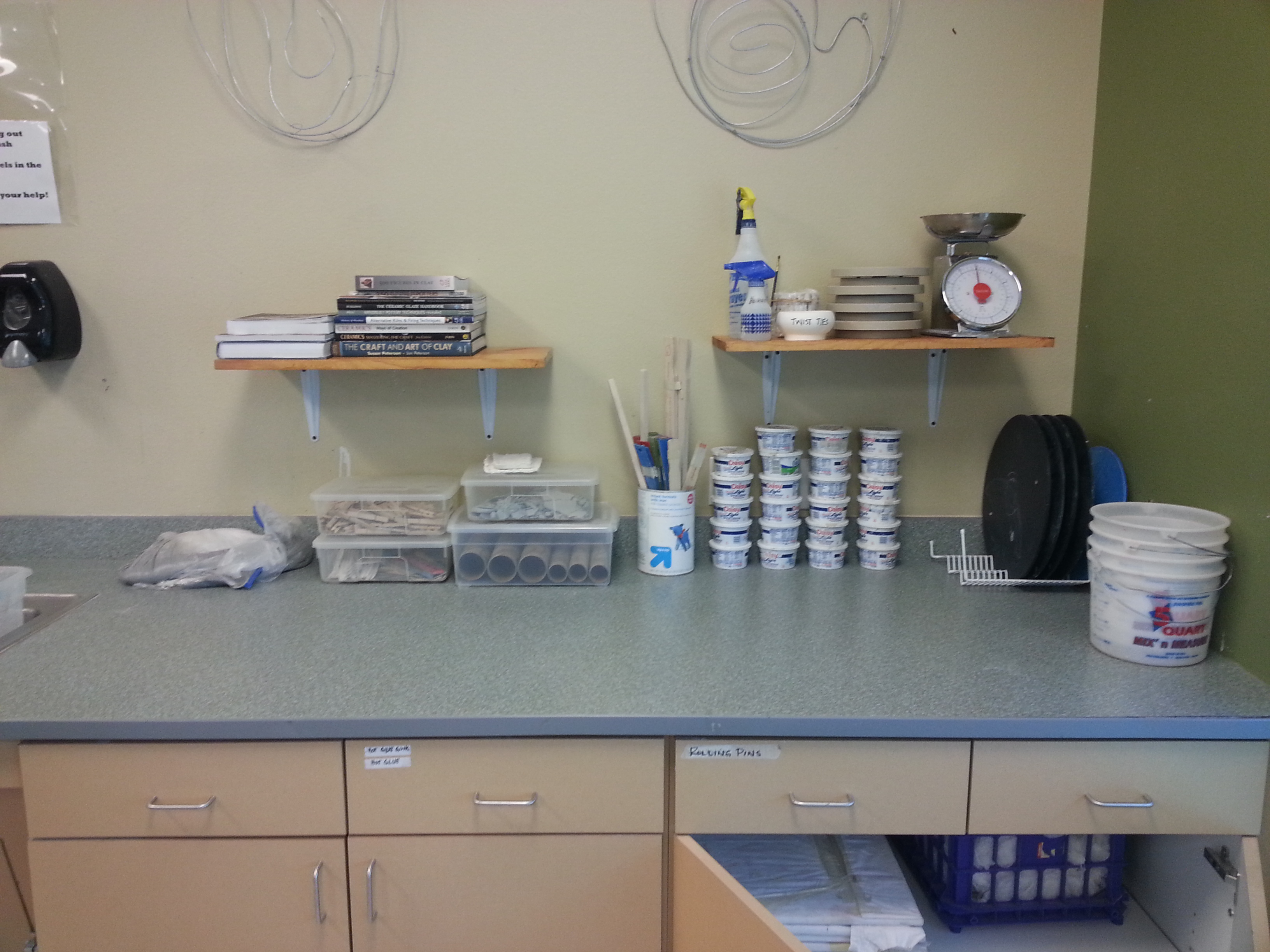
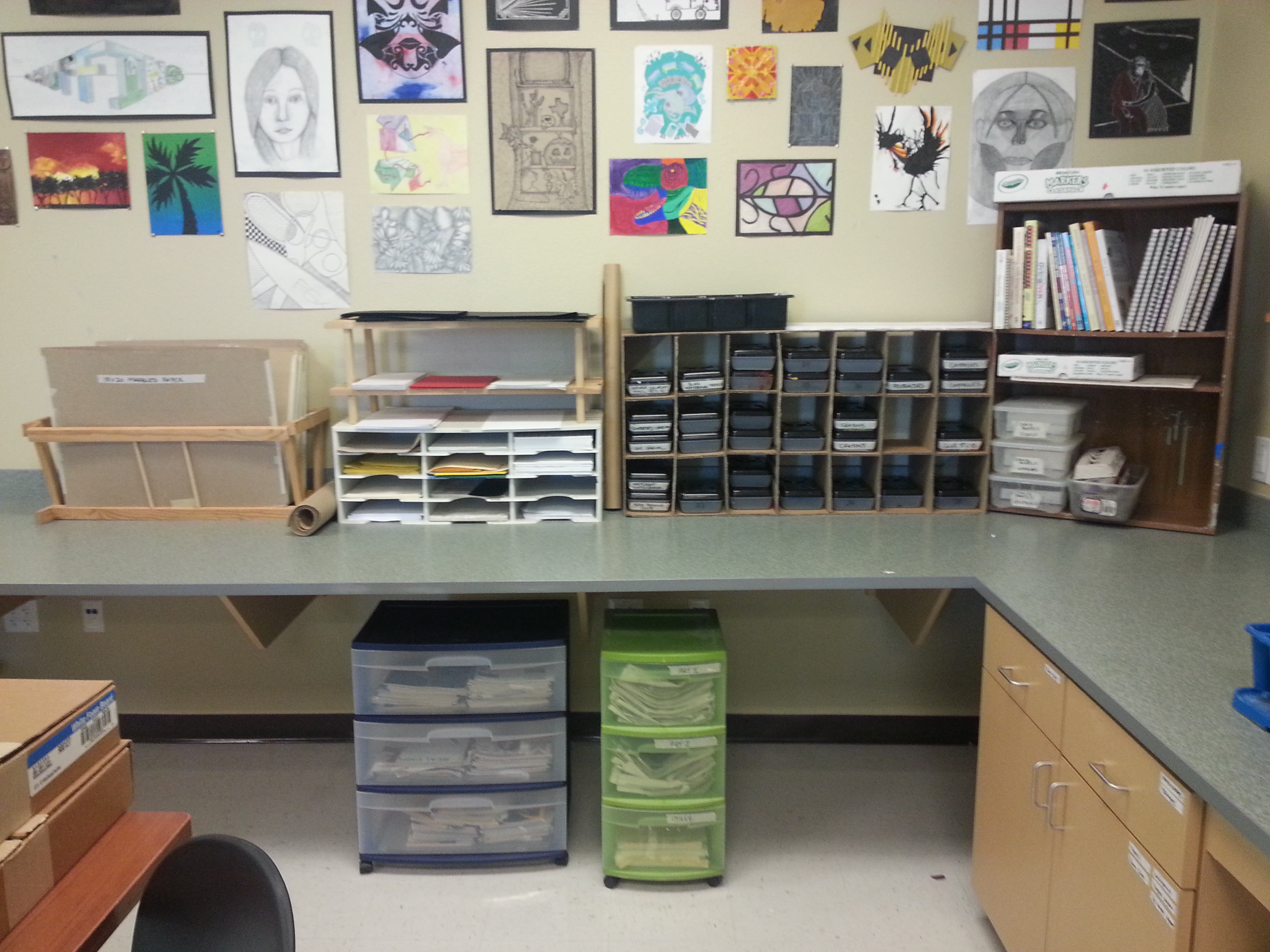
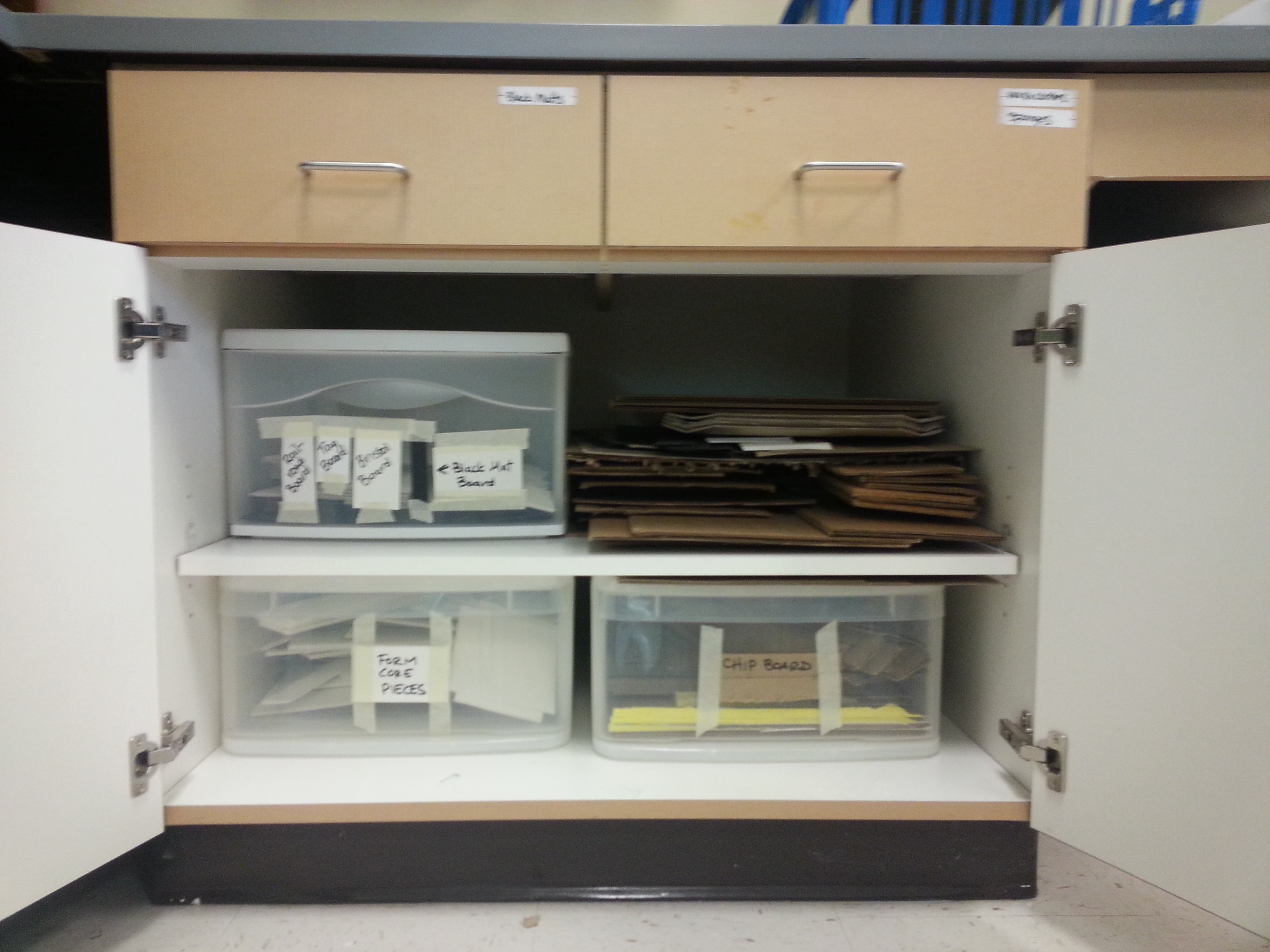
I spent the summer trying to figure out how to set up my room to best serve my students in a TAB environment. Well, it was easier said than done. Luckily, I didn’t have to buy too much. I had a friend that was moving who gifted me a ton of plastic tubs and drawers. I had a ton of stuff from before that I repurposed. I did buy a few things that I didn’t have…like a new drawer unit for magazines, but all in all, I didn’t spend too much.

My room isn’t the best size for an artroom in my opinion. It is long and narrow, and I have rather large desks and 4 potter’s wheels to accommodate. But, I think I have it all figured out.

I came in a couple of times over the summer and got rid of things I hadn’t used in years and old projects I was saving for no reason. I started to re-arrange and re-purpose. I have set up what we will need at the beginning. Paint and color will come into play in a few weeks, so I thought since I had some time, I would concentrate on what I needed right away and what had to be put away so it wasn’t cluttering up my counters.

It is a work in progress and I like to think of it as a living thing that will change as the needs of the students change and as we figure out better ways of doing things.

20140822_111916

Ceramic Corner

20140822_111924

Ceramic Corner

20140822_112016

Glaze Station in storage room

20140822_112051

Drawing/Paper Media Counter

20140822_112104

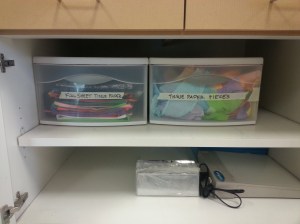
Storage

20140822_112118

Different Types of Boards (bristol, card, rail, etc.)

20140822_112149

Still Life Drawing Items

20140822_112130

20140822_111958

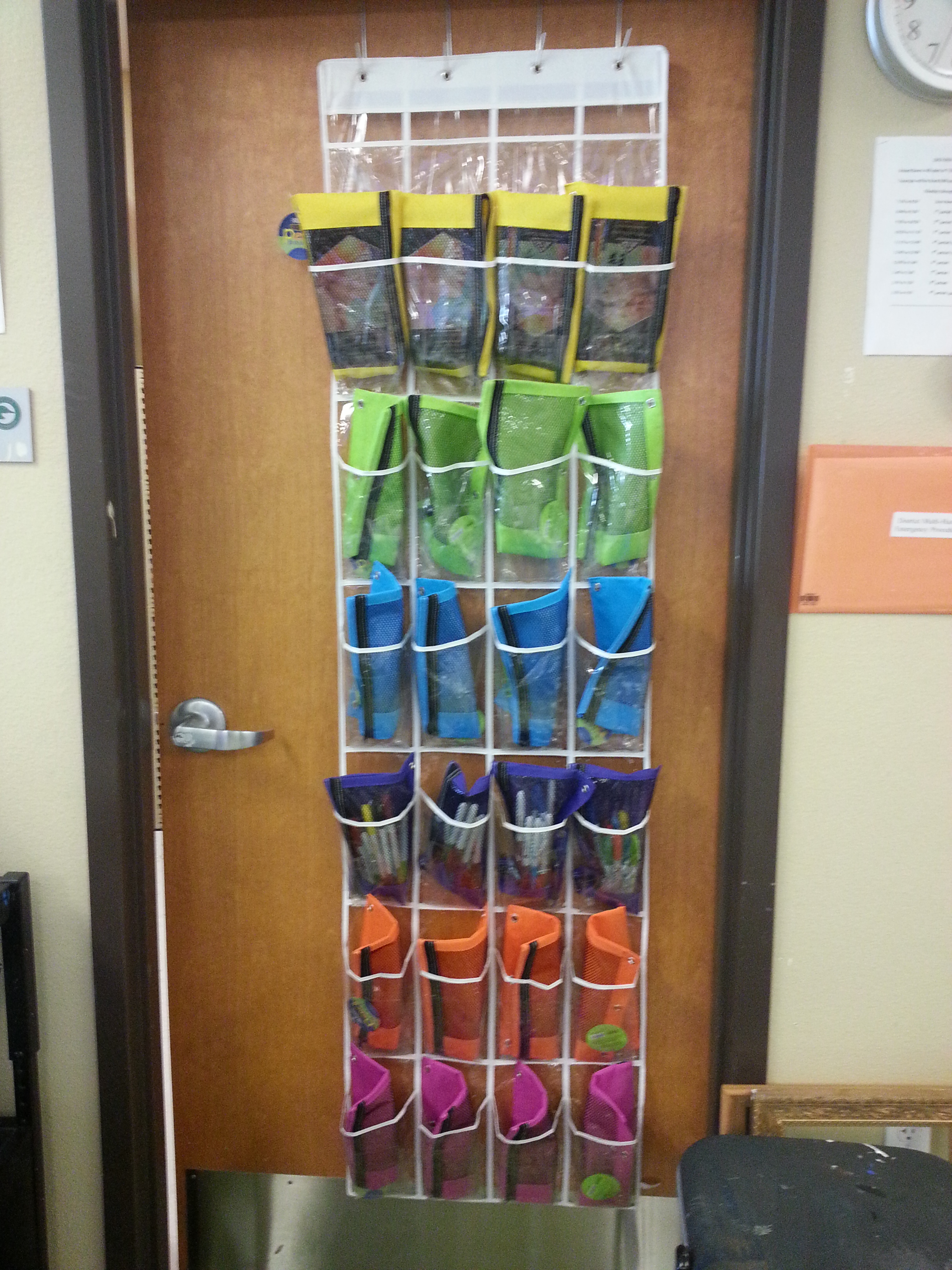
Check Out Station for Prismas, Brushes, and Colored Sharpies


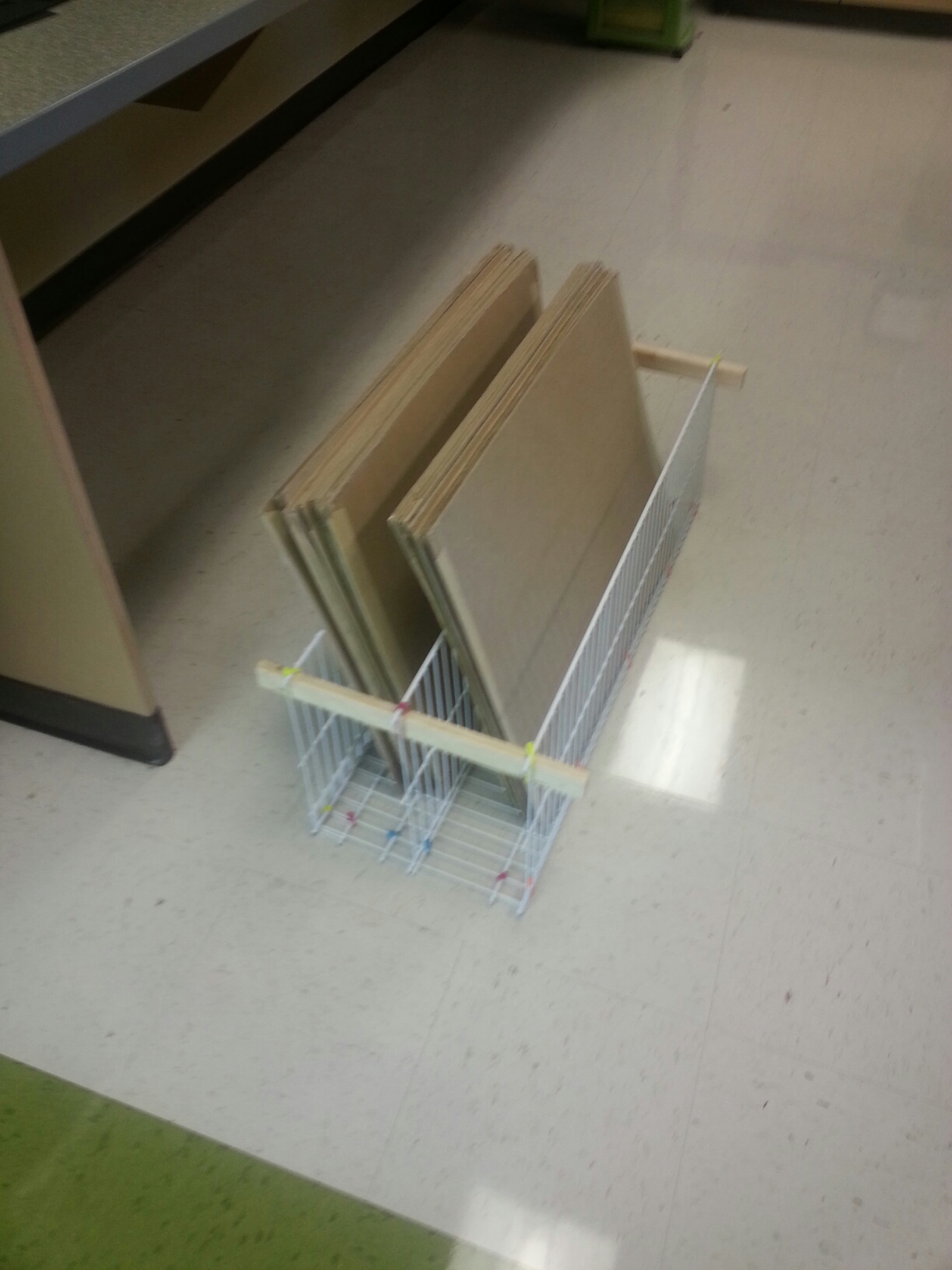
My Portfolio Rack Hack.

Standard

Several years ago I made wooden cradles to hold my students’ rather large portfolios. I attended a session at the TAEA conference about building racks and the presenter gave us her plans. Well, they lasted me about 6 years, with some repairs here and there. Had I screwed them together instead of stapling them, they might still be around. Hindsight and all.

At the end of last year, I tossed all but one; I had built 7.  This year I needed something new. I looked and I looked. I toyed with plastic drawer units which would require smaller portfolios.  That saddened me, but I couldn’t think of much else. I tried to make something out of a window box planter liner and some wooden feet.  It sucked.

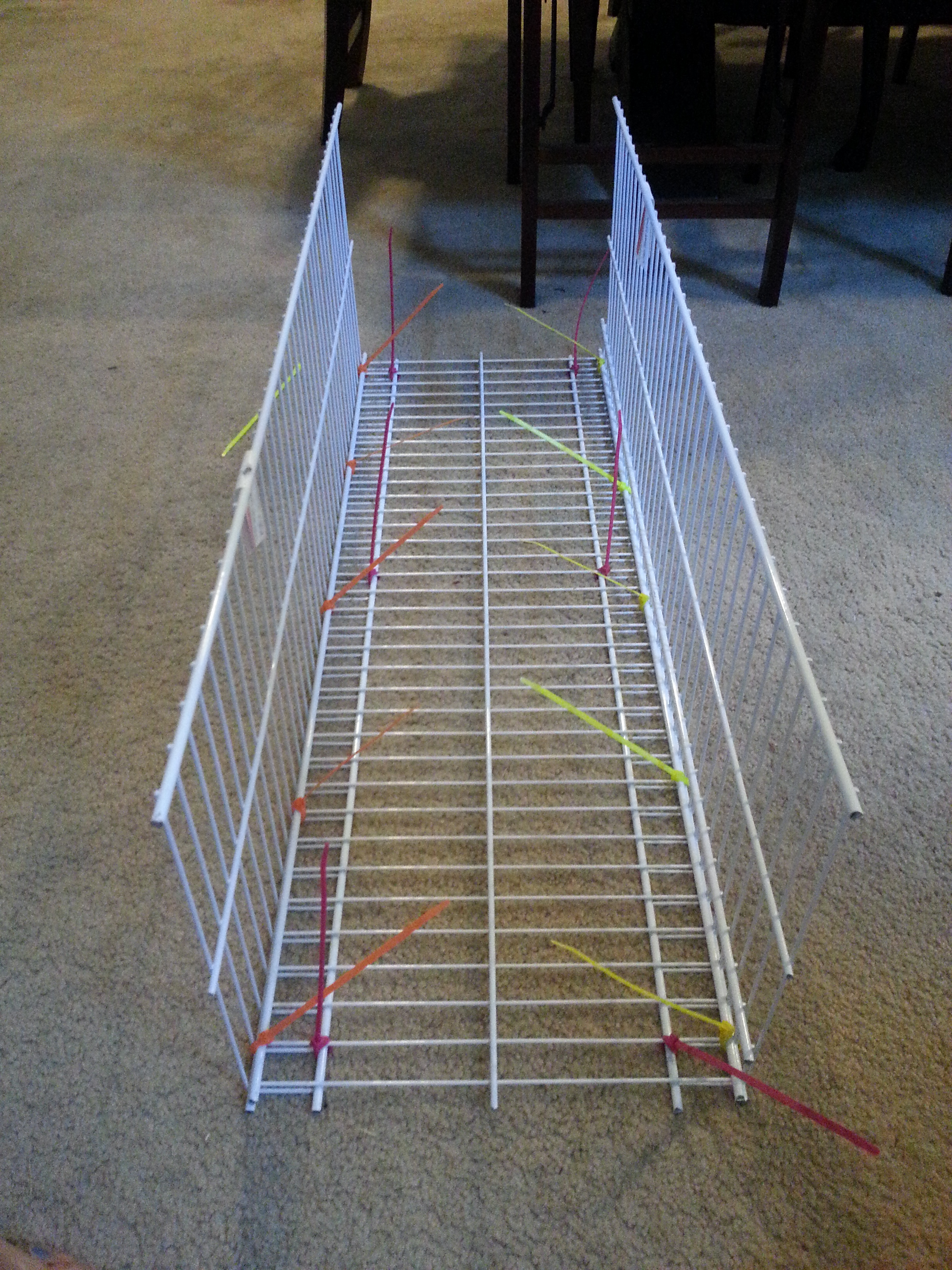
Then it hit me in the car on the way to the aquarium. Wire storage racks and zipties. My daughter and I headed to Lowe’s (after looking at the fish at the aquarium of course.) They had 6′ lengths and I needed half that. Luckily they had bolt cutters there for that reason.

image

I ziptied the sides on first.

image

Then I cut the end of the ties

image

and tied the last piece down the middle.

image

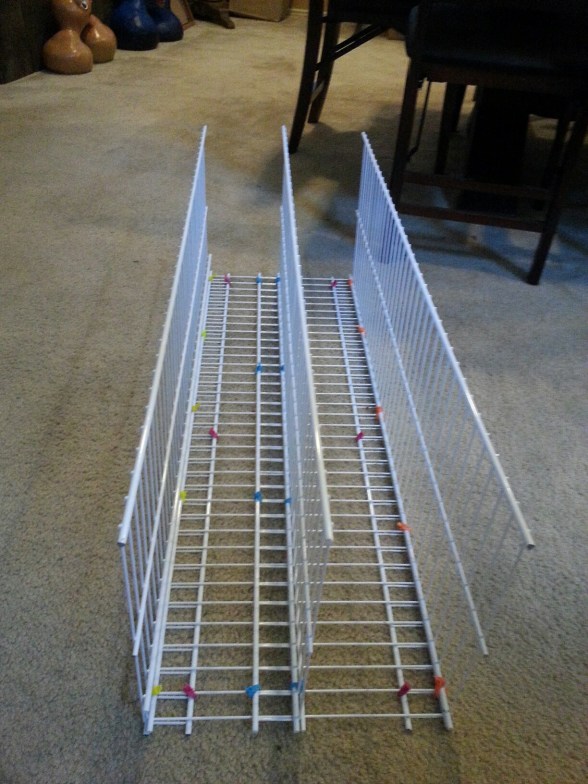
I added the upper supports today when I put in some portfolios to check the strength.

image

image

As you can see, it will hold portfolios for 2 classes. I have 4 classes that need portfolios.  So, I built 2 racks. I just need to cover the sharp tips and they are done.

I am quite pleased with my hack.  And, it was relatively inexpensive.

Shifting Focus

Standard

A new school year is upon us and with that comes great changes to the art room. I am excited to shift the focus in my classroom. We will be working with a “new” way of becoming artists. We will focus on building artistic behaviors and creating artwork from conception to final work. The students will have more control and choice over materials and techniques to solve “problems” given to them. And we will be writing about the process and the decisions made along the way. This is a way of teaching art called TAB (Teaching for Artistic Behavior).

~First blog entry on my art classes’ new website.

Why am I shifting focus? Sometime last year I had found this Facebook group for art teachers and it was a gold mine. Here was this group of people like me from all over the world wanting to share and discuss all things about teaching art. It was from this group that I was introduced officially to this idea of choice or modified-choice in the art room. Some of it was familiar as I was starting to offer more choice to my kids, but I was still a mostly “teacher-focused” art room.

One day as I was standing in the hallway between classes (as teachers are supposed to do) I was focused on the display cases in front of me and something occurred to me: every single painting in the case was identical. I mean there were some differences in the trees and the clouds and the mountains, but for all intents and purposes they were the same. It was then and there that I decided no more. I wanted my kids to think, to have a voice, to create something “original”. And choice was going to be the way.

Back to the Facebook group. It was from this group that I was introduced to Katherine Douglas, a pioneer in TAB, Ian Sands, Melissa Purtee and the other art teachers at Apex High School in North Carolina, and Colleen Rose, an art teacher from Ontario. Along with a few other TAB teachers, they helped me to understand what TAB could do for me and, more importantly, for my students. The teachers at Apex wrote this 5 part series on choice in the HS art classroom. This helped me to see how wonderful it could be. (parts: 1, 2, 3, 4, 5) I would like to thank them for all their help over the past few months.
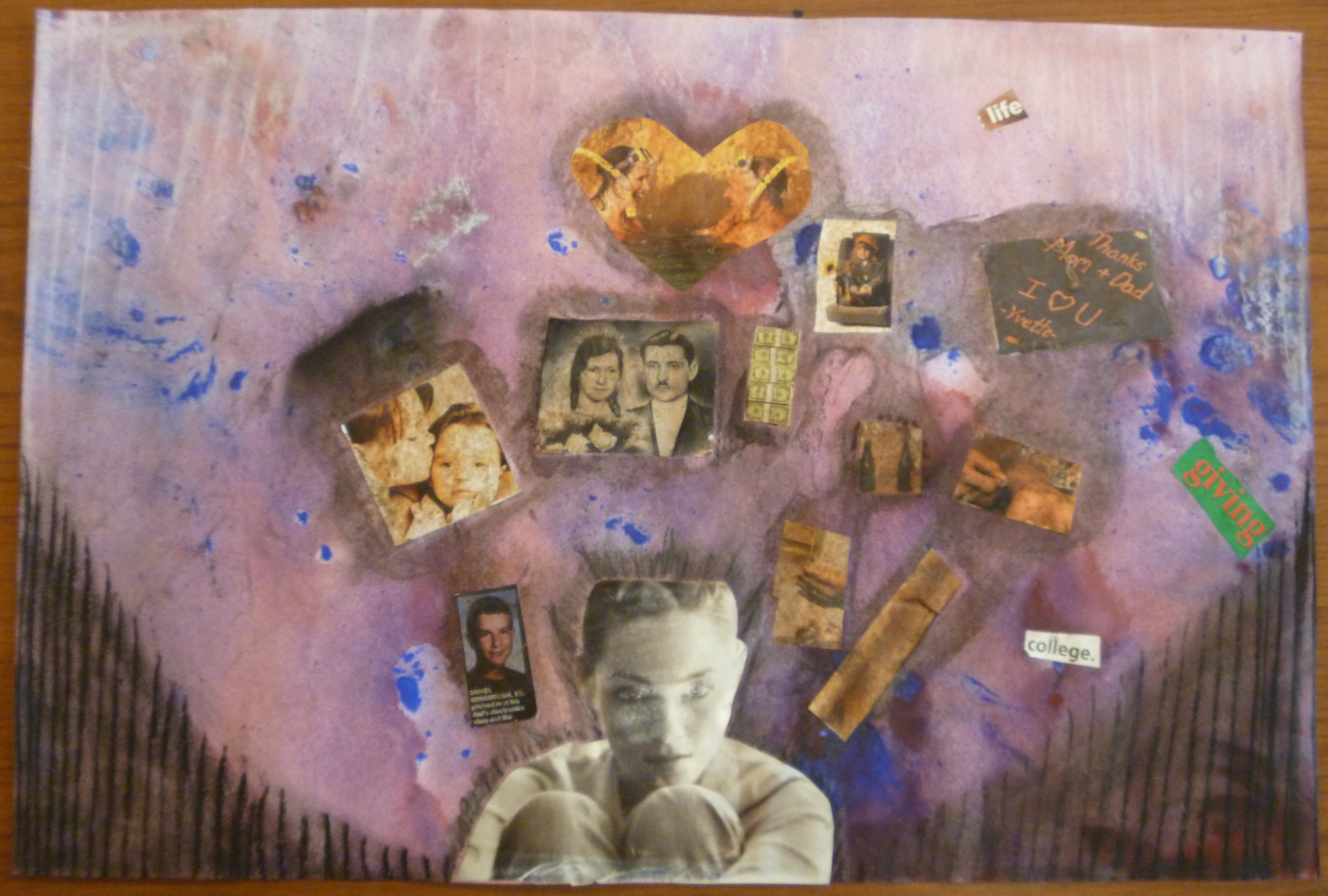
I tried out choice several times during this past school year (here, here, and here), well, sort of choice. I guess it was more of a modified choice. I learned a lot about how my students would handle have such “freedom”. I learned what I could handle. And I saw first hand what my students could create without me. That was the best one.

So, I decided to make the shift from a teacher-focused classroom to a student-focused classroom. I no longer wanted to come up with the lesson where the outcome has already been decided. I want to be surprised. I want my students to go through journeys similar to the journeys I go through when I make art. I want them to know why they made a certain choice. I want them to be able to talk about their work. I want them to stop copying others. I want them to learn from their mistakes and to take chances. I want my classroom motto (stolen from Ms. Frizzle of Magic School Bus fame) of “Take Chances. Make Mistakes. Get Messy.” to actually mean something.
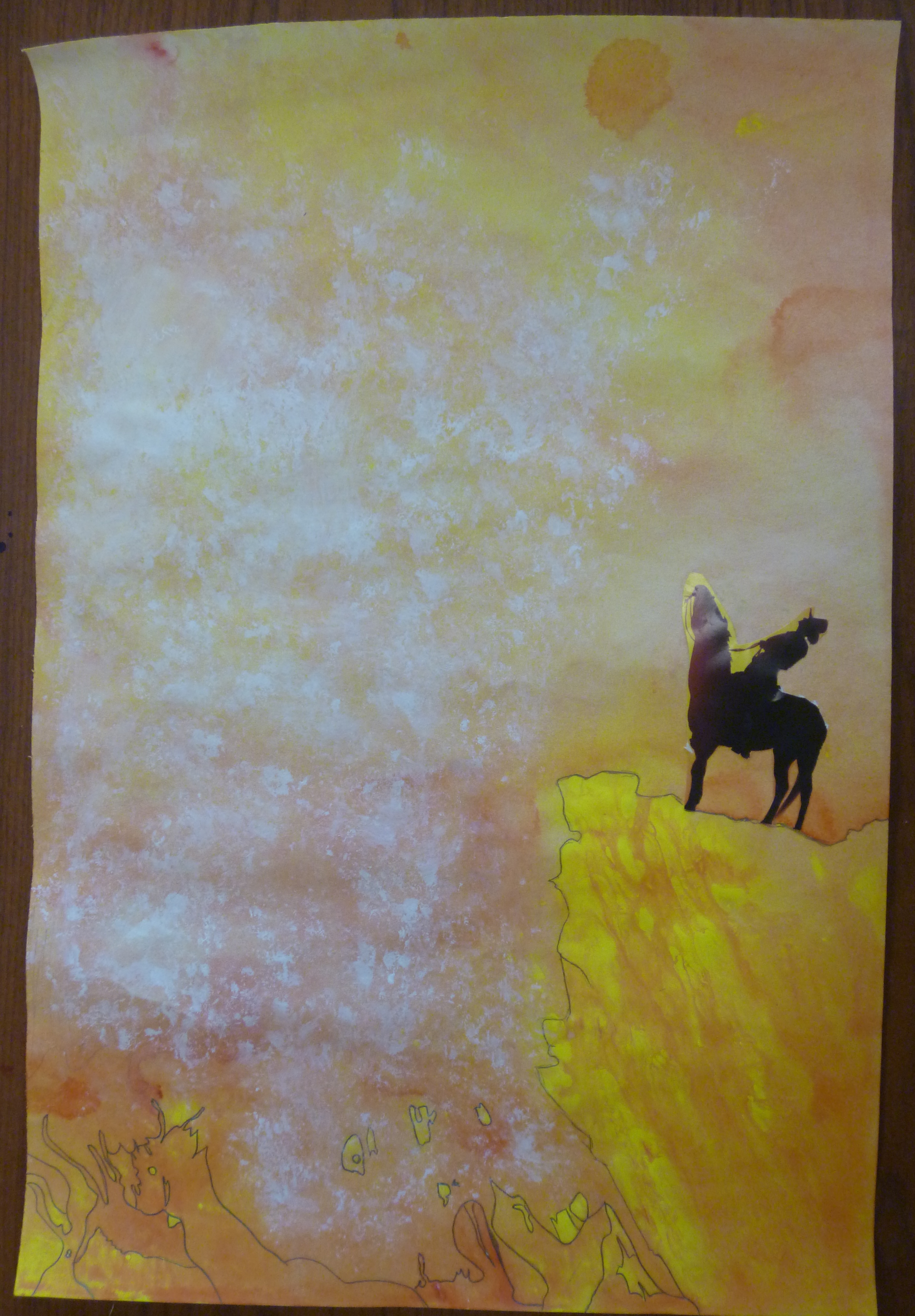
And, I think this fall, it will.

Bringing in Some Art History and the Digital Age

Standard

A fellow art teacher posted this link to our FB art teacher group.  I thought it was awesome.

Basically, this middle school art teacher in Georgia shows a carefully selected group of artworks to her students and has them add text over the images to create memes.  But, she takes it a step further and then has the students research the original context of the artwork and when they post the meme to their edmoto page, they write about the original context in the comment section.  Then students are asked to comment thoughtfully on 3 of their classmates memes.

I think this idea is great.  And, I am going to incorporate it into my art 1 classes.  I think once every other week, the students will pick from the list of artworks and create the meme.  They will then upload it to their blog and add a description of the original context of the artwork.

It is a great way to tie art history with technology.  And, using the meme makes it relevant to the students and their lives.

Thanks to Artful Artsy Amy for sharing her blog.  I hope you don’t mind me borrowing your fabulous idea.  😉

Looking Back: 2013-14

Standard

School wrapped up on a Friday with Graduation like it always does.  It is always a bittersweet moment for me.  I love watching my students finish their grade school careers and seeing the excitement in their eyes as they move onto the next chapter of their lives.  But, it is sad to say good-bye.  This year was the toughest yet.  It was the first time in my career that I had several students for 3-4 years in my classes.  I had never done that before.  I had know those kids like I had know no others.

But, enough sad stuff.  Let’s look back at this year.  I think it was my best year yet at THS, and at being a teacher.  I learned a lot–not only about myself as a teacher, but also about where I want to go and how I want to get there.  And, the journey is just as important, if not more so, than the destination.

I met some great people along the way this year through an art teacher FB group and a splinter group for HS TAB teachers.  They have helped me tremendously.  I was really able to examine who I was as a teacher and how/what I was teaching through reading what others posted about.  I saw things I didn’t like and would not like in my classroom.  And, I saw fabulous things that I do want in my classroom.  I was forced to think and explore this year.  Did I always put my students first and have their best interest in mind?  Yes.  Was it always successful?  No, but sometimes you have to break a few dishes.
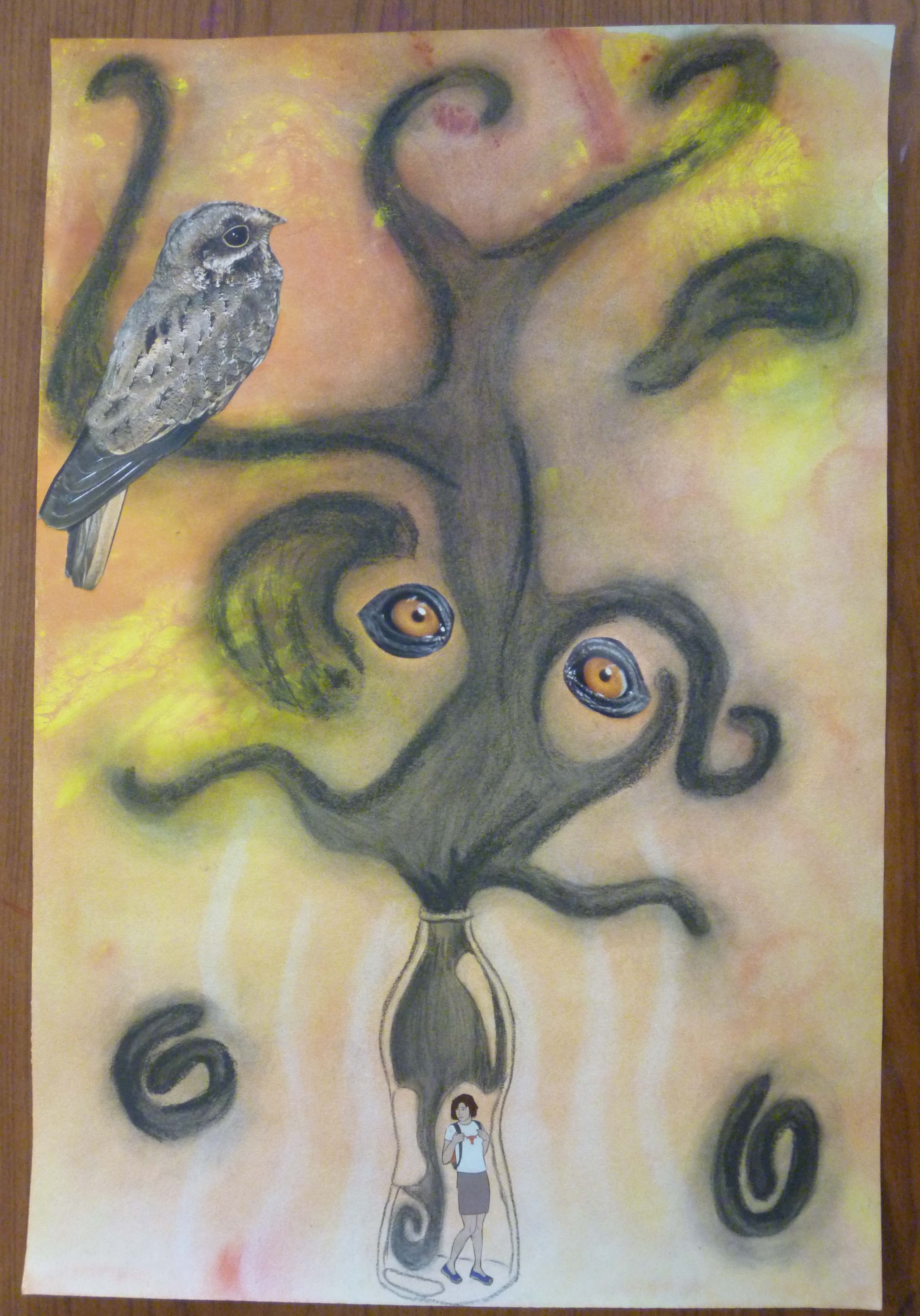
I learned so much about my teaching and what lights the fire inside of me as a teacher and what bores me to death.  I think if I am not passionate about what I am teaching, then the kids will pick up on that and they won’t want to invest in it.  I improved in my working with others.  I still have a long road, but I am further along than I thought and it’s a good thing.

I know I made the right decision when it came to switching my sculpture class to a ceramics class.  In the short months we focused solely on ceramics, students grew so much more than my sculpture students did over the course of 2-3 years.  The program is still a work in progress, but the path is bright and growing larger.  My numbers for beginning sculpture/ceramics almost tripled.  I am excited and scared of this at the same time.

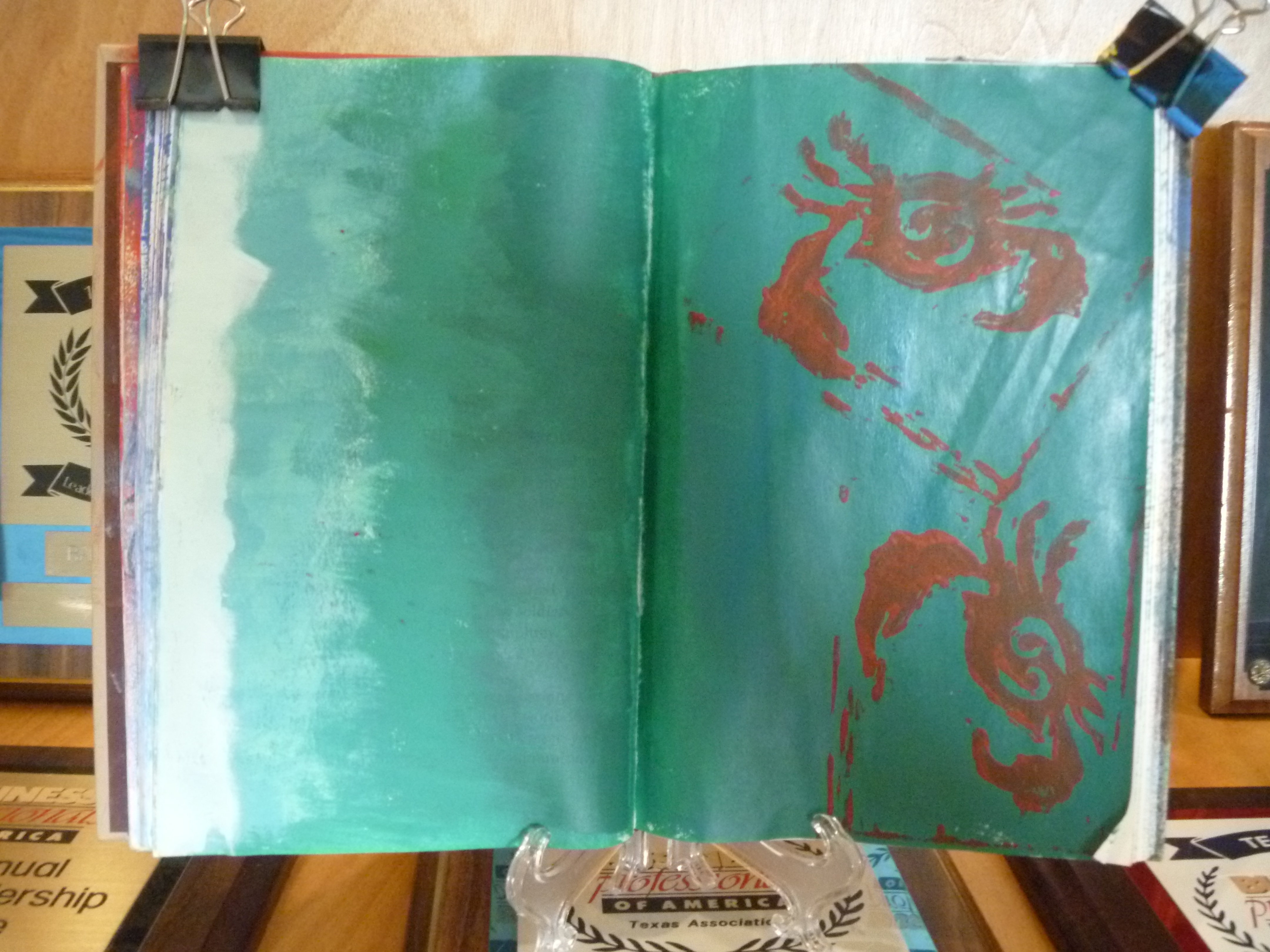
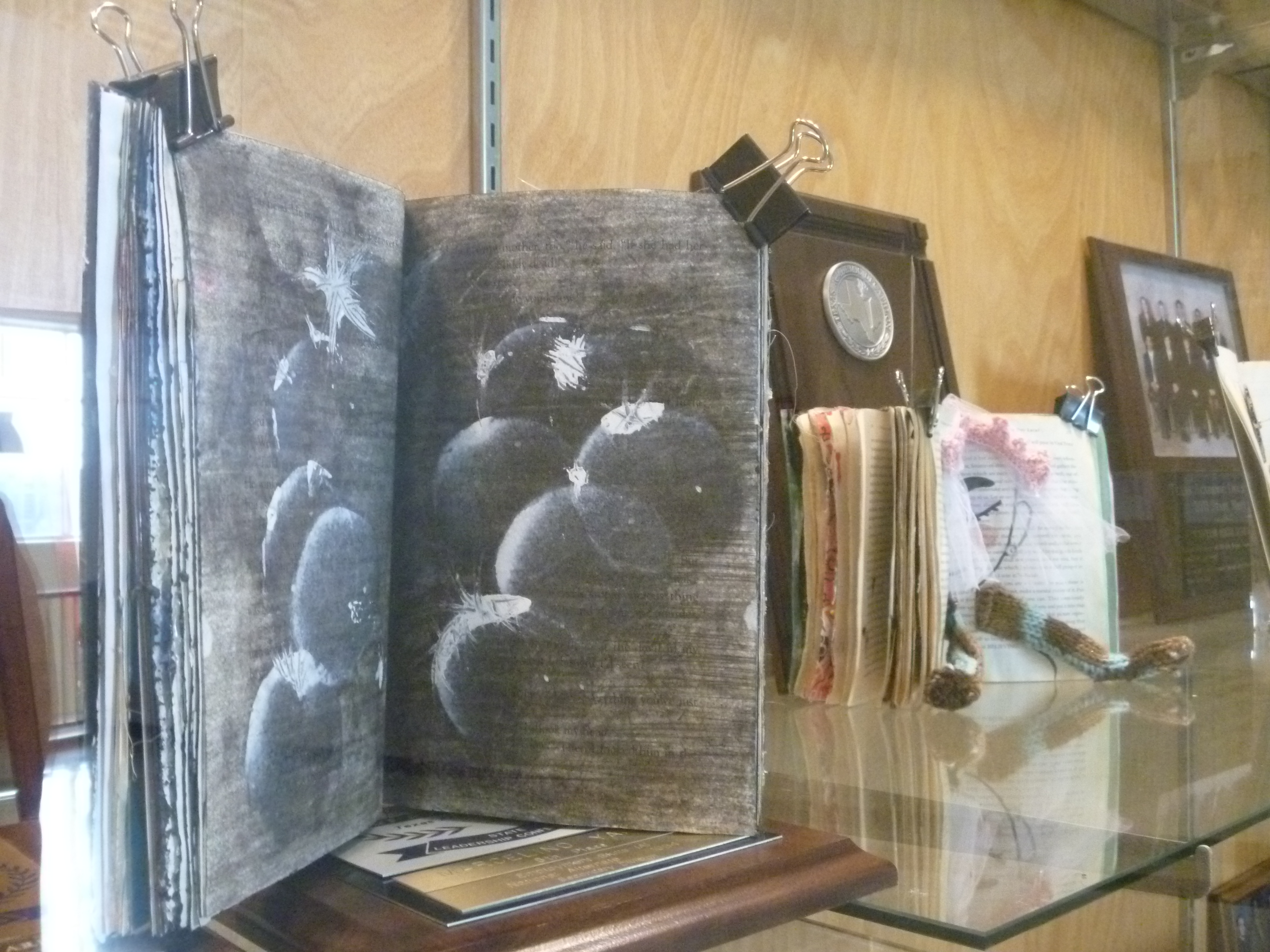
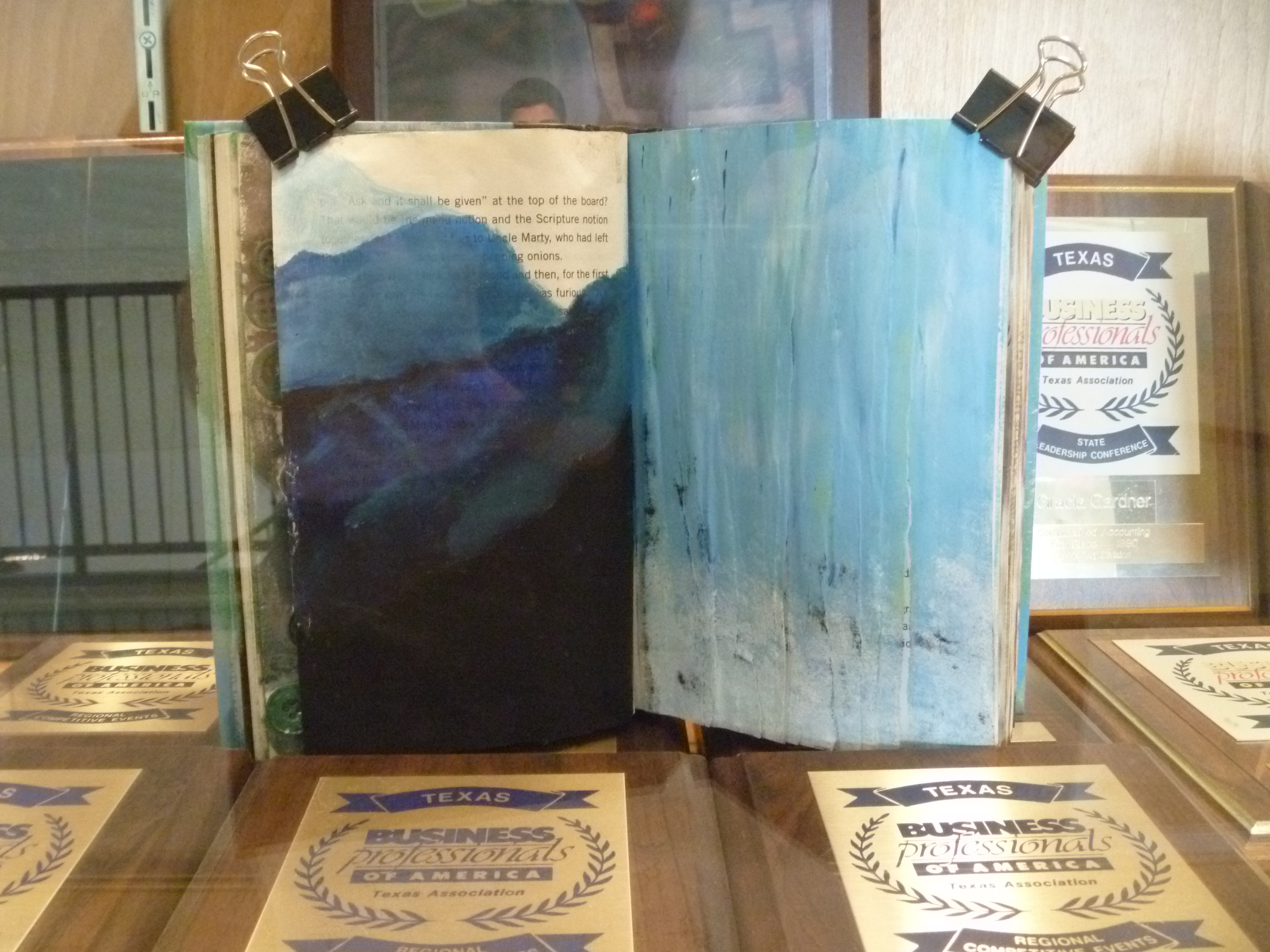
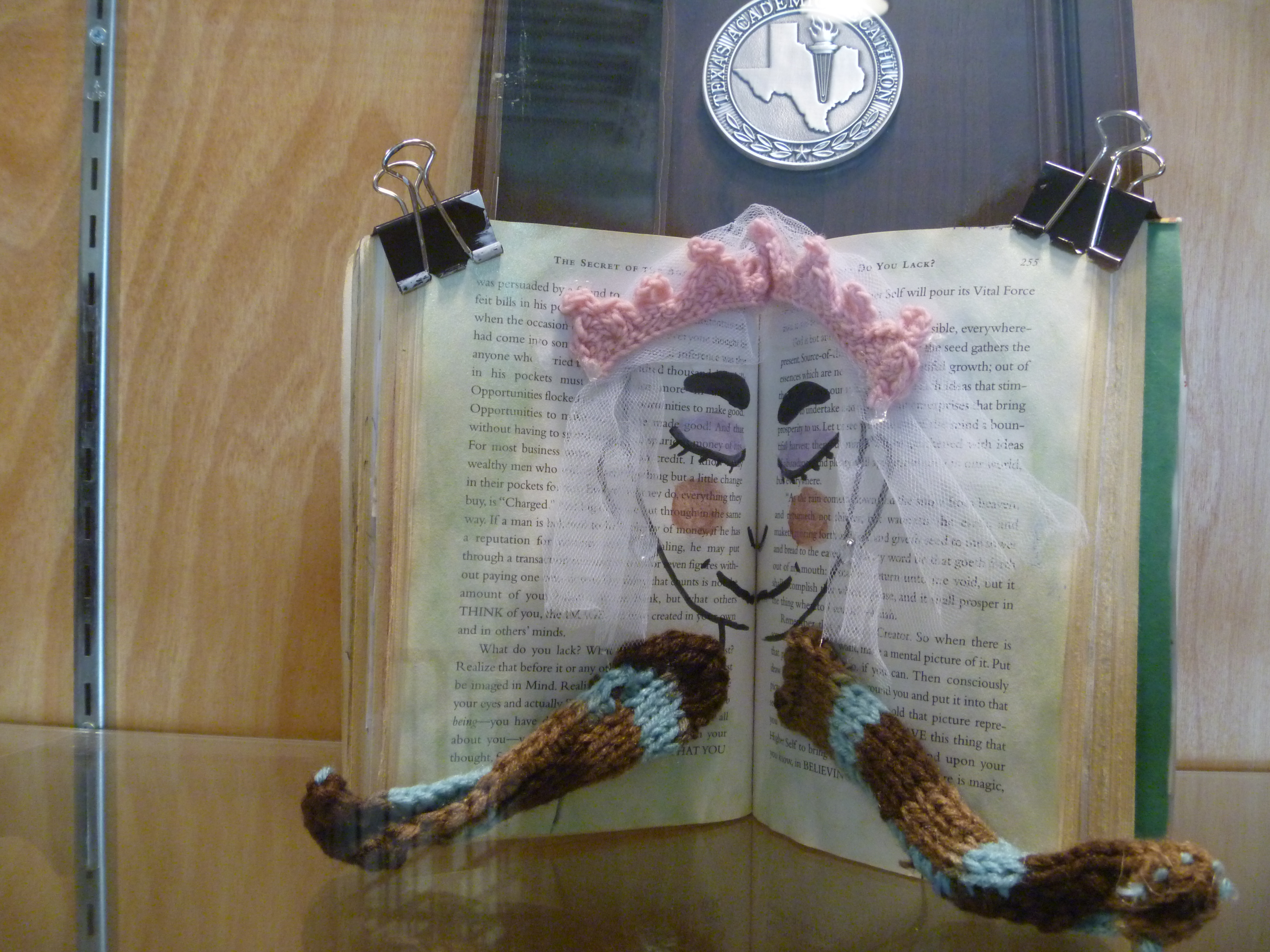
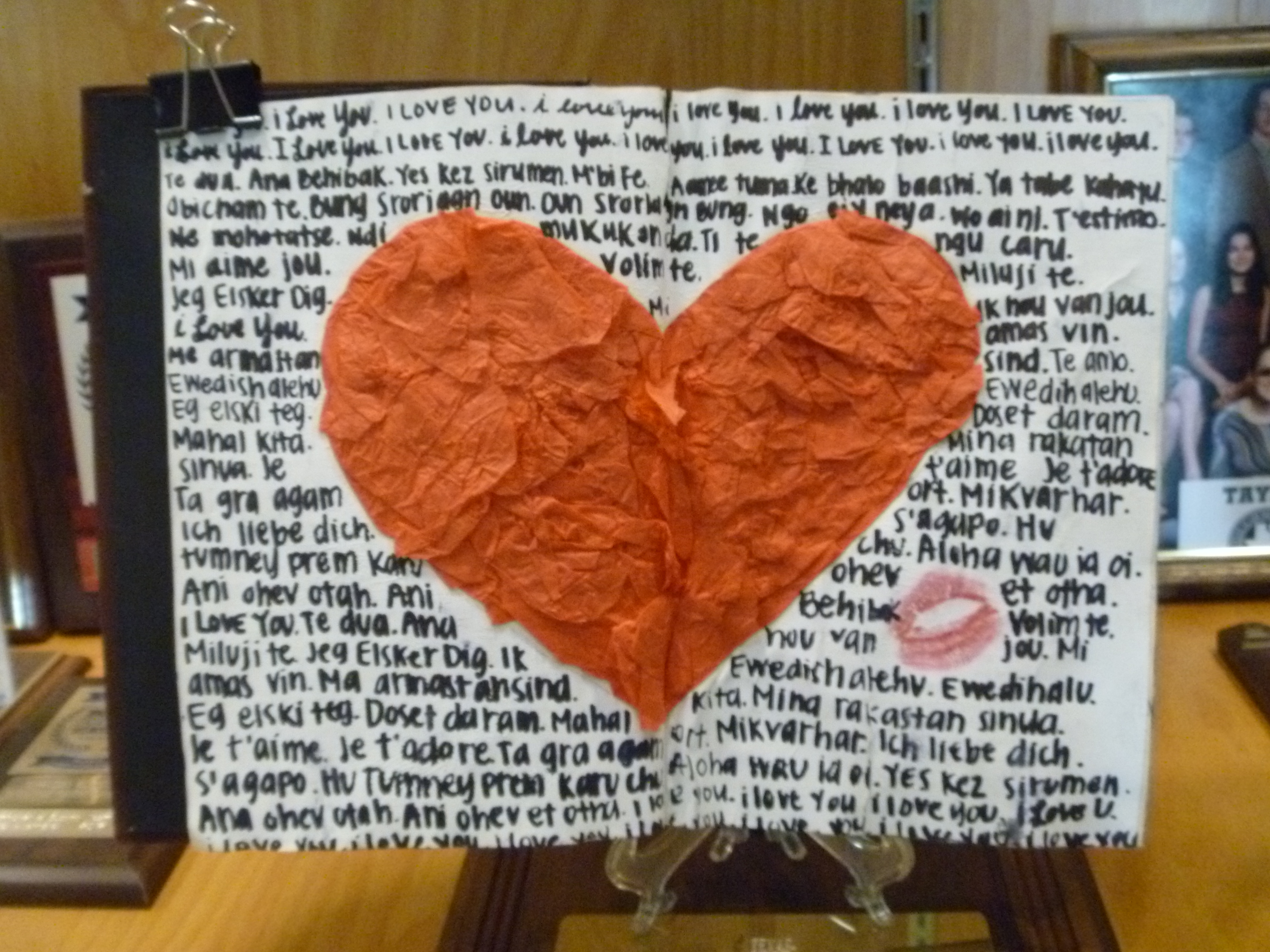
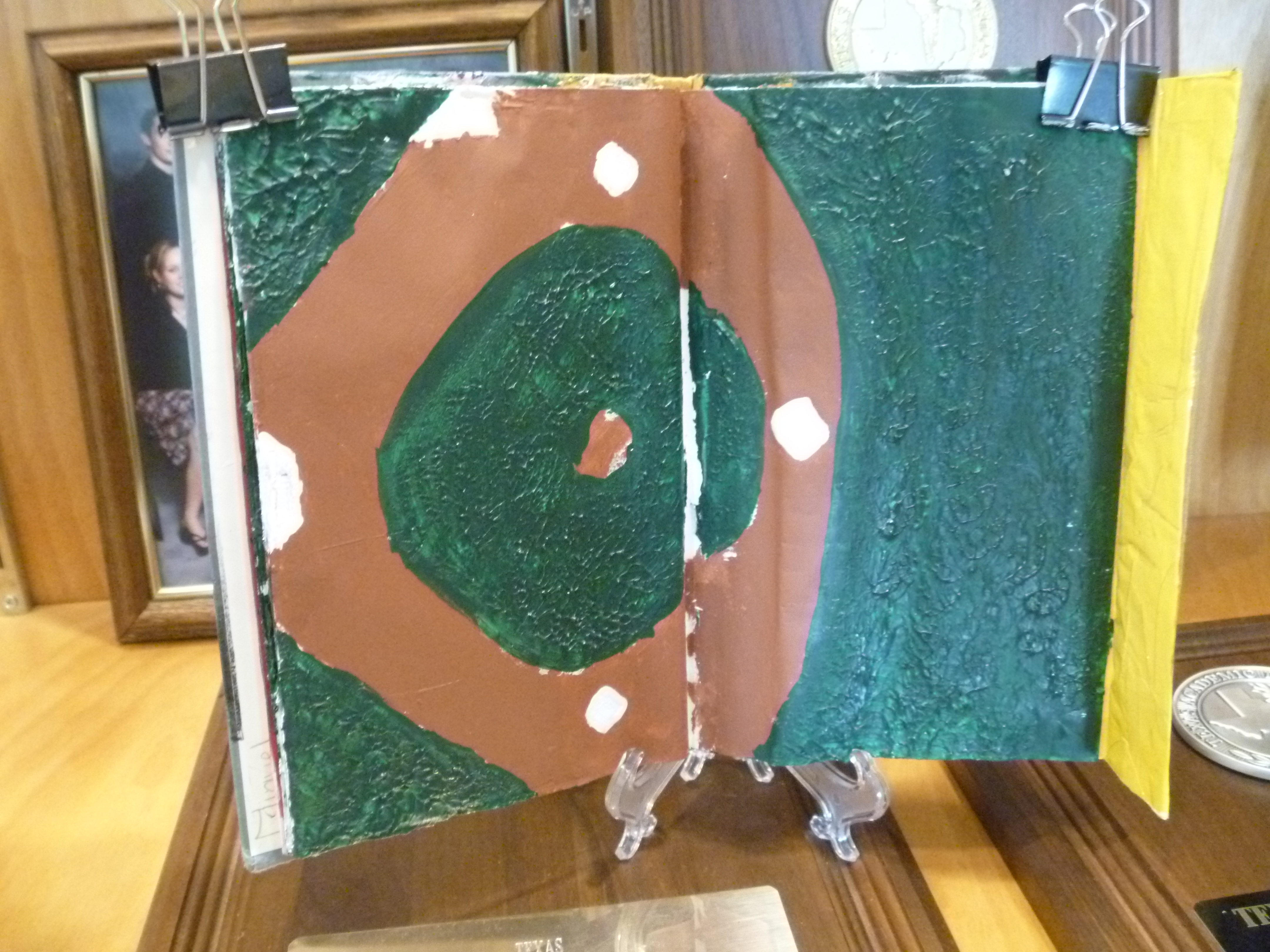
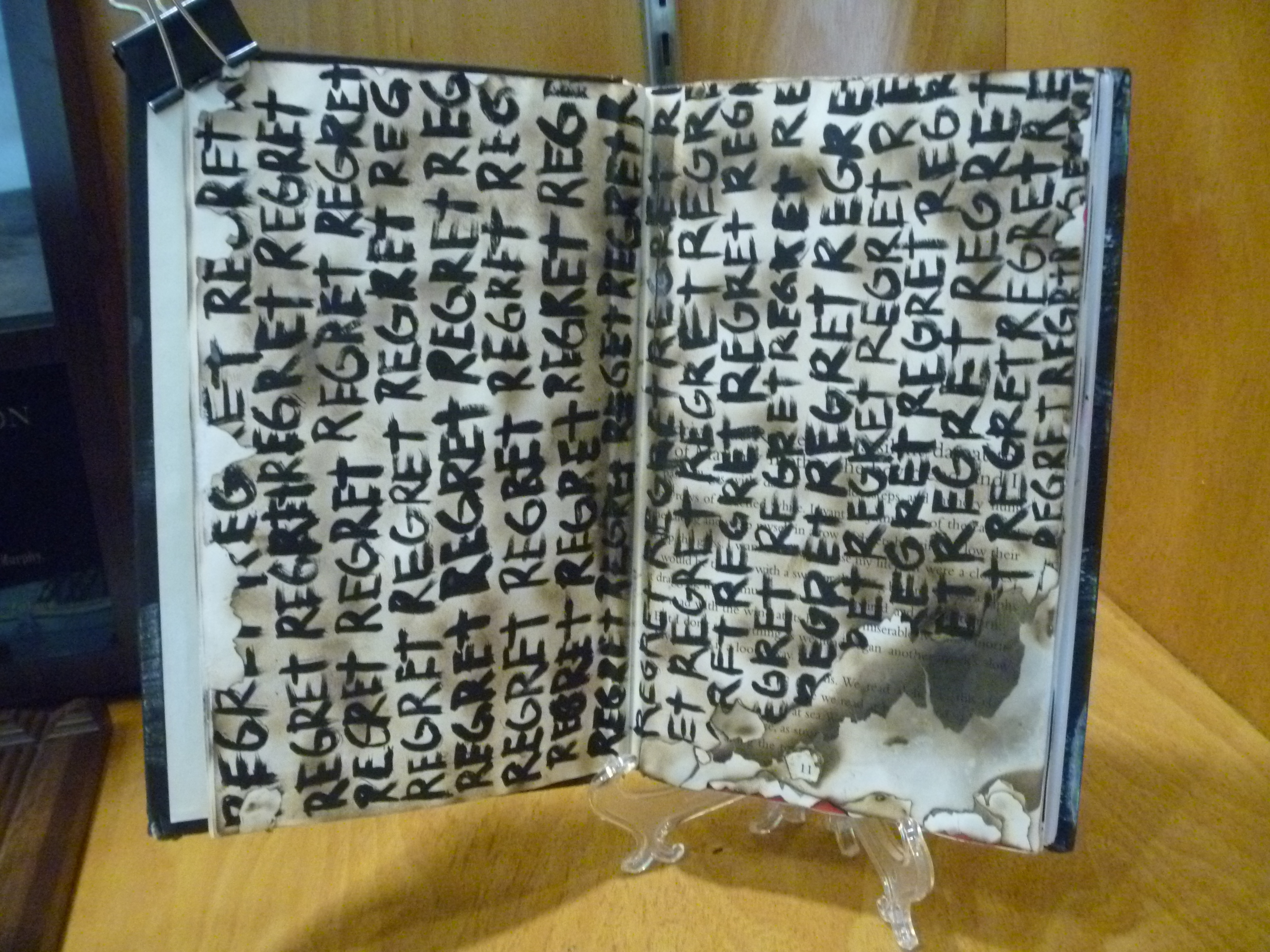
Some of my favorite moments from this year:  The first HS art show.  It was hard and fun all wrapped into one.  I loved the relationships I created with some of my painting/drawing students.  The sculpture field trip to the Umlaf Sculpture Garden is one I will never forget.  My freshmen this year were so much fun.  I love that so many decided they wanted to be with me again next year.  I loved altered books and egg carton balance and mixed media collages.  I love that I saw 2 boys, boys that would probably get lost in the system, come to life when I put clay in their hands.  And, I love that they are taking ceramics next year (and hopefully for the rest of their hs careers.)  I was honored that the principals did recognize me and my efforts to name me November teacher of the month. I am proud of my monthly parent newsletter–I’ve been wanting to do this forever, and finally got it done.  I am proud of all that was accomplished this year.  I had a blast.

All in all, it was a great year.  But, as usual, I have already moved on and working on next year.  Stay tuned….it’s gonna be a good one!

Some Food For Thought.

Standard
"The techniques of Monet or Degas can be copied; their principles of design are not obscure, they can be learned. If you want them for yourself you can have them—for a price.  And the price is dearer than you may think.  Not only will you have  to put in at least as much time as they did in developing the same skills, all your living days, but the real price you will have paid is that you will have succeeded in becoming them, and will have missed becoming you. 

Better to raise the questions Monet did than to mimic his responses. What are his questions, the task he set himself?  They are remarkably similar to the questions any artist, any creative person, any awake person asks. “What is that damn thing out there? What does an idea look like? How can I give form to a feeling? How does this whole mess fit together.  How can I speak about the thing no long there? The thing not here yet? Why am I moved like this by mere daylight, by nightfall? Is there truth here, or merely beauty? Does this line have integrity, or is it guile? What have I made up, what have I observed? Of all the things I can do, what shall I do, what should I do? Will I ever get it right?" Peter London NO MORE SECONDHAND ART Shambahla 1989

Painting:
The Rose Walk, Giverny, 1920–22, Musée Marmottan Monet

“The techniques of Monet or Degas can be copied; their principles of design are not obscure, they can be learned. If you want them for yourself you can have them—for a price. And the price is dearer than you may think. Not only will you have to put in at least as much time as they did in developing the same skills, all your living days, but the real price you will have paid is that you will have succeeded in becoming them, and will have missed becoming you.

Better to raise the questions Monet did than to mimic his responses. What are his questions, the task he set himself? They are remarkably similar to the questions any artist, any creative person, any awake person asks. “What is that damn thing out there? What does an idea look like? How can I give form to a feeling? How does this whole mess fit together. How can I speak about the thing no long there? The thing not here yet? Why am I moved like this by mere daylight, by nightfall? Is there truth here, or merely beauty? Does this line have integrity, or is it guile? What have I made up, what have I observed? Of all the things I can do, what shall I do, what should I do? Will I ever get it right?” Peter London NO MORE SECONDHAND ART Shambahla 1989

Painting:
The Rose Walk, Giverny, 1920–22, Musée Marmottan Monet

(Thanks to my friend Katherine Douglas for posting this in our art teacher FB group.  It is super inspirational and I think I might print it out and post it in my classroom next year.)

Art 1 Final Project (Part 4: The Results)

Standard

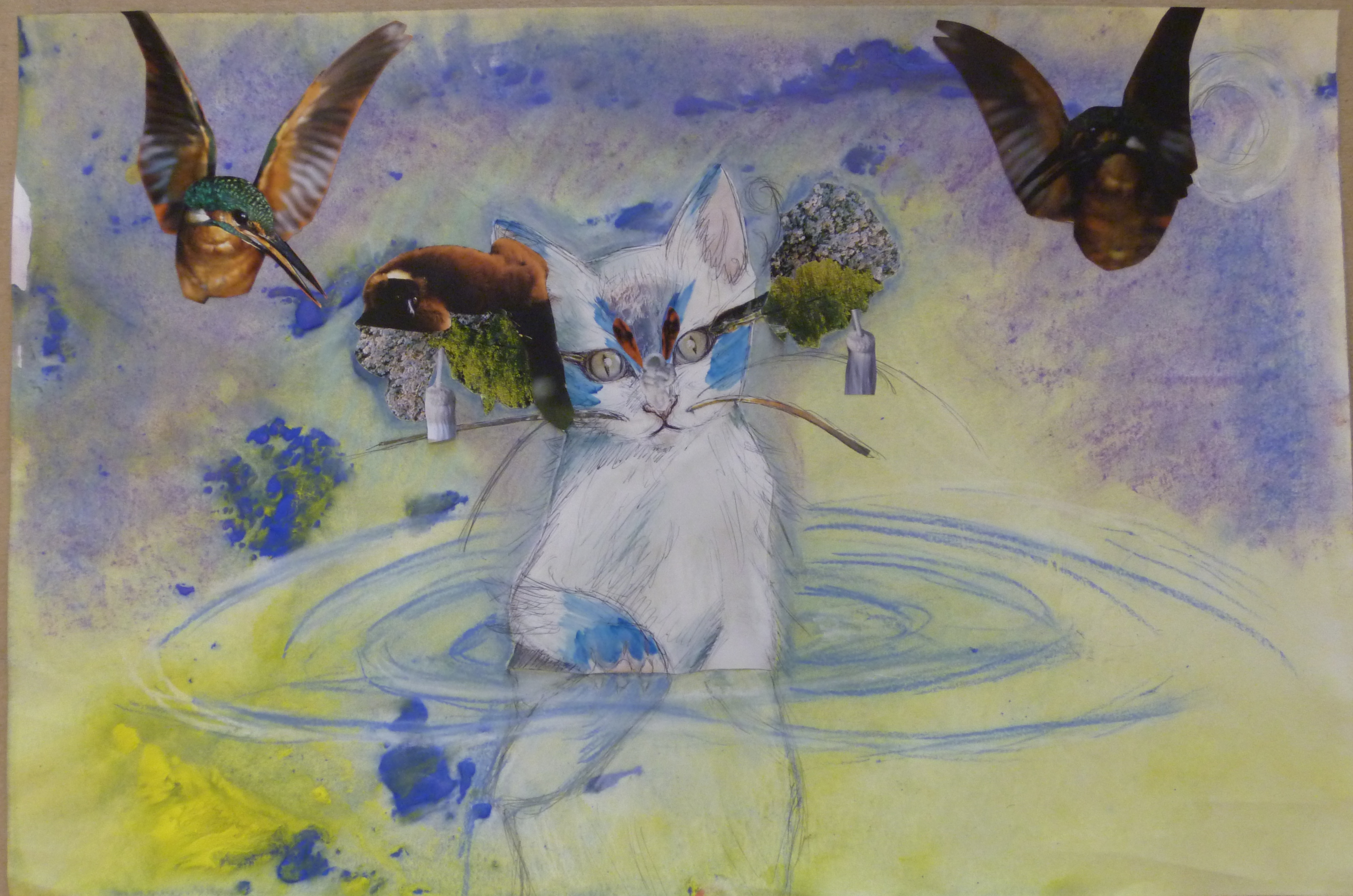
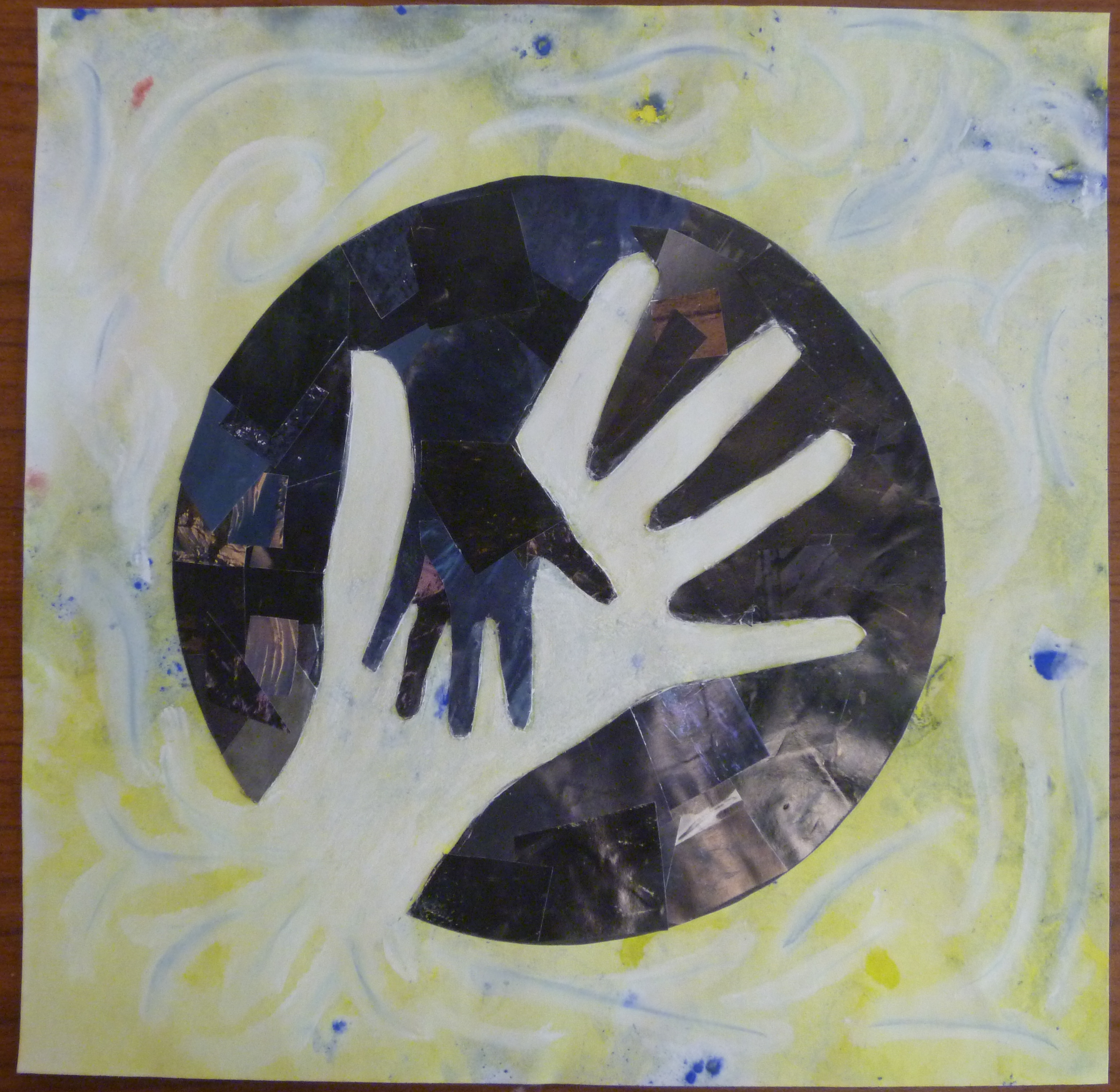
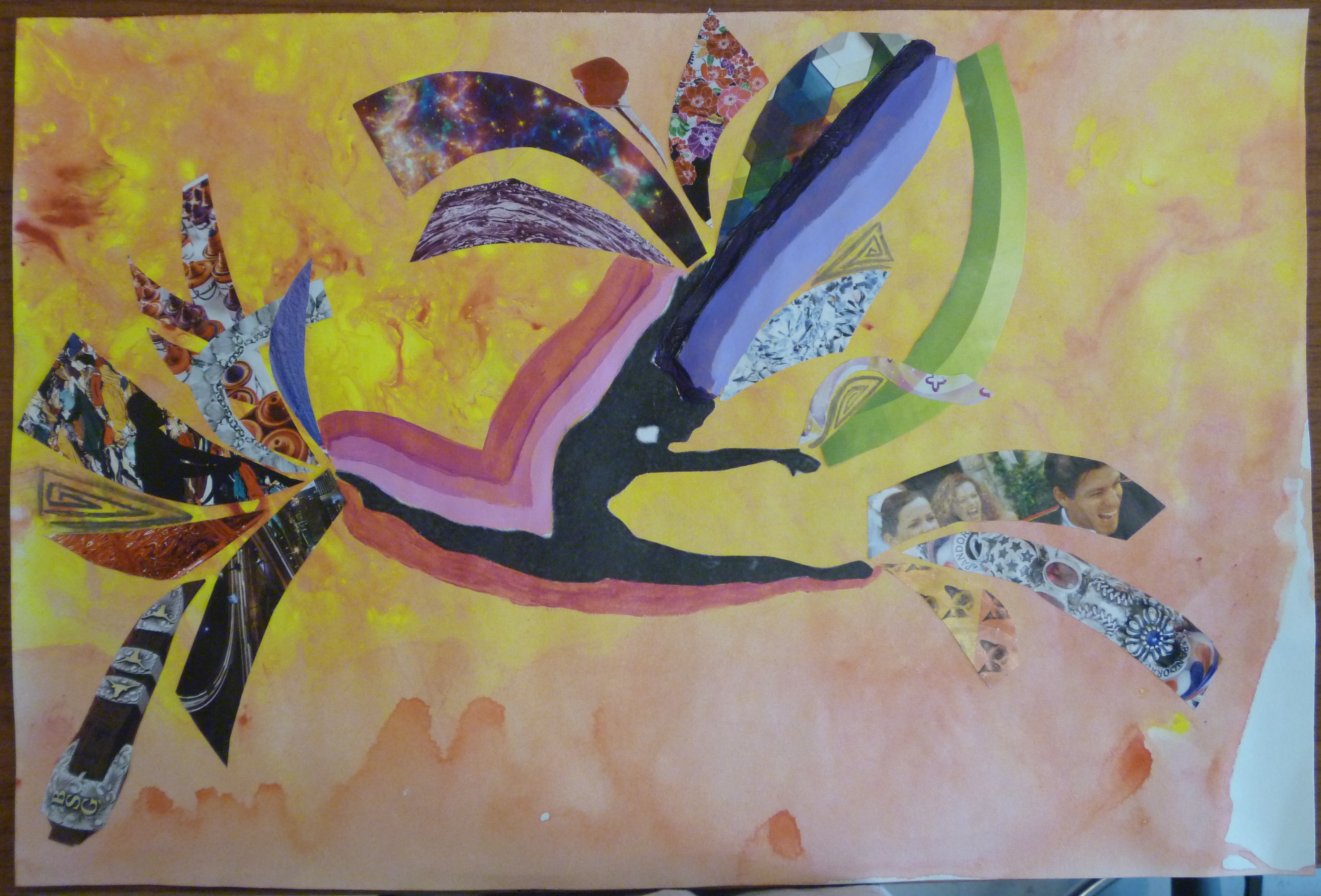
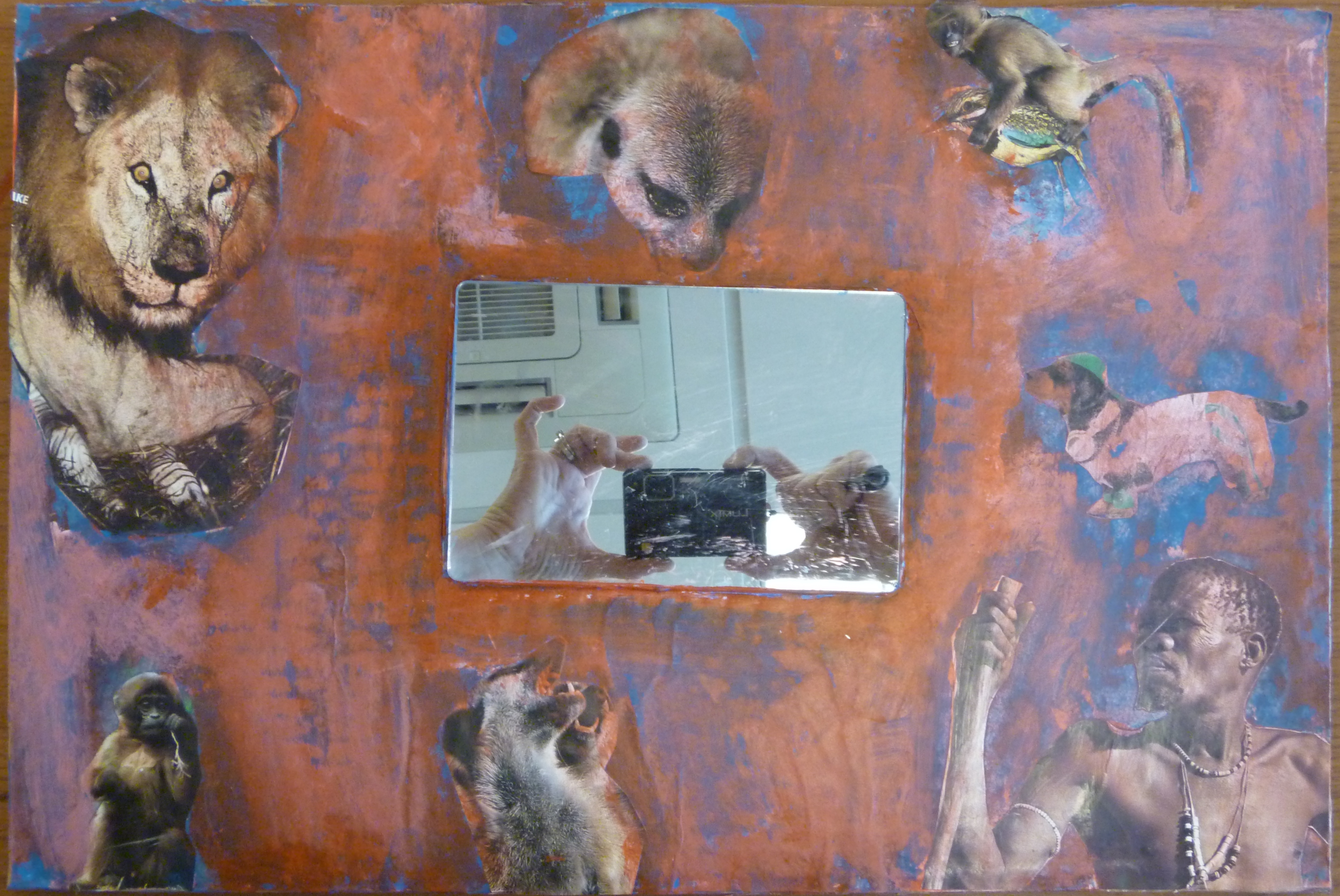
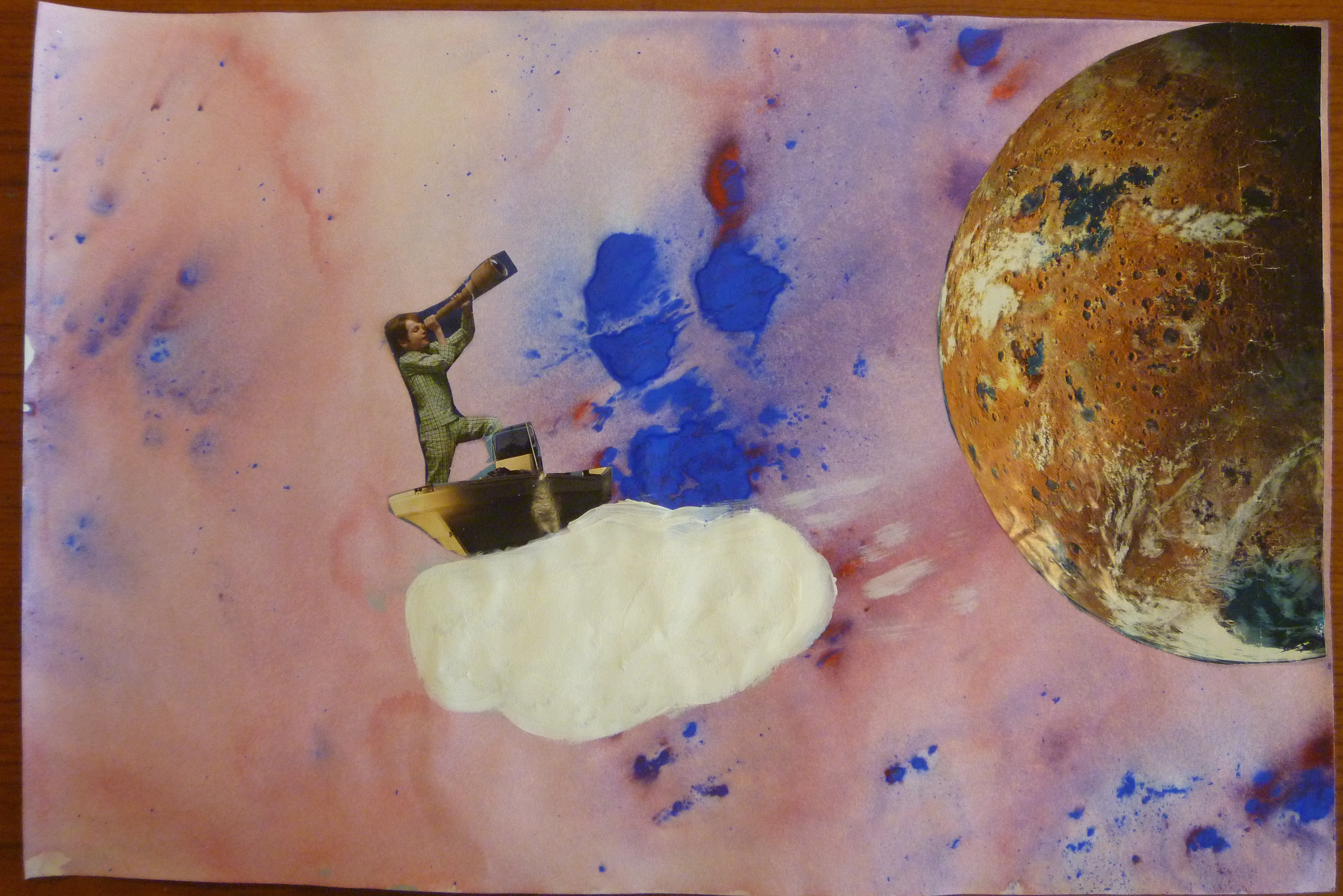
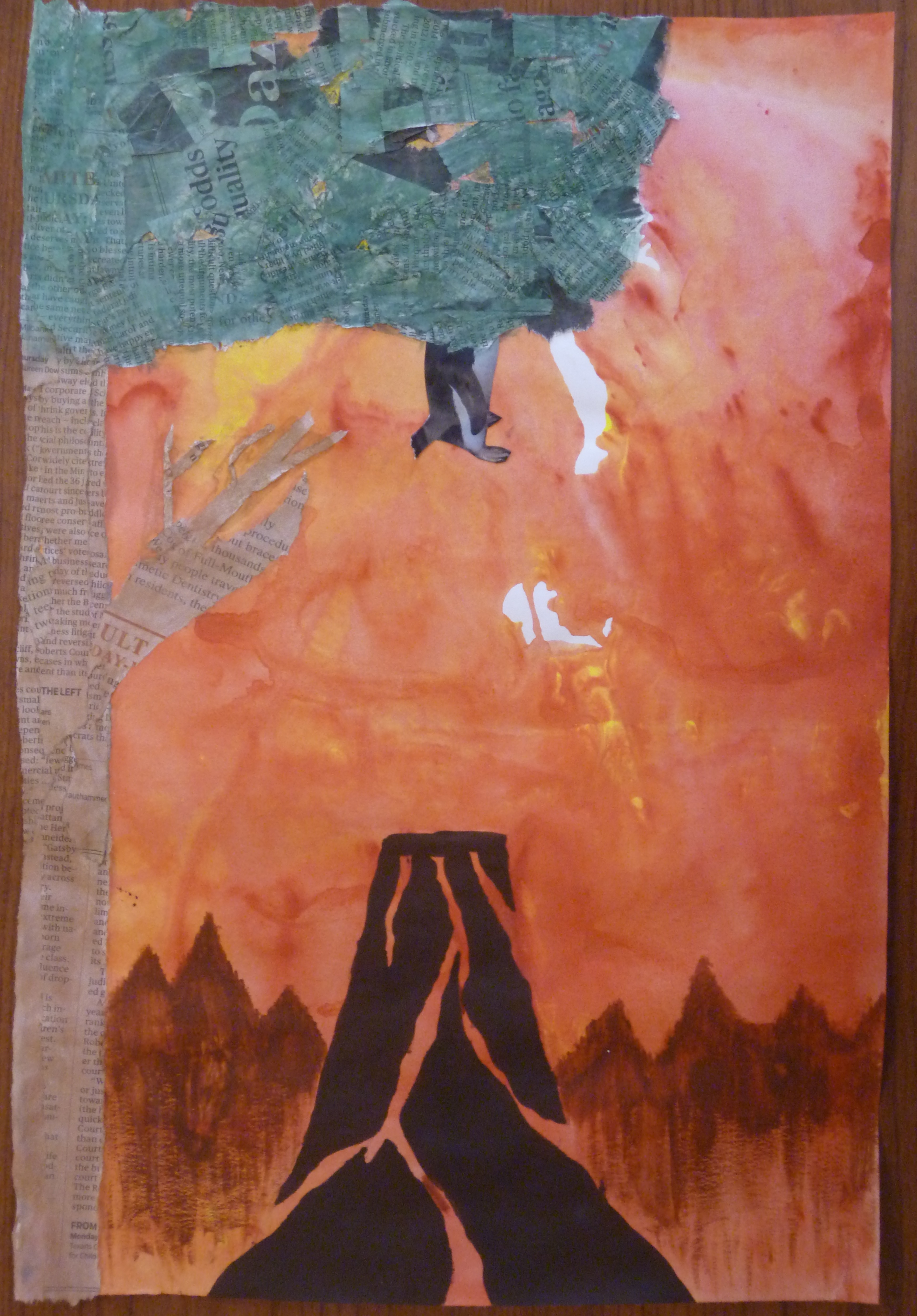
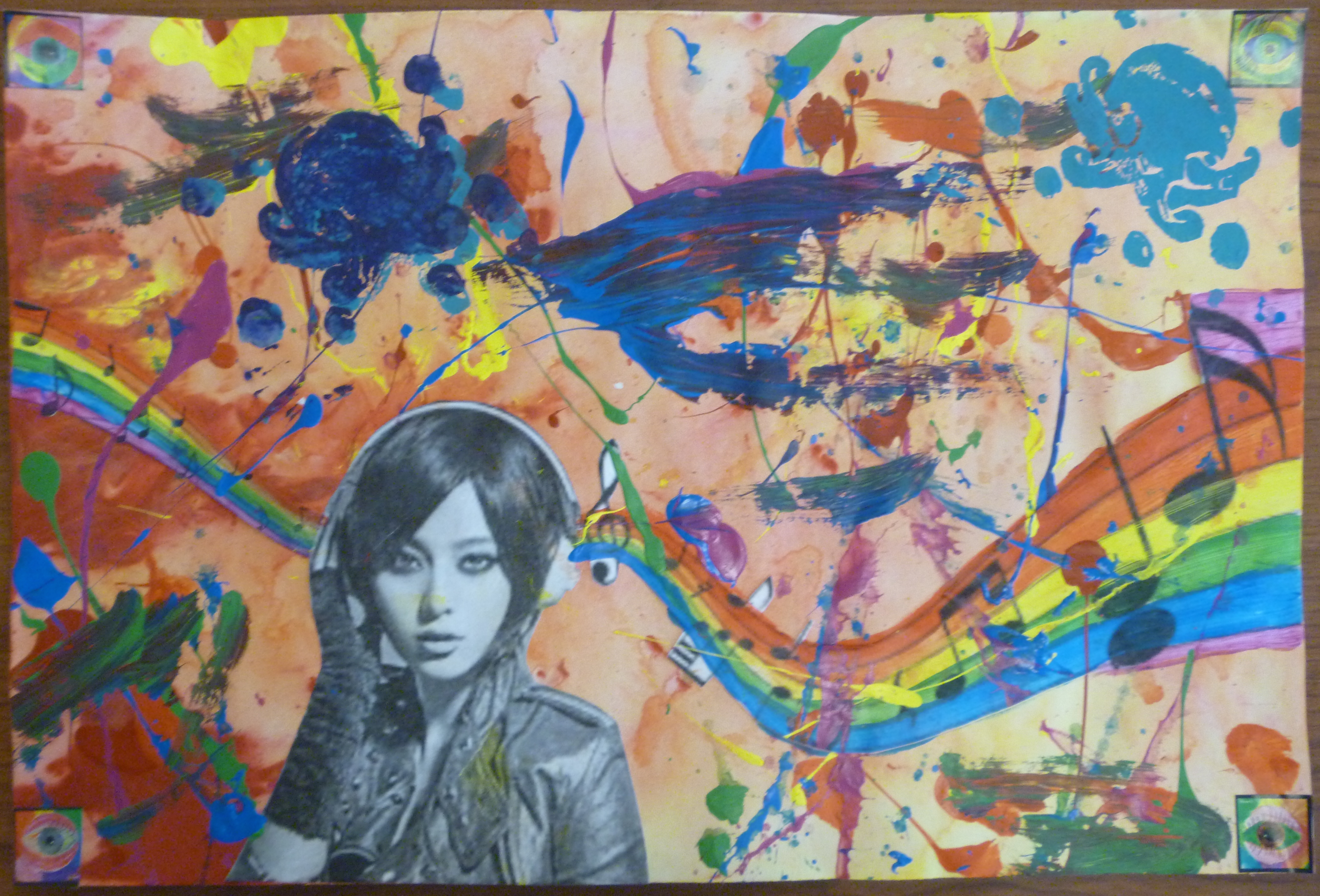
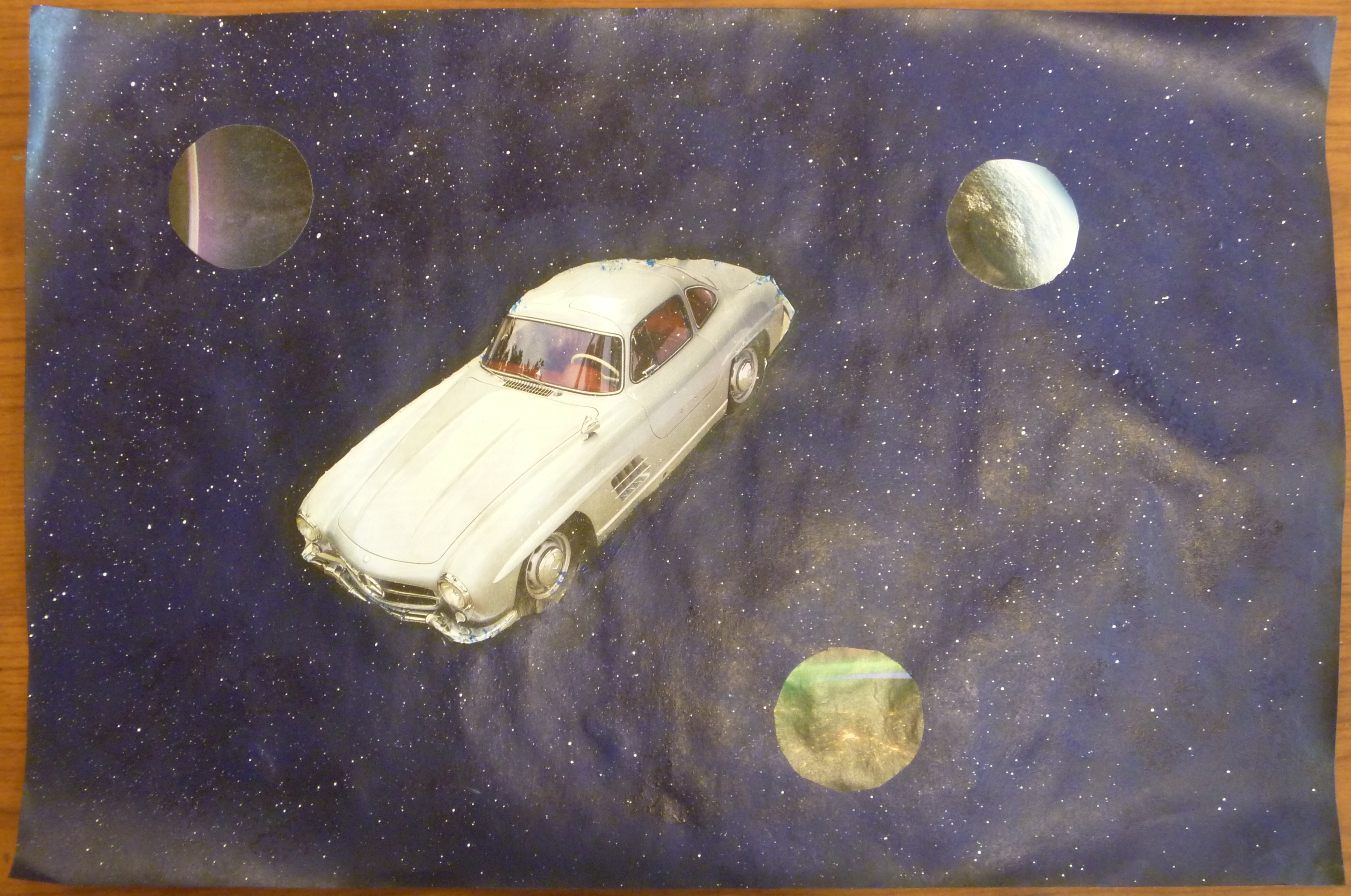
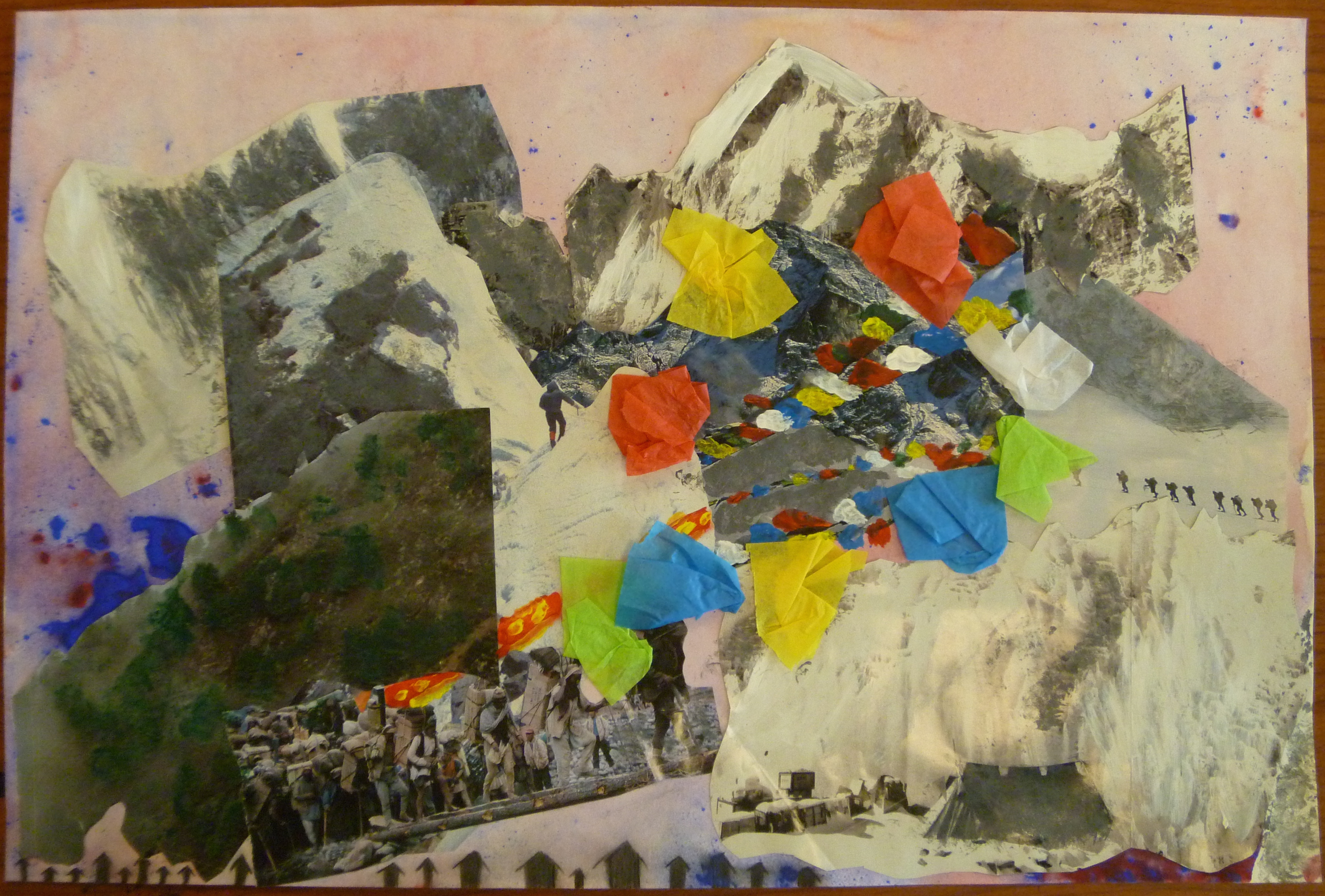
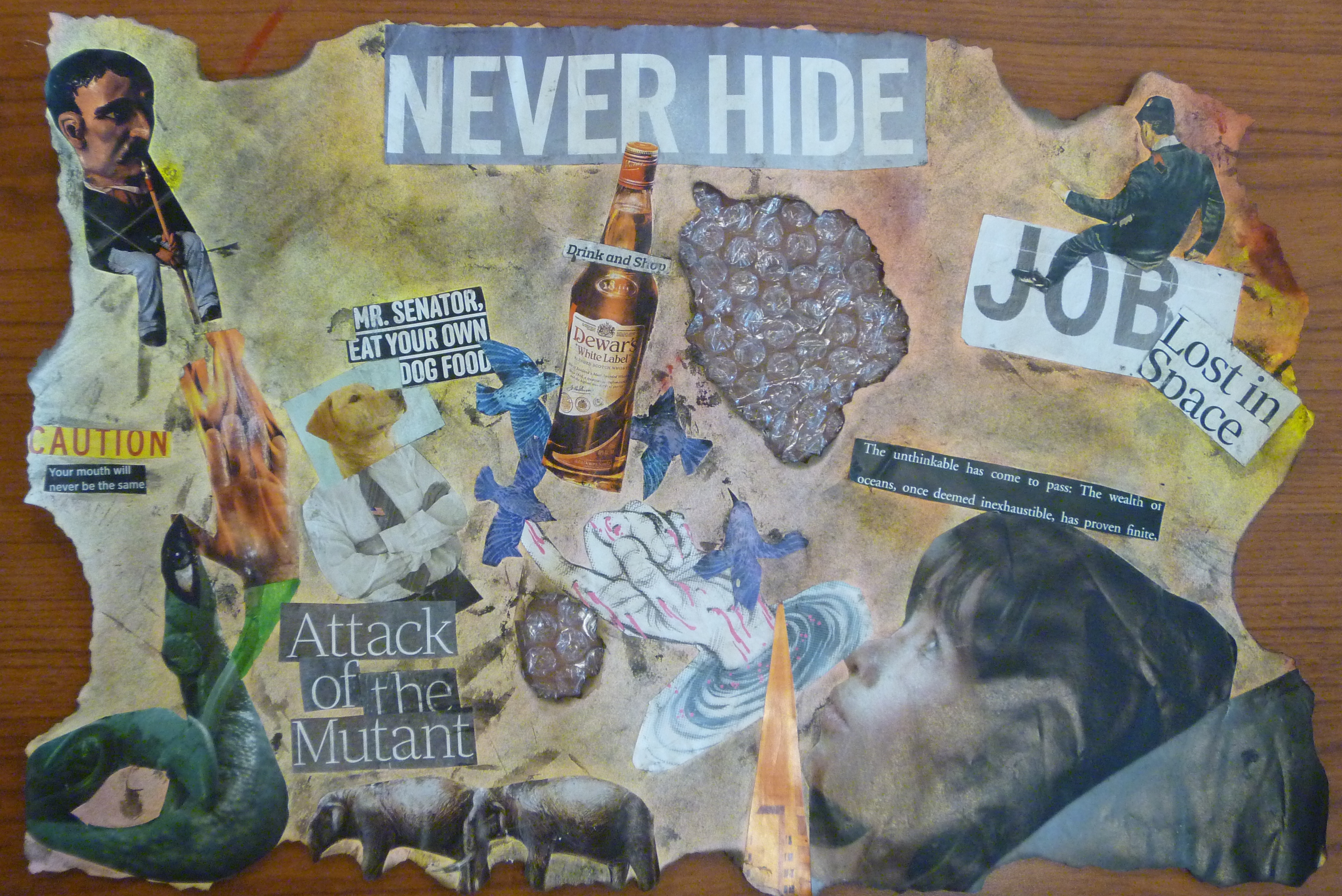
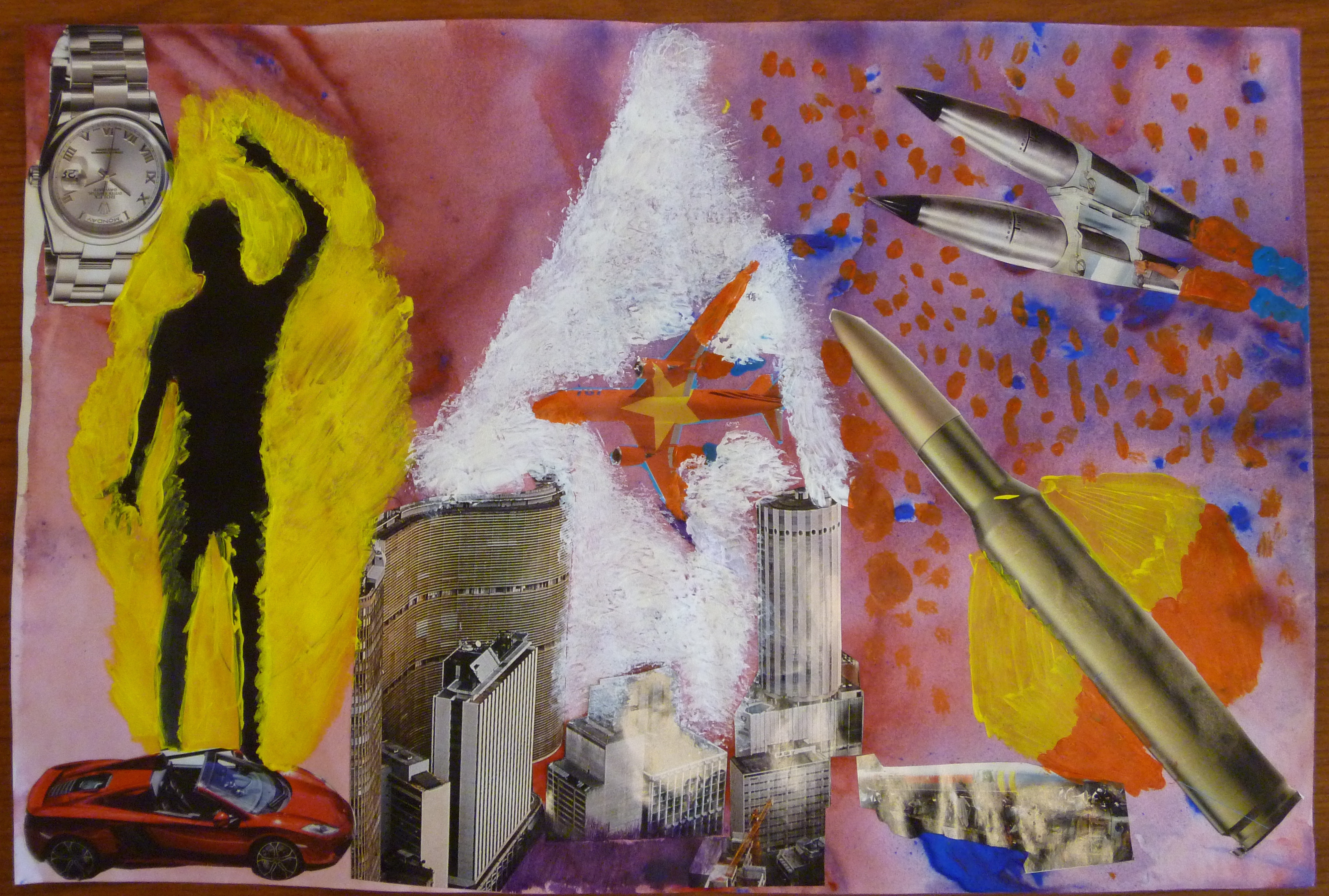
The school year has finally come to an end, and so have the mixed-media artworks my art 1 students created.  It has been a whirlwind the past 2 weeks in my art room during periods 2, 6, and 7.  We were messy on day 2 making monoprints.  We explored composition and the involvement of the audience in an artwork on day 3.

Then for the rest of the 2 weeks, my young artists cut out magazines, painted with tempera and acrylic, drew with colored pencils, graphite, charcoal, conte, chalk pastels, and markers.  They used block prints and burned their paper.  One student used thread and spray paint.  Another added torn newspaper and watercolors.  I was asked for yarn and plastic mosaic pieces and bubble wrap.  I showed them where the materials were, and I sat back and watched, helped, learned, and was amazed at what my students were doing.  THEY WERE BEING CREATIVE!!!  They were having a voice.  They were exploring.  They were communicating–with me, with each other, with an audience.

P1040036

“Look Into His Eyes”

P1040057

“The Joining of Two”

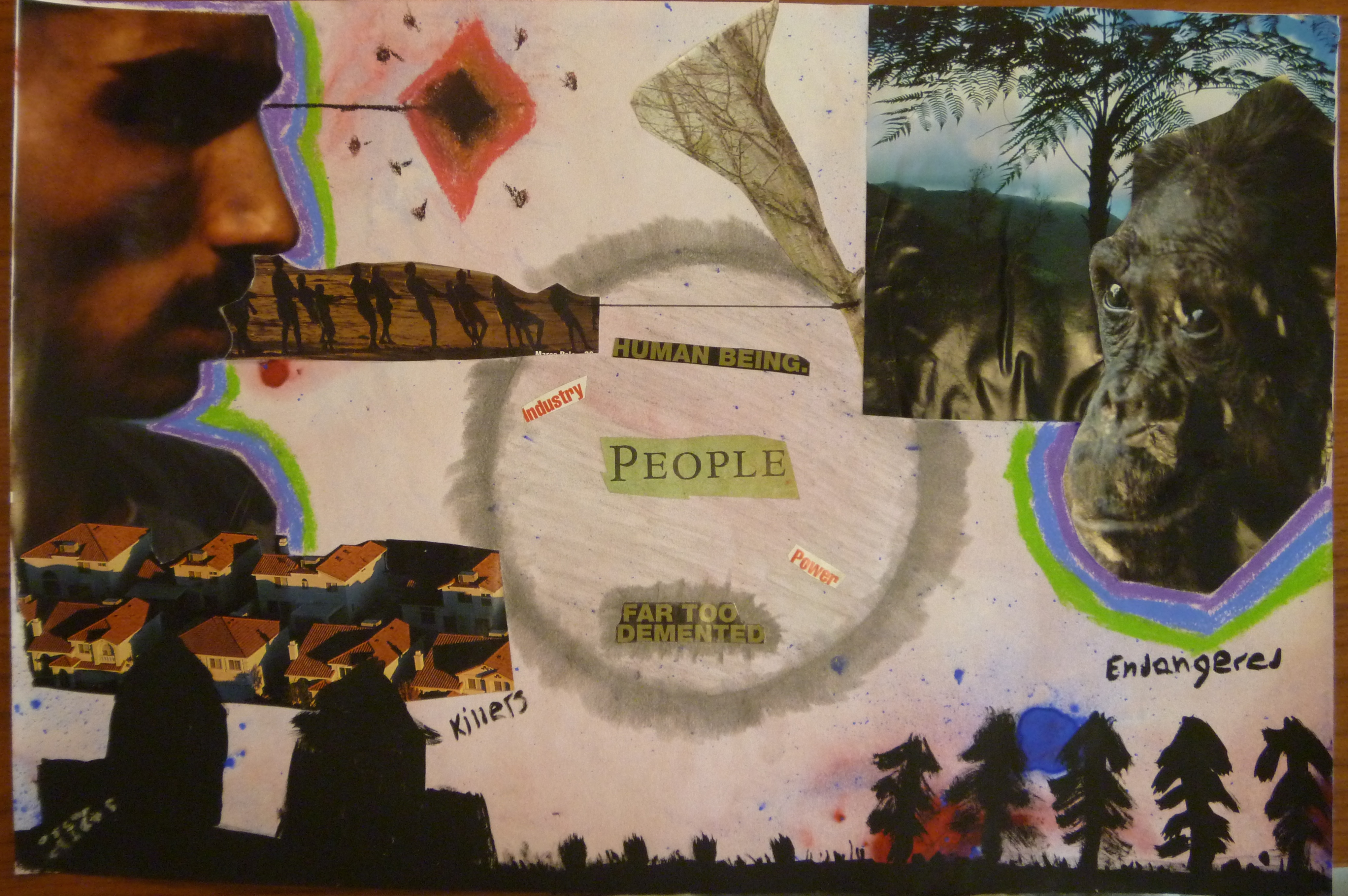
P1040058

“People”

P1040059

“Dreaming Dancing Girl”

P1040060

“Stay Thirsty”

P1040062

“You”

P1040052

” ‘Merica”

P1040049

“New Discoveries”

P1040050

“A Great Penguin Disaster”

P1040051

“Road to Divorce”

P1040053

“Track the Vibe”

P1040054

“Dark Space”

P1040055

“Secrets Hurt”

P1040041

“Her”

P1040042

“Wild Fire”

P1040043

“Future Revolution”

P1040044

“Foggy”

P1040045

“Breaking Free”

P1040046

“Everest”

P1040047

“Lucid”

P1040048

“Art Attack”

P1040038

“Two Sides”

P1040039

“Demonic Flower Girl”

P1040037

“Woman’s Secret”

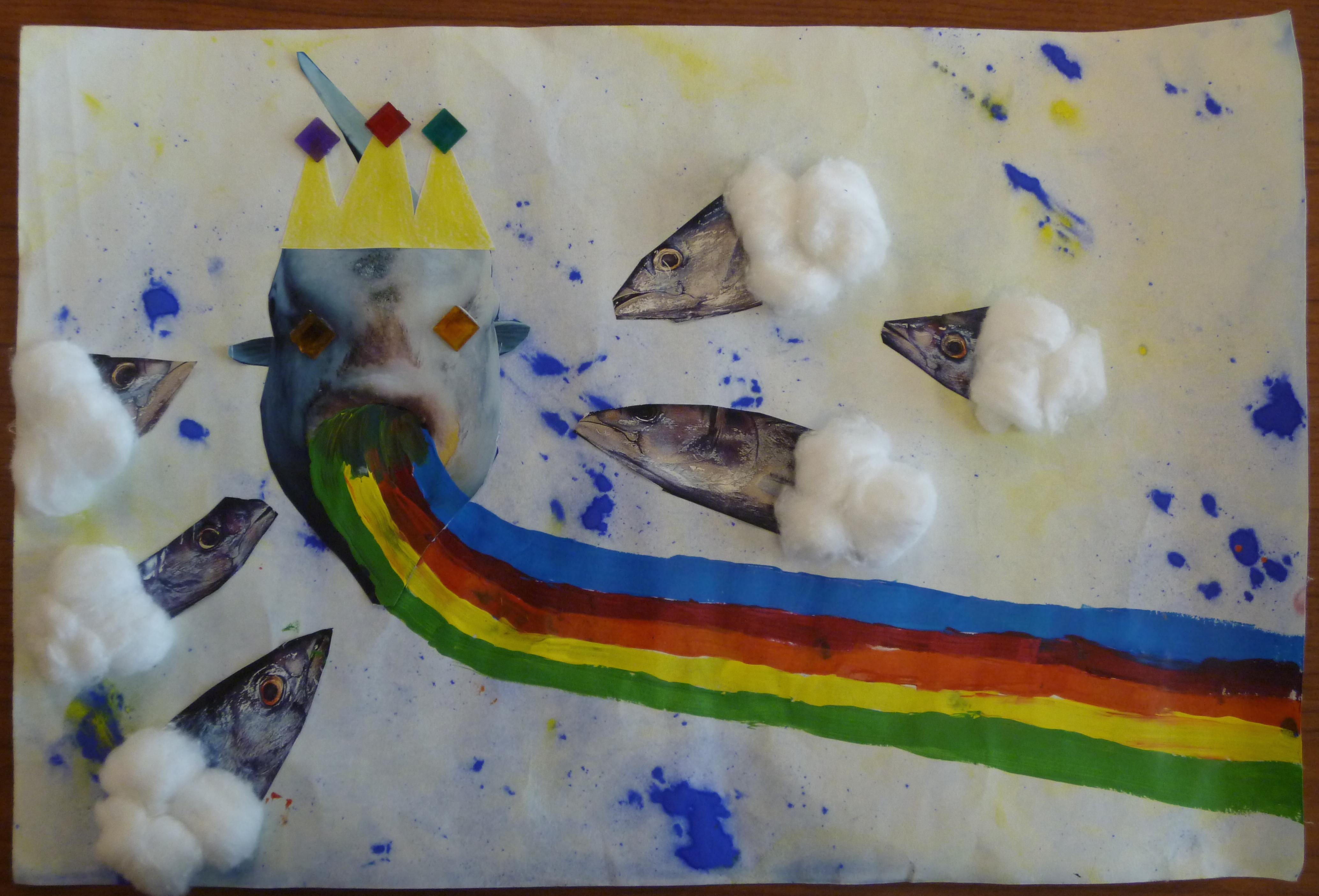
"The Almighty Fish God"

“The Almighty Fish God”

Students were given a reflection sheet/rubric on which I would grade.  Most were questions based on their thought process.  I think the most telling questions were “If you to title your artwork, what would it be?”  and “Explain what is going on in your artwork”.  I enjoyed reading the reflections.  I made the grading rather simple–10 point if the student only collaged and did not explore the addition of other media, up to 10 points off for not trying to utilize the composition concepts we discussed, 5 points off for not turning in a rubric, and up to 5 points off for what they say on the rubric.  In other words, they will all receive a passing grade as long as they turned it in.  I am contemplating having reflection sheets similar to this next year.

From students:

“[My favorite art making activity was] my final one because I tried to take everything that I learned this year and put it into it.”

“[My favorite art making activity was] this one because of the freedom and creativity this produced”

“I enjoyed this project the most.  It gave me a lot of leeway.”

They all worked hard, well, most worked hard.  Of course I had those few kids in every class that just cut out random things and glued them down and called it finished.  But I am okay with that.  I feel that I am not being realistic if I expect 100% engagement in this type of project.  Several students weren’t sure how to proceed after the collage part, but I talked them through and they eventually got it.

As I reflect on this project, I think more time, maybe a period tops, needs to be spent on content.  I think that is where some people struggled.  We originally talked about surrealism, but as kids progressed through the process, many veered off that and found topics based on the magazine pictures that interested them.  I am okay with that.  I guess we need to talk more about how to work through things.  I am hoping as I move to a more choice-based class and we talk more about artistic behaviors (thanks art teachers of APEX HS) next year, this might not be as much as a struggle for some.

I look forward to doing this project again.  I so much enjoyed it this year.  In fact, I think it was my favorite of the year (for Art 1 anyway.)  Many students asked if they could take them home.  I want to say no.  I want to hold onto them to hang at the beginning of next year to help brighten up the hallways and to show off this wonderful artwork they made.  In fact, that was the choice I made, and they seemed okay with it.

Altered Books Revisted

Standard

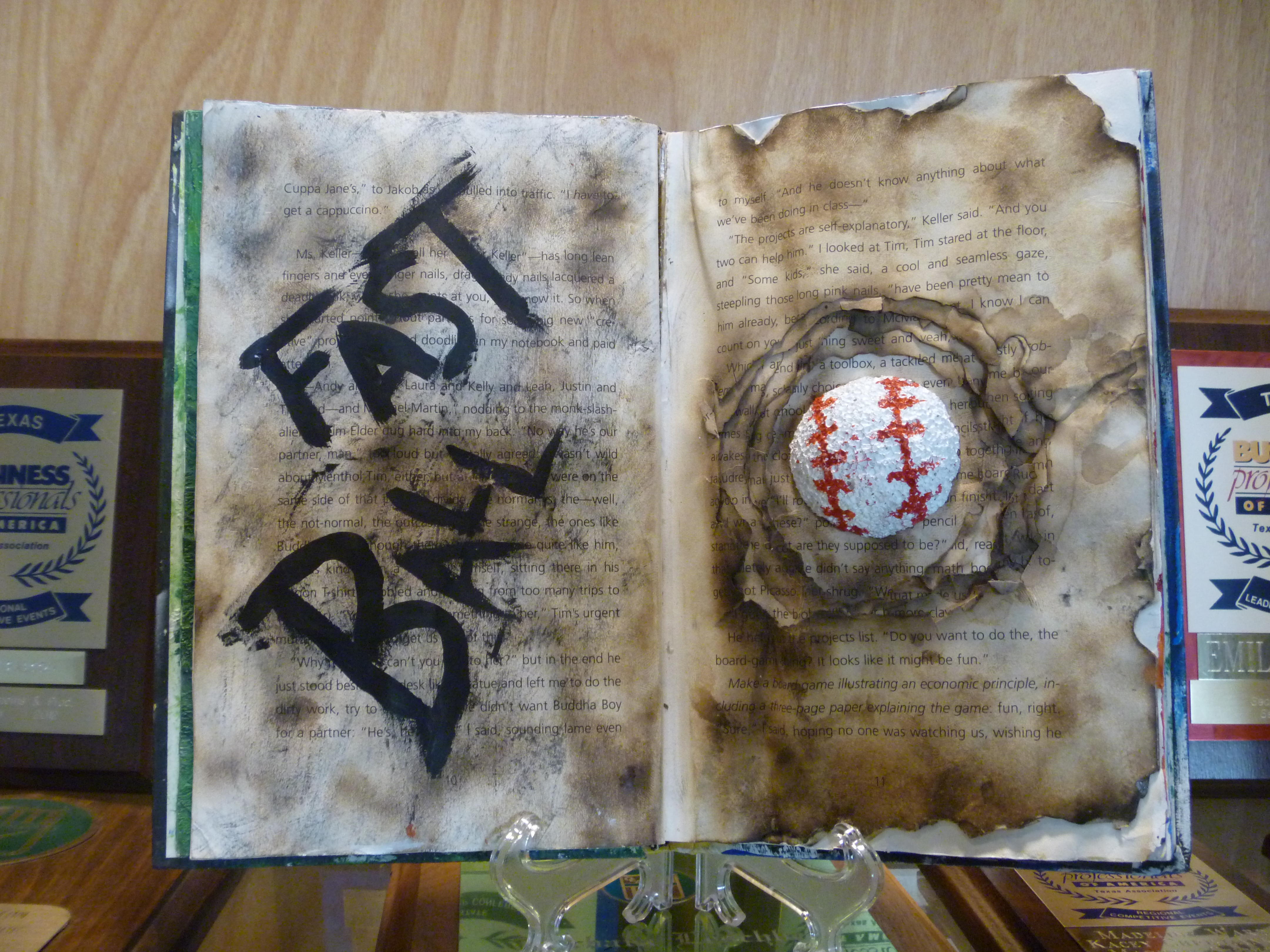
My Art 2: Painting/Drawing students finally finished their altered books, and let me tell you what… they are fabulous.  (As a side note, I think I have been in Texas too long if I just wrote the phrase “let me tell you what.”)  Anyway, I knew some were going to be a home run, but I wasn’t prepared for almost every book having at least one amazing page.  Normally I get some great books and a few that could have been great, but were never finished.  And, of course there are the ones that should have never been allowed to become artworks.

This year, I had a hard time deciding which page in several books to display.  It makes me feel so good as a teacher to see such exploration.  And, throughout the process, my kids just weren’t learning from me or on their own…they were ASKING OTHER KIDS about what they were doing.  And some of the kids didn’t even like each other.  AWESOME!!!!

I will be doing this again, but much sooner in the year as I think it really opens up the definition of what can be done with art. In fact, perhaps I will introduce the Altered Book to Art 1 towards the end of next year.

P1030893 P1030894 P1030895 P1030897 P1030898 P1030899 P1030900 P1030901 P1030902 P1030903 P1030904 P1030905 P1030906 P1030907 P1030908 P1030909


P1030934

Art 1 Final Project (Part 3: In Progress)

Standard

We have been working on the final project in art 1 for 4 days now.  And, let me tell you, it has been a blast.  After making monoprints, I introduced the idea of surrealism.  Then, as a class we talked about the “requirements” of the final project.

I talked about composition and how it was important to invite the viewer in and keep them in by creating an entryway, “lines” that help the viewer to move around, and depth to keep them there.  I told them that an artwork is a 2-way street–both the artist and the viewer are important.  Not only can you use the artwork to say what you, the artist, had to say, but you also want to create something that the viewer wants to look at.  I told them that they could have this horrific subject matter, but if they created depth and interest that the viewer could get lost in and move around in, then they have won.  They have solved both problems and their artwork is a success.  I told them of a painting I saw in Vienna that was so bloody, but had so much depth, that I went and stared at it for over a half hour, just lost and wandering.  I never showed them the painting, although I have thought about it.  I can still just stare at it for quite some time and get lost.

“Kreuzwegstation”, Hermann Nitsch, 1961. (Translation, “Station of the Cross”)

But, back to the art 1 assignment.  The last part of the assignment was the use of multiple mediums.  I told the students that I wanted them to explore mixed-media art.  I let them know they could use any technique or material we have used.  I told them they could try new things we haven’t used.  I was open to anything.

And off they went to collage.  And, off I went to collage. We have been having a blast.  The kids are loving looking through magazines and having me make photocopies.  Every piece is so different.  Some are serious.  Some are fun.  Some are just plain awesome.  I can’t wait to see where they end up.

One student today said to me as I was walking around looking and asking questions, “I don’t know if I am doing this right.  Is this what it should look like?”  “It looks exactly like what it should look like,” I said, ” Yes you are doing it right.  I am coming up with mine as I am going along.”  He seemed very pleased with this answer.  I know he is working hard and I can see he is making carefully planned out choices.

P1030947


A serious piece about words that hurt us–I think she is still looking for the “right” eyes.

P1030944


Yesterday, she said she wasn’t sure what to do.  All she could come up with was trees.

P1030942Today I was joking around with the bottom half of some penguins I added to mine and told her to glue them to look like the feet were hanging out of the tree leaves.  She did.  And now she is painting in a volcano under the tree that the penguin will fall into.  I told her this is awesome.  It is so not serious, which is so different than her normal work.


This student has been inspired by both the highest point, Mount Everest, and the lowest point, the Black Sea.  She chose the former.

P1030948


Simple, at least for now, with just a set of eyes.  Can’t wait to see what the conte will bring.

P1030949


I have one student that pulled about 5 monoprints.  She is creating multiple mixed media pieces and then will decide which one is the most successful and will turn that in.  Here is one of them.  I love the energy and her intensity with which she is working.

P1030946

I have been having a blast, not only watching my students create and make choices and collaborate, but also creating mine.  I think that the energy I am bringing to making my piece has rubbed off because the energy in the room is different.  The way the students are working is different.  And that is a good thing.

The students are funny.  They are like, “Who are you?”  “You are never like this.”  “You’re examples are never this crazy/weird.”  I told them, “Not weird, Awesome!  My artwork is just awesome and you are jealous of it’s awesomeness.”  Of course, this is all in good fun and they jab me right back.  (Then the whole penguin thing occurred, so….um….yeah.)

But, here is my example, just in case you were wondering.  Yes, that is a duck ship.  Yes, it is beaming up an armadillo.  And, yes, that condor is shooting laser beams at the unicorn. But, no, I don’t know what’s up with the monkey.  And, no I don’t know which side the fish are on.  I just know it is Animal Armageddon in Penguin Town.

wpid-20140516_163017.jpg

The students have 5 more class, plus their exam period to complete their surreal mixed media artworks.  Every day I look forward to my 3 art 1 classes.  I can’t wait to see what they do next.


Art 1: Final Project (Part 2: Monoprints)

Standard

I had planned to start on Monday, but an unexpected Mother’s Day gift from my son (stomach virus) caused me to start a day late.  While I felt bad taking time away from my students to work, I think they are strong and will not let it affect them.

Today was part 1 of the project:  monoprints.

Several years ago at a conference at UT, I learned how to create monoprints using water and tempera paint.  It was messy and tons of fun.  At the time, we used the paper to make paper kimonos.  Cute, but not really my thing.  I have used the technique another time as a background to learn about symmetry using the Maori Moko Tattoos.  I have since stopped that lesson, but I thought the monoprint technique was a great base for this artwork.

As I stated in part 1, I find that many people, myself included, have a hard time making those first marks on clean, pristine, white paper.  So to help solve that issue and hopefully allow the kids to jump right in, we created monoprints.

Our “plates” for this were my tables.  I covered three tables with water and 2 colors of tempera:  blue/yellow, red/yellow, and red/blue.

Image


Next the students would lay down their paper and pull their print.

Image


Image


Some of the kids liked the process and made several monoprints.  Others were not into the mess or just didn’t want to make art today.  But I am happy with the outcomes and I hope they all have a great base for their multimedia artwork.

Now, the worse part of this activity is the clean-up.  I did have newspaper every where, but there were still a lot of dripping from walking the prints over to the counters.  And, unless you ask the kids to help, no one will.  They will all just sit and watch you clean and wipe up the floor on your hands and knees.  I was disappointed that out of my 65 students, only 3 offered to help clean.  I guess the brightside is it was cleaned to my standards.

Here are some of the fabulous results.

Image   ImageImage

ImageImageImage