Category Archives: Art 2: painting/drawing

Say Yes to Drawing Tests in Art!

Standard

A concern that I have heard about having a choice-based or TAB art studio is that students don’t ever work on skills–including observational drawing skills.  I would like to address this particular concern.  My students work on observational skills…every 2 weeks.  How do they do this you might ask?  Well, let me tell you…with a drawing test.

Several years ago I went the TAEA (TX Art Ed Assoc) State conference somewhere and I attended a session on creating workbooks.  In that session, the two teachers mentioned drawing tests. I was intrigued so I asked for more information.  They gave me the run down and I have been implementing them in my classes ever since.

I thought the drawing test was such a great way to have the students spend a few moments of uninterrupted time to concentrate on observational drawing.  And, now that I am in a TAB room, I find this time even more beneficial.

Here is the low-down:

MATERIALS:

  • many class sets of objects.  I went to the dollar store and bought a ton of crap over the year that would be good for drawing–spoons, forks, ramekins, ornaments, salt shakers, etc.  For me a class set is 24.  I also bought a bunch of cheap bins from the dollar store to hold each set.  It is an investment, but worth it.  If you can find sets of things…like the forks came in groups of 3, ornaments come in packs of 12. Each box is labeled so it is easy to find and pull out.
  • squares of lightweight drawing paper. I have a ton of 60# white drawing paper.  I cut the paper down to 5.5-inch squares.  I cut a bunch at a time…enough to get me through a few weeks of testing for 4 classes.  I keep it all in a bin.
  • white poster board or railroad board. This is used to mount the tests for the book at the end
  • silver rings. I use the binding rings.  This holds the books together and makes it easy for the students to flip through.
  • white labels. to be used to label the pages of the book
  • double-sided tape. to attach drawing tests to the railroad board
  • timer. the tests are timed

HOW TO:

  • Each student gets a piece of paper and the week’s object.
  • We start off with easy things like Legos and work towards more complicated things.
  • Each test is timed. Art 1 starts with 5 minutes and works up to about 10 minutes at the end of the year. Art 2 starts at about 7 minutes and work up until 13 minutes.
  • Every week I tell the students things I want them to concentrate on when they are drawing.  I usually start with 3 things and as we move along, the easier things get removed and harder things to observe and concentrate on get put in.
    • shape
    • line quality
    • use of 3-d
    • surface quality
    • no lines
    • shading/shadow
  • There is no talking during the test
  • They must draw the entire time.  This means they either need to draw again or try to improve what they have done.
  • I also don’t let them listen to music.
  • I type up a sheet and post it on the screen during the test.  The sheet has the date, the drawing time, and what I am looking for.  Also, the reminders about drawing the whole time and talking are at the bottom.  I save all these because they give me the information for the labels later on.

Before we start, I give reminders and tips to drawing from life and observing things like shadows and planes.  I talk about making connections to help with proportion.  I point out things they should notice…like the salt shaker top is not as wide as the glass part.  During the test, in a quiet voice, I give reminders about how to observe and things to notice.

When time is up, I have the kids sign their work.  The first test they write their names on the back for my reference. The second time we talk about signatures and how artists sign their work.–I show some famous examples like Picasso, Monet, Durer, and myself.  After this, they then can write their name on the back and/or sign the front.

From there I take up the tests, grade them, and put them away for safe keeping.  Sometimes the kids ask about them, but mostly they kind of forget about the tests themselves.  I don’t hide them and if they want to see them, I let them see them. What do I do with them?  This is where a good aide comes in.  Each test gets mounted on a 6X9 piece of railroad board.  Each board gets a label with the date, the test time, and what was the concentration areas.  At the end of the year, each board gets hole-punched twice and put on rings.  I make a cover page for each book and hand them back the last day of classes (well most of them anyway.)

The students like to look through and see how far they came.  They remember which items were hard, why things were hard, which they hated, which were easy, and which they didn’t try on.  Many cherish the book for years to come.  Several years ago, Ethen left his book behind.  I kept it because it was good, Ethen was one of my favorites (don’t tell nobody), and I could use it to remember what objects I used when, etc.  This year Ethen was a senior and he saw I still had the book.  He wanted it back because he didn’t have any of his drawings.  I was sad, but silently happy that his face lit up when he looked through it and remembered our awesome class.

Anyway, this past year I stumbled upon an article that talked about some of the things my students question me about–the main one is the silence/no music thing.  Here is an excerpt from the article.

1. What if I told you, you talk too much?

Talking and drawing don’t mix.
The main problems associated with drawing is when you talk you engage your logical, language dominated left side of the brain. This side of your brain is keen on knowing an objects name, labelling it, and organising it.
Often when learning to draw, you need to temporarily hold off judgment and try not to second guess what you think the object should look like, rather than what the object actually looks like.
When you are trying to learn to draw something realistically, you have to engage your right hand side of the brain, which is keener on images and spatial perception.
It’s very hard to do both at the same time.

Why?

Because it causes mind freeze.
Have you ever been in a creative zone of absorption, a state where time travels quickly and you are in what psychology professor Mihaly Csikszentmihalyi calls ‘flow’.

How Does It Feel to Be in Flow?

  1. Completely involved in what we are doing – focused, concentrated.
  2. A sense of ecstasy – of being outside everyday reality.
  3. Great inner clarity – knowing what needs to be done, and how well we are doing.
  4. Knowing that the activity is doable – that skills are adequate to the task.
  5. A sense of serenity – no worries about oneself, and a feeling of growing beyond the boundaries of the ego.
  6. Timelessness – thoroughly focused on the present, our sin to pass by in minutes.
  7. Intrinsic motivation – whatever produces flow becomes its own reward.

Flow is the mental state when you are fully immersed in an activity, a feeling of full involvement and energy.
You can get to this stage of involvement whilst drawing… until you get interrupted.
The combination of left and right battling against each other makes trying to draw tricky.
You can learn to talk and draw at the same time but it takes practice.
It all starts by understanding how your mind works, and how you can be subconsciously sabotaging your best efforts.

This excerpt is from an article by Will Kemp called “The 3 reasons why you can’t draw, (and what to do about it)”.  You can find the remainder of the article here.

I posted the excerpt on the students’ art blog.  Next year I plan on having them read the article as part of class, instead of just stumbling upon it.

Like I said, I think having these “tests” are important.  I think most kids think they can’t draw and this helps to show them otherwise.  Furthermore, it is good to have a time set aside for the students to work on these exercises.  Using the word “test” is mean, but I think it somehow gives the exercise a sense of importance in their minds.

Here are some examples from this past year.  It is a mix of art 1, art 2, and life skill students.
This slideshow requires JavaScript.

A New Theme Brings Back Some Life

Standard

Over the past week my students and I have waded through learning about how to draw and shade facial features.  All of this was leading up to the intro of our newest theme: the self portrait.

It’s a scary theme for many high schoolers. Many surprised themselves with how well they could draw lips, noses, and eyes.  But I could tell they were still dreading the theme.

I then showed them the pinterest inspiration board full of famous self portraits AND a myriad of non-traditional self portraits.  I could see the tension and apprehension melting away.  I could see the light in their eyes that had been missing these past 2 months.  I could feel the excitement in me return.

That same day, a student had talked to me about a controversial piece she wants to do. She wants to “talk” about the darkness she had inside and the scars that haven’t healed. Since I know she is already getting help, I gave her the go ahead. Today she made a cast of her hand and part of her arm. It has a well thought out diagonal opening on the arm where I imagine you will be able to see the dark and the scars.  I know to some that this may seem like a cry for help. I see it as a way to help her heal. I feel it could possibly help others too.

I didn’t intend for this post to take this turn, but as I was writing, I was thinking of her and a peer casting her arm today. I thought more information was needed. I admire her courage to take this theme and really make it her own and something that has meaning to her.

A Great TASK to Help Start the New Year

Standard
A Great TASK to Help Start the New Year

Today was the start of a new semester at school.  I thought we needed to start off with a great activity–one that would shake off the slumber of winter break and ring in creativity and imagination for a new year.  And what better way to do so than have a day-long TASK party.

What is a TASK party you ask?

You can also find a previous post on TASK here.

I pulled out a bunch of supplies I had in my storage room:  yarn, egg cartons, craft items, fabric, 12″ dowels, wooden hearts and starts, buttons.  I plugged in all the hot glue guns we had.  I grabbed the large rolls of colored paper from the faculty lounge.  And, I started with a container full of tasks.

This party was to last all day.  I have 7 classes.  Once I started the party, I only broke for lunch, which consisted of writing more tasks.  This was the only place the students faltered…well, and when it came to blindly picking a task.  (Many wanted to pick and choose their task.  It was hard to stop them.)

It really was a fun day.  A few kids fought it at first, but ended up having a good time.  I think they need that time to play.  High school kids don’t often get that anymore.  And bonus, no one was on their computer today.  I wish I knew how many tasks were completed today…or at least attempted.   It would be fun to figure it out.  Perhaps next time.

By the end of the day, my feet were killing me and I was tired as all hell.  But, I had a counter full of artifacts.  I had a hopscotch board on my floor, and I had 2 body outlines–one in dry erase marker and one in tape.  (Just an FYI–certain dry erase markers don’t come off the floor so easily.)  I had a roll full of photos of the students making and laughing and creating and smiling.  I had a heart full of memories. And, I think it set the tone that creativity is welcome here–and encouraged.

This slideshow requires JavaScript.

How Do My Students Feel About Choice?

Standard

If you have read any of my posts, then you know exactly how I feel about Choice in my artroom.  And in case you are new…I love it!!!  Love it, love it, love it.

But all too often we talk about what we as teachers want and how something made us feel or if we made the right decision.  We don’t ask the students, the most important people in our teaching world, what they think.

So, I did just that.  I asked them on their midterm exam what the experience of having choice in their classroom was like.  Here are some responses.

“This effected me a lot because last year we were very limited on the materials we had to use, and we all had to do the same art work in  the same manner everyone was doing it. It was a good idea for you to change it to were we can all do different types of art work but with the same theme, for example we were able to carve, paint, draw, and a lot of types of work. i think that method should stay because you can see what each person likes, and what their good at.”   ~Aharon, art 2 student

“I was really appreciative of the opportunity to get to pick what I wanted to do and how I would do it.  Having little restrictions was really helpful in expanding my creativity and giving me more choices.”    ~Edward, art 2 student

“We had a variety of things to use and how to use them. I personally think that some of the projects shouldn’t have been so optional with such a variety of things. That the assignments shouldn’t have been so open to do what those of such wanted. Some should of been open to pick to choose their material used, but some also should of been told what to use and work with that and grow on that to know how to use it and get used to using it. When starting a project it took me awhile to pick what I wanted to do and what I wanted to use due to all the options we had. I am the type of person that I’m more comfortable to be told what to use and then go from there. So it was a challenge adjusting but I got it done. ”  ~Kalisha, art 1 student

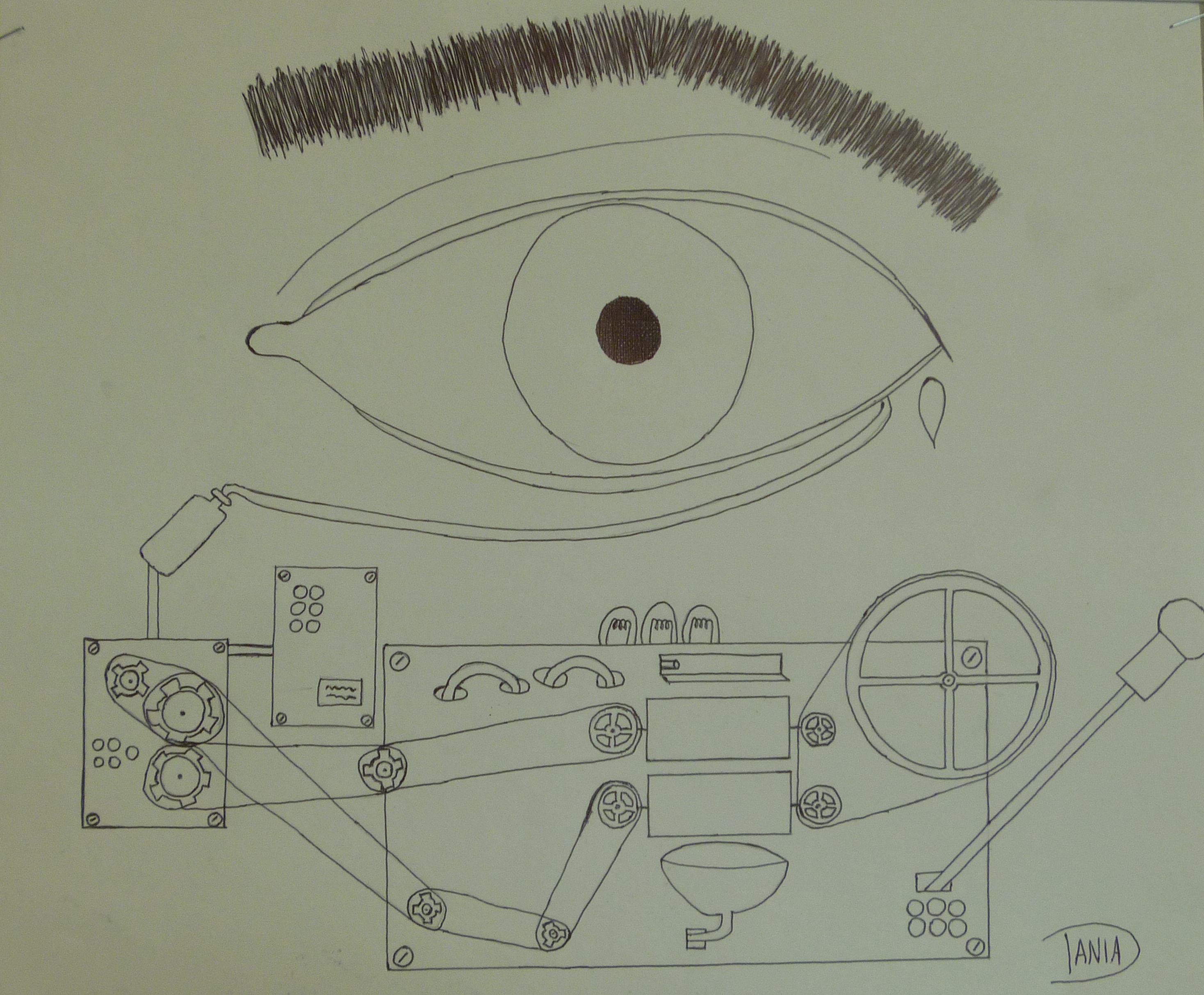
“I liked the new way of teaching/learning you introduced because it gave me a lot of liberties. In my school (in Germany) we have more defaults and the pictures look similar. Here everybody can draw and interpret the theme his/her own way. That way everybody draws something different and unique.”  ~Dania, art 1 foreign exchange student

“I felt like it really effected me because if you wouldn’t have given us the choice to really be creative i wouldn’t really try and make something really boring just something easy. I feel like it honestly did help me because i am actually interested and feel like i could do something with my art one day in the future. I am honestly really happy i stayed in this class and you gave me freedom because without that i probably wouldn’t see how much i enjoy art and really see i can do a good job when i put actual effort into it.”  ~Casey, art 1 student

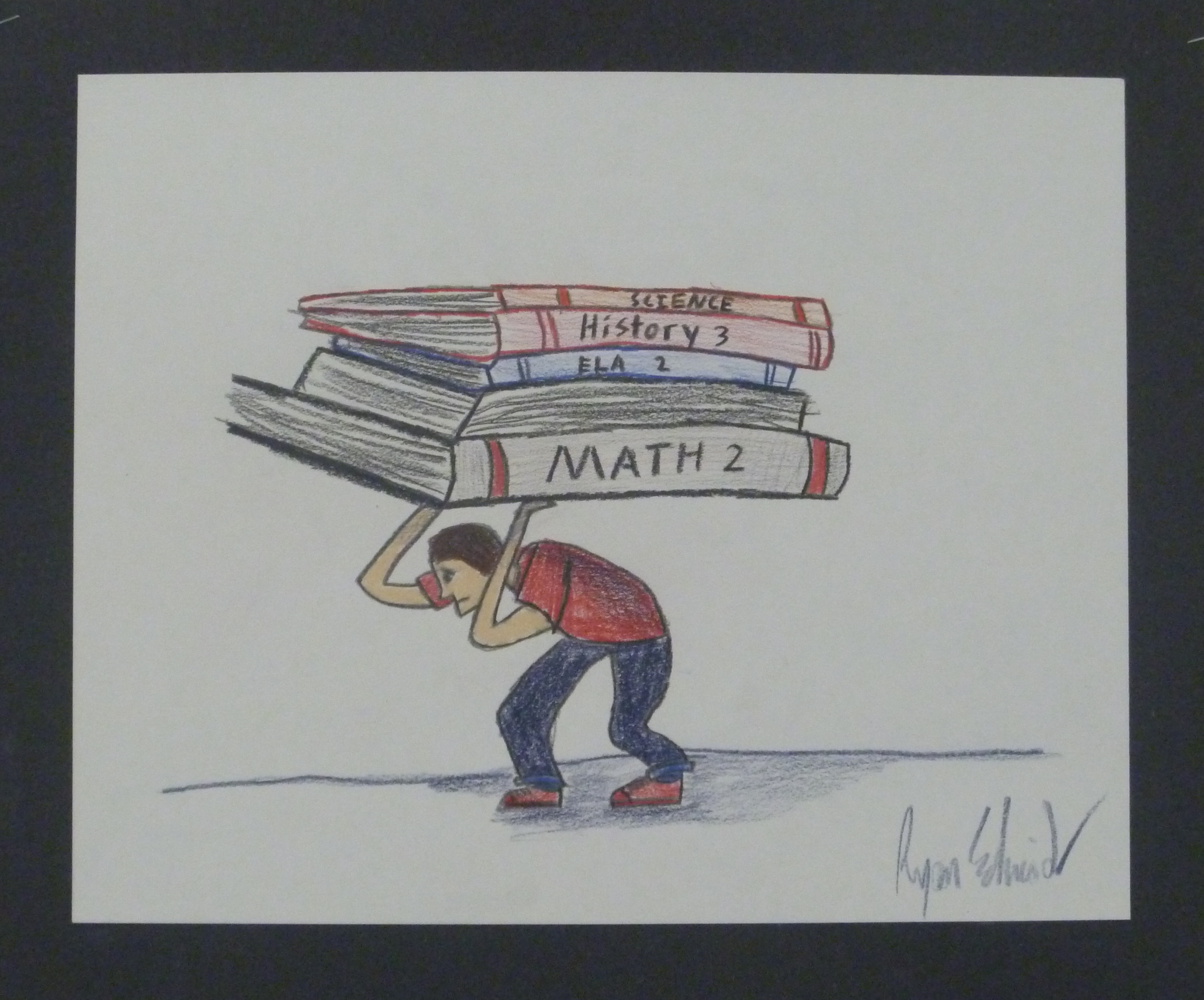
“I loved that we got to choose what our artwork was this year. It’s given me a lot more freedom and has actually made me care about my artwork because I’m doing what I want to do, instead of something that i have no connection to.”  ~Ryan, Art 2 student

“This was effective to me by, letting me use the things that i needed and allowing me to have the things i need to make my artwork be great, and make it to where i don’t just slap something on a piece of paper and turn it in. I can actually give it character.”  ~Zoe, art 1 student

“I remember last year in ceramics when we had to make a certain piece, but use the method our art teacher wanted us to use. This year, we have theme that our pieces must revolve around, and we may use which ever method of building we like. Personally, I love this new method our teacher has been using for this year. I feel this allows us to continue to use a method we enjoy and focus on improving our skills using that method. Instead of constantly changing which method we have to use and using a method some students might dislike more than others. For example, say we are assigned to make usable containers, one student could use the slab method while another might use coils. There could also be a student who wants to use his or her own method to build a container. They each can find a way they like to sculpt and continue to learn more and more about whatever method they choose. We also have the privilege to try and improve our skill in a method we are not yet comfortable with.”  ~Joseph, intermediate ceramics student

Far and wide, almost all of my students (with the exception of beginning ceramics because I have not moved that class to choice…yet–it is coming next semester) really like having the choice.  They like being able to experiment and try new things and start over with another medium when the first they chose isn’t working.  They like being able to interpret themes as they wish.

I appreciate Kalisha’s perspective as well.  I know for some it is really hard to not be told how to do something, especially when you have been told how to do it for most of your young life.  She is a fabulous artist who spends time thinking about how she will interpret things and trying new mediums.  She works hard and has created some fabulous work.  I think that one day she might change her mind about having such freedom because from my perspective, it is working for her.

For more reading my students’ responses, go here.  I would also like to thank the teachers of Apex High School (for the umpteenth time) for sharing what they have done in their TAB classrooms.  I “stole” their exam questions to use with my students.


Under Pressure

Standard

I just had to put that as a title.  However, my students were not under any pressure.  Pressure was the latest theme for my Art 2: Painting/Drawing students.  This was an interesting theme.  The students had some wonderful ideas, but a few just never hit the mark.
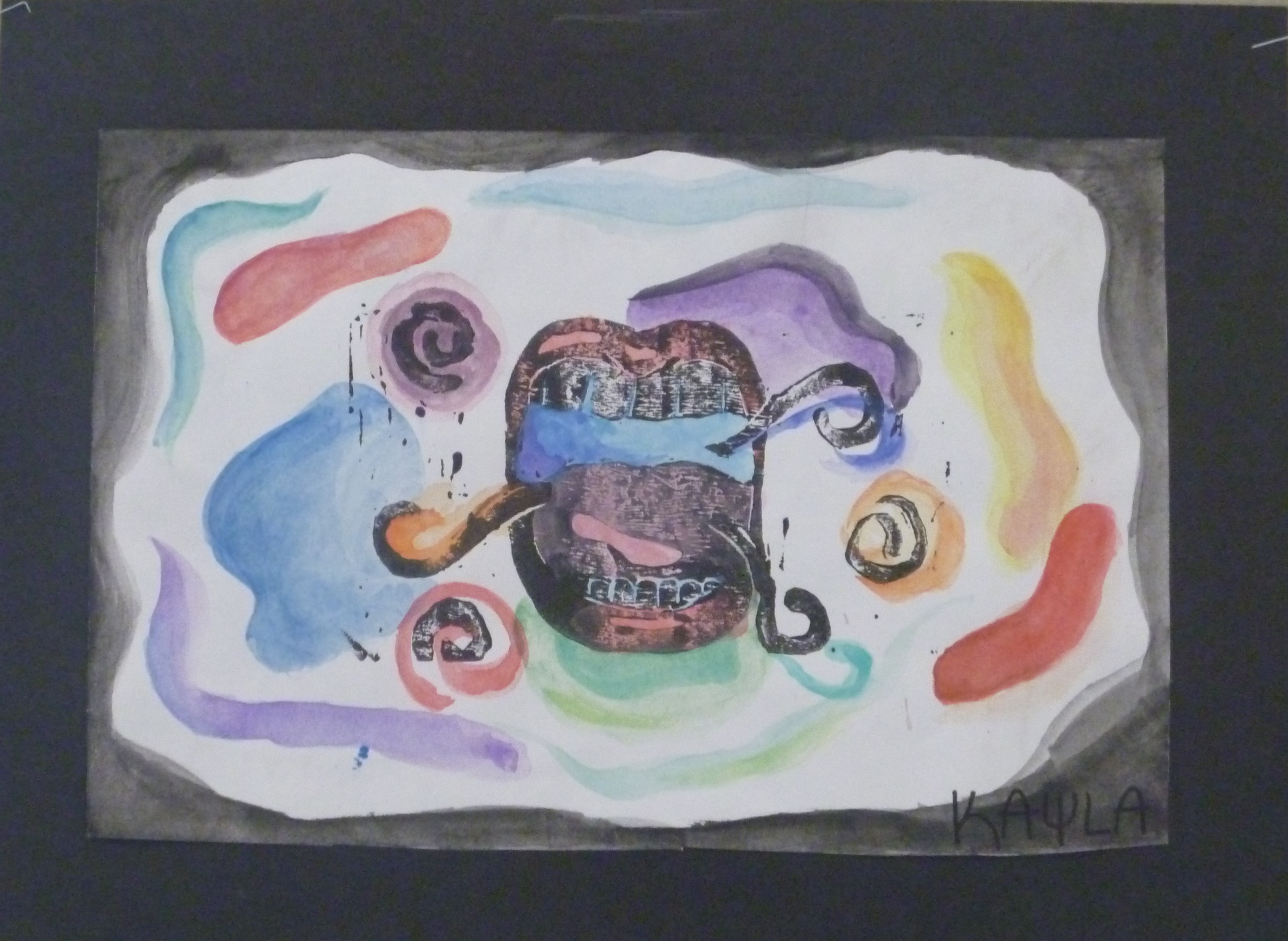
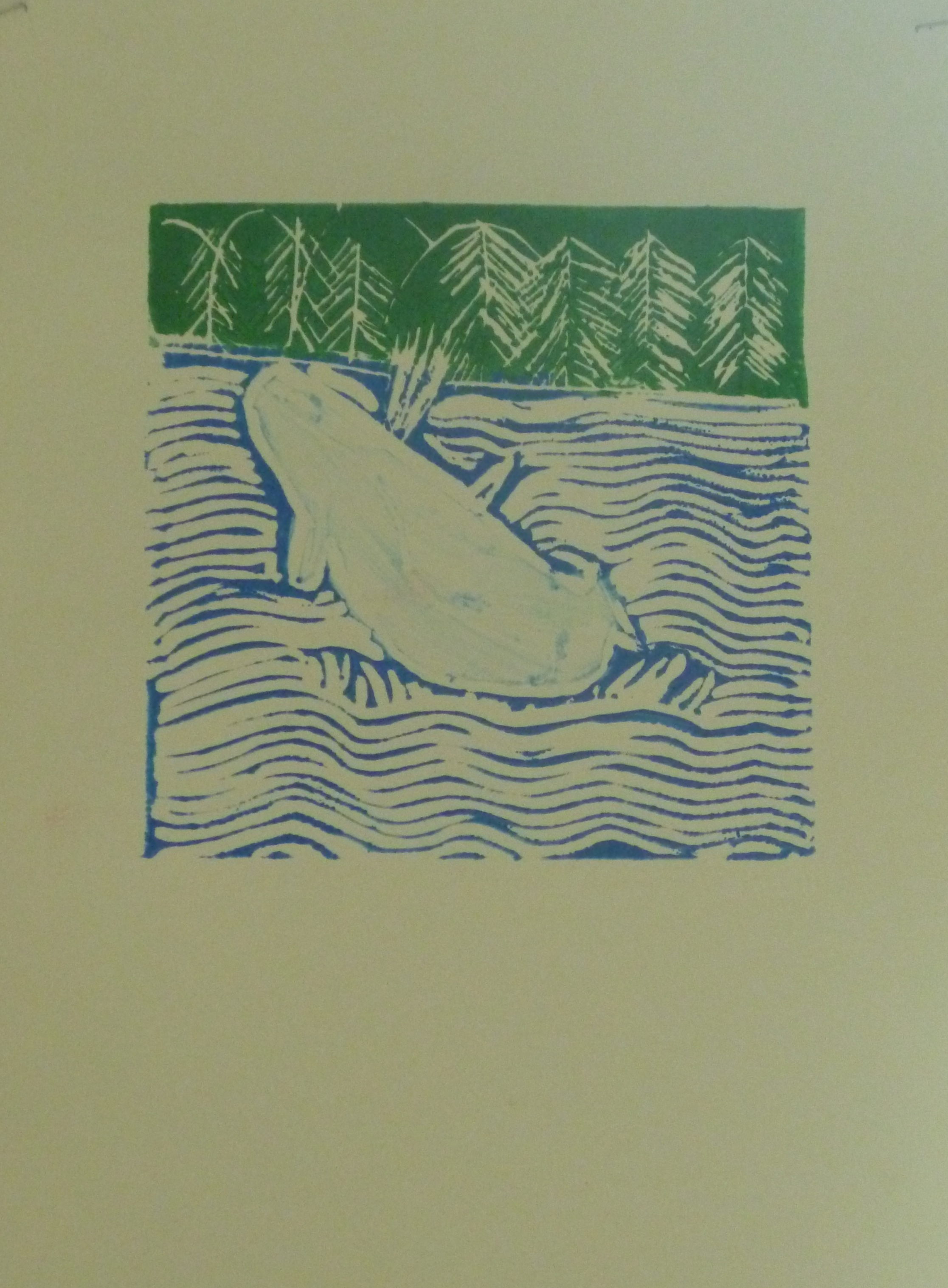
I added into the mix printmaking–both collograph and block.  I also addedpainting–watercolors (paints and pencils) and acrylics.  Funny thing was, almost every student chose to use block printing.  I asked them about it after the fact and some said they really liked the carving aspect, but some said they thought they had to do block prints.  I looked at them with a questioning look on my face.  We discussed, again, that they could use any medium they wanted for their work.  Hopefully they get that now.  I am unsure what I said or did for them to get that impression.

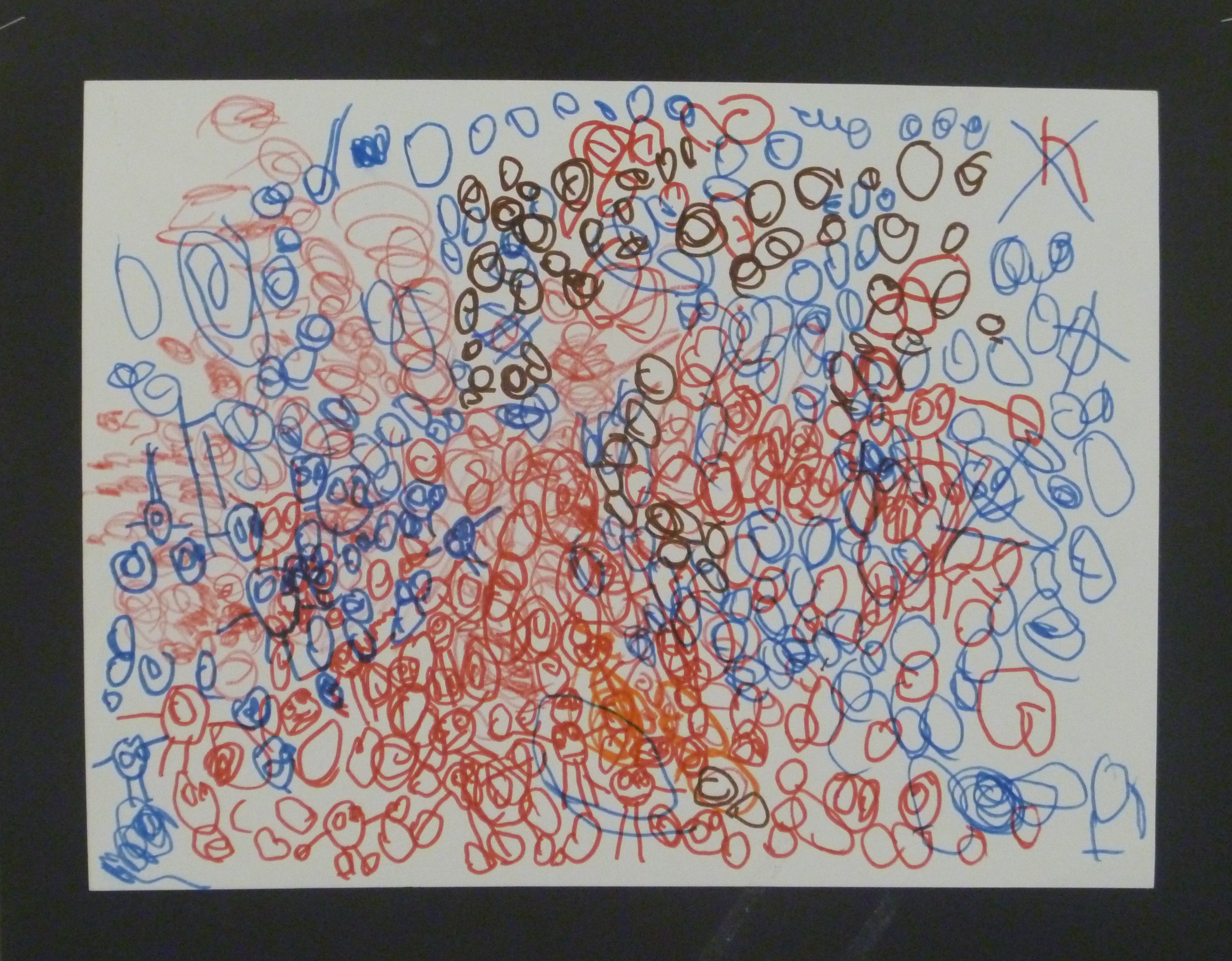
I have 6 life skill students in my class.  Most of them chose to do block prints.  I want to highlight Noah’s.  While I am sure that what he did had no ties to pressure, I love this piece.  He has been scribbling since day one and he has developed so much.  I love this piece.

P1040856

This next piece is also by a life skills student.  Deven is one of my more advanced LS kids.  He plays football and much of his work is centered on it.  His pressure piece is no exception.

P1040868

This piece had so much potential when I talked with this student.  We talked about the pressure from people looking at us and watching us.  I think the execution missed the mark.

P1040861

The rest are pieces that are super successful.  These are my favorites from the group.

P1040860 P1040866 P1040858 P1040855 P1040854 P1040852 P1040851

Art 2 Work In Progress: Interior/Exterior

Standard

Art 2’s newest theme is interior/exterior.  They have really explored this theme and their ideas run the gamut.  They are all so different and I am so proud of them and their work.  They work so hard and many come in with ideas so they are ready to go once they finish practice sheets.

Here are some of the works in progress.

This student did a smaller sample first to figure out how he should color his mango.  We both liked the look of the sketch so much, he tried to replicate it in a larger form, finger prints and all.

20141028_160015

This student is big into soccer, so he is doing an open stadium located in Madrid.

20141028_155943

I really like his concept of switching up the ball and the court.  This student’s work is improving so much.

20141028_155918

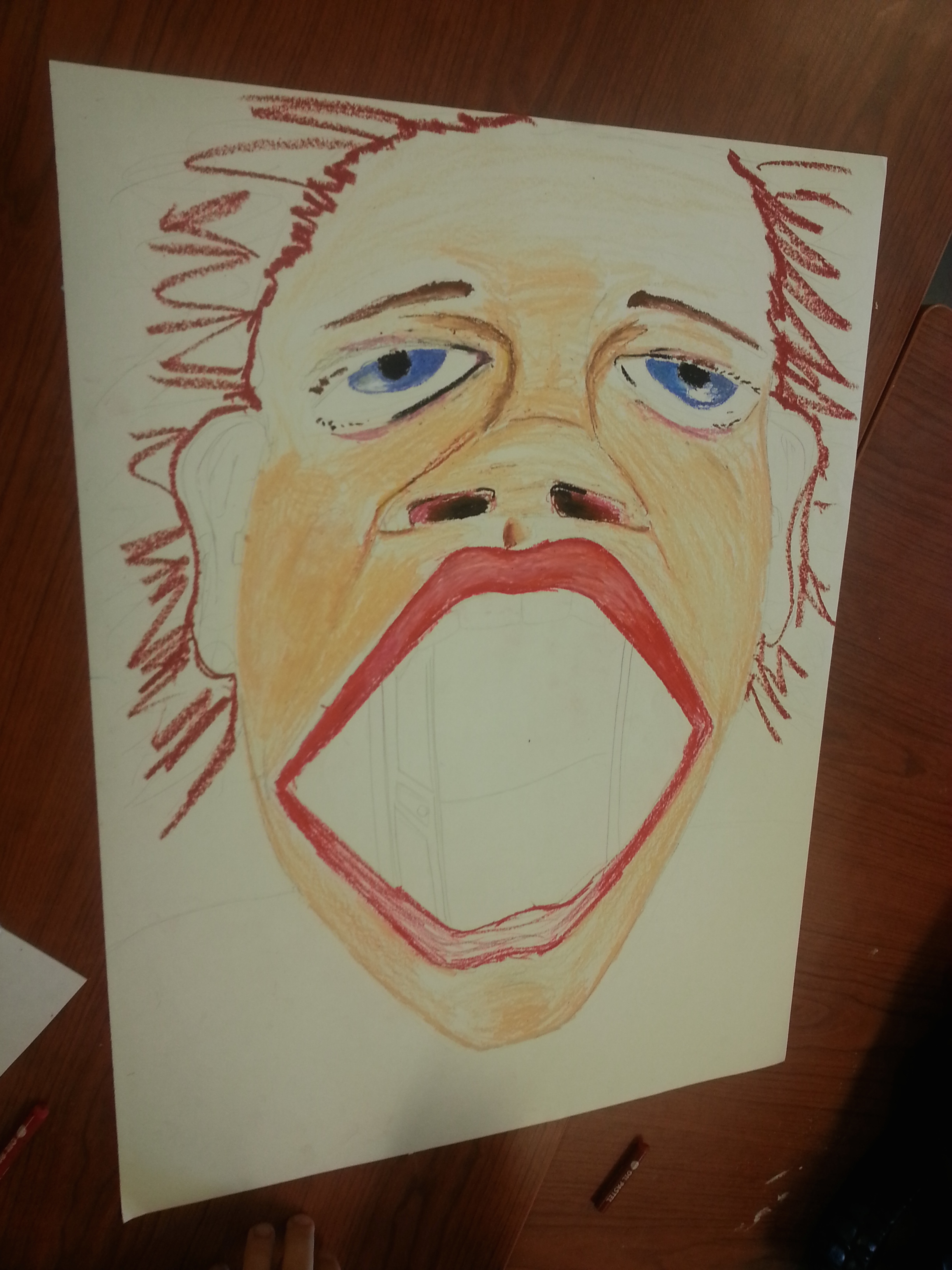
I am not quite sure what is happening in the mouth, but it isn’t “mouth parts”.  Today he and I had a discussion about what color the inside of our nostrils are.  He went so far as to use his camera to find out.  I love the way he is using the oil pastels.  He has never used them before.

20141028_155911

An “inside”look into someone’s eyes.  And, it is said that they eyes are the doorway to the soul.

20141028_155904

I eagerly await the finished artworks.

Man / Machine

Standard

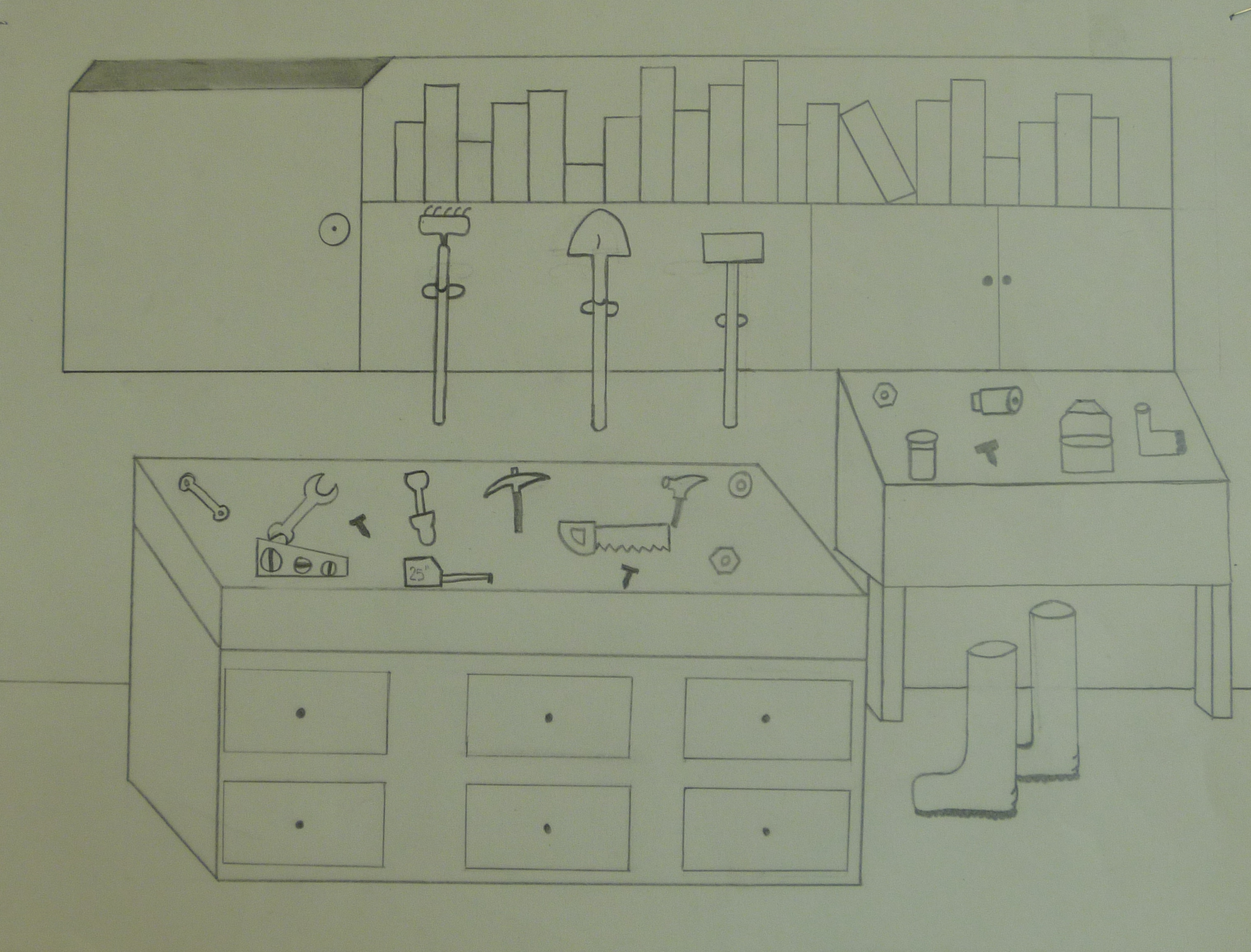
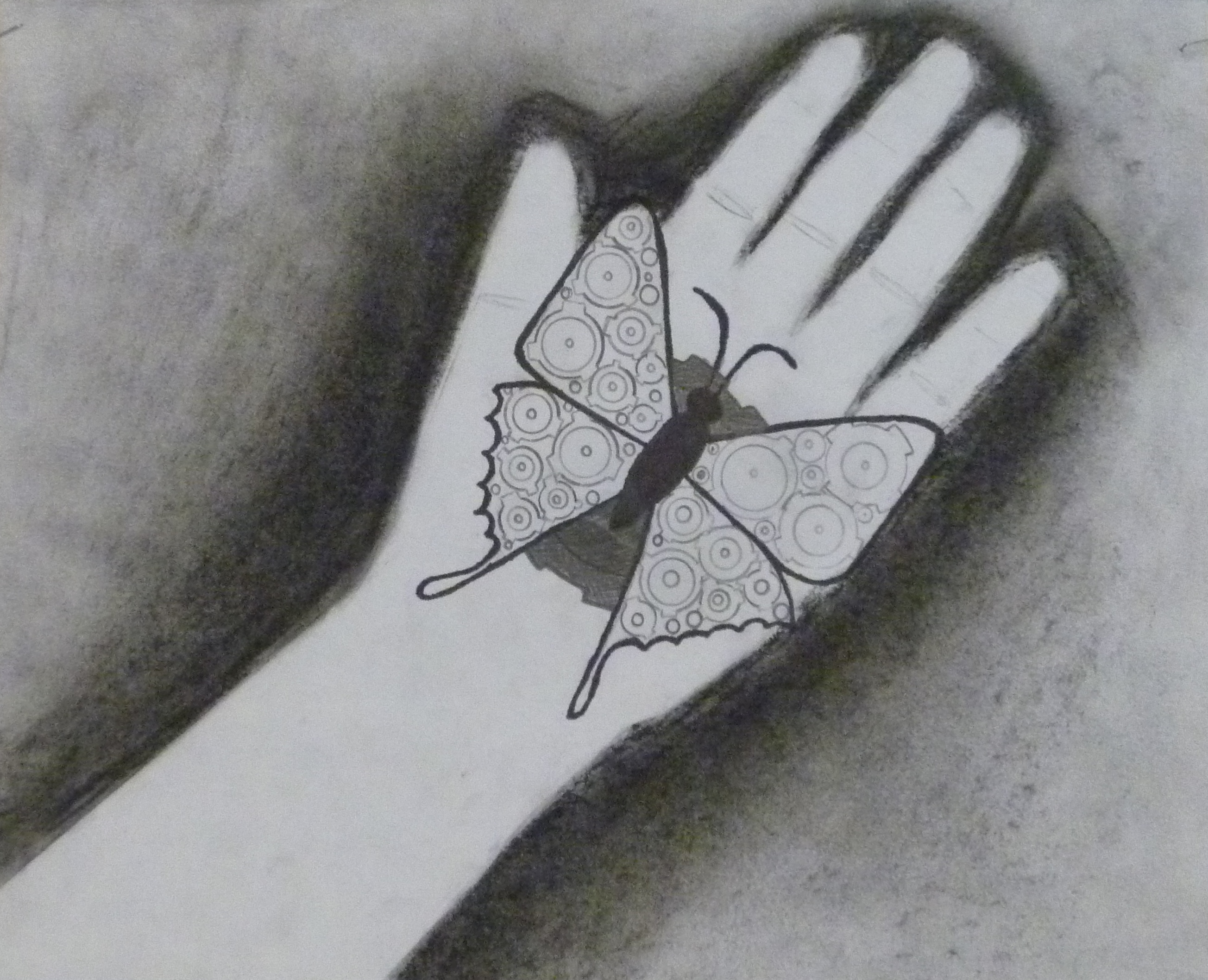
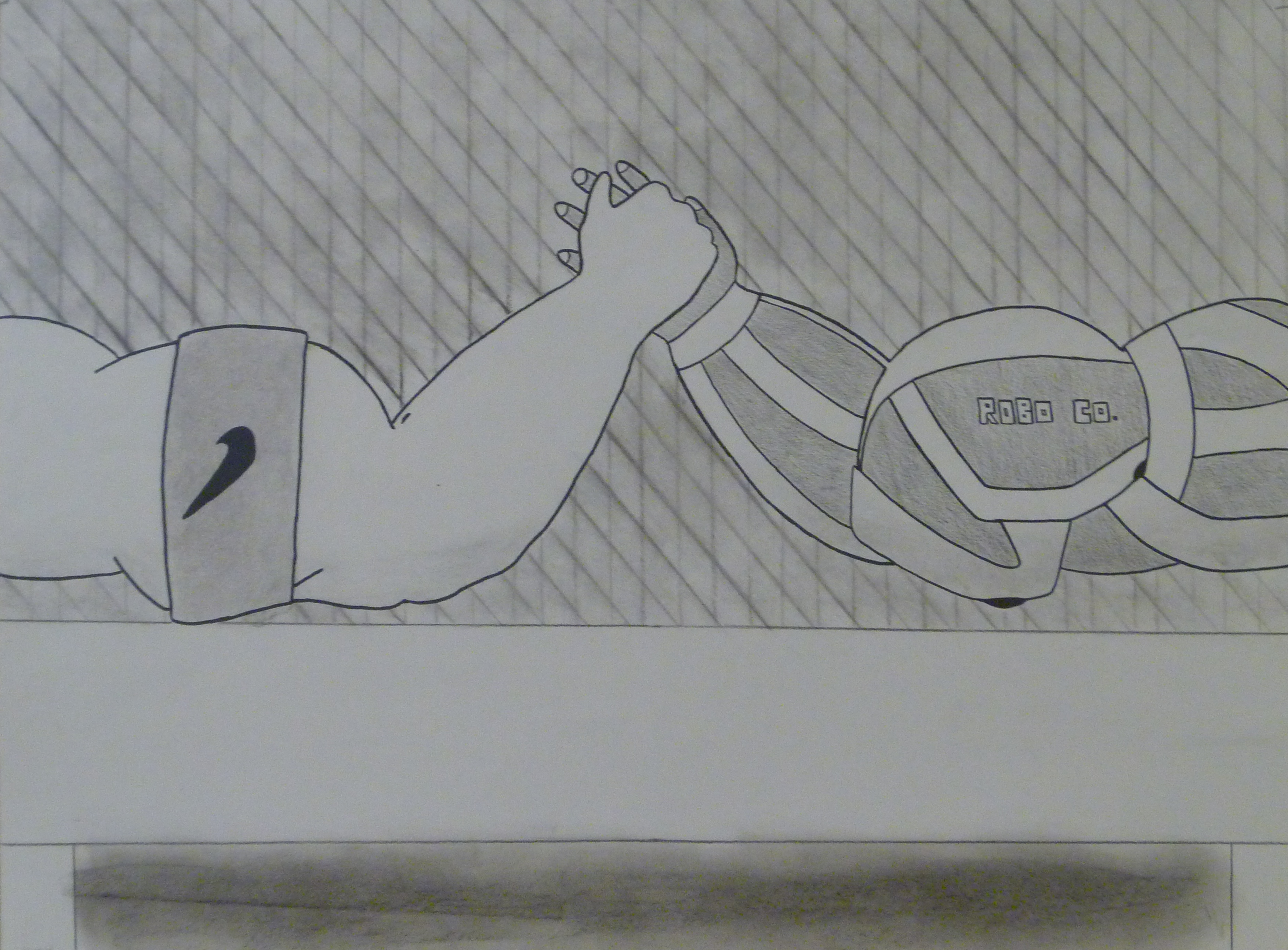
Our first TAB unit is coming to a close.  Art 2 finished last week, and Art 1 is just about done.  The theme the students were challenged with was MAN/MACHINE. As a class, we talked about what “man” could mean, what “machine” could mean, and what connections/interactions/relationships they could have.

The students were limited to a black and white drawing no smaller than 8X10. We talked about different techniques including hatching, cross-hatching, pointillism, and scratchboard.  The students practiced these along with charcoal and using white pencil on black paper.

I couldn’t have asked for a better first theme.  The students gave it their all–well, 98% did.  They learned so much about the artistic process.  Many sketched first before committing to a final drawing.  Others went through 2, 3, or even 4 ideas before settling on something.  Some even started final works, reflected on what they were doing, weren’t happy, then started over again.  Kids researched drawing faces and learned how to draw wood grain.  I don’t think my classroom has seen so much independent learning in one artwork in an art 1 class, ever.  Art 2 amazed me with their thought processes and choices.

Interpretations were all over the map.  Here are just a few.

P1040280

P1040281

P1040288

P1040289

P1040294

P1040295

P1040296

P1040297

P1040299

P1040303

P1040305

On "aged" parchment paper.

On “aged” parchment paper.

P1040326

P1040330

P1040333

On newsprint, like a comic.

On newsprint, like a comic.

I have to admit that I was nervous putting them up in the hallway to display.  I was nervous that my colleagues would think my students weren’t as talented as in previous years.  I wrote a carefully worded email announcing new artwork in the hallway.  I always do this because the fine arts hallway is out of the way for many.  This time I explained what the students were learning, TAB, and the authentic art making happening in my art room.  My worries were not necessary.  I received…well the kids received so many complements.  In fact, one of my AP’s complemented me on the artwork, the wonderful email, and the exceptional learning going on in my room.

Finally Having a Great Time

Standard

And when I say I am finally having a great time, I mean that I love teaching and I love my job…every period, every day. While I struggle with the stupidity that comes with all the paperwork and administrative stuff, I do it with little complaint because the rest is awesome.

Why is it so good? Because I love teaching ceramics and because of TAB.

My ceramic classes are all working and learning and having fun. The clay is here. And the students want to be there and are eager to work and get messy. Finally all my non-ceramic classes have started working on their artworks for our Man/Machine theme.And I couldn’t be more excited by all the different interpretations and the enthusiasm in my students.

It is like my classroom is a whole new place. My eyes have been opened and I never want to shut them. I don’t watch the clock any more. I don’t surf the web anymore. I talk with my kids…about their art, about their process, about their struggles, about them. I know it’s only been a few weeks and perhaps I am still in the honeymoon phase with TAB, but I foresee us having a long and happy marriage.

Brainstorming with Padlet

Standard

If you have never tried Padlet before, I suggest you check it out.  I found out about this wonderful free online program this summer.  I have used it twice in my classroom already.  

The first time it was meh.  Not all my students had computers and they had to shout out what they wanted me to add when we had a brainstorming session.  Many voices weren’t heard because, well, you know that student, the shy one that doesn’t speak up and especially not to the whole class.  

Today we used it again in my Art 2 class.  We had our final brainstorming session about Man/Machine and the relationship, meaning, and interactions.  Almost all of the students had computers so they were able to add as we went.  It was a huge success.  It can be anonymous and helps those who don’t know or don’t want to share their physical voices.

And bonus, I can share the link on their Art 2 webpage so they can reference it.

It really pumped me up as we move to the art making stages of this unit.

Jumping in Feet First into Tab

Standard

Today I decided my art 2: painting/drawing was just going to jump in, feet first, into TAB.  Let me tell you, it was nerve wracking.  We started off with a Padlet activity.  I introduced our first theme of man/machine and we brain stormed what they thought of when I said the word “man” and when I said the word “machine”.  This was the most talkative the class was all period.  Next I told them of the facebook art teacher group I am part of and how I asked my fellow teachers what artwork and what artists they thought of when I gave the topic of man/machine the list was so varied.  I showed my students examples from the suggestions.  I wanted them to see that there was no wrong answer.  That everyone has different images when told a theme, and that was okay.  In fact, it was encouraged.

The last thing I did today was a few demos on ways of creating value.  Our first unit based on “Man/Machine” is all about b/w drawing media.  I am excited about the artist dictionary they will be creating over the year from their practice of the demos that I do.  I don’t think I made the right choice in how I went about handing things out and the order of that.  I think next time (and I will have a chance to try again in a week or so with art 1), I will do the demo then hand out the practice sheets because even though I told them not to draw what I was drawing, many of them did.  I really want them to practice something and really try the technique out and not just do the short little “thing” I do.

As I mentioned before the loudest they were was during the brainstorming.  It really was a little freaky how quiet a 9th period class was.  I am really hoping they were just overwhelmed because it wasn’t  “normal” art class and they were trying to take it all in.  I really hope they were not bored.  I hope as we go along and this becomes “routine” they act more comfortable in class.  

I look forward to tomorrow.