Tag Archives: process

Art 1 Final Project (Part 3: In Progress)

Standard

We have been working on the final project in art 1 for 4 days now.  And, let me tell you, it has been a blast.  After making monoprints, I introduced the idea of surrealism.  Then, as a class we talked about the “requirements” of the final project.

I talked about composition and how it was important to invite the viewer in and keep them in by creating an entryway, “lines” that help the viewer to move around, and depth to keep them there.  I told them that an artwork is a 2-way street–both the artist and the viewer are important.  Not only can you use the artwork to say what you, the artist, had to say, but you also want to create something that the viewer wants to look at.  I told them that they could have this horrific subject matter, but if they created depth and interest that the viewer could get lost in and move around in, then they have won.  They have solved both problems and their artwork is a success.  I told them of a painting I saw in Vienna that was so bloody, but had so much depth, that I went and stared at it for over a half hour, just lost and wandering.  I never showed them the painting, although I have thought about it.  I can still just stare at it for quite some time and get lost.

“Kreuzwegstation”, Hermann Nitsch, 1961. (Translation, “Station of the Cross”)

But, back to the art 1 assignment.  The last part of the assignment was the use of multiple mediums.  I told the students that I wanted them to explore mixed-media art.  I let them know they could use any technique or material we have used.  I told them they could try new things we haven’t used.  I was open to anything.

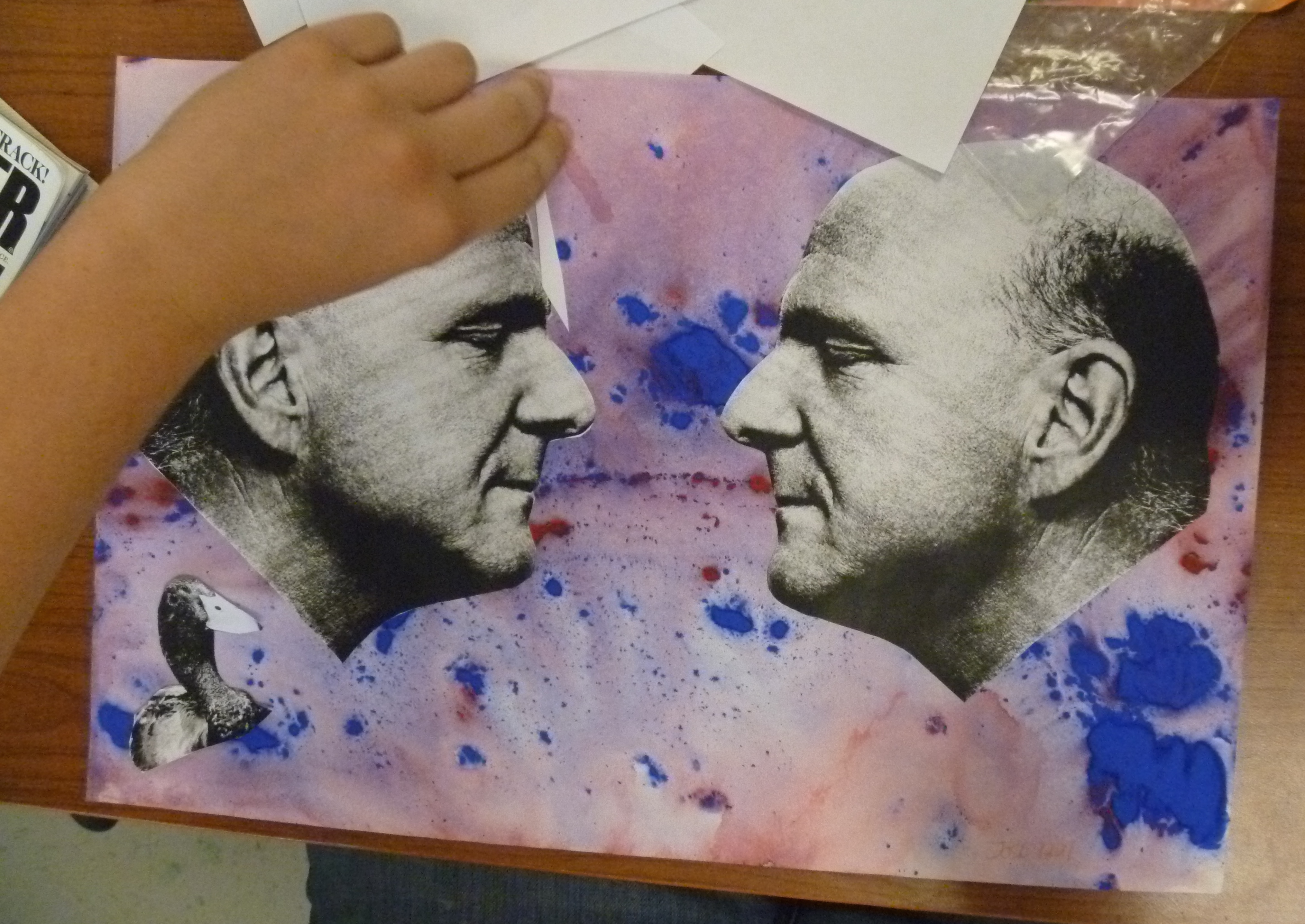
And off they went to collage.  And, off I went to collage. We have been having a blast.  The kids are loving looking through magazines and having me make photocopies.  Every piece is so different.  Some are serious.  Some are fun.  Some are just plain awesome.  I can’t wait to see where they end up.

One student today said to me as I was walking around looking and asking questions, “I don’t know if I am doing this right.  Is this what it should look like?”  “It looks exactly like what it should look like,” I said, ” Yes you are doing it right.  I am coming up with mine as I am going along.”  He seemed very pleased with this answer.  I know he is working hard and I can see he is making carefully planned out choices.
P1030947


A serious piece about words that hurt us–I think she is still looking for the “right” eyes.

P1030944


Yesterday, she said she wasn’t sure what to do.  All she could come up with was trees.
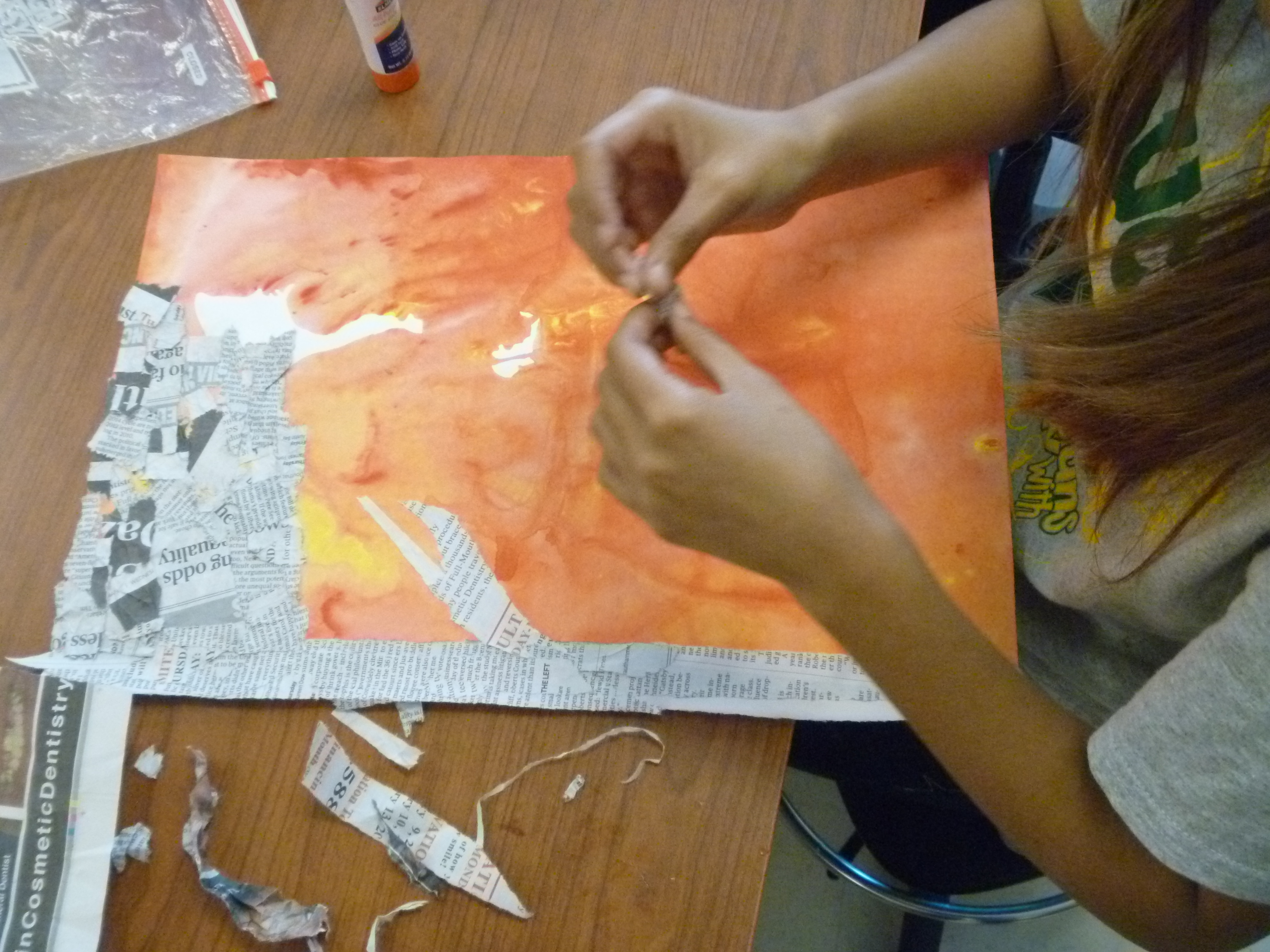
P1030942Today I was joking around with the bottom half of some penguins I added to mine and told her to glue them to look like the feet were hanging out of the tree leaves.  She did.  And now she is painting in a volcano under the tree that the penguin will fall into.  I told her this is awesome.  It is so not serious, which is so different than her normal work.


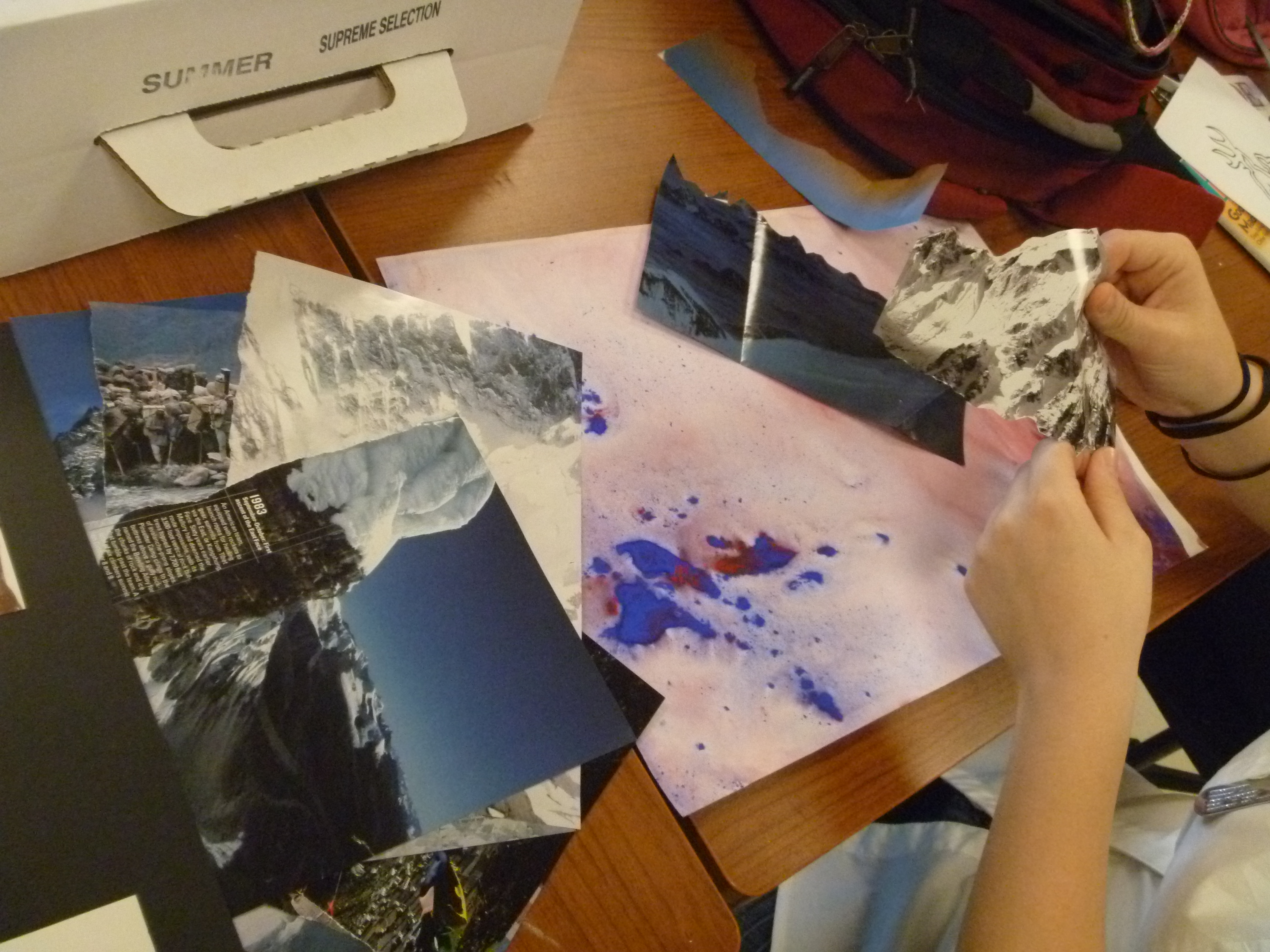
This student has been inspired by both the highest point, Mount Everest, and the lowest point, the Black Sea.  She chose the former.
P1030948


Simple, at least for now, with just a set of eyes.  Can’t wait to see what the conte will bring.

P1030949


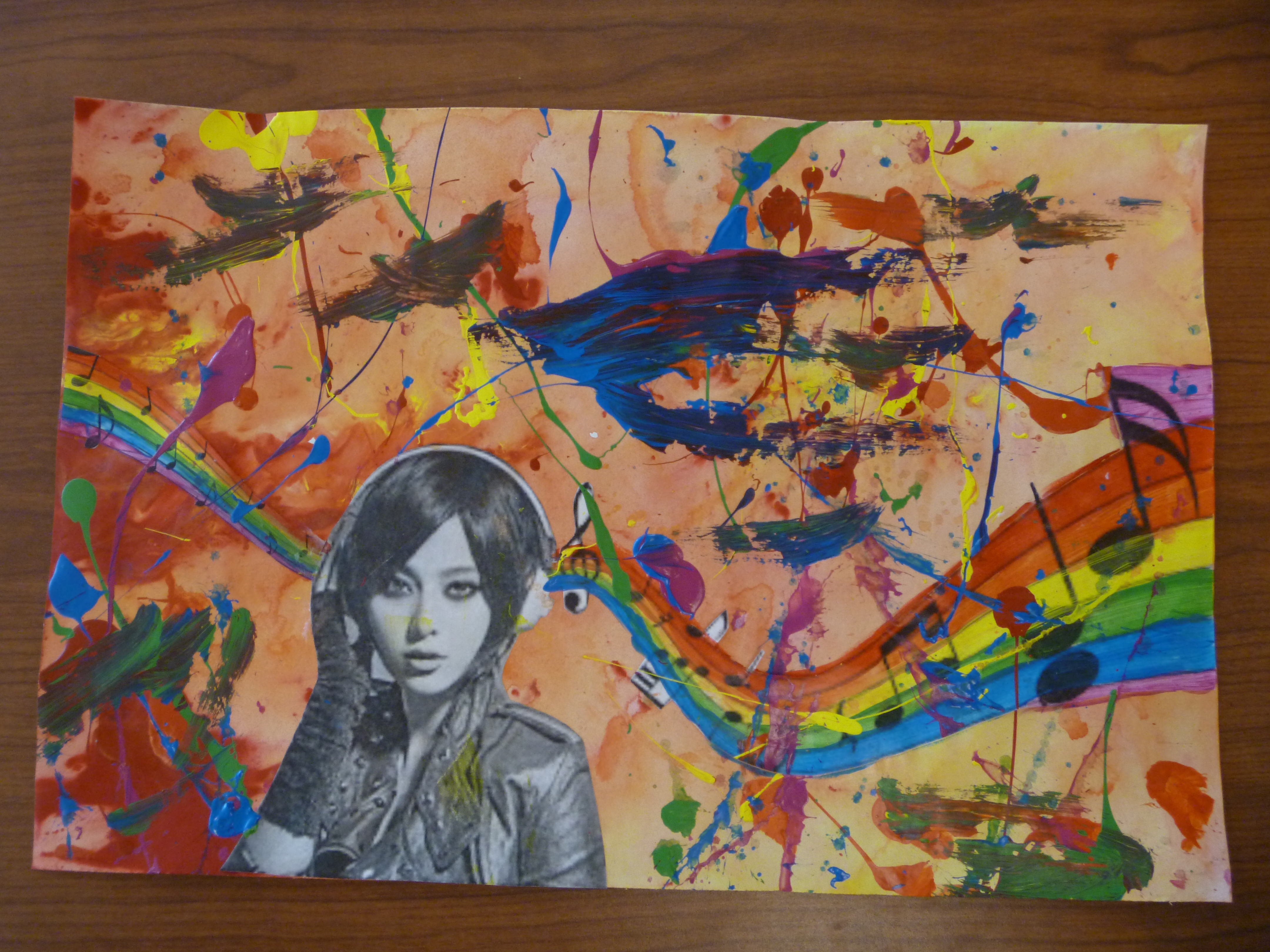
I have one student that pulled about 5 monoprints.  She is creating multiple mixed media pieces and then will decide which one is the most successful and will turn that in.  Here is one of them.  I love the energy and her intensity with which she is working.
P1030946

I have been having a blast, not only watching my students create and make choices and collaborate, but also creating mine.  I think that the energy I am bringing to making my piece has rubbed off because the energy in the room is different.  The way the students are working is different.  And that is a good thing.

The students are funny.  They are like, “Who are you?”  “You are never like this.”  “You’re examples are never this crazy/weird.”  I told them, “Not weird, Awesome!  My artwork is just awesome and you are jealous of it’s awesomeness.”  Of course, this is all in good fun and they jab me right back.  (Then the whole penguin thing occurred, so….um….yeah.)

But, here is my example, just in case you were wondering.  Yes, that is a duck ship.  Yes, it is beaming up an armadillo.  And, yes, that condor is shooting laser beams at the unicorn. But, no, I don’t know what’s up with the monkey.  And, no I don’t know which side the fish are on.  I just know it is Animal Armageddon in Penguin Town.

wpid-20140516_163017.jpg

The students have 5 more class, plus their exam period to complete their surreal mixed media artworks.  Every day I look forward to my 3 art 1 classes.  I can’t wait to see what they do next.


Art 1: Final Project (Part 2: Monoprints)

Standard

I had planned to start on Monday, but an unexpected Mother’s Day gift from my son (stomach virus) caused me to start a day late.  While I felt bad taking time away from my students to work, I think they are strong and will not let it affect them.

Today was part 1 of the project:  monoprints.

Several years ago at a conference at UT, I learned how to create monoprints using water and tempera paint.  It was messy and tons of fun.  At the time, we used the paper to make paper kimonos.  Cute, but not really my thing.  I have used the technique another time as a background to learn about symmetry using the Maori Moko Tattoos.  I have since stopped that lesson, but I thought the monoprint technique was a great base for this artwork.

As I stated in part 1, I find that many people, myself included, have a hard time making those first marks on clean, pristine, white paper.  So to help solve that issue and hopefully allow the kids to jump right in, we created monoprints.

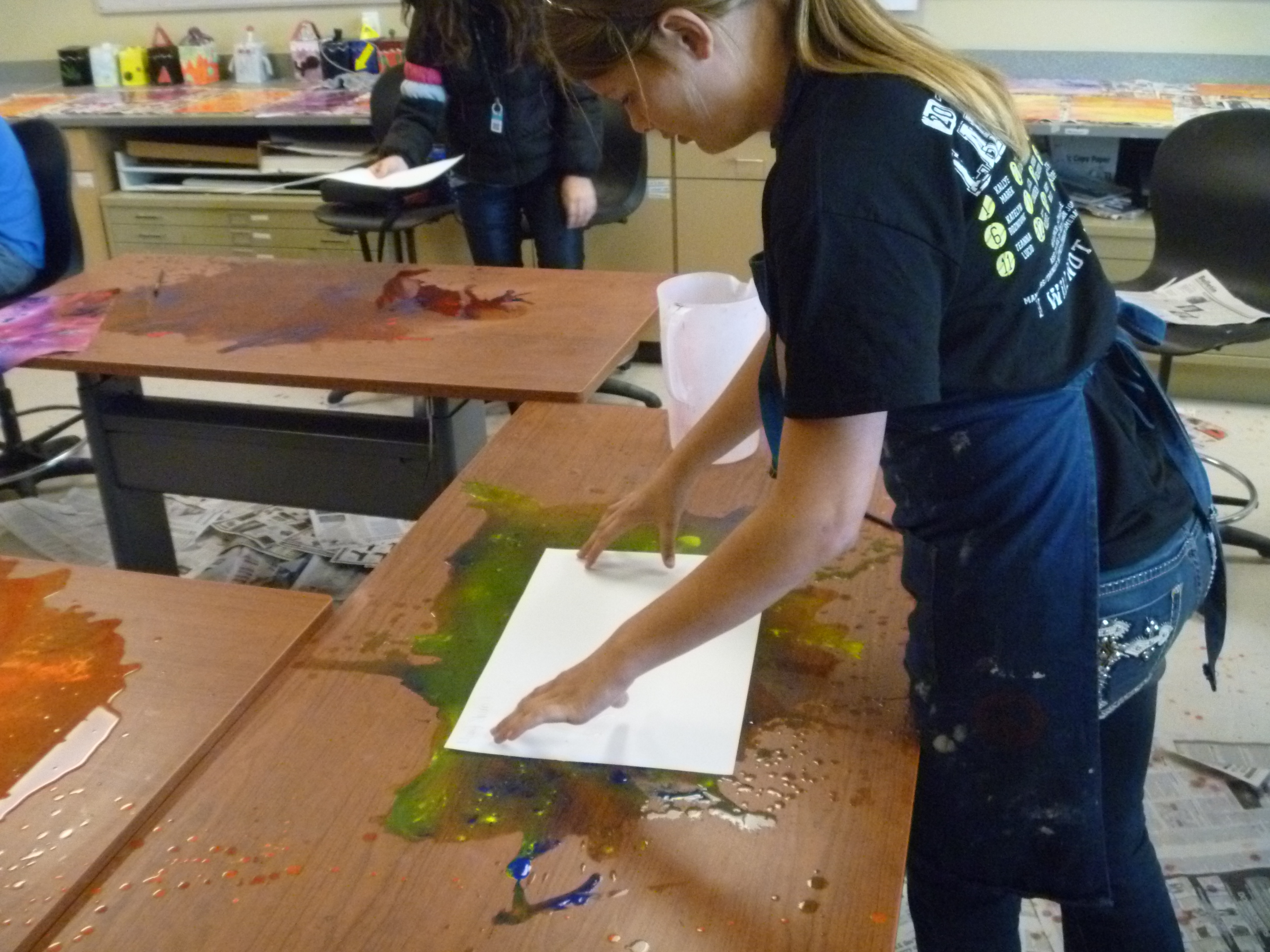
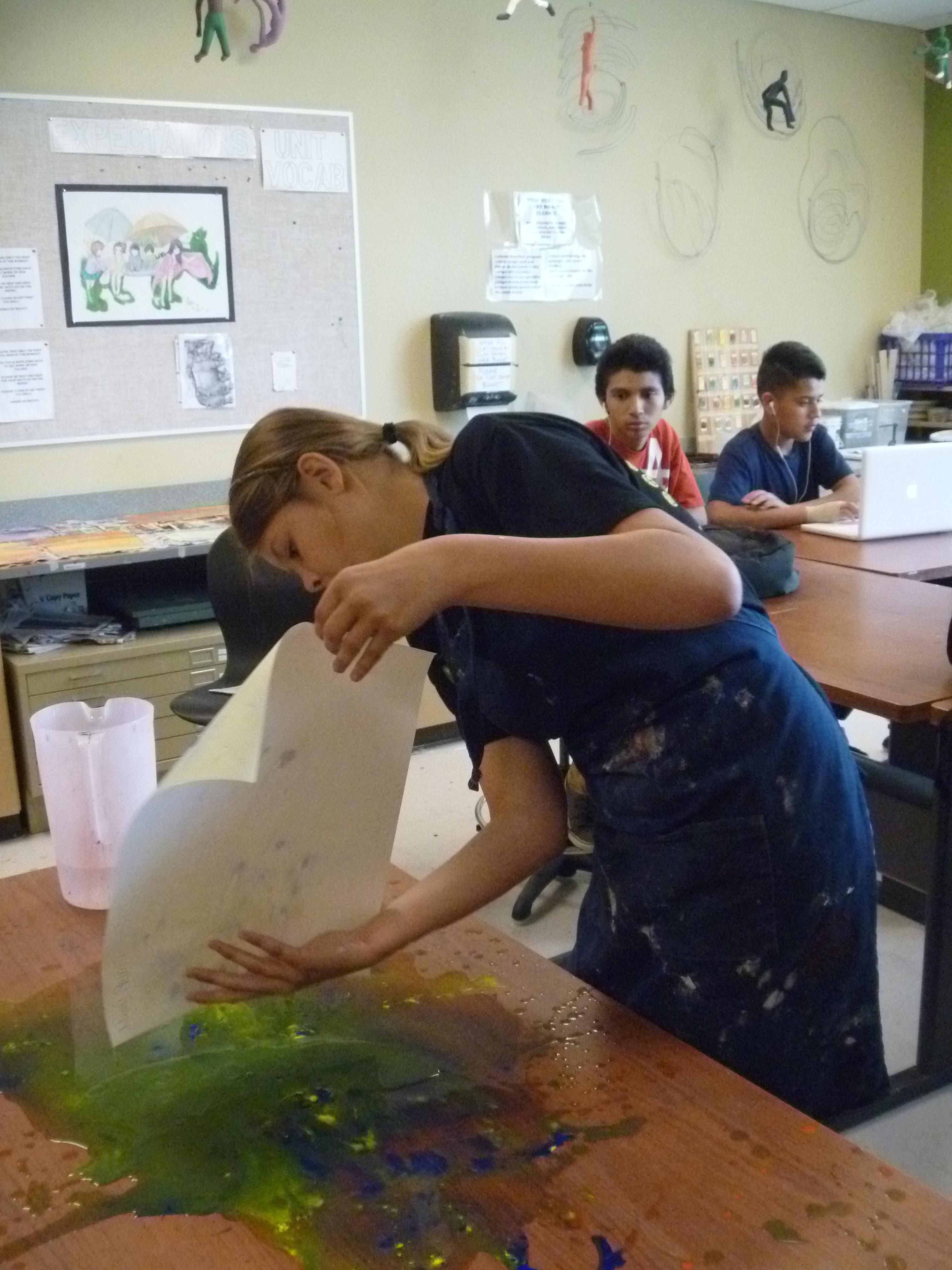
Our “plates” for this were my tables.  I covered three tables with water and 2 colors of tempera:  blue/yellow, red/yellow, and red/blue.

Image


Next the students would lay down their paper and pull their print.

Image


Image


Some of the kids liked the process and made several monoprints.  Others were not into the mess or just didn’t want to make art today.  But I am happy with the outcomes and I hope they all have a great base for their multimedia artwork.

Now, the worse part of this activity is the clean-up.  I did have newspaper every where, but there were still a lot of dripping from walking the prints over to the counters.  And, unless you ask the kids to help, no one will.  They will all just sit and watch you clean and wipe up the floor on your hands and knees.  I was disappointed that out of my 65 students, only 3 offered to help clean.  I guess the brightside is it was cleaned to my standards.

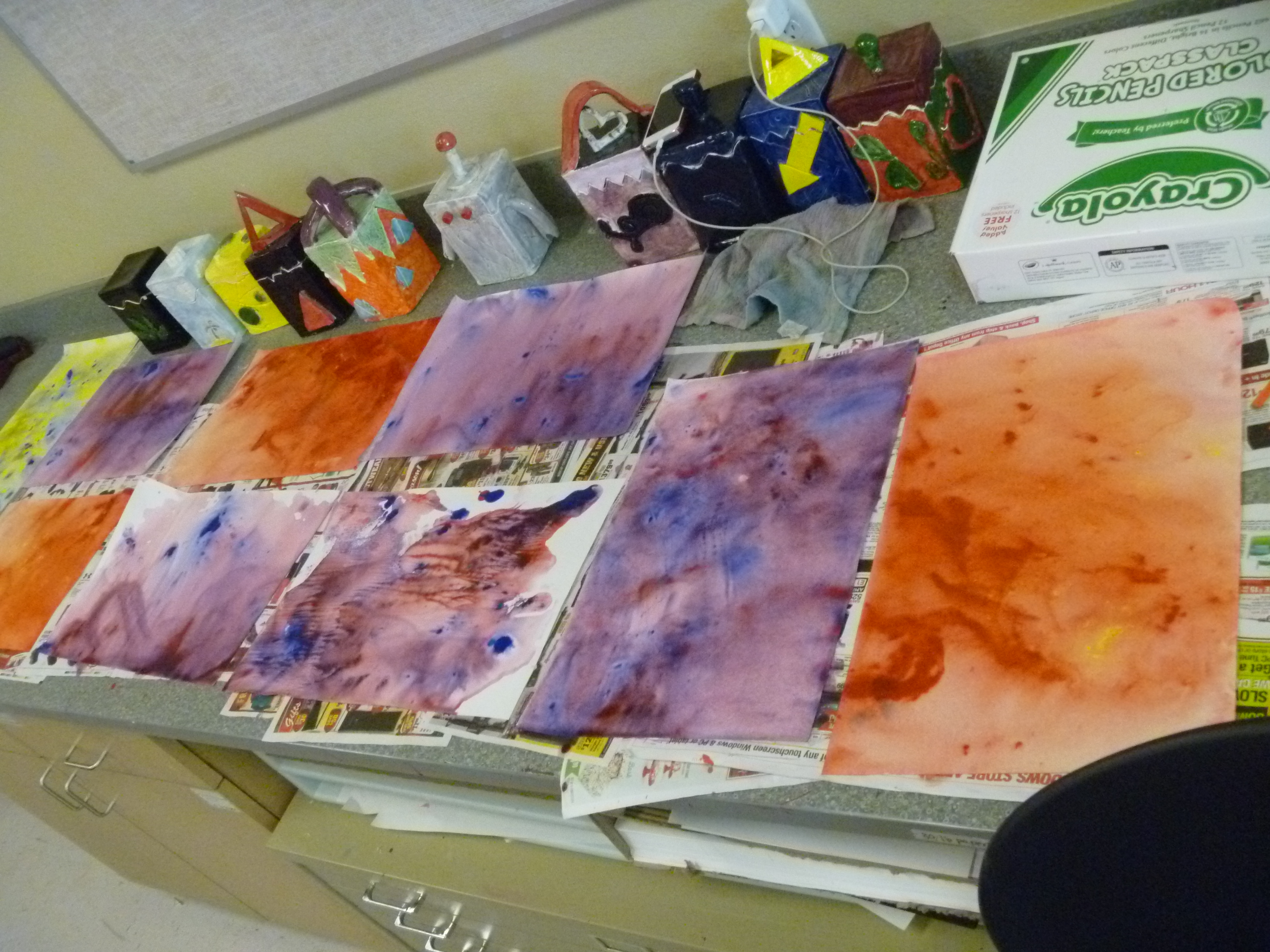
Here are some of the fabulous results.

Image   ImageImage

ImageImageImage

Art 1: Final Project 2014 (Part 1)

Standard

Originally, I planned on being able to have one last project in art 1, spending a day or two reviewing for final exams, and then having a written test.  Not exciting, but it is what it is.  Then STAAR happened.  I didn’t really take into account that state testing would take kids out of my room for 3 days (and me for one to administer), thus having me lose almost a whole week and pushing back my plans.  There wasn’t really much I could do that could be done in less than 2 weeks that was meaningful.  And, I couldn’t just let them do nothing for 2 weeks.  Plus, I really didn’t want to write an exam.  It’s not my favorite thing to do.  So, I came up with a final project that would also become their exam grade.  I call it “”.

Over the next few posts I will document our exploration through the multimedia process.  I am not sure of the outcome, but I am excited about the journey.

First we will create monoprints using tempera and water.  I have done these before, albeit 6 years ago, for a project on symmetry and the art of Moko Tattoos.  This will become the “ground” or base for the artwork.  I have found that often students are intimidated by the white surface.  It’s so clean and error free.  Hopefully having this monoprint background will help break that fear.

Second students will find several images from magazines.  I suppose if a student really wants a certain image from the interwebs I will allow it.  They image will then be in b/w unless the student has a color printer at home.  I am hoping to halt images at 3 or 4 so it doesn’t become too crowded.

While I was out administering the STAAR test, students did 2 Arts & Activities reading about composition and leading the viewer through a composition. Here and here.  We will review the major concepts from the readings and I will expect them to create their artwork with the concepts in mind.

Students will then be asked to add more to their collages using a variety of other media: pencil, colored pencil, marker, sharpie, pen, paint, and well, I guess anything else we have used this year.  I am hoping they will had additional layers of depth and interest with the additional media.  I have created a pin board for them with some collages, but I really am unsure what to add to the board.  I don’t know what to search for to find examples to show.  But, maybe that is good as it will leave the door wide open and they won’t have preconceived notions of what this “should” be.

Pack your bags and join me on the journey to places unknown and unfamiliar.  My art 1 kids are always surprising me, I hope they do here as well.  (And I hope they will be able to work in our short time frame–this is the most nerve-racking part of this.)

Art 1: Informal Balance: Wrap-up and Review

Standard

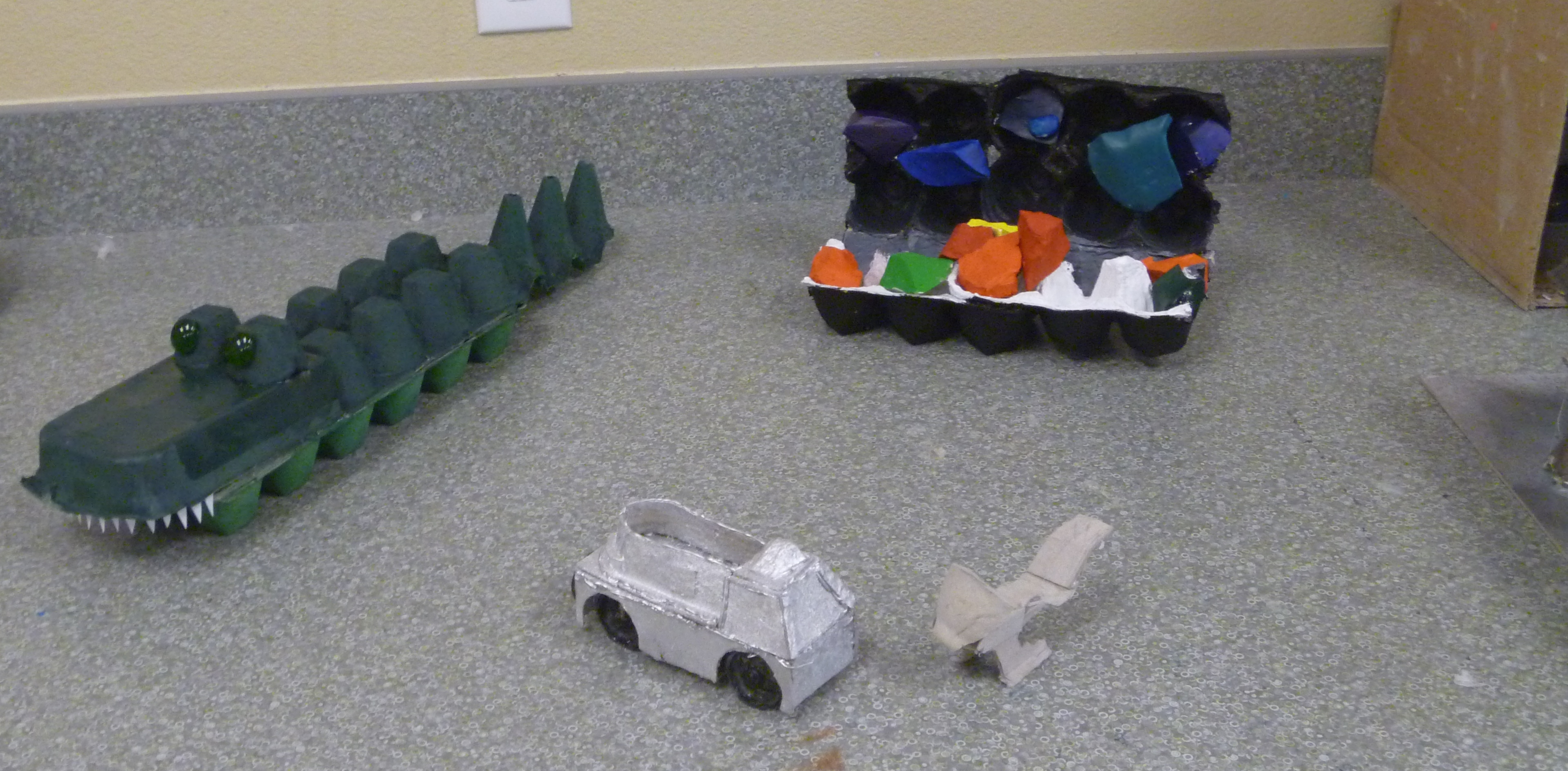
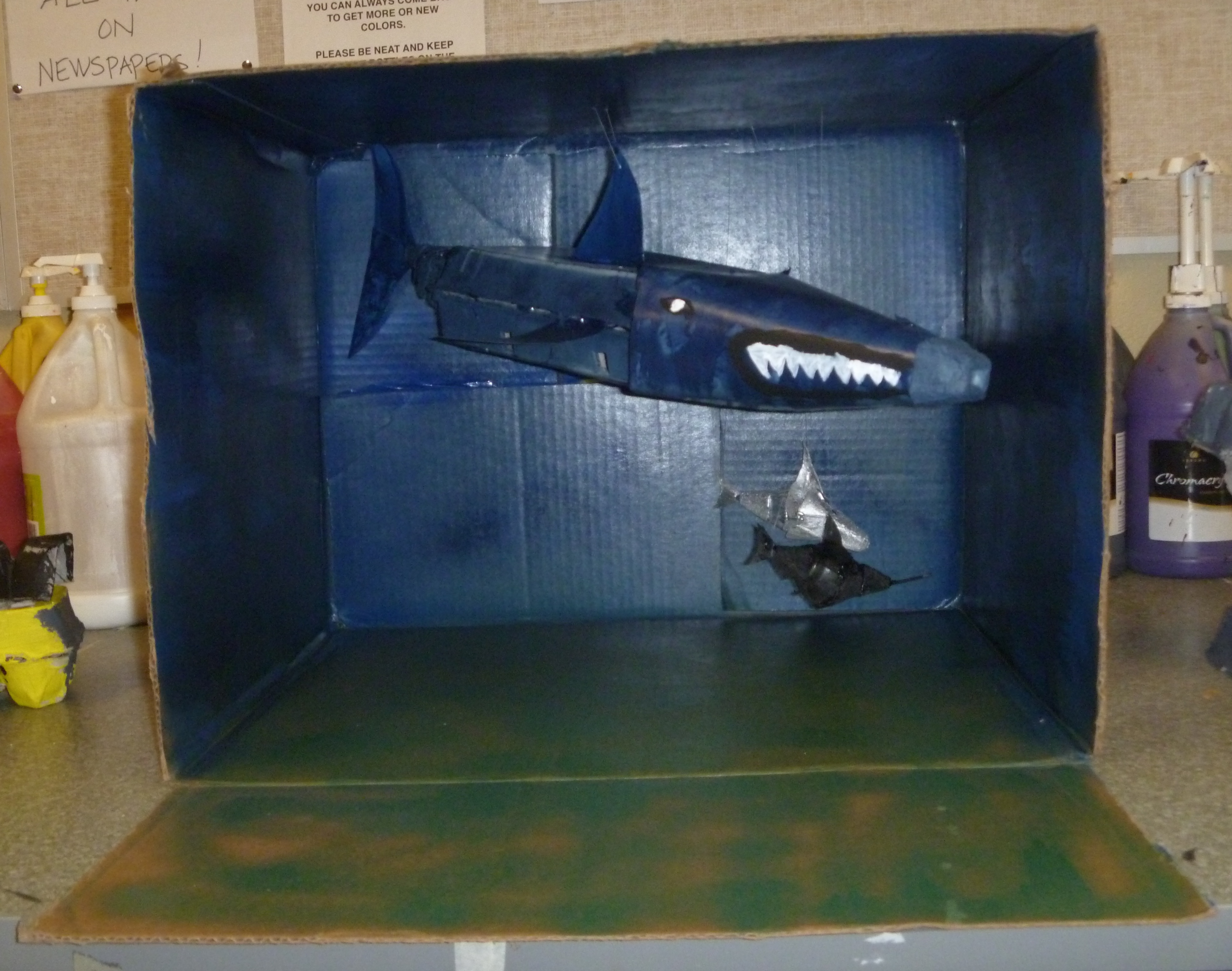
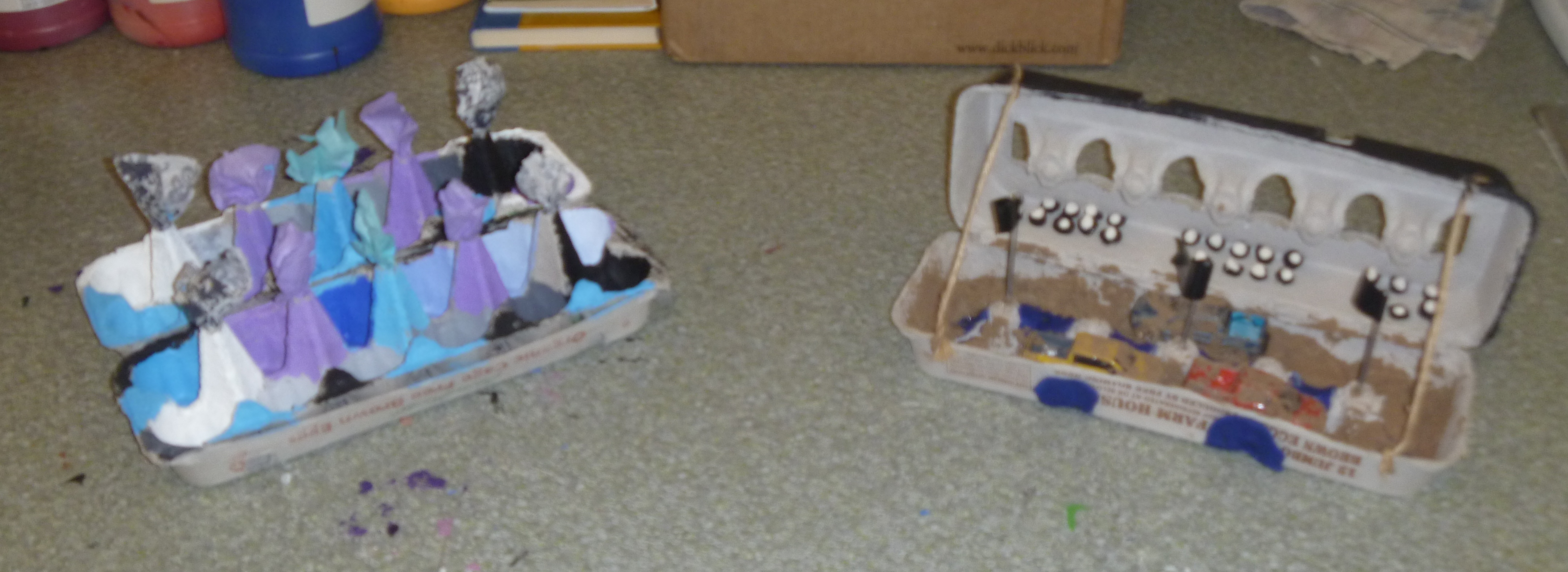
Think back to this post where I talked about bringing in some choice to my art 1 students.  They were able to work in groups and were each given an egg carton to which they could do whatever they liked as long as their final artwork had informal balance.  We worked on the project for about 2 weeks, then we took a week’s break (spring break), and finished up in about 2 or 3 days.  During spring break, I decided not to grade them on the outcome of their project, but instead to grade them on the process and what they had to say about that process.  I had created a list of questions for them to answer.

When it came time to actually figure out a grade, I really had no idea what to do about it.  I didn’t really have a rubric on how to grade what they had written.  They had never done anything like this before, so they had no idea what I was really looking for.  They were honest in their answers.  In the end I gave each student a 100, unless I specifically recalled them spending days not working (which one child did and his partners said something about it in their answers) or they failed to answer all the questions.  The grades ranged from 85-100.

It has taken me a long time to write about the project/process; I’ve been reflecting about it…a lot.  What had I really hoped to gain from this “experiment” of throwing so much choice at the students?  I mean, really, it was all for me.  Yes the kids learned about informal balance.  And I truly believe that many did understand it by the end.  And, of course, there were some that didn’t, but I am not sure they would have gotten it anyway, if I am being honest here.  I had been reading so much about choice that I really wanted to try it out.  I felt the only way to see if I liked it and how I could implement it in my classes was to do a trial run.   I felt this unit was really more for me then for them.  Part of me feels like I shouldn’t admit that, but how am I to know what works and what doesn’t if I don’t try.  Many things look good on paper…

I learned a lot about choice and how to make it work in my classroom and how to make it work for me.  I admittedly am a sort of small control freak.  It is hard for me not to know an outcome.  But, I rolled with this.  I think I need to do some sort of a modified choice.  I think that leaving it so broad was hard for me and for the students.  (Many did say they they didn’t like not knowing what it “should” look like, and that it was hard to come up with an idea.)  I think I would have to slowly bring them into the “choice world”.  It was too much at once.  I think to make it work well, I would need to limit choice to either 2-D or 3-D.  (I have done some choice things in my 2-D and 3-D classes and it has been successful.)  Maybe I should spend some time on different techniques, then go from there where they could expand, explore, and build on things we have already discussed.  I still have a lot to think about.  I like giving them freedom, but I need some sort of control.  I need to find a balance that benefits us both. We (my students and I) need to have a symbiotic relationship if we are all going to thrive.

Overall, it was a fun time in the art room and there was lots of good conversation and exploring going on.  They were doing what I had told them was my motto for the year (stolen from the Frizz of course) “Take Chances, Make Mistakes, Get Messy!”

P1030715

P1030714

P1030713

P1030711

P1030710

P1030707

P1030706

P1030704

P1030703

Artistic Process Reflections

Standard

Our current project in Art 2 is an altered book.  This is one of my favorite projects every year because it introduces some techniques and ways of art making that students may not have thought of.  It really makes them think and make connections.  They have to plan around a theme.  They have to be creative and interpret.  This year I have many kids that are super excited about this project, which makes me super excited about this project.

And, because of the nature of this project, I figured it was a great opportunity to try out a new way of grading…grading the process instead of the product.  I blogged about this in previous posts–here and here.  We are on our third week of altered books, so that means we have reflected twice.  I typed in the questions that Apex HS graciously shared into Socrative.  I asked my students to answer 2 of the questions based on what they did that week in their book.

I finally got around to reading them (I was a little busy with the art show).  I have learned a lot about my students and how they think.  I was nervous that they would just bullshit their way through the questions, and surprisingly I only got a few responses like that.  For the most part, students were very honest about their work and how they get their ideas, what they learn, how they collaborate, etc.  I have never asked many of them before to talk about their art or their choices.  I know I should.   Most jumped right in.  I am proud of them.

Student Response: “My mother nature drawing symbolizes my depiction of what she’d look like. I wasn’t able to add a masquerade mask like I wished I could have. No mask seemed to fit with the face so I just scrapped it. Mother nature is meant to be mysterious and beautiful. All in one. ”

Student Response: “Well my theme is emotions. I’m trying my best to focus more on the happier emotions rather than the sad ones. Because I am one of those “Negative Nelly’s” and with this project im hoping it’ll bring out the positive side of me in some way.”

Student Response:  “Yeah, I always seem to ask James because he sort of see’s things more imaginative/abstract. I usually see the obvious, but I guess thats because I’m a serious person.”

Student Response: “I wanted to convey an image of chaos through unity of concepts on some pages and an image of peace through random markings and chaotic techniques. I had few issues and this mirrors me because I am both peaceful and chaotic.”

Student Response: “I’ve been trying to step back and analyze my work every time I try to add something new to it. I have been really thinking about how to layout each scene in my book. It’s been a little difficult to work on the backgrounds of each scene without having any real plan on where I’m going to put everything.”

I look forward to reading the responses in the upcoming weeks.

Altered Books

Standard

Art 2: Painting and Drawing have started their altered books.  It is a project I have been doing for 5 years and every year is a completely different experience.  Every year I don’t know what to expect.  Every year I say I am not going to do them again next year; and you know what, I don’t listen and I do them again.

Our school library removes books from its circulation every year and they are free for the taking.  So, in the spring time, I load up on books that I think will be good canvases for next year.  I pick the books carefully.  They are always hard covered.  I pick based on size, both width/height and thickness.  I look at titles that might be interesting to the kids.  For, when I choose books to alter for myself, these are the things I base my choice on.

I introduce the project by talking about how the books are being expelled and we are going to recycle and reuse these books.  I talk about how the book will provide many canvases in one place for the artist to work on one theme.  I tell them that many artists work around a single theme on several artworks and that this is good practice for that.  I also mention that it is good practice for those who will be going to AP Art and will have to come up with a concentration.

From there we talk about the book expectations and the prompts.  I expect each book to have a minimum of 6 pages.  I expect each book to have a cover and a table of contents (listing which prompts were used for which artworks.)  I expect the book to have a theme.  I expect each page to have originated from one of the prompts.  Other than that, there are no other “rules”.

I am sure what you are asking is what are these prompts?  Here is the list of prompts.  The prompts are a way to help the students get their juices flowing.  They are a starting point, or a jumping off point.  They are a beginning…but NOT an ending.  I stress this. They are to take a prompt and use it to help them create an artwork around their theme.  They can interpret the prompt any way they want.  There is not a right or wrong answer. (Unless they are wanting to use copyrighted or trademarked images of course.) Prompts include drip paint and make a print, layers, texture, sew page, and many others.  I ask students to use a prompt once and only once as their jumping off point.  I want them to explore different ways of making art…adding materials they may not have thought of or doing things they may have at one point shrugged off.  And again, I stress the prompts are starting points, not ending points.  And this year, I think they are really understanding that.

This year I decided to try something different.  After talking with several teachers about process over product, I decided to have that be the emphasis on this project. Normally I grade each page individually.  And normally, I hate that process.  I could not come up with a better way to grade the book though.  I even told the students that I would be grading the book that way on the first day of the project, a Monday.  On Tuesday I walked in and said I had changed my mind and we were going to concentrate on the process instead.  I said that I would rather them try 10 new things and work really hard and have their book fail, but having learned something over having a fabulous book where they learned nothing new, took no chances, and didn’t grow as an artist.  I told them on Fridays we would have a reflection on what they did that week and how they acted like artists and did what artists did.  They seemed to be okay with that.   You can read about what I set up in the second half of this post.

And, that Friday we had our first reflection.  I have yet to open the document with their responses. I am scared to see what they wrote.  I don’t know why.  I am excited, but nervous.

In any case, I have watched as half of one class is invested in this and becoming excited at the prospects of what they can make. And I have watched the many of my other class bring their book home with them and back the next day or stop in during morning tutorials to work on their book.  I love it that they are excited about it.  It is a great feeling when a student shyly comes to you and asks if it is okay if they do this or try this.  And then to see their face light up when I gladly say yes.

Process Over Product?

Standard

A couple of months ago, I joined an art teacher’s forum on facebook.  It was a great find–a great use of social media.  I am in contact with hundreds, if not thousands of art teachers from around the globe.  It has really got me to thinking about how I run my art room, what is important, what isn’t important, what is art, what is craft, should we have more choice, should technique be the main focus, should, should, should.  In short, it has made me think, learn, and grow…3 things that are important to stay a relevant and qualified teacher.

It is through this group that I was introduced to TAB or choice-based art.  It is through this group that I have been introduced to this group of teachers from Apex, NC at Apex High School.  They have been experimenting with choice this year, and recently they have  brought to the front of my mind the question of process over product.

Is the artistic process more important than the product produced?  I don’t know.  Is the process just as important than the product?  I also don’t know. But as I begin to explore this topic and experiment with it in the classroom, I find I might lean more towards them being equals.

As I began to think about stressing the process in art making and really trying to have my students participate more in the process and making decisions regarding their art just like artists do, I began to think about how do I assess this?  Unfortunately, assessment is always towards the front of my brain. (It’s hard not to think about it when you have to have a minimum of “X” grades per marking period without question, complying with district policy, blah, blah, blah.)   I want my assessment to be fair and meaningful.  I want my assessment to be as objective as can be in a very subjective area like art.  I create rubrics for almost everything.  I have to. Otherwise, I feel like I am grading on a whim.

But back to assessment.  How does one grade process?  How does an artist think?  What actions does an artist do?  Fortunately for me, the very nice people of Apex have sort of figured that out and are willingly sharing their work here.  The questions/artistic habits that Melissa Purtee designed are wonderful and so helpful.

This week I participated in a video art chat and the topic of process over product was the topic.  Ian Sands, a teacher at Apex, discussed how he and the teachers at Apex HS are having the students do what they call a “snapshot”.  Bi-weekly the students go into blogs that they have created and they write about their process.  They must pick 3 of the artistic behaviors and add pictures.  It is a really interesting way to be able to assess the process and to see how the kids are working, thinking, and growing as artists.  The teachers are also discussing using the snapshot as their grades and not grading the final product.

This is where I become unsure.  This is where I veer off.

I decided to give this focus on process a try.  On Monday, my Art 2: P/D students started altered books.  For me, this is a project for the students to really focus working around a theme and trying new ways of making art. (They have prompts to jump off from.  Prompts include things like draw with glue, layers, glazes, burn the page, etc.  I want them to think about doing things other than just “traditional” drawing/painting. )  I have always graded the altered book in a way where each page was graded and then the book as a whole was graded.  I had a rubric that I had created for the assignment, but I wasn’t in love with it.

However, the project has always been more about the process of art making.  Why not then assess it more about the process?

I walked in to class today and told the kids we were trying a different approach to grading this time around.  I told them to disregard everything I talked about regarding the rubric and individual page assessments.  I have decided to have the students do a weekly reflection for the duration of this process instead.

I borrowed the artistic habit domains and wrote up the questions in Socrative. (No time to really set up blogs at this point.) They will answer 2 of the domains each week…their choice.  (I do think I will tell them that they can’t always answer the same two.)  Then that will be their grades.

However, I will still give them an overall product grade based on some basic questions that I outlined for them yesterday…more of did you fulfill the requirements of the altered book type things.   I can’t walk away from the product completely.  I think the product is equally as important.  I think it is important to see things through to the end, even if it is not successful.  Then you can reflect back on the artwork to see what worked and what didn’t.  But this is a conversation for another post.

I am excited to see how it goes.  I am excited to see what students will write. Many are already excited about the altered book, and I think this focus on process over product will let them be more free and willing to try new things.

I will update as we continue with this process process.  (See what I did there?)