Tag Archives: learning

Skill vs Creativity

Standard

As a teacher that has embraced the Teaching for Artistic Behavior (TAB) philosophy for almost a decade and a half, I still find myself struggling sometimes with with debate around skill and its importance. I know it’s important for artists to have technical skills and for them to continue building those skills. Buuuutttt…. should that be the most important thing in the high school art room (or any art room for that matter?)

I was doom scrolling the other day, and I came across this reel in my IG feed and I finally felt a little bit of validation. The artist talked about an art teacher he had that pretty much said what I had felt in my art heart all these years.

Gabriel talked about an art teacher he had who said that “technical skill is extremely overrated. And she had visited a school that prioritized the technical ability versus teaching the students creativity. And while their paintings were very technically well done, they were super dead, boring, not inspiring whatsoever.” He goes on to say that he thinks we put technical ability on a pedestal way too much, and that there isn’t enough credit to the creativity. Skill is still important, but it is a means to show that creativity.

I couldn’t agree more. There are times when I go to conferences and see “award winning” art, or I scroll through Facebook looking at other high school programs and I feel a sense of insecurity. I begin to question if I am doing a disservice to my students by focusing on the process, on creativity, and on what they have to say over spending day in and day out just learning and practicing technical skills and realism. But then I pause and picture in my mind’s eye the work my students are producing. Some of my students are very skilled. Others still have ways to go on their journey. But their work is so expressive. It has life. You can tell they explored new things. You can see the energy in their marks. I think of their faces and conversations when they are in our classroom studios creating, and it fills me with joy. I watch them push themselves to be better than the day before.

It’s not that I don’t teach skill. It’s not that I don’t encourage practice to make better. I do those things. I just don’t preach that it’s the pinnacle of art making. I teach new skills for my students to have in their tool boxes. We practice technical skills every time we make in the art room. It’s just that I put the onus on my students to choose which technical skills they want to practice to get better at. There are so many mediums and techniques that I can’t teach them all, and I am not going to choose which ones are more important than others to focus on. I will let my students decide what is important to them. I let them guide me when it’s time to explore new mediums and techniques.

In the end, I am not saying that those classes that focus on technical skill are wrong. If that is what you want your focus to be, then that’s your prerogative. What I am saying is that I am proud of my students and the work they create. I am proud of my program. They are proud of their work and their growth! Personally, I would rather have my students make work that carries their feelings and emotions out to the world, than a bunch of pretty pictures that are technically well done.

Let’s Go? Advice from almost 2 decades of teachering.

Standard

I’m about to start year 19, and man have I had an interesting career. I’ve taught high school for 18 years, AND I’ve done it all in the same place. I can retire in 11 years, but plan on doing at least 12 so I can retire on an even number. But, that’s just an arbitrary date. I’ll see the state of education when I get there. I may be done, I may not be. Who know’s. ::shrug:: But this post isn’t about when I’ll retire. This post is about a few things from my journey that helped to get here…to today…a week and a half before I walk into day one of in-service for year 19.

When I look back on everything, there are a few key things I’ve learned that keep me going, keep it relevant, and have made me into the force I am today. Yes–I said it, I am a force. I haven’t always been so confident in my abilities, but today I am. I am a good, nay, an amazing teacher. I am really good at what I do. Do I have some areas I can work on? Of course–who doesn’t? What makes me so different is that I know there are things I lack and I reflect on that and I learn and continue to grow in this ever changing, but not really changing, world of art education.

I want to share some of what has motivated me, and helped me to believe in my abilities over the years. It always hasn’t been sunshine and puppies (although I don’t really like puppies–come at me bro–so maybe that phrase for me should be sunshine and art supplies. Just sayin’.) I’ve had my fair share of crap days and considering moving districts and not wanting to go to work, but in the end, I show up because deep down, I love teaching and I looooove teaching art to teenagers.

So here we go!

It takes 3 years to build a program. I was told this by Ian Sands at the beginning of my TAB journey. And, he was right. I now say it to everyone who is new to a role or implementing TAB for the first time or even starting at a new school. You may think you have it in the bag and that it’s going to be easy peasy, and that attitude is great. But, as you go along the first year, you will hit bumps and things won’t work. You’ll be learning how your population reacts to you, your goals for both you and them, and your systems that you are trying to implement. You will fail, and THAT IS OKAY. Learn from those failures and revise the next year, or even as you go along that year. Teaching is like making an artwork–we have an idea, we research, we develop plans, we try to implement those plans, we revise, we fail, we reflect, we try again, then we start the whole cycle again. By that third year, you really do understand the relationship between you and your population, and you can see the growth that you’ve made and your program has made. It’s easier in year 4 and beyond. That’s not to say that you stop reflecting and revising, but at that point it’s different. So, don’t give up. Give yourself grace. I needed this “3 -year build” advice when I jumped into TAB. Then I needed to remind myself again when I switched up my sculpture program to a purely ceramics program. Rome wasn’t built in a day. Just sayin’.

Administrators come and go, but good teachers stay. One of my favorite co-workers, and a great friend of mine, said this to me about year 4 when I was struggling with my principal and the differences of opinions we had. And she was right. That principal left, finally, and left space for one of the best principals I have worked under. He wasn’t perfect, but he was perfect for me. He took time to understand me and my program. He knew what I needed both professionally and personally. He supported me. Unfortunately, he had to move onto another district, and my current admin isn’t him, but I know that some things are temporary. When you find your place and find what feels right, even when admin and you just don’t mesh, you stay. I love my program (which I helped to build from very little), and I love my population. I love that I’ve taught all the siblings in a family or am going to. I don’t always agree with my district or the town I teach in, but I know that being a constant in the district is important to what those families love about being ducks.

Remember your why. I know all you reading this just totally cringed at that phrase. I hate it too. I’m not talking about when admin asks you to try and placate you because they aren’t giving you a raise or there is some other stuff thing they are doing. This is super TAB specific. I said this to my secondary cohort this summer at the 2025 TAB Institute. I saw the eye rolls. But then I went on to explain. What are you trying to achieve by implementing a TAB philosophy? What do you want from your students? This isn’t about the methodology and how you will do this, but why you CHOOSE to believe the philosophy? This is my why: Yes I am hoping to make artists, that is my dream goal that everyone of my students will be an artist. And yes, that drives all the decisions about how I implement TAB–from the choice continuum, to themes, to the supply buffet. But let’s be realistic. That is not my population–they are not all going to go to art school and become artists. And while yes, I am trying to make artists, my why is really is about helping my students become creative and become independent thinkers. I am helping them to be able to make choices, informed choices. I am helping them to have an open mind and to see that things do not live in a vacuum and things are cross-curricular. That is my goal. Art making is my vehicle to get there. TAB allows me to do that more than any other art education philosophy I’ve explored. And it allows me to do it in my own way, using my strengths. So, when I am having those days full of doubt and questions, I think of my students and the ones that I have impacted well after they’ve graduated and the ones that are currently making a mess in my office, and it all makes sense again.

I’ll leave you with this. As you go into this new school year, whether it’s your first, your fifth, your nineteenth, or beyond, have confidence in yourself and your ability as a teacher. You’ve got this. I am already facing challenges this year, both personally and professionally. I can go in with an eff this attitude, or I can focus on what is important to me, inside my classroom with my students. I will take what they throw at me and try to see their point of view, but in the end, while I will be compliant with their requests (for the most part–iykyk), I will just do me. I know my program is strong. I know I am strong. I know my students will thrive because of what I am setting up for them. I know I’m not perfect and that I have things to work on, but I don’t have to be perfect, because clearly no one is and the conditions we teach in today clearly aren’t either. I just need to shut my classroom door, have fun, be present for my students, remember my why, and be imperfectly me. Everything else is just noise and in the end doesn’t matter. Have a wonderful year.

Goal Setting

Standard

School’s been in session for just a month now, so of course that means it’s time for me to decide on my yearly goal for my T-Tess. That’s the evaluation system my district in Texas uses. While I’m not sure that the system in general has helped me as a teacher, I did decide to actually take my goal seriously this year.

In the past, I wrote goals that seemed easy to achieve and collect data on so that I could easily check that box off and spend most of my time focusing on the fun part of my job. When we had to work on our goal during our PD earlier this month, I started off with the same attitude and just copied a goal from about 5-6 years ago. But as the month went on and I thought about it, something in my brain switched and I began to take the goal seriously and really figure out ways to help me learn from my goal.

This year’s goal falls under the professionalism domain, as I am going to work on reflecting on my practice. I normally reflect on my practice throughout the year. I make notes. I think about what worked, what didn’t work, and changes I can make. But after 17 years, I think that’s not enough.

I know they say if it’s not broke, don’t fix it. Somehow, that doesn’t seem to apply this year. This year has come with some changes that I didn’t anticipate, and I am struggling with finding my place in our system this year. I know I have been a strong and effective teacher for years, but something feels different this year. I feel I’ve been focusing so much on being a great TAB teacher and being true to the philosophy that I believe in so much, that I’m missing something else. I am hoping to figure what that is.

I have been working on gathering some strategies to really help me reflect on the different facets of being a TAB teacher. I hope to write more reflective posts this year, not just ones that give advice on technique or incorporating TAB. I really want to look closely at how I deliver information, at how I am communicating to students and colleagues, at how I scaffolding the important concepts as I lead my students towards understanding the artistic thinking process and ultimately independent thinking. I plan on watching other teachers teach, from a variety of disciplines. I am essentially an island, in more ways than the obvious. I think seeing how others approach their classrooms can shine many lights on what I do and choose not to do. I have contacted several teachers that I respect and asked if I could come and observe them. I received much enthusiasm and am excited to start. I will go to my first observation next week. I am pretty excited about it.

How do you choose your yearly goals? Is it part of your evaluation process? Do you take it seriously or do you do it to check the boxes? I have just written goals in the past that easily allowed me to look good. But, the longer I teach, I don’t want to get stagnant or stale and just do what has always worked. I am looking forward to learning more about teaching and myself through this process.

Seeing the Art of Children

Standard

Every child is an artist. The problem is how to remain an artist once we grow up.

~Pablo Picasso

This is the ultimate challenge to artists, isn’t it–to hold onto that wild abandon and curiosity when making art.  As we grow up, for some reason that changes.  How we make and view art as adults does a complete 180, and I believe this issue needs to be addressed.  In this day and age as we talk about creativity and how this new generation lacks creativity, we must ask ourselves how did we get here?  Then, we need to figure out how we can change that.

Somewhere along the line, we are taught that the skill to make things realistic is equal to beautiful/good art.  That coloring in the lines is a goal.  That creation comes with a set of directions that needs to be followed.  Things like expression through messiness and exploration through process go to the wayside.  Does this stem from an unconscious connection to the development of fine motor skills (FMS)?  Perhaps somewhere we think that as we develop our FMS, our art should follow suit–that it needs to look sharp and be realistic.  But, I think that is taking away what art could and should be.

The old adage that says “Beauty is in the eye of the beholder” comes to mind.   Art could be defined by this, and many people do define art this way.  But, should it be defined by this?  I think this minimizes what art is.  I think children get it right.  For children, art is about the process.  It’s not defined by skill.  It’s not about correctness.  It’s about telling a story.  It’s about making what is in their head a reality.

And, we as adults need to understand that.  We have been told for so long what to do and how to do it that we have lost track of our inner child.  And, as art teachers, we have an opportunity to help create the next generation of adults who can see art and make art as they did as children.

20180508_155426

Art 1 student in-progress work

You have to be in a state of play to design.

~Paula Scher

That is where Teaching for Artistic Behavior can come into play.  (See what I did there?)  Starting at the elementary level, we can not only teach kids how to behave like artists, but we can teach ourselves and our colleagues to see their, the children’s, work for what they intend it to be.  We can stop telling our students what to create and how to create it, and let them tell us what they want to create and how they want to create it.  Each student has her own story and voice to tell it.  We can stop pushing our adult agenda and aesthetics on students and listen to them.

This doesn’t mean we don’t help our students improve their skill.  This doesn’t mean we don’t teach them about composition or color theory or shading or foreshortening or art history.  Those things are important parts of art, and we should incorporate them into our lessons, but should they be the most important or central part about art?  We need to help guide our students on their journey and see their journey for what it is…and we need to look at it at their level.  We need to meet them where they are.  We need to stop telling them what art should look like, but instead ask them what they envision it could look like.

Perhaps a bullet list will help… And remember, these lists are not mutually exclusive and they are not complete and can change with time


What art doesn’t have to be:

  • photorealistic
  • 24 of the “same” image (ie student created “Van Gogh sunflowers”)
  • polished
  • colored in the lines
  • a finished product

What art could be:

  • made of repurposed materials
  • messy
  • unfinished
  • a “failure”
  • a journey
  • outside the lines
  • unrealistic
  • in need of an explanation

What should be your takeaway from this blog post?  That children’s art is NOT adult art.  AND, we as adults need to recognize that and stop judging it like it is.  Does that sound harsh?  Maybe.  But, what if we did just that and helped to make a generation of artists instead of a generation of followers.


A Week of Clay Exploration

Standard

I’ve been a TAB teacher now for more than half my teaching career, and even I still struggle sometimes with creating exploration camps for my students that are open enough to give kids a taste of “new” mediums. One of these that I struggle with is clay. I know, I know, I teach ceramics, how could I struggle with this one? Giving students a week and a half to explore a medium that takes practice to understand is hard. I wanted to give them as much freedom as I could, but still limit some things due to practical aspects such as the amount of clay I have and the many students I have.

I had planned just on letting 2 of my 4 classes explore, but then decided I was too lazy to have 2 different explorations going on at the same time. And, I’m glad that I had all of them explore. Out of my almost 100 students, I had 95% engagement all week. I had about 3 kids decide they never want to touch clay again and I had several kids say they are signing up for ceramics next year–kids that I thought would stick with our 2D path. So, bonus for me and my program.

How did I run the exploration camp? I showed 2 quick demos on Monday, pinchpot and coil, with lots of finished examples of pieces created using those methods. Then on Tuesday I showed slab building. We talked about the term vessel, a hollow container, and how I was very open to how they could interpret that term. Then I let them go. They were to build a vessel of their choosing with any hand-building technique or combination of them they wanted.

If you have a lot of kids working at once, I would advise creating some damp boxes to help store as the kids work all week. See this post on how to create a damp box. It was a game changer on storage and keeping 90+ pieces workable all week. And, over a weekend for the handful that needed/wanted more studio time. I had been wanting to make some for my ceramic students, but never had time. This week forced me to make them. So glad I did.

I don’t have many pictures to share this time as we were having so much fun, I got caught up and forgot to pill out my phone.

New Year, New Curriculum

Standard

Summer is over for me as in-service starts on Monday the 7th.  And, that means it is time to shake off the sun, which is hard in Texas.  Anyway, with the start of the new year comes new lessons, new ideas, and new curriculum to be implemented.

Curriculum: the lessons and academic content taught in a school or in a specific course or program.

Since I am the only ceramics teacher, I am in charge of my own curriculum for those courses.  And, the ceramics curriculum is going to be the biggest thing I will implement this year.

For some years now, I have taught my ceramics classes in a way that lends itself to my TAB philosophy that I follow.  My purpose is for the students to be able to think like ceramic artists by the end of their time in those classes.  That includes knowing about clay, glazes, and different techniques to achieve the ideas the artist wants to create.  I have structured my classes as a teacher-led beginning, with the first semester leaning more towards a choice class with “projects” I have designed to teach the basic building techniques ceramicists use.  From there, we move into a more TAB atmosphere with themes and the students using the design process while interpreting those themes.  My upper classes have even more freedom to either take or leave the themes.

I have found that most students were not really understanding how ceramic artists work nor were they able to think like one…relying too much on me and very low-level ceramic skills.  That when I finally made the connection that I needed to dump themes like I had in my art 1 and art 2 classes, and move to a more unit based curriculum…but not units based necessarily on the artistic behaviors that I use in art 1 and art 2.  Instead, I needed to come up with common artistic behaviors that ceramicists use.  Creating 3-dimensional objects requires a different mindset and understanding that creating 2-dimensional artwork.

I racked my brain for what I had learned and seen over the years in ceramic arts, and invented a list of things I felt that ceramic artists did when creating their work.  Many are based on the type of work they create and how they create that work.  I will take those behaviors and structure the units like I do my normal units–with 3 parts: digging deeper, challenge, and your turn.  In the digging deeper students will define some pertinent words to the behavior, students will watch and analyze a video about an artist that works in that fashion, and then will find examples of ceramic art in that style.  For the challenge…well, I don’t know yet how that will work…but, I’m not too worried about it right now.  And of course, the your turn section.  I think that is self-explanatory.

My plan on using this is to start with my intermediate/advanced class and have them be the guinea pigs.  Once the beginning class has finished the first semester and is ready to move onto the units, I will have tried them once and can tweak what is needed so they will be able to use them.  Basically, intermediate/advanced will be a semester ahead.  And, in the long run, it should work out that those in advanced next year will be able to truly be full TAB having been through the ceramic behavior units.  (I hope that makes sense because it does in my head.)

Here is my list of ceramic behaviors:

  • Artists Work in a Series 
  • Artists Explore Color 
  • Artists Explore Surface Treatments
  • Artists Work Conceptually 
  • Artists Create Realism 
  • Artists Communicate 
  • Artists Work Decoratively
  • Artists Work Functionally 
  • Artists Develop a Style 
  • Artists Create Installations 
  • Artists Work “Figure”atively

This is all a work in progress, but I feel that it will be very successful.  My move away from themes and into AB units in art 1 and art 2 were highly successful in my students becoming artists, so the natural conclusion is this will too.

2016-17 Year in Review

Standard

It’s that time.  Another school year has come to an end.  And, in honor of me finishing out my 10th year, I will count down the 10 biggest things that happened this year.   Not everything that happened this year was good.  In fact, it was kind of a crappy year.  But, I did learn a lot and made some great relationships with me students.  So, without anymore drivel from me, let’s do this.

10. UNITY:  I will admit, I saw the Unity Project video on Facebook, and I was in.  I emailed my principal and he was all in.  I created a gofundme project for it and through the kindness of others, the project was funded quickly and I was able to go shopping for materials.  It was a great way to kick off the year.  I had so much support from other teachers and our student body.  While there was a few hiccups along the way (one being when a students thought he could climb on a pvc pole and he broke it), in the end, it was an amazing installation.

9. THE PURPLE HOODIE: I had a tough student this year.  He was hard to reach.  He didn’t talk much, and he often had his purple hoodie pulled up over his head.  I started the year off by giving him some space, and by asking his monitor teacher for some strategies with him.  It took a while, but we built a relationship.  He spent much of his time during his class in my office, but he would do the work I asked him to do.  And believe me, he did not like making or talking about art.  After a while, he would come in during lunch to hang out and chat.  He did this at other times as well.  We built a relationship where I could be honest with him and give him a fair dose of snark and it was all okay.

There was this one day that was bittersweet.  It both made me sad and touched my heart at the same time.  He came into my office one morning during tutorials, but there were already like 6 other kids in my office.  I said hi, and he looked at me, but then left as quickly as he came in.  I sensed something was off.  I figured I would ask him later that day.  He didn’t show up to class.  When he returned the next day, he told me where he was…talking to some people in the office.  When he told me why, I was saddened.  I won’t go into details about why.  And I know this is weird, but it touched me that I was the 2nd person he came to find to talk with him.  The first wasn’t in her office, so he came to me. I care very much about this young man.  And, I am glad I gained his trust.  Sadly, he has moved to another city with his father.  But, rumor has it, he will be back next year. Relationships can sometimes matter more than art making.

8. ESCALATION: I have a co-worker that has been teaching with me for the past 10 years.  We get along on the surface, but when you look closely, you will notice we couldn’t be more different.  For starters, we teach on complete different ends of the art spectrum…he’s dbae and I’m TAB.  We don’t play well together and it has been building up for years.  I finally got up the courage to talk to an admin about the situation; I went in with the intention of seeking advice in how to make our department better and how to work with him.  It was suggested that we circle up, a restorative discipline term.  Basically, it was like mediation.  He basically refused, and one day it escalated between us in my classroom.  Luckily, I was on conference and I held my cool. We still haven’t worked things out, and I have been told our head principal will eventually talk with us, but I’m not holding my breath.

Why am I adding this?  Well, this was a big event that happened this year.  I think it needed to happen.  I would have liked to go to mediation, but I am mostly okay with the outcome.  The fact that I spoke up and I was honest about my feelings and that I took ownership that I wasn’t innocent in any of it was big for me.  I don’t like confrontation, nor to like to create waves in my workplace.

7. SCHOLASTIC ART: This year, I finally got up the nerve to enter my students work in the Scholastic Art contest.  I was so nervous.  I see the potential and awesomeness in my students’ works, but do others.  My kids don’t make “normal” pieces, and often times it’s not what “they” consider gold seal work–one reason I don’t enter into our state art event.  But, I was told Scholastic was different.  My kids didn’t win anything, and after looking at what did win for my region, I wondered about the judges.  But, that is neither here nor there.  I am so proud of my students for trusting me.  I still think they were shafted because their work was super cool.  I know, I’m biased.  I look forward to next year and entering more student works.

6. DALLASThis year’s Texas Art Ed Assoc held it’s yearly conference in Dallas.  I presented not once, but twice.  I presented once about grading and TAB…it kind of bombed.  I was told it was fine, but I know better.  The other presentation was a overview of HS TAB.  It went really well.  Beyond the presentations, I participated in my first live twitter chat, got to have great burgers and beer with a friend who I met in Chicago at NAEA16, I met the terraforma cards guys, and I got to throw some bowls for a local empty bowls event.  It was a pretty fun time, I must admit.  It was a much needed and much appreciated work-cation.

img_20161117_153704.jpg

5. THE BIG APPLE NAEA17 was held in my old stomping ground…NYC!  There was no way I was going to miss a chance to go “home”.  I don’t even know where to begin.  I got to room with 2 of my favorite TAB ladies.  I got to finally meet and hangout with Melissa Purtee.  I stayed in a hotel in midtown.  I lived in Queens, so the hotel stay was new and so cool.  I got to go to the MOMA, which is in a completely different location from the last time I went there…over 20 years ago.  I had a fabulous dinner with other TABbers, provided by my fabulous mentors, Diane and Kathy.  Times Square had become something I couldn’t believe…so bright and shiny.  And, I got to have a reunion with one of my closest friends from college.

4. 4th Annual THS Art Show:  Six years into my time at THS I asked if we could have a high school art show.  Up until that point, there wasn’t any.  This year marks the 4th year that I have put up a show that celebrates all art made at our school.  I don’t just show off my students and my co-worker’s students.  We include any other elective where art is created–welding, fashion, photography, floral design, culinary, and we include our teachers.  It is a lot of work, but in the end, it is so worth it.  This year I was worried that it wouldn’t go off well.  (See the escalation paragraph above.)  But, I put that aside and just focused on the art.  I think it was a great turn out.  Students sold their work, and not just to their parents.  The rain stayed away (every year it rains at the beginning of the show) during the show itself; I do believe it rained earlier in the day though.  I found a better way of hanging the paintings, almost none fell down this year…the rain always brings the humidity and that doesn’t play nice with how we used to hang out artworks. Granted no one from central office showed up, even though they were sent formal invitations, but I’ve come to expect that.  And quite frankly, those who are important, like parents, friends, teachers, and the community, showed up in support.  I look forward to celebrating our students again for years to come.

art show poster (1)

3. A SMILE LIKE I’VE NEVER SEEN: Art is a funny yet fabulous thing.  It can grab hold of the most unlikely and unexpected people.  This year I was lucky enough to witness this.  I watched a student finish a project early and ask me if I could show him how to use the wheel.  We weren’t slated to use the wheel for months, but who am I to stop a student from learning to art.  That week, I knew art had put her hooks in him.  Over the next few months, I watched him grow, and learn, and create.  I watched him create bowl after bowl, vase after vase, each time honing his skills, and using every ounce of clay we had.  But, it was more than that.  I saw the passion for what he was doing rise in him.  I saw a smile, and a light in his face when we talked about ceramics and his work.  I am so glad that he decided to sign up for beginning ceramics.  If only he found it before his senior year.

2. RESTORATIVE DISCIPLINE: Our school started to implement a new behavior management system.  It is called restorative discipline, and for the most part, it is meant to be proactive instead of reactive.  It is not something that the entire campus learns at one time.  It is done in stages.  I know that seems odd, but after learning about it, it makes sense.  I was lucky enough to have been asked to be in cohort #2, which began it’s training 2 weeks before school ended.  It is so much about community and building relationships…which is right up my alley, and why I was asked to be in the 2nd cohort.  I personally think it was cool to be asked knowing why they asked me.  (Some were asked because they thought that teacher was lacking in that area.)  Anyway, so far, so good.

But, more than being part of the next cohort, I did participate in a couple of tier 2 circles this year…these are reactive, but they can make such a difference.  I had one student who I kept butted heads with, and if she kept it up, we knew she was headed to our alternative center.  We circled up and we both spoke our piece and listened to the other person.  We made a contract and tried to implement it.  We hit a bump and had to re-circle.  But, that time worked.  We now have an amazing relationship, and don’t tell her, but I will miss having her in class next year.

1. NO MORE THEMES: This year I dropped the themes for my art 1 and art 2 classes.  I instead went with artistic behaviors for major units.  We worked our way through: artists solve problems, artists communicate, artists, observe, artists steal, artists represent, artists abstract/don’t represent, and artists work in a series.  This was a major step forward for me and my students in our TAB studio.  I think it really was more meaningful to them to really understand what artists do.  It really made a huge difference, the switch that is.  I could see it in their work; I could see it in their exploration; I could see it in their understanding of art making; and I could see it in their growth.  And, at the end of the year, I had the least amount of work left behind I have had since making the leap to TAB.

IMAG1038_1

It has been a very interesting decade of art teaching for me.  I have changed so much.  My teaching has changed so much.  I like to think it’s all for the better.  I keep learning new things, about art, about teaching, about students, and most importantly, about myself.  I often wonder what is going to happen next, which is something that keeps me interested and wanting to go to work every day.   What obstacles will I face and will I overcome them?  What new things will I learn?  What new things can I teach someone?  What new relationships will I make?   What new surprises will I find?  I think it’s this last one that I really enjoy because I love being surprised by what my students do and learn and create and tell me.  It is what makes it all worth it.

NAEA 17: New York City Reflections

Standard

When I arrived in the city, it had been too long…almost 7 years….and so much had changed.  Even though I had lived in the city for many years, I had never actually stayed in Manhattan, so I was pretty psyched for that.  And, to stay in midtown…oh the excitement. I arrived at JFK, and took the airtrain to the subway to get to our hotel.  The first thing we did that day was check into the conference so I could get my badge and the bag of crap that I didn’t need or want.  I mean really, who needs a paper-thin bag full of magazines and other things that weren’t eco-friendly.  Unfortunately, I had to carry that around for the rest of the afternoon, but I digress.

imag9930.jpg    We then headed over to the MOMA.  I was a little bummed that I didn’t get a discount with my badge like I did last year in Chicago. (And if I was supposed to…. ::sad face::) But, no big deal…the MOMA was fantastic.  I hadn’t been to the museum since it was in its old location, many moons ago.  The new location is great, and so much bigger.  I am a fan of modern art, so I really enjoyed this visit.  It even sparked a discussion between my friend and fellow TABber, Hillary, about craftsmanship.  We were both noticing the same things about the paintings and sculptures of famous artists; things that made us question why we ask our students to paint/color/draw a certain way when these artists wouldn’t pass that “craftsmanship poster” that is floating around.  We are in the midst of discussion of a proposal about it for Seattle…

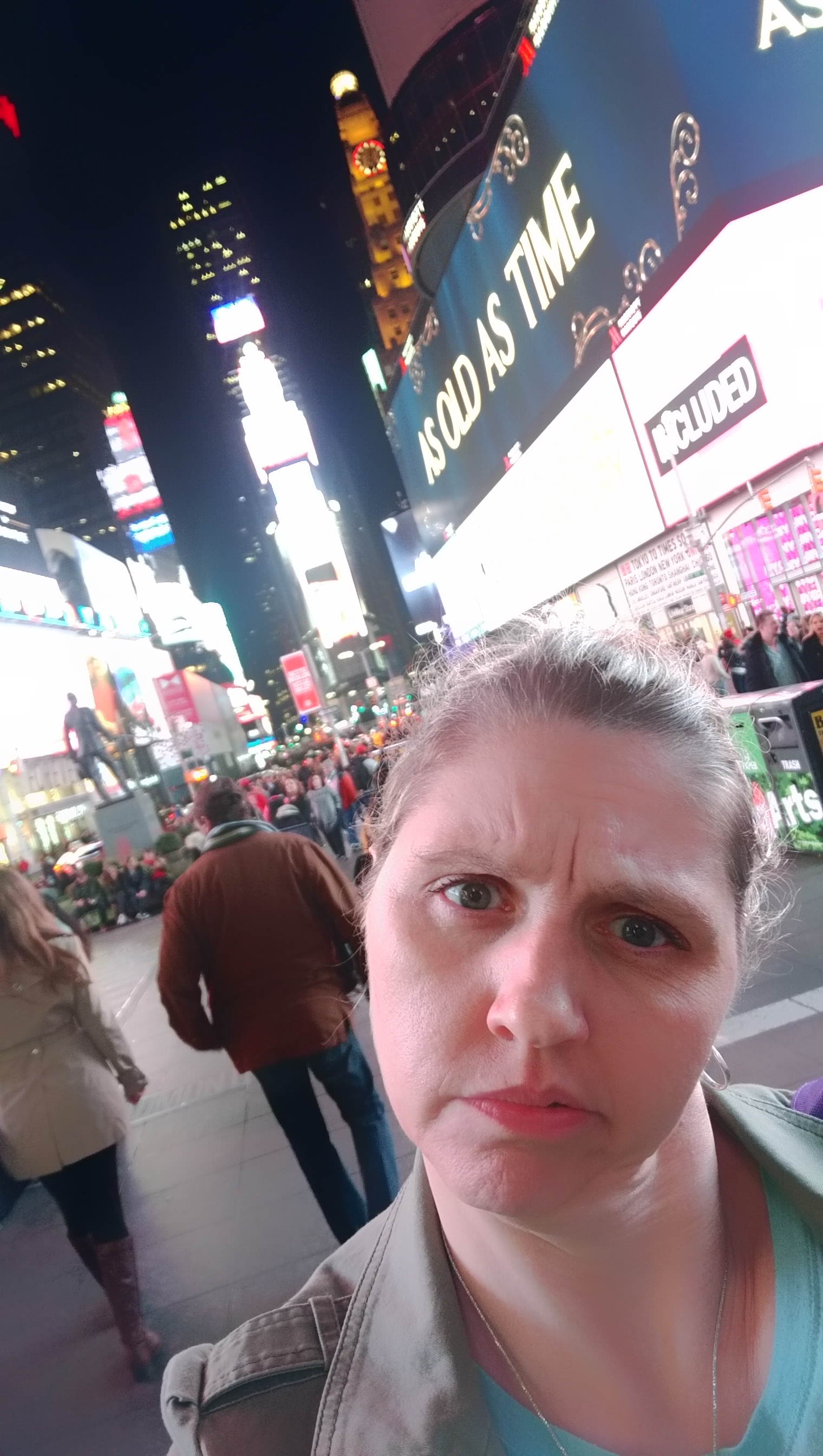
That evening we ate Mexican outside.  Made me long for the days I lived in the city.  I am glad we had a chance to eat outside because this would be the almost the last time we could…thanks Obama for inventing global warming.  It turned imag9974.jpgwicked cold while we were there.  This Texan implant wasn’t having it.  Anyway, that night we went to Times Square.  Man, totally not the same as I remembered.  When did it turn into a 24-hour sunlight extravaganza?!

Enough about all that touristy stuff.  I really should be writing about the conference and sessions and all that artsy stuff. Thursday morning started off as a dud.  We went to the first general session, which was the keynote speaker, Jeff Koons.  Boring.  I don’t like his work, and I find he is so boring to listen to.  He was quiet toned and just wasn’t what an estimated crowd of 7000 members needed to jump-start their conference.  We left.  If only Tim Gunn could come and speak again….

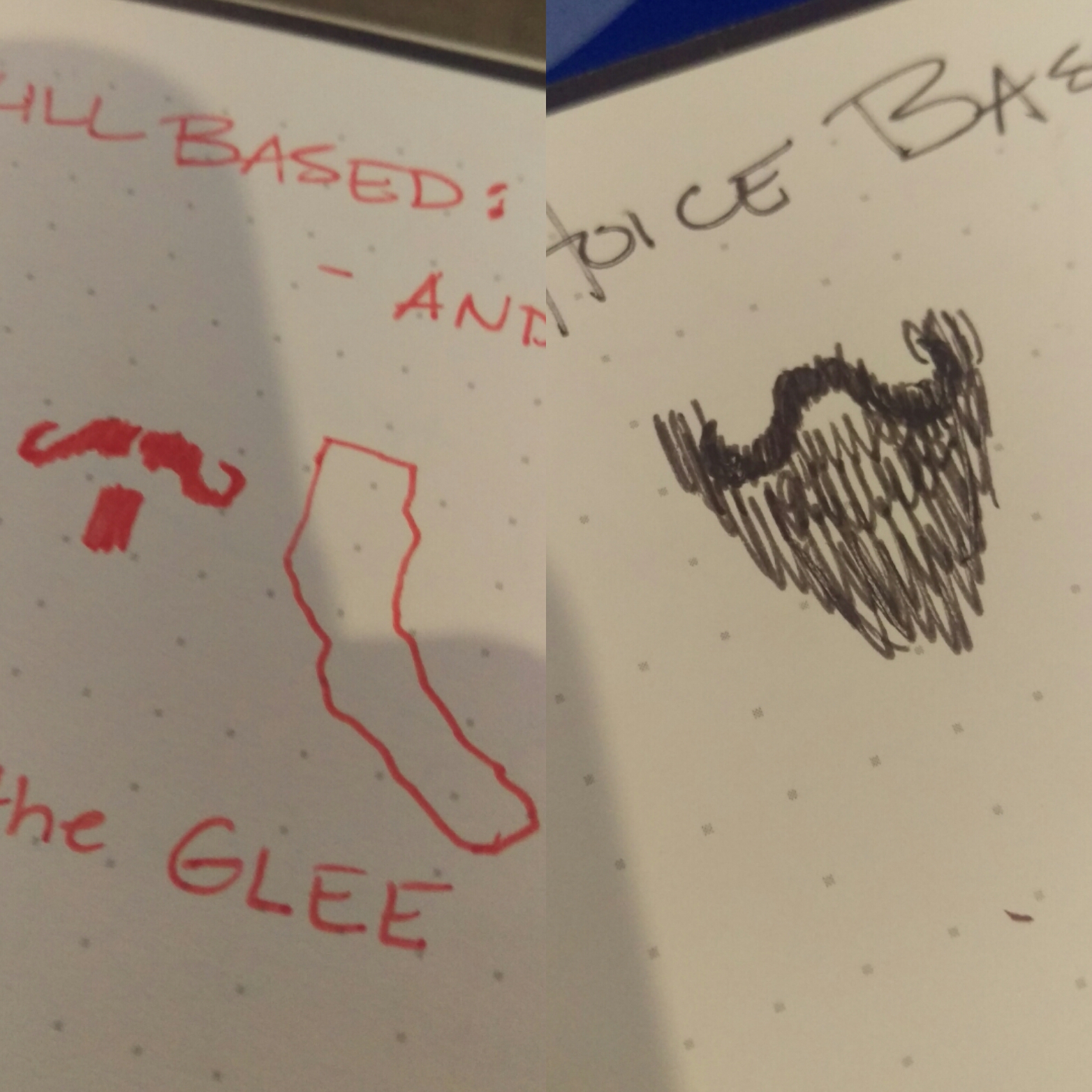
Over the next three days I went to several sessions on TAB/choice. img_20170316_173427.jpgTwo were by 2 different men, both with wicked cool mustaches.  In fact, I scribbled their mustaches in my notes.  Both men were interesting and full of information that I already knew.  I guess that is what happens as you move up the high school TAB ladder.  One thing that I did take away from Andrew McKee’s (red mustache) presentation was the “style book”.  It’s basically a place to save ideas, get ideas of what they like, are into, etc.  So the students can pull from that when they create their work.  I mean I have my Pinterest page that I refer to often when I create my work, but I don’t “require” my students to do that.  I think it might be helpful to incorporate something like this in my art 2 classes next year…and also maybe my ceramics classes.

imag9966.jpg

I went to a very interesting Raku session, which of course now has me wanting to write a grant for a raku kiln.  Thursday afternoon I went to an MCAD session on drawing as thinking.  We basically spent the 50 minute session doing a bunch of drawing warm-ups. It was a nice break, and it left me with some great exercises to bring into my classes next year as we move into block schedule.

The rest of my session were, like I stated above, choice/TAB sessions.  While the sessions were fabulous, (I’m looking at you Cynthia Gaub, Joy Schulz, and Melissa Purtee), I felt a little empty.  And, it’s nothing against my colleagues.  I am just looking for something more…something more than what I already know and am 100% agreement with.  I am looking for more than an intro to what TAB/choice is. I want something for those of us who have been doing it a while.  I hope that makes sense.  I did have an “a-ha moment” during Joy’s session.  For years, I thought Joy had this magical way of pulling greatness from her students.  After sitting through her session, I get it now.  She is so organized and her analytical side really affects how she works with her students.

The final session I want to talk about was a super-session.  It starred Katherine Douglas, Anne Thulson, Sharif Bey, and Olivia Gude.  It was amazing.  These four leaders really hit it out of the park.

These were my lasting thoughts from the session:

~Do we intervene: how, where, when, why, how much (OG)
~concept=something we use; not something to possess (OG)
~2 sentence curriculum: what do artists do? the child is the artist (KD)
~art supplies are materials; concepts are materials (can’t remember if this was OG, I think so)
~How do we keep students in that magical place as they get older? (OG)
~we have the capacity to exist in many art worlds (OG) [personally for me, this meant a lot]
~Sometimes LESS can be liberating (OG)
~We’re getting lost….ON PURPOSE (OG)

I know it seems that Olivia gave me much to think about, but Kathy always gives me much to think about…I wouldn’t be here without her.  Anne gave an activity to try for next year when we talk about “artists observe”.  It will get my students out of my classroom and really looking at the small, mundane details around them.  And Sharif…oh Sharif….we are kindred souls and I think we should totally hang out.

imag9999.jpgWhile I enjoyed the sessions I went to, I did think the selection, for me anyway, was limited.  I don’t understand how imag9987_1.jpgsessions are selected.  I don’t understand how they choose to schedule which ones and when.  I also don’t understand why so few TAB/choice sessions are offered, when clearly, year after year, the sessions offered are packed–which was another downside to conference in NYC…small rooms…or at least those rooms that held popular topics were small.  And, rooms that held research sessions (no offense to research) were in these huge rooms with few attendees.  And when I say TAB sessions were packed, I mean, way over room/safety capacity, on the floor seating, out the door, room temp went up 15 degrees packed.  NAEA needs to work on this.  It is just ridiculous.  I pay a lot of money, out-of-pocket, to attend the national conference.  I want to get my money’s worth.

imag0028.jpgMy favorite part of the conference is always the part where I get to see and hang out with my TAB/Choice mentors, colleagues, and friends.  I even got to meet some new friends whom I have only seen on the interwebs.  I want to thank Kathy and Diane for setting up the amazing dinner we had Friday night.  And, thanks Diane for making me not sit with Hillary and Liz.  It was fabulous to get to chat with Melissa, Joy,Cynthia, and Anne for a while.  Spending time with those that get it, and get me, is always a good time.

17038748_10210664539683656_3379946926746923205_o

I hope to make it to Seattle next year.  Cynthia promises it will be a fabulous time.  So, hopefully, at least one of the sessions I propose or co-propose will be accepted.  And, maybe someone will help me write a grant and/or convince my school to pay for it…I just can’t afford another year.

Artists Communicate

Standard

Our most recent, and final artistic behavior unit, was a closer look at the behavior, Artists Communicate.  This unit was set up a little bit differently than the other units.  We didn’t do as many activities prior to the artwork.  And, this was the first unit where my students created their own original artwork…from conception to artist statement.

We started off with a video on an artwork/installation piece by artist Maxwell Rushton.  As a little background, on Mondays we do what I call “Artist Monday”.  I show a video ranging in length from 3 minutes up to 10 minutes about a current artist.  (Artists Have a Global Awareness of Artmaking) When I choose the video we will watch, I try to keep it in line with the big idea of the current unit.  So, back to Maxwell Rushton.  He created an installation called “Left Out“. It communicates a message about homelessness and our perception of the homeless population.  Students reflected on the video on their BlendSpaces.  Another video I showed over the course of the unit was about Latina printmaker Kirsten Lapore.

One other short activity my students did was a simple sketchbook assignment.  They were asked to break one of their sketchbook pages into 6 boxes.  In each box they had to convey a certain idea–without using the items in the description.  Descriptions included: smell of a fresh baked apple pie, feeling of loneliness, sound of an approaching train, the taste of a hot pepper, the feel of lambskin, and an alarm clock at 5am.  The activity forced students to think of line, shape, and color when creating their sketches.

screen-shot-2016-11-27-at-8-40-48-pm

We spent a day, which probably was really boring until about half-way thru the slide show when the students got to participate.  I showed a slide show that also touched briefly on planning and research.  (This was the boring part.)  Then we got to the communication part and the slide with 5 photos of artworks.  We discussed what they thought the meaning was.  I talked about what the artist intended.  Then we discussed what the artist did to convey those ideas and messages.

screen-shot-2016-11-27-at-8-40-35-pm

That night, after a full day of that slideshow, I realized that the works I chose were very heavy with meaning.  I wanted my students to know that artists also communicated other things that weren’t so steeped with deep meaning.  Here is the pinterest board with the images I chose.  I set up Padlet boards for each class, and one by one I would put up an image and the students would chime in with what they thought the artist was saying and how they determined that.  I was impressed with my students.  They really read the images well.  It lead to great discussions.  As things were posted, I would say some things out loud and ask questions.  I could see the students contemplating, then some would reply out loud with their thoughts.

screen-shot-2016-11-27-at-8-40-18-pm

This brought us to studio time.  My young artists were asked to fill out an artwork proposal for what they wanted to create.  My students really put a lot of thought into their work.  Some students knew what they wanted to communicate, but didn’t know how to convey that.  Others knew what they wanted to make, but didn’t know what they wanted to say about their image(s).  That’s where the meetings came in.  When a student turned in their proposal, I read over the form and wrote down questions and comments.  Then I went and talked with each student.  It really helped me to understand their thoughts, and it helped them to see what “tools” to use to help convey their message…colors, line, composition, viewpoint, symbols, etc.

screen-shot-2016-11-27-at-8-40-59-pm

One thing that I was really impressed with was how much my students prepared for their final artworks.  Some gathered photo references.  Some did sketch after sketch trying to improve their skills.  Many watched videos to learn new skills–such as drawing and shading eyes.  I had students trying out new mediums.  They were all so into what they were doing.  They put so much into their artwork.

screen-shot-2016-11-27-at-8-41-08-pm

Anyway, we concluded the unit by setting up weebly websites/blogs.  I wanted my students to have an online portfolio; something different than the BlendSpace.  I see the BlendSpace as a place for research and collecting thoughts.  The websites are for finished artworks with artist statements.  They are something where they can show off their work.  We learned about artist statements and looked at statements by my artist friend, Roger Mudre, and at my artist statement.  So, now when my students finish an artwork, they take a photo, write an artist statement, and create a new blogpost.

For the first time in a long time, I felt my students’ artworks were at the same caliber as those from the students from my peers, such as Joy Schultz, Ian Sands, and Melissa Purtee. Their students always seem to have so much depth in their art, and now my kids did too. Proud teacher moment, if I do say so myself.  I hope we keep up this momentum because I can only imagine how amazing my students will be by the end of the year.

Artists Solve Problems

Standard

Our second in-depth look at an artistic behavior in Art 1 classes was “Artists Solve Problems”.  For this unit, I really wanted to give my students a chance to create some art, while figuring out how to overcome a problem or problems.  I feel this is a very important skill to have for life…not just for art making.

We started off the unit by watching the TED Talk by Phil Hansen, “Embrace the Shake”.  Most students really enjoy watching this video.  They are intrigued by how Phil fulfills his need to create while overcoming his perpetually shaking hand.

Our next activity came to my from my friend and fabulous art educator, Melissa Purtee.  Earlier in the school year, she wrote about game she played with her student on the first days of school called “What’s in the Bag?”  I read her post and thought this would be a great activity for students to begin working on problem solving skills.

I created 6 bags for each of my art 1 classes.  That required my students to break into 6 teams of 4…no one was allowed to work alone. (Working together in a group was another problem to solve.)  Each group picked a prompt from the bucket and then received their bags.  They were given an hour (broken up over 2 classes) to bring their prompt to life.  Bag contents included: a portion of an egg carton, 3 pipe cleaners, a cork, a round plastic piece, 10 popsicle sticks, 2 tongue depressors, some puzzle pieces, 3′ strip of lollipop wrapper, 3 small square chipboard pieces, and 2 rectangular chip board pieces.  They could also use the bag if needed, but it was not required.

After time was up, students were asked to present their creation to the class, addressing the following topics:

  • What was your prompt?
  • Talk about your creation BEYOND “this is my project”…DESCRIBE IT!
  • What was the hardest problem to overcome building your creation?
  • How did you overcome it?
  • What was the best part of this activity?

Lastly, each class took a closer look at the creations and then voted for the 2 they best felt fulfilled the following criteria:

  • Best interpretation of the prompt
  • Best visual appeal
  • Best craftsmanship
  • Best use of materials

I also showed a few other videos along the way for kids to see how real life problems could be solved in fun, artistic ways.  The videos came from The FunTheory site.  Thanks Ian Sands for showing me that one.

Our final activity of this Artist Solve Problems unit was SCAMPER.  I learned about SCAMPER while at a Gifted and Talented training this past summer.  Out of all the different activities we went over at the training, I felt SCAMPER was one that I could actually take back to my classroom and have the students use.

I wanted my students to create an artwork, on their own, but I wanted it to fall under this unit.  I thought with SCAMPER I could kill 2 birds with 1 stone so-to-speak, as I have a ton of old student artwork that I no longer needed or wanted.  So, this was a great time to use them.  Students will pick an artwork from the pile and use it to create a new artwork.  The catch is, they have to choose one of the letters of SCAMPER when creating their  “new”artwork.  Subject matter, medium(s), and technique(s) are all up to the student.

S = SUBSTITUTE

C = COMBINE

A = ADAPT

M = MODIFY

P = PUT TO OTHER USES

E = ELIMINATE

R = REARRANGE

Modify was the letter most used in the activity. But, a few really dug in with combine, rearrange, eliminate and put to other uses.  I wish I had some of the before images, but I don’t.  Oh well.  Anyway, they stepped up with SCAMPER–some students taking the artwork so far off the original…YAY!  One student totally took her piece apart and created a whole new piece.  (The feathered bird above–it was once a rhino.)  One note I did have for myself for next year is to have a wider variety of old artwork for the kids to choose from.  Too many of the same starting image and ending with not changing the image enough.  Thanks DBAE. Live and Learn.

As we have moved on from this unit, I can see my students talking with each other and trying to work through problems on their own first before involving me.  This is huge.  It leaves me more time to walk around and chat and get to know my students.