Category Archives: Classroom Management

Day to Day in My TAB Classroom

Standard

DSC_0154

A post on my art teacher’s fb page asking about how a TAB classroom works at the high school level got me to searching my blog for a post on how I do it.  I found numerous posts on why I do it, the themes we have used, and organization of my room.  While those are very helpful, they don’t really talk about how my classroom is run–the day to day.

I have said in the past that my classroom is a living entity, and that is as true today as it was when I wrote about it; and it will be true tomorrow and for years to come.  I have to ebb and flow with the needs and wants of my students.  Otherwise, I am taking away something important from the students and not living up to the pedagogy I believe in.

The basics of running my classroom include: introduction of theme, brainstorming, inspiration, demos, time to plan and work, due date, reflection.

  • INTRODUCTION OF THEME:  This is just that…I tell the students the theme.  At the start of a unit, I turn to the kids and tell them the theme. simple. easy.  Themes we have used this year include:  man/machine, interior/exterior, power, pressure, home, environment, light, sound, surrealism, self-portraits.
  • BRAINSTORMING: A few of our themes have not needed brainstorming–like self-portraits.  But, for the most part, we brainstorm as a class.  We are a 1:1 school with MacBooks, so I have the students use a program called Padlet to help them develop ideas.  This helps in several ways…it allows for multiple points of views, it helps to give a voice to those who are shy, and I can link the brainstorm board for those that need to go back and review.
  • INSPIRATION: Currently I am helping my students get some inspiration.  Many of my students haven’t been exposed to much art, so thinking outside of the box is often difficult for them.  I like to help them see what could be possible within a certain theme.  I create pinboards with a myriad of examples for my students.  I hope in the future to change this by having my students find the inspiration and creating the pinboards.  I’m just not there yet.
  • DEMOS: Part of running the TAB classroom includes giving short demos on various materials, tools, techniques for the students.  When I introduce something new, I do a quick 5-8 minute demo and I record it.  I took a page from Apex High School and created my own media portal.  I post all the videos here so students can go back and reference if they were sick or if they need a refresher.
  • TIME TO PLAN AND WORK: The majority of time spent in my classroom is dedicated to this.  At the moment, I don’t require students to plan by sketching or the like because it is not something I always do.  Some students plan on their own, while others don’t.  I am seeing that the reason for this is that they don’t know how.  This is something I am working on and planning on adding in the future (as soon as I figure out how…).  Many of my students experiment as they go, working through ideas and finding solutions–just like many artists do.
  • DUE DATE: I’m going to be honest here, I like having due dates.  I think they are important.  They help to keep my students with wandering minds on-task.  They are important for future endeavors.  I think it is something they have to learn.  I use a soft due date and a hard due date.  There is a week between the two due dates.  Basically, the day after the soft due date I introduce the next theme and we brainstorm.  During that week, those that have finished with the current theme can move on and start planning/working on the new theme; those that need a few more days can finish up working while thinking about what they want to do on the new theme.  I have found the soft/hard due date works for my student population, and it helps keep me in compliance with a few district/campus policies.
  • REFLECTIONS: During the first semester, each student created a website using Weebly.com.  As a class, we talked about 8 different behaviors that artists have.  Every 2-3 weeks, the students chose 2 behaviors and wrote about how they were or weren’t showing that behavior.  It didn’t matter where they were in the process of an artwork.  It was helpful for them to see that the processes they were going through were what was changing them into artists.  When the second semester started, I introduced the artist statement, and the students reflected at the end of each unit, writing an artist statement about what they just created.  I realized that many were not ready to move on to this and were producing better reflections about themselves and their work talking about the behaviors.  I give them a choice at the end of the unit about how they want to reflect now.

MEDIA CHOICE:  I have set up my classroom so that almost all media is out in the classroom and easily accessible for the students.  We started off the year with b/w drawing media.  From there I added color media.  Next was printmaking, then painting and collage.  Starting in the second semester I opened sculpture and clay.  At this point in the year (10 weeks to go), students are allowed to choose whatever media they want.

I know that not every TAB classroom works like this, but this is what works for my student population and for me.  I hope as I continue with the TAB pedagogy, I am able to allow even more freedom to my students.  I keep a list of running notes of things I think will make it run better next year.  What demos did I miss this year that would have been good?  What if I spent more time on each behavior individually?  How can the students get more out of blogging?  Things like that.

There are never two days alike in my classroom.  In fact, even when I do an intro day, no two classes are ever the same.  It’s a good thing.  It keeps it interesting to me.  It keeps me on my toes.  It keeps me happy.

Let There Be Light?

Standard

Light:    

  1. the natural agent that stimulates sight and makes things visible.  
  2. understanding of a problem or mystery; enlightenment.
  3. (of a color) pale.
  4. of little weight; easy to lift.
  5. gentle or delicate.
  6. (of entertainment) requiring little mental effort; not profound or serious.
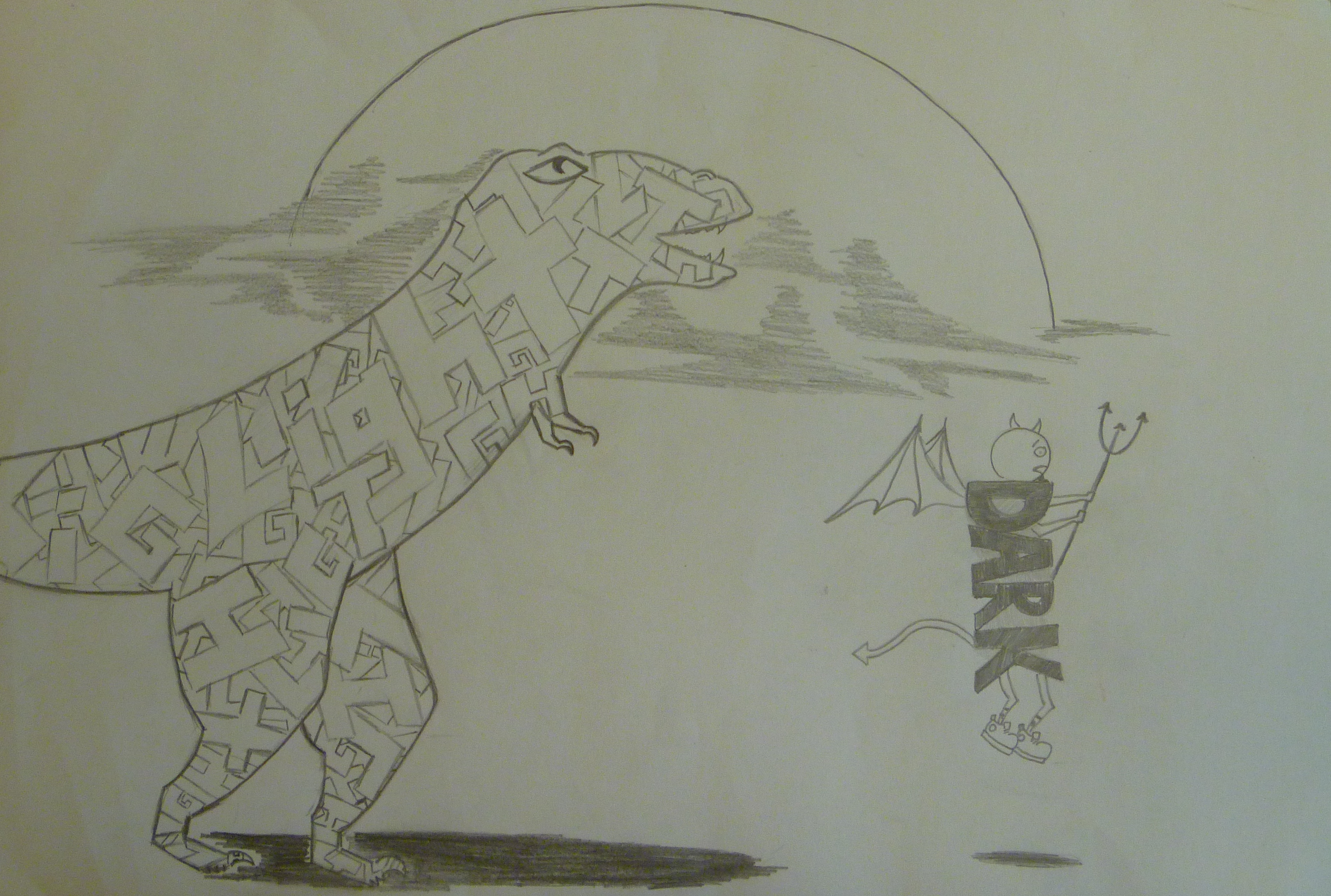
  7. (of persona) good; vs. evil (dark)

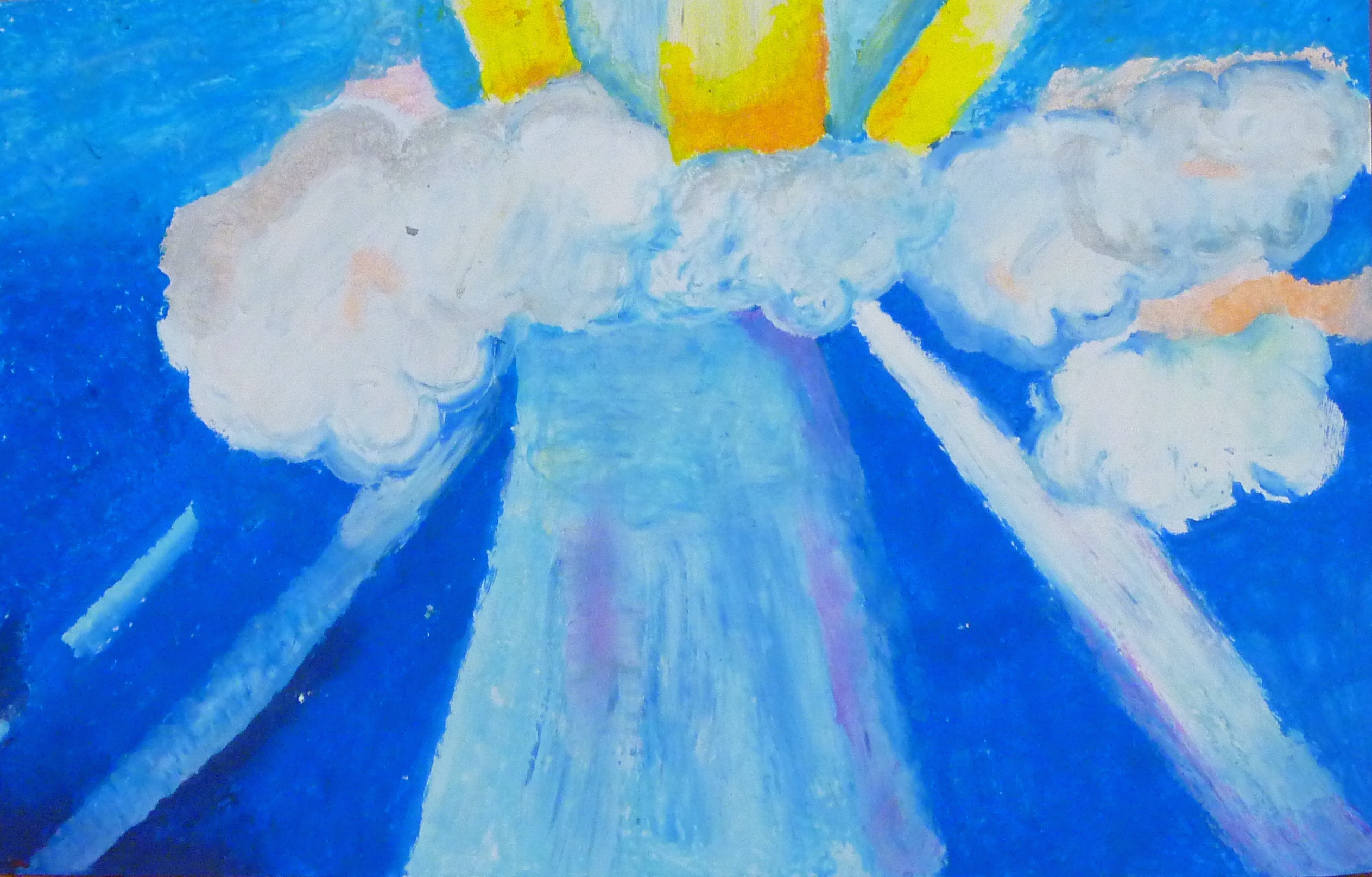
This was our theme.  Seems like there could be a myriad of possibilities.  I thought it would be “easier” that our previous theme of “Sound“.  Unfortunately, it was much harder than I thought it would be for my students.

I don’t know if it was the theme or if it is just that time of year.  (To be honest, I have hit that proverbial wall that often shows it face in February as we are just on the cusp of beginning the last 2 marking periods of the school year.  But, I digress.)  While a few knocked it out of the park and had some deep thinking and meaning to their artwork, many just went through the motions.

Not everything that came out of this unit was bad.  It helped me to realize some things about my students, myself, and the atmosphere in the room.  My students need a break from computers.  Enter our next theme of surrealism where they will rely on their minds for ideas.  I need a break.  I know we just returned to school, but I feel like I am about to start up this huge mountain of responsibilities and I won’t get to the top until mid-April.  And, finally, my room has become too comfortable.  It’s a double-edged sword really. It’s what I wanted.  I wanted my students to want to be here.  I wanted my students to want to make art.  I wanted my room to be a living thing.  And it is all of these and it is not all these things.  I don’t know how to explain it.  I like the chaos of art making and several of my classes deliver.  But what I don’t like is just general chaos–which other classes are becoming.

So, see, this unit has brought reflection and thought for me.  This is a good thing.

Here are a few more good things that were brought about by this unit.

P1050806 P1050811 P1050814 P1050837 P1050839 P1050844 P1050874 P1050879 P1050882 P1050913 P1050914 P1050923 P1050925 P1050927 P1050974 P1050978

Setting the Stage…The Paint Stage

Standard

One of my biggest fears/concerns this year when moving to a TAB/Choice-Based classroom was the addition of paint into the mix.  Paint is always a scary thing. Kids don’t always wash brushes out and acrylic dries in them. Trays get left behind for me to clean. So much paint gets wasted because no matter how many times you say, “you can always get more”, the kids take enough to cover an elephant.  And don’t get me started on those pumps for the half gallon bottles that are always clogged.

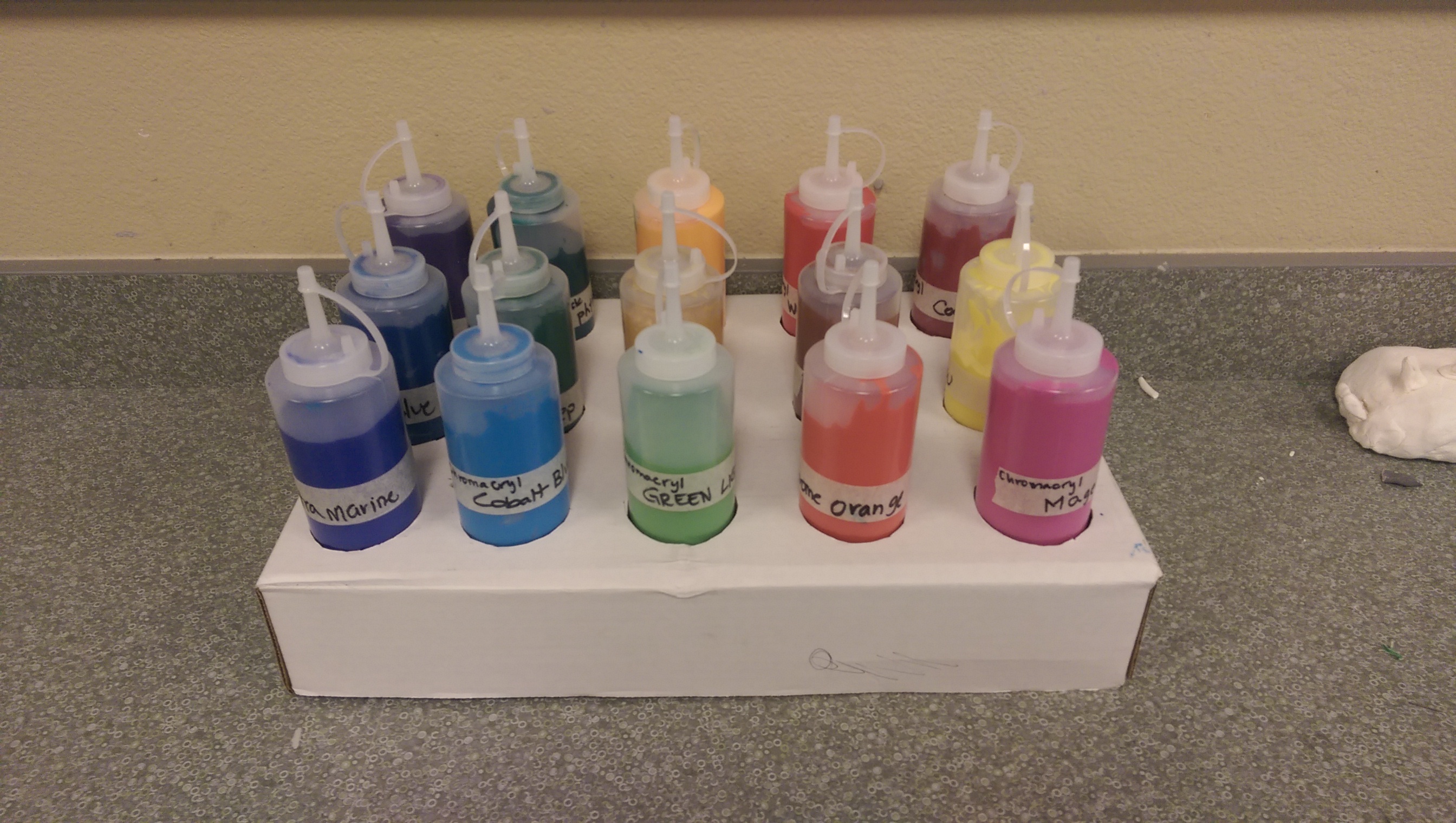
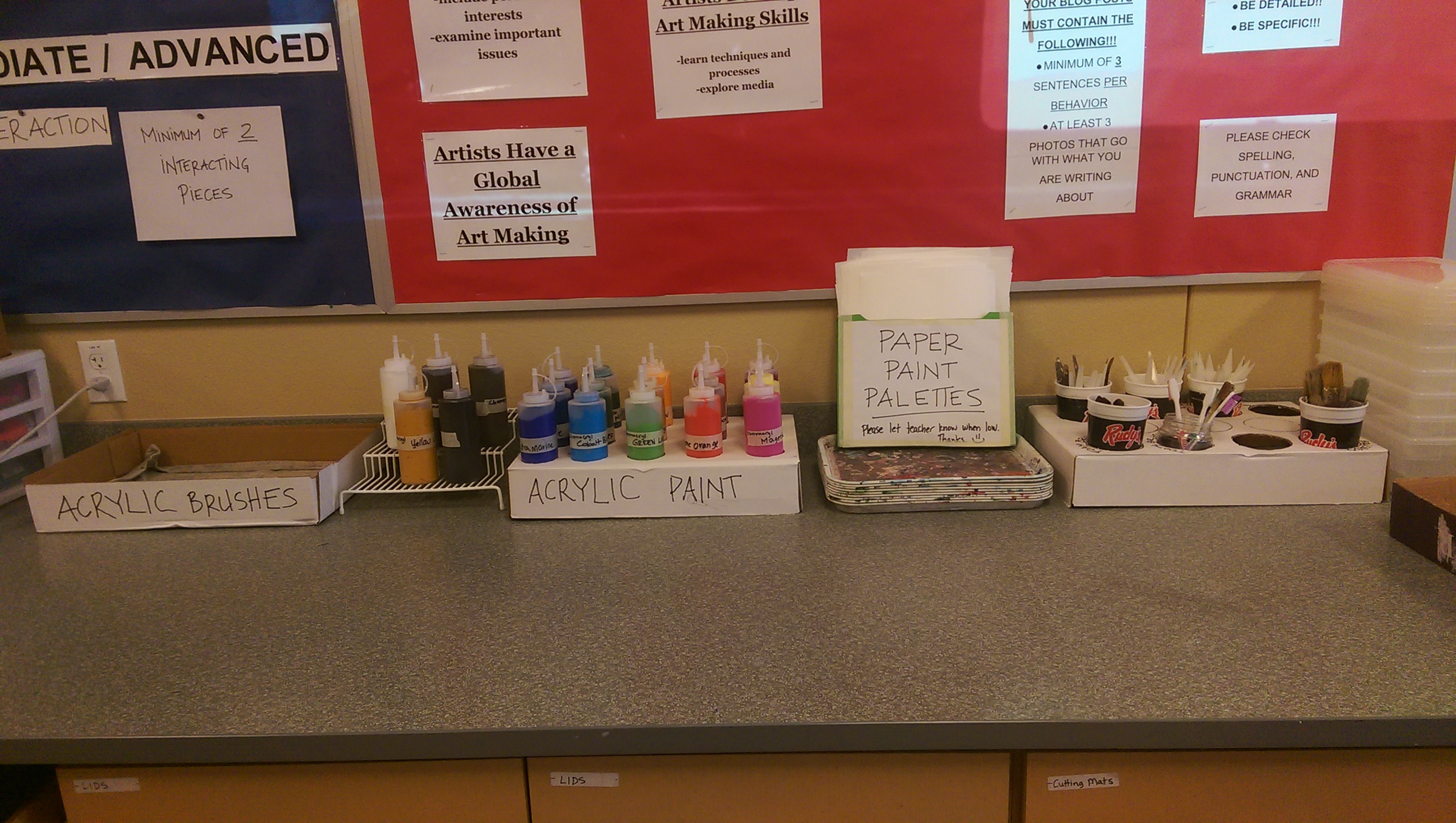
Since this year I have everything out for the kids to access, I thought paint, both acrylic and watercolor, should be out too.  And, not to toot my own horn too much, since I had put so much thought into organization (and it is working very well), that the paint should get the same consideration.  I bought a bunch of clear, empty ketchup bottles for my acrylic to try and combat the too much paint/clogged pump issue. I looked through all the stuff I had and found a couple of racks I could use. And, I appropriated several Xerox paper box lids from the work rooms.
I made 2 areas–one for watercolors, and one for acrylics.  So far, so good. Kids have access to it all, except they do have to ask for the canvas boards. They have been taking only the paint they need.  They close the caps on the paint bottles.  Almost all brushes are washed well.  (They have been following the brush washing video I made for them.) The paper paint palettes help so much with giving them less to clean and more time to work.

It seems my fear of introducing paint was unnecessary. Let’s hope they keep up the good work, and good clean-up.

image

Watercolor station. Includes paint trays (not pictured), brushes, paper, salt, resist medium.

image

Canvas board size choices, on the wall near

image

Acrylic paints in their new bottles. There is a small spice rack stand that holds the neutral colors.

image

Acrylic paint set-up. Brushes, other tools, paint trays, paper palettes and brushes. There is a towel in the brushes box top so wet brushes can dry and not destroy the cardboard.

Brainstorming with Padlet

Standard

If you have never tried Padlet before, I suggest you check it out.  I found out about this wonderful free online program this summer.  I have used it twice in my classroom already.  

The first time it was meh.  Not all my students had computers and they had to shout out what they wanted me to add when we had a brainstorming session.  Many voices weren’t heard because, well, you know that student, the shy one that doesn’t speak up and especially not to the whole class.  

Today we used it again in my Art 2 class.  We had our final brainstorming session about Man/Machine and the relationship, meaning, and interactions.  Almost all of the students had computers so they were able to add as we went.  It was a huge success.  It can be anonymous and helps those who don’t know or don’t want to share their physical voices.

And bonus, I can share the link on their Art 2 webpage so they can reference it.

It really pumped me up as we move to the art making stages of this unit.

My “New” TAB Classroom

Standard

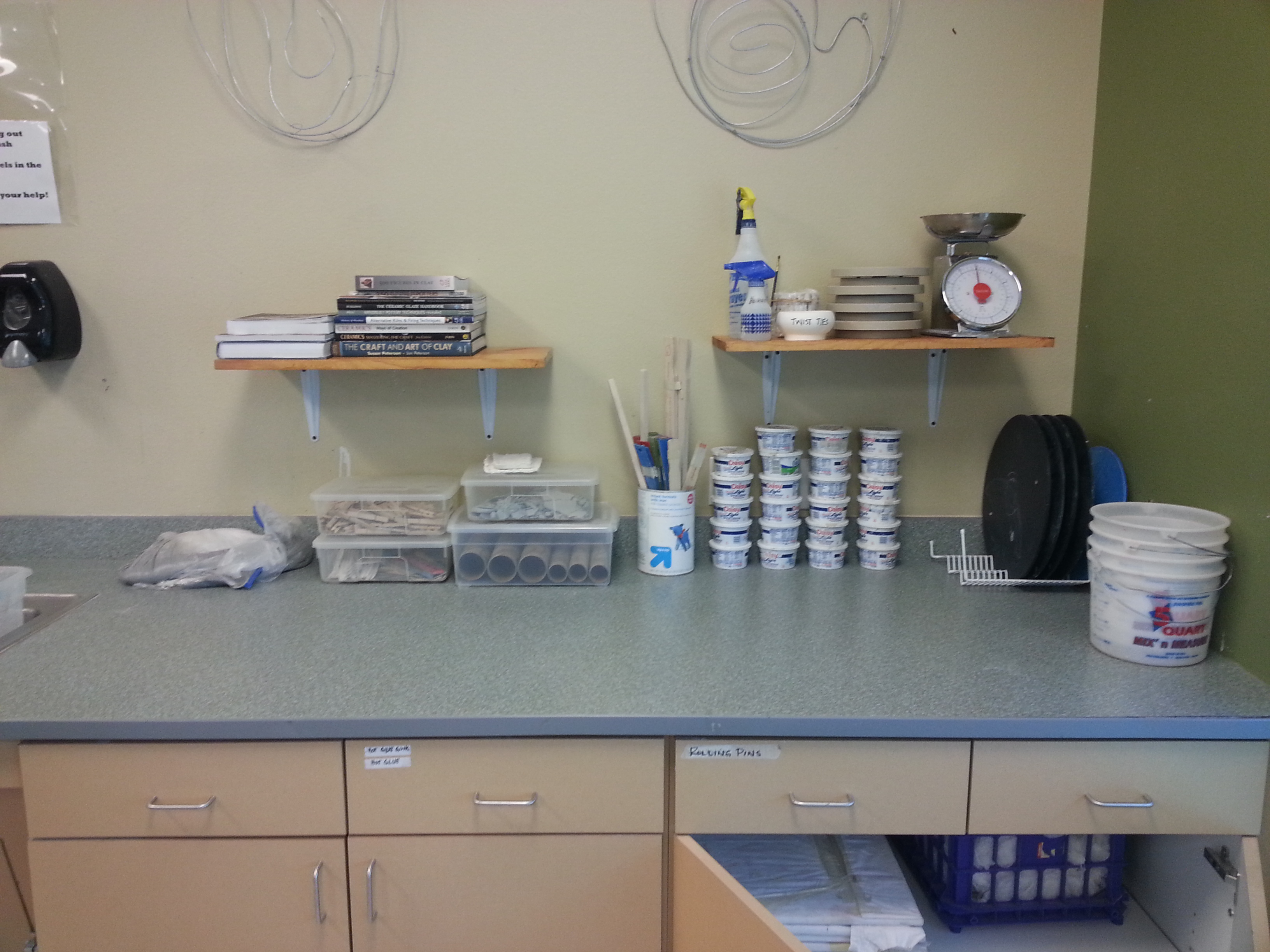
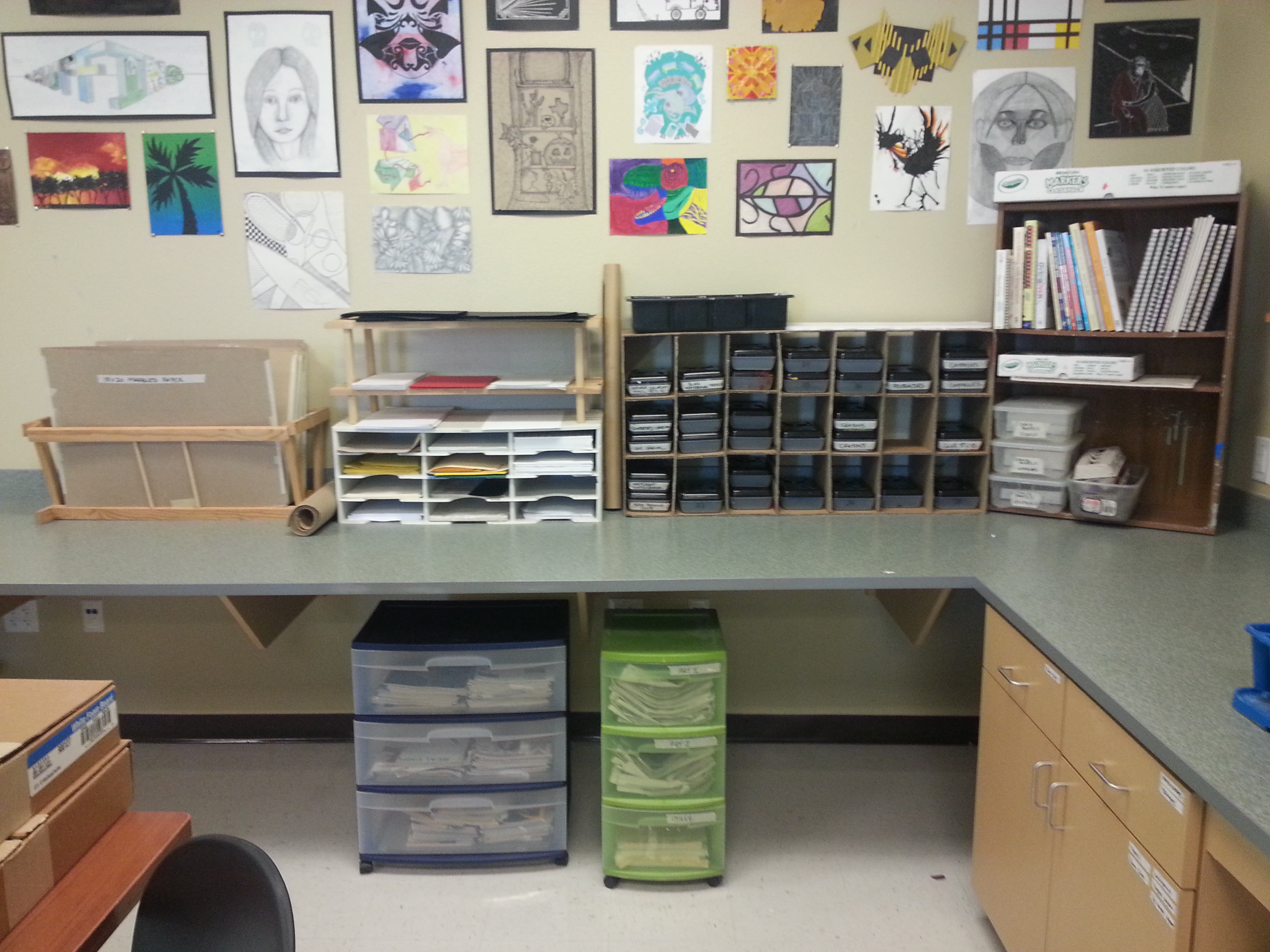
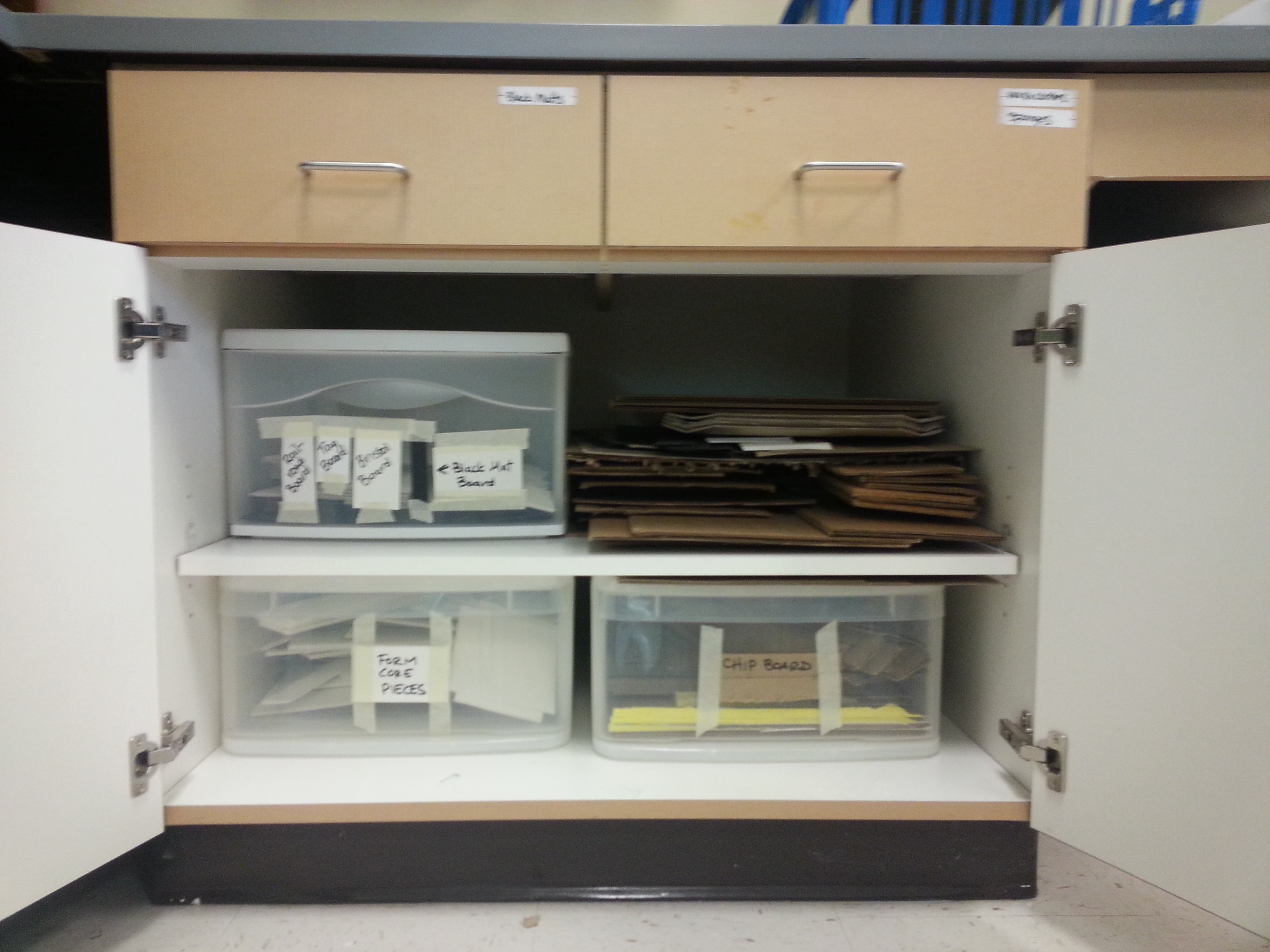
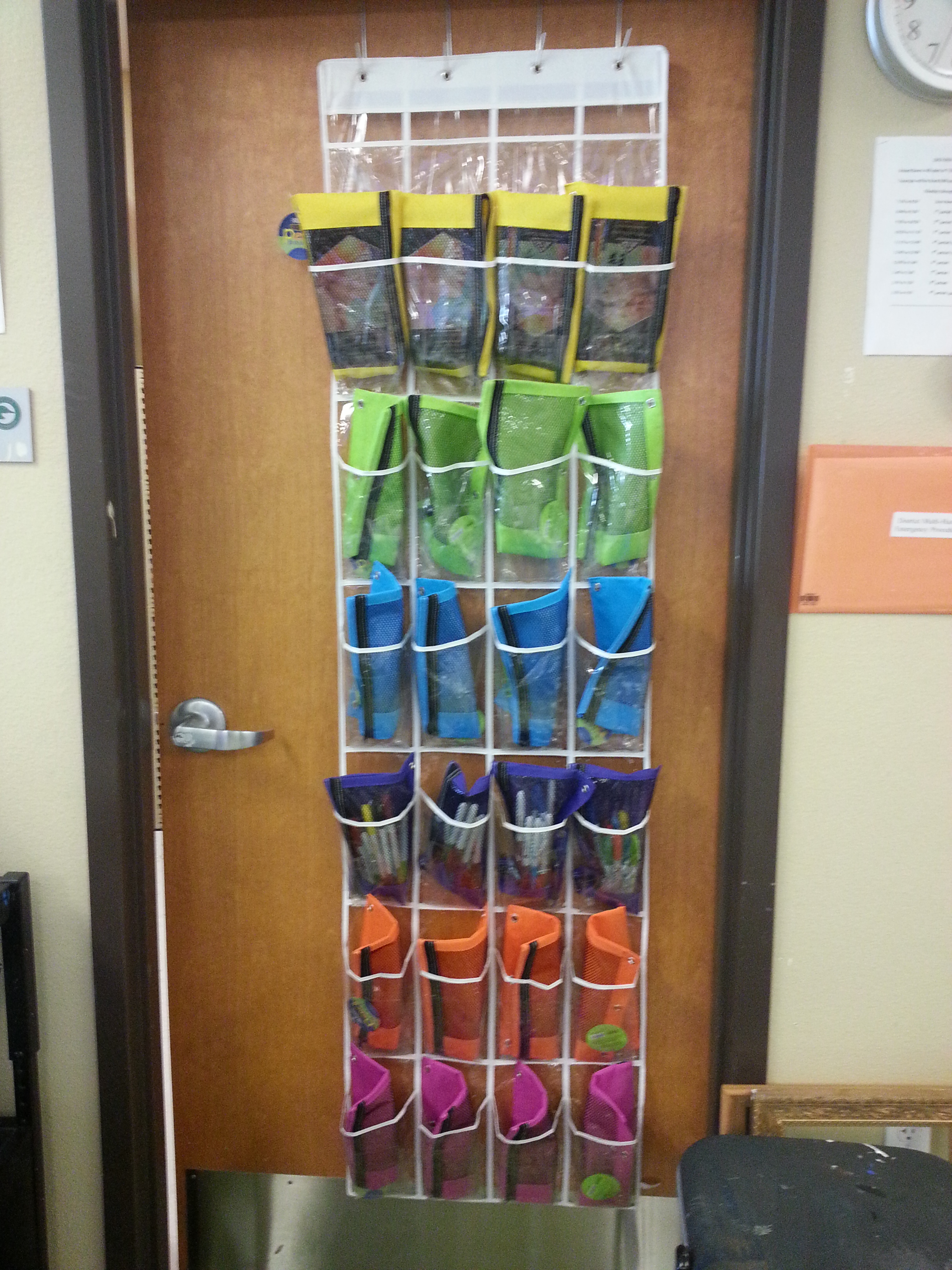
I spent the summer trying to figure out how to set up my room to best serve my students in a TAB environment. Well, it was easier said than done. Luckily, I didn’t have to buy too much. I had a friend that was moving who gifted me a ton of plastic tubs and drawers. I had a ton of stuff from before that I repurposed. I did buy a few things that I didn’t have…like a new drawer unit for magazines, but all in all, I didn’t spend too much.

My room isn’t the best size for an artroom in my opinion. It is long and narrow, and I have rather large desks and 4 potter’s wheels to accommodate. But, I think I have it all figured out.

I came in a couple of times over the summer and got rid of things I hadn’t used in years and old projects I was saving for no reason. I started to re-arrange and re-purpose. I have set up what we will need at the beginning. Paint and color will come into play in a few weeks, so I thought since I had some time, I would concentrate on what I needed right away and what had to be put away so it wasn’t cluttering up my counters.

It is a work in progress and I like to think of it as a living thing that will change as the needs of the students change and as we figure out better ways of doing things.

20140822_111916

Ceramic Corner

20140822_111924

Ceramic Corner

20140822_112016

Glaze Station in storage room

20140822_112051

Drawing/Paper Media Counter

20140822_112104

Storage

20140822_112118

Different Types of Boards (bristol, card, rail, etc.)

20140822_112149

Still Life Drawing Items

20140822_112130

20140822_111958

Check Out Station for Prismas, Brushes, and Colored Sharpies


Process Over Product?

Standard

A couple of months ago, I joined an art teacher’s forum on facebook.  It was a great find–a great use of social media.  I am in contact with hundreds, if not thousands of art teachers from around the globe.  It has really got me to thinking about how I run my art room, what is important, what isn’t important, what is art, what is craft, should we have more choice, should technique be the main focus, should, should, should.  In short, it has made me think, learn, and grow…3 things that are important to stay a relevant and qualified teacher.

It is through this group that I was introduced to TAB or choice-based art.  It is through this group that I have been introduced to this group of teachers from Apex, NC at Apex High School.  They have been experimenting with choice this year, and recently they have  brought to the front of my mind the question of process over product.

Is the artistic process more important than the product produced?  I don’t know.  Is the process just as important than the product?  I also don’t know. But as I begin to explore this topic and experiment with it in the classroom, I find I might lean more towards them being equals.

As I began to think about stressing the process in art making and really trying to have my students participate more in the process and making decisions regarding their art just like artists do, I began to think about how do I assess this?  Unfortunately, assessment is always towards the front of my brain. (It’s hard not to think about it when you have to have a minimum of “X” grades per marking period without question, complying with district policy, blah, blah, blah.)   I want my assessment to be fair and meaningful.  I want my assessment to be as objective as can be in a very subjective area like art.  I create rubrics for almost everything.  I have to. Otherwise, I feel like I am grading on a whim.

But back to assessment.  How does one grade process?  How does an artist think?  What actions does an artist do?  Fortunately for me, the very nice people of Apex have sort of figured that out and are willingly sharing their work here.  The questions/artistic habits that Melissa Purtee designed are wonderful and so helpful.

This week I participated in a video art chat and the topic of process over product was the topic.  Ian Sands, a teacher at Apex, discussed how he and the teachers at Apex HS are having the students do what they call a “snapshot”.  Bi-weekly the students go into blogs that they have created and they write about their process.  They must pick 3 of the artistic behaviors and add pictures.  It is a really interesting way to be able to assess the process and to see how the kids are working, thinking, and growing as artists.  The teachers are also discussing using the snapshot as their grades and not grading the final product.

This is where I become unsure.  This is where I veer off.

I decided to give this focus on process a try.  On Monday, my Art 2: P/D students started altered books.  For me, this is a project for the students to really focus working around a theme and trying new ways of making art. (They have prompts to jump off from.  Prompts include things like draw with glue, layers, glazes, burn the page, etc.  I want them to think about doing things other than just “traditional” drawing/painting. )  I have always graded the altered book in a way where each page was graded and then the book as a whole was graded.  I had a rubric that I had created for the assignment, but I wasn’t in love with it.

However, the project has always been more about the process of art making.  Why not then assess it more about the process?

I walked in to class today and told the kids we were trying a different approach to grading this time around.  I told them to disregard everything I talked about regarding the rubric and individual page assessments.  I have decided to have the students do a weekly reflection for the duration of this process instead.

I borrowed the artistic habit domains and wrote up the questions in Socrative. (No time to really set up blogs at this point.) They will answer 2 of the domains each week…their choice.  (I do think I will tell them that they can’t always answer the same two.)  Then that will be their grades.

However, I will still give them an overall product grade based on some basic questions that I outlined for them yesterday…more of did you fulfill the requirements of the altered book type things.   I can’t walk away from the product completely.  I think the product is equally as important.  I think it is important to see things through to the end, even if it is not successful.  Then you can reflect back on the artwork to see what worked and what didn’t.  But this is a conversation for another post.

I am excited to see how it goes.  I am excited to see what students will write. Many are already excited about the altered book, and I think this focus on process over product will let them be more free and willing to try new things.

I will update as we continue with this process process.  (See what I did there?)

Monthly Newsletter

Standard

I put together a monthly newsletter that I send out to my parents/guardians, principals, and some colleagues.  You can find links to them on the right column.  I use a program called Smore.  I have a section for each of my classes–art 1, art 2, etc.  I have wanted to keep in touch more with parents about things that go on in the classroom.  I want them to know what their kids are learning in my room–that there is more than just “art” or “fun” happening.  I want them to know I plan carefully and that I have high expectations for my students.  I include pictures and some carefully worded explanations of what is happening.  I have received return emails from some parents complementing me and thanking me for keeping them updated.  I also received a very nice card from the district instructional technology coordinator, the man that introduced me to Smore, about my use of the program and recognizing my effort.

Lately, the newsletter have been a bit more difficult to write.  I have been exploring new things and trying out some things in the classroom as I grow as a teacher.  I believe in being transparent about what I am doing.  But it is scary.  I worry that someone is going to question why I am changing things, question my decisions, not agree with what I am doing, or worse, ask me to stop and go back to what everyone thinks art should be.

I know I shouldn’t worry and I should be confident in what I am teaching my students–I do have their best interest in mind.  I guess only time will tell if my worries are for nothing.