Author Archives: missjaybar

Helping Students to “Get It”

Standard

Sometimes kids just don’t get it.  No matter how hard you try, there is some disconnect between what you are saying and what they are comprehending.  I recently had this issue.

Art 1 is working under the theme of “Environment”.  We discussed and had a brainstorming session of what an environment is and what it could be.  They came up with some wonderful ideas in our padlet session.  I really thought they knew where to go from there.

A few days pass, students finish up new media practice sheets, and they begin to work on sketches for their artworks.  I walked around taking peeks here and there to see what they were doing.  I began to notice that I was seeing a whole bunch of the same thing…lots of sunsets over water and lots of generic landscapes.  Nothing seemed as creative as their last artworks.

What was I doing wrong?  What were they not getting from me?  Where was the misconnection?  I asked some colleagues on the FB TAB teacher group and they helped me to see what was missing.  One person suggested that maybe it was in the wording.  Another asked what types of images I had shown them.

I thought about their suggestions.  I realized that it was a wording issue and that my choice of intentionally not showing any examples backfired.  I quickly made a pinboard of an wide array of environments.  The next morning I had a sort of “show and tell” with my students.  I showed them an image and had them tell me about the environment.  I asked them what environment it was.  I asked how they came to that conclusion.  I asked what the artist did to help create that environment.  I told them that another word for environment was “setting”.  We then moved on to the next activity for that class period.

The next day I walked around, again peeking at what they were sketching.  This time I saw images that were more thought out.  They had subject matters that were put into a surrounding.  I saw kids becoming more “into” what they were creating.  I was happy, and things felt “right” again.

The Day(s) I Became an Electrician

Standard

One of my Brent potter’s wheels had suddenly started to not work correctly.  No matter what I tuned, it would either not stop turning when the pedal was all the way off or if I got it to stop spinning, when in the high position it would turn only fast enough to trim pots.  Not ideal for students learning to throw.

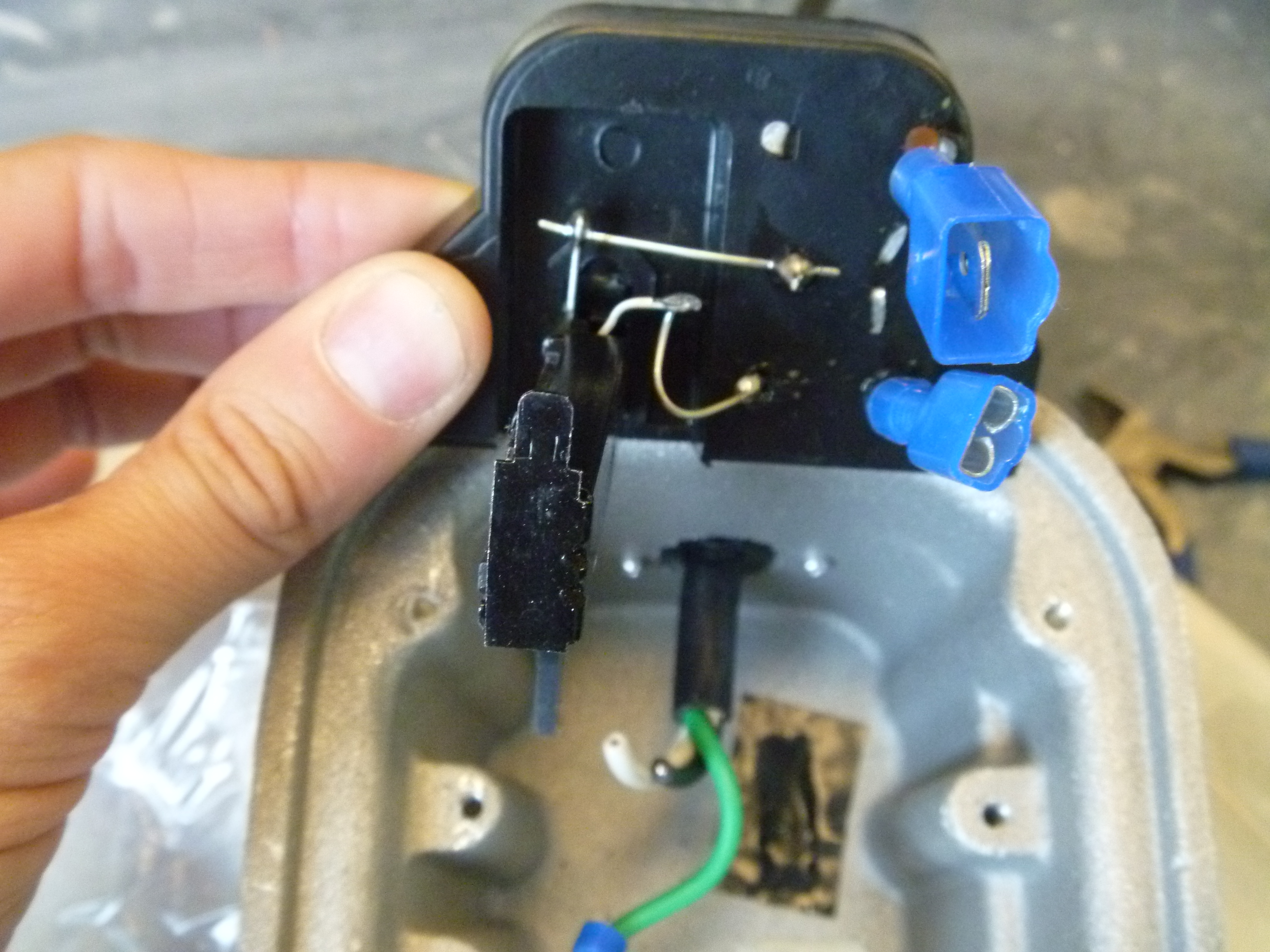
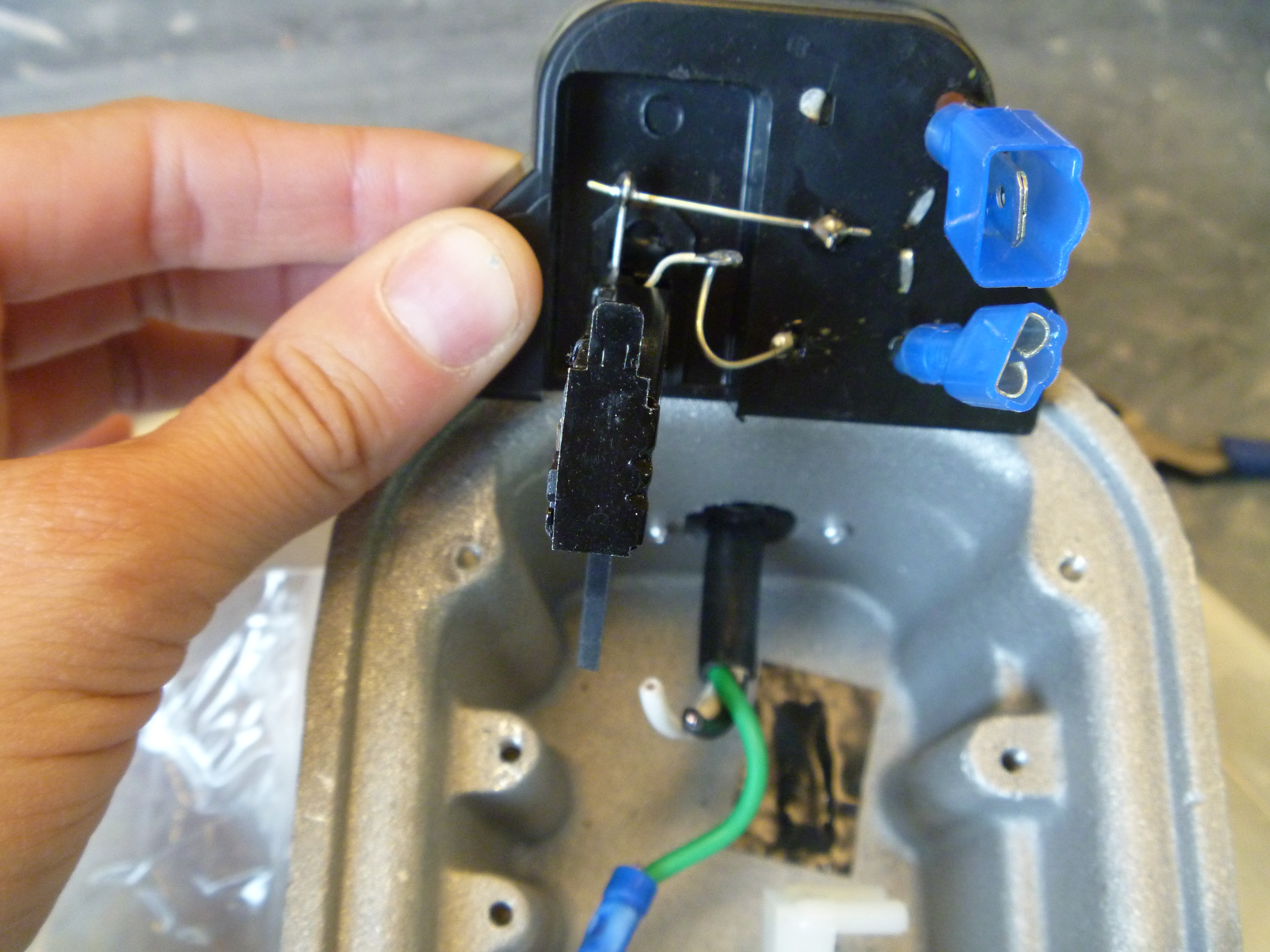
I called up Brent and told them of my case.  Luckily for me, the wheel is still under warranty.  The sent me some new parts.  I was expected to fix this myself.  As you can see from the pictures their part had these blue caps that mine did not have.

P1040348 P1040349

I wrote back and told the service person.  She told me I would have to strip the wires and attach them, but assured me no soldering was necessary.  I then cut the blue caps and stripped both sets of wires so they leads were long enough for me to twist together and cover up.  Let me tell you, it wasn’t easy.  There wasn’t a lot of wire there to work with.

But I was successful and was able to fix my wheel.

20141017_142239

Things are now spinning properly and only when I want it to.

Man / Machine

Standard

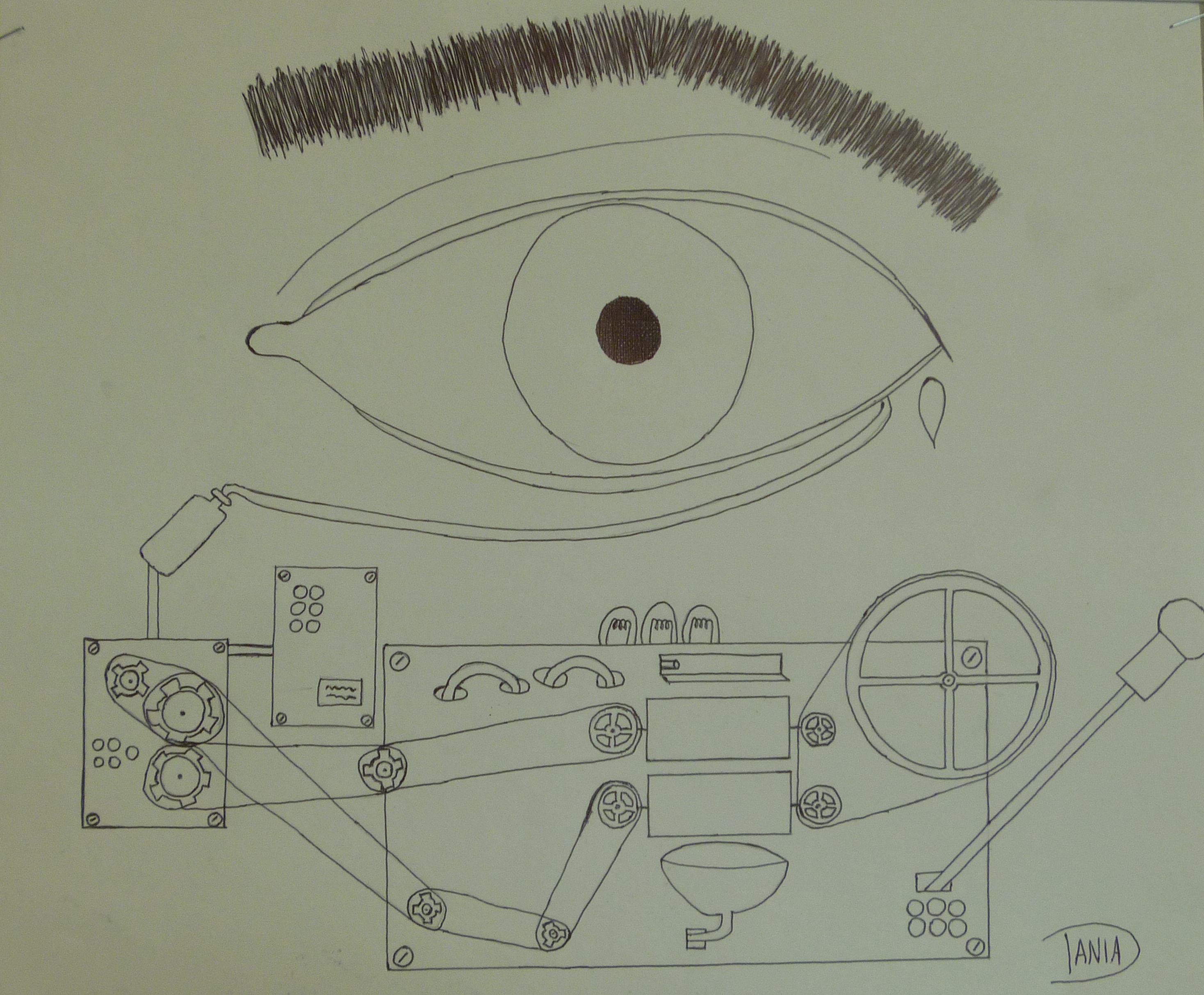
Our first TAB unit is coming to a close.  Art 2 finished last week, and Art 1 is just about done.  The theme the students were challenged with was MAN/MACHINE. As a class, we talked about what “man” could mean, what “machine” could mean, and what connections/interactions/relationships they could have.

The students were limited to a black and white drawing no smaller than 8X10. We talked about different techniques including hatching, cross-hatching, pointillism, and scratchboard.  The students practiced these along with charcoal and using white pencil on black paper.

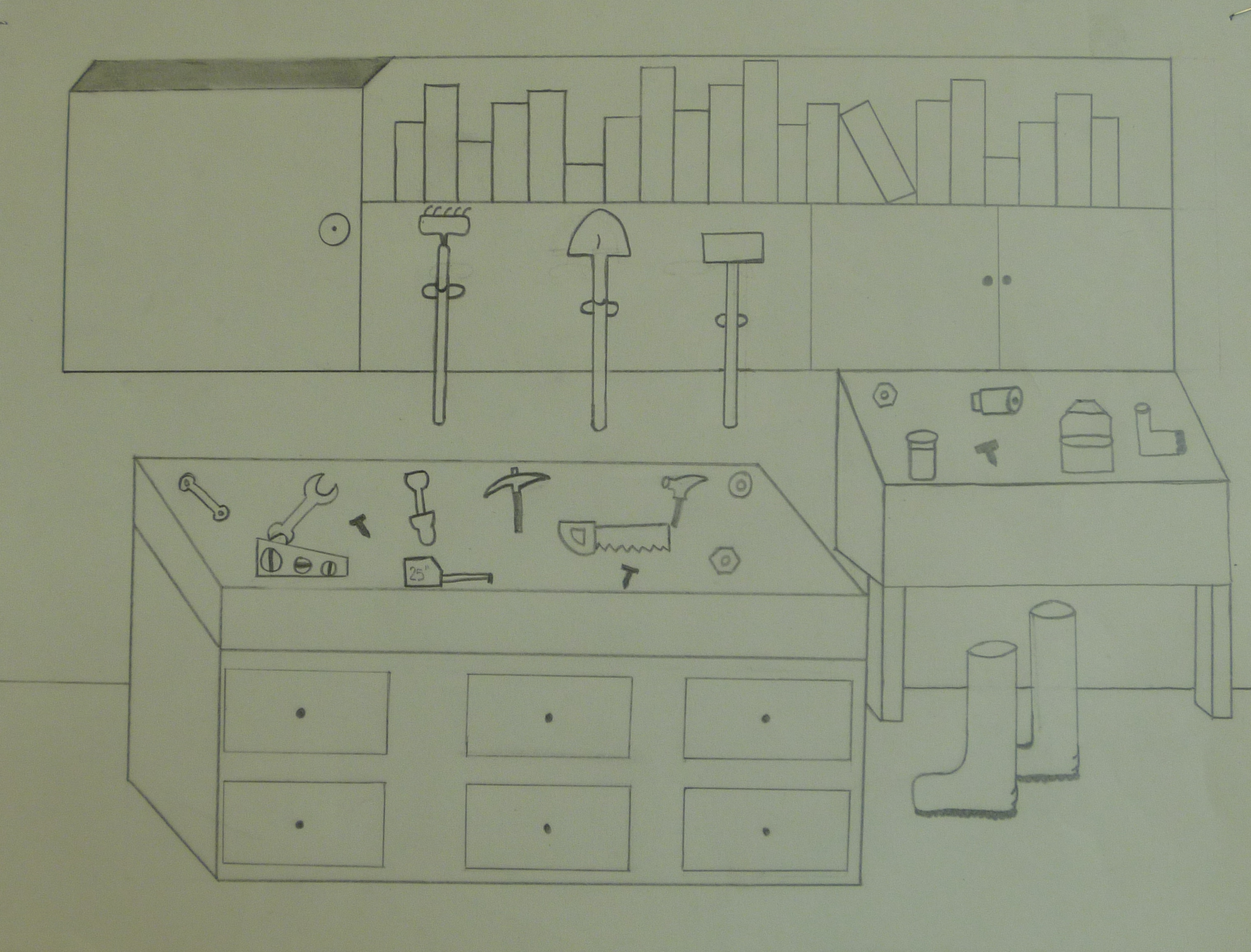
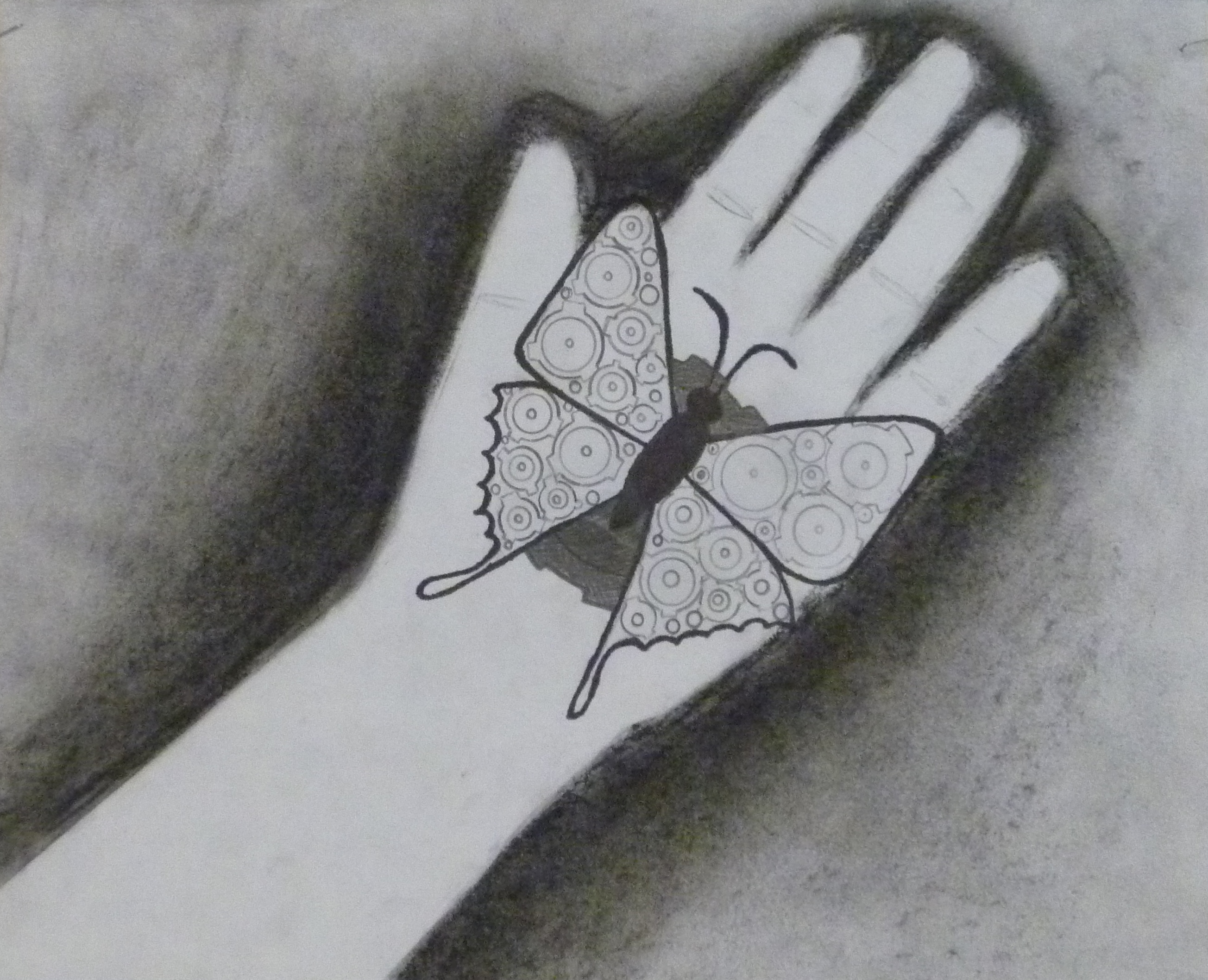
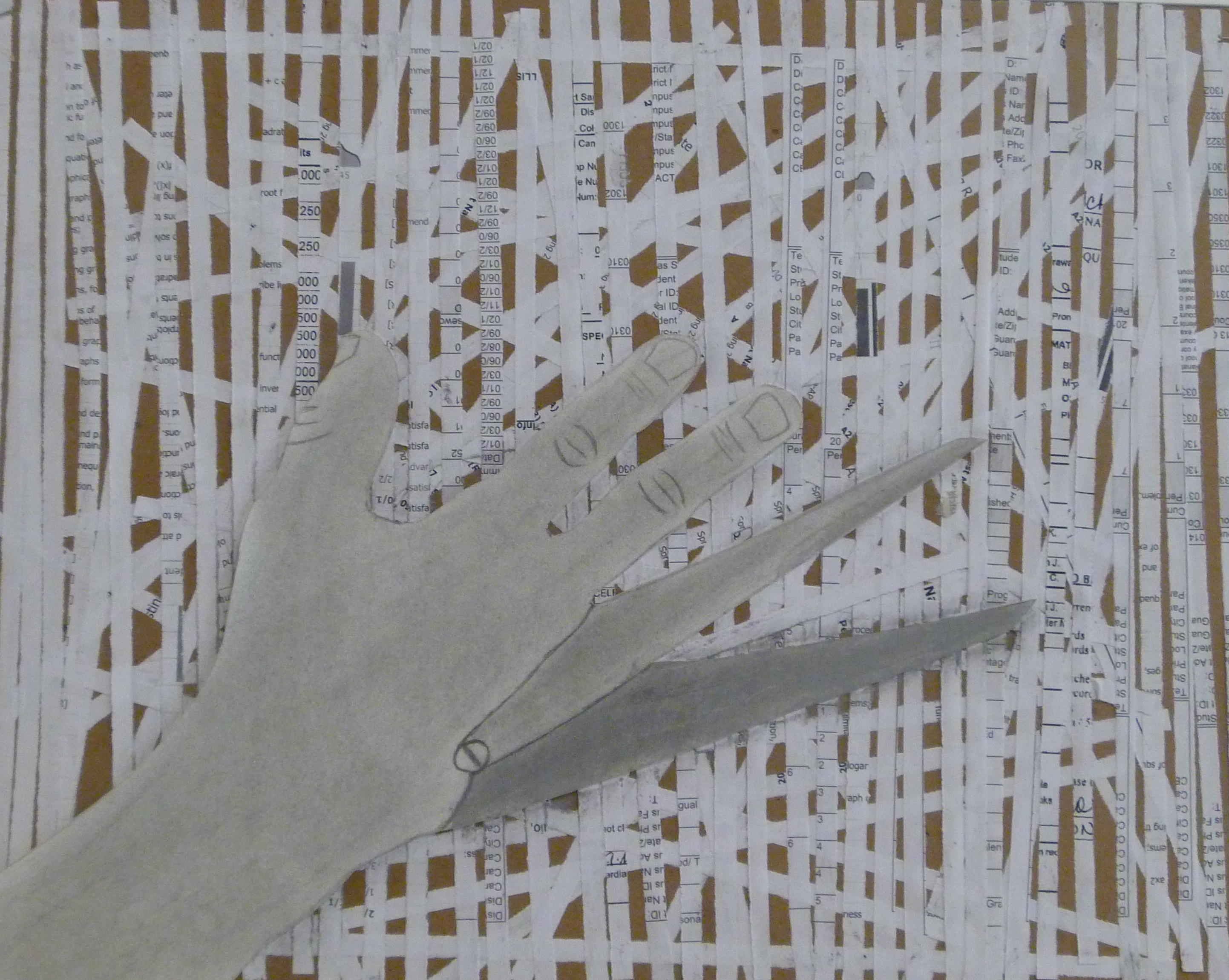
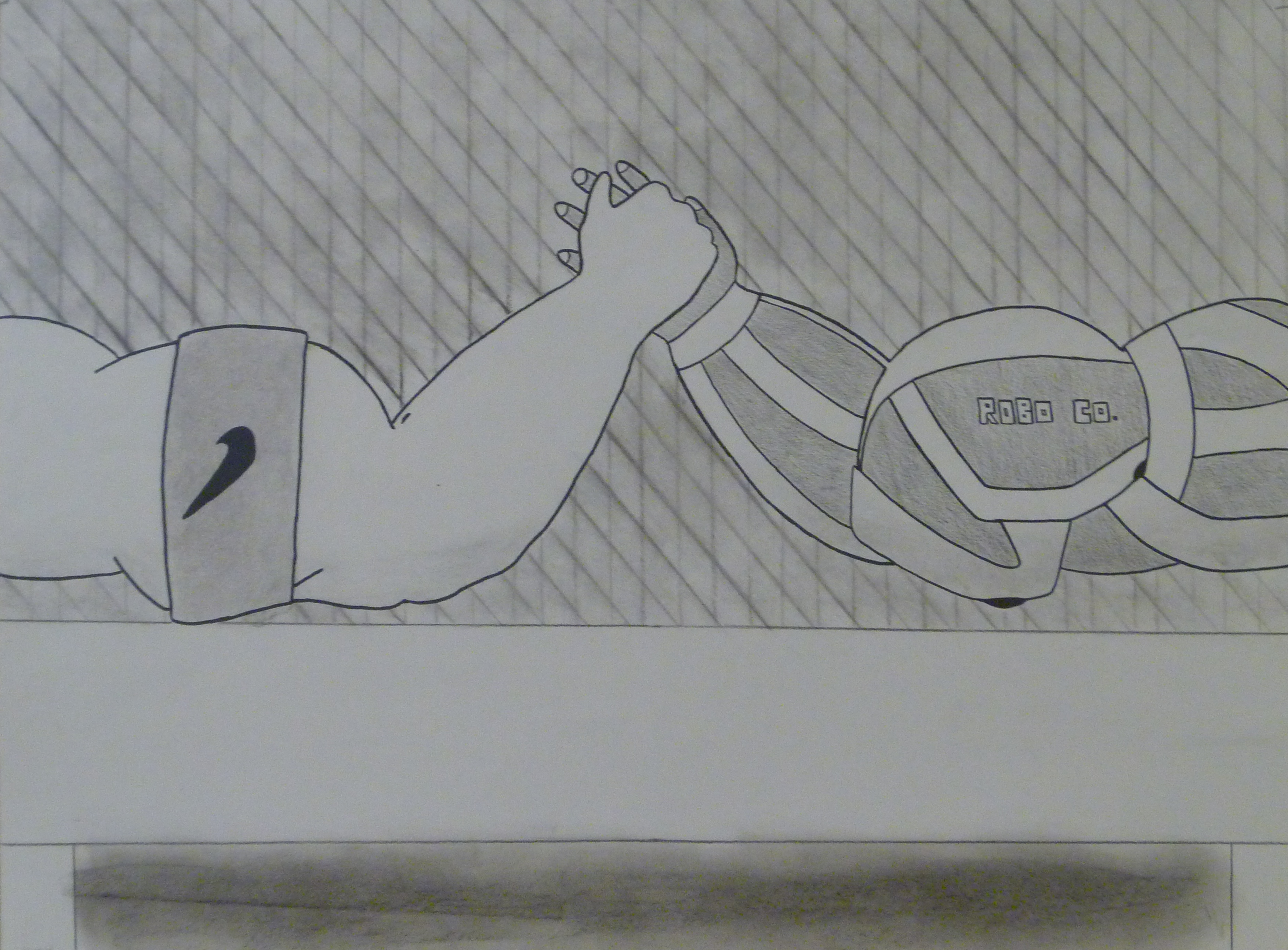
I couldn’t have asked for a better first theme.  The students gave it their all–well, 98% did.  They learned so much about the artistic process.  Many sketched first before committing to a final drawing.  Others went through 2, 3, or even 4 ideas before settling on something.  Some even started final works, reflected on what they were doing, weren’t happy, then started over again.  Kids researched drawing faces and learned how to draw wood grain.  I don’t think my classroom has seen so much independent learning in one artwork in an art 1 class, ever.  Art 2 amazed me with their thought processes and choices.

Interpretations were all over the map.  Here are just a few.

P1040280

P1040281

P1040288

P1040289

P1040294

P1040295

P1040296

P1040297

P1040299

P1040303

P1040305

On "aged" parchment paper.

On “aged” parchment paper.

P1040326

P1040330

P1040333

On newsprint, like a comic.

On newsprint, like a comic.

I have to admit that I was nervous putting them up in the hallway to display.  I was nervous that my colleagues would think my students weren’t as talented as in previous years.  I wrote a carefully worded email announcing new artwork in the hallway.  I always do this because the fine arts hallway is out of the way for many.  This time I explained what the students were learning, TAB, and the authentic art making happening in my art room.  My worries were not necessary.  I received…well the kids received so many complements.  In fact, one of my AP’s complemented me on the artwork, the wonderful email, and the exceptional learning going on in my room.

A Student’s Story about Problem Solving

Standard

I wanted to take a moment to brag on one of my ceramic students.  Lately I’ve been talking so much about my art 1 and art 2 classes and how their immersion into TAB has been off the chain.  I feel like I’ve been neglecting my other classes…my ceramic classes.  They do make up half of my class load after all, they should not be looked over.

It has been slow going in the beginning classes as we were waiting for clay and slabs are getting to a working state that isn’t so floppy.  (I have to say I can’t wait until we are past the first project so kids have more than one thing to work on.)

My intermediate/advanced class is creating enlarged organic objects.  I asked them to bring in an organic object, but of course, only one student did.  Luckily I predicted this and found a ton of things for them.  One of the objects was the flower pod from the cactuses here in Texas.  Paul chose that object.

It started out fresh and bulbous and he jumped right in building it 5 times as big.  It was going to be an awesome piece.  However, over the course of the time we’ve been working, the pod began to shrivel as the moisture left.  Neither of us thought of this possibility.  As Paul was close to finishing, I told him if he wanted to just pretend the piece hadn’t shriveled, I was cool with that.  He said ok.

I went about my business and towards the end of class came back to Paul and saw that he had incorporated the shrivels.  His piece looked way more awesome than it did before.  There is now so much more life to his sculpture.  I am so proud of him.  This is his best work to date.  I love that he encountered a problem and instead of getting mad, he ran with it and brought his work to another level.

P1040214 P1040245

Student/Teacher Collaboration

Standard

Should we influence our students’ artworks?  And if so, how much?  I struggled with this the other day.  As I walk around my classroom, I stop and watch students work.  I stare at them staring at their work and eventually ask what they are struggling with or what they are thinking.  This has started some wonderful conversations and lead to some collaboration.

I listen carefully to what they have to say and I form my questions with great intention to pull out of them where I think they need to head in their artistic journey:  what things they need to consider, what are they trying to say with their work, what is the relationship between this and that.  I wait for them to think and answer.  And in the moments of silence, I start to think too.  Based upon their answers, I come up with some suggestions.  I can see the unknown in their eyes and I say, “what if you…?”

As I offer up ways to go with their pieces, I started to think to myself, am I giving them too much and not letting them figure it out on their own?  Am I taking something away from them?  Maybe yes, maybe no.  I like to think I am helping to open their minds to the world of possibilities and that art can be so much more than what they have seen in their little rural town.

The possibilities of where they can take their artwork and how they can bring it to another level excites me.  It makes me love art and teaching even more.  But, am I teaching or am I directing?

What do you think?

Finally Having a Great Time

Standard

And when I say I am finally having a great time, I mean that I love teaching and I love my job…every period, every day. While I struggle with the stupidity that comes with all the paperwork and administrative stuff, I do it with little complaint because the rest is awesome.

Why is it so good? Because I love teaching ceramics and because of TAB.

My ceramic classes are all working and learning and having fun. The clay is here. And the students want to be there and are eager to work and get messy. Finally all my non-ceramic classes have started working on their artworks for our Man/Machine theme.And I couldn’t be more excited by all the different interpretations and the enthusiasm in my students.

It is like my classroom is a whole new place. My eyes have been opened and I never want to shut them. I don’t watch the clock any more. I don’t surf the web anymore. I talk with my kids…about their art, about their process, about their struggles, about them. I know it’s only been a few weeks and perhaps I am still in the honeymoon phase with TAB, but I foresee us having a long and happy marriage.

Brainstorming with Padlet

Standard

If you have never tried Padlet before, I suggest you check it out.  I found out about this wonderful free online program this summer.  I have used it twice in my classroom already.  

The first time it was meh.  Not all my students had computers and they had to shout out what they wanted me to add when we had a brainstorming session.  Many voices weren’t heard because, well, you know that student, the shy one that doesn’t speak up and especially not to the whole class.  

Today we used it again in my Art 2 class.  We had our final brainstorming session about Man/Machine and the relationship, meaning, and interactions.  Almost all of the students had computers so they were able to add as we went.  It was a huge success.  It can be anonymous and helps those who don’t know or don’t want to share their physical voices.

And bonus, I can share the link on their Art 2 webpage so they can reference it.

It really pumped me up as we move to the art making stages of this unit.

My TAB Classroom Is a Living Entity and Must Be Treated As Such

Standard

I’ve been at this TAB thing in my classroom for about 2 weeks.  I have implemented it in my Art 1, and my Art 2.  My ceramic classes aren’t quite there yet, but they will be.  I started Art 2 first on the TAB path.  I showed short demos and had them practice using the techniques.  We talked about out main theme of man/machine.  I plan on revisiting tomorrow.  

I feel I made some mistakes in my approach, so after a week of monster pinch pots and bobble heads in Art 1, I had a chance to have a mulligan.  I changed how I had them practice.  And after the first day, I even added a practice exercise that I didn’t do with my Art 2.  

As I go along, I am learning just as much, if not more than my students.  I think that is important in the TAB classroom.  You have to be flexible.  You have to take a step back and re-evaluate.  And, if you are lucky, like I am, you can get a mulligan and try a new way within a few days and not have to wait until the next unit in a few weeks to try something new.  

However, as I watched my Art 2 students finished the final practice before re-visiting our brainstorm session of man/machine, I felt that how I was having them practice just wasn’t right.  I feel they weren’t really having a good go at the different techniques/media.  I plan on finishing up with Art 1 how I completed Art 2, but over the course of the next few weeks, I will come up with some new ideas on how to practice.  Because hey, what worked at one time may not work at another time.  That’s just how the TAB classroom works.

“If there is no struggle, there is no progress.”  -Frederick Douglass

“To improve is to change; to be perfect is to change often.”  -Winston Churchill

“If we don’t change, we don’t grow.  If we don’t grow, we aren’t really living. ” -Gail Sheehy

This activity is just TASK-ing to have fun

Standard

What is task you ask?

“Created by contemporary artist, Oliver Herring, TASK can take many forms each time it is performed.  Every artist involved, depending upon the prompt (TASKS) and the materials on hand has the capacity for creative input and creative action.  TASK is a fantastic means to exploring the big idea of Play–what place does it have in a classroom?  Without play, we are not free to explore ideas, to push possibilities, and trust our responses to others ideas, and our own ideas within the context and structure of a space with constraints of materials on hand.”  

                                   ~from a TASK handout I received at an art conference this summer

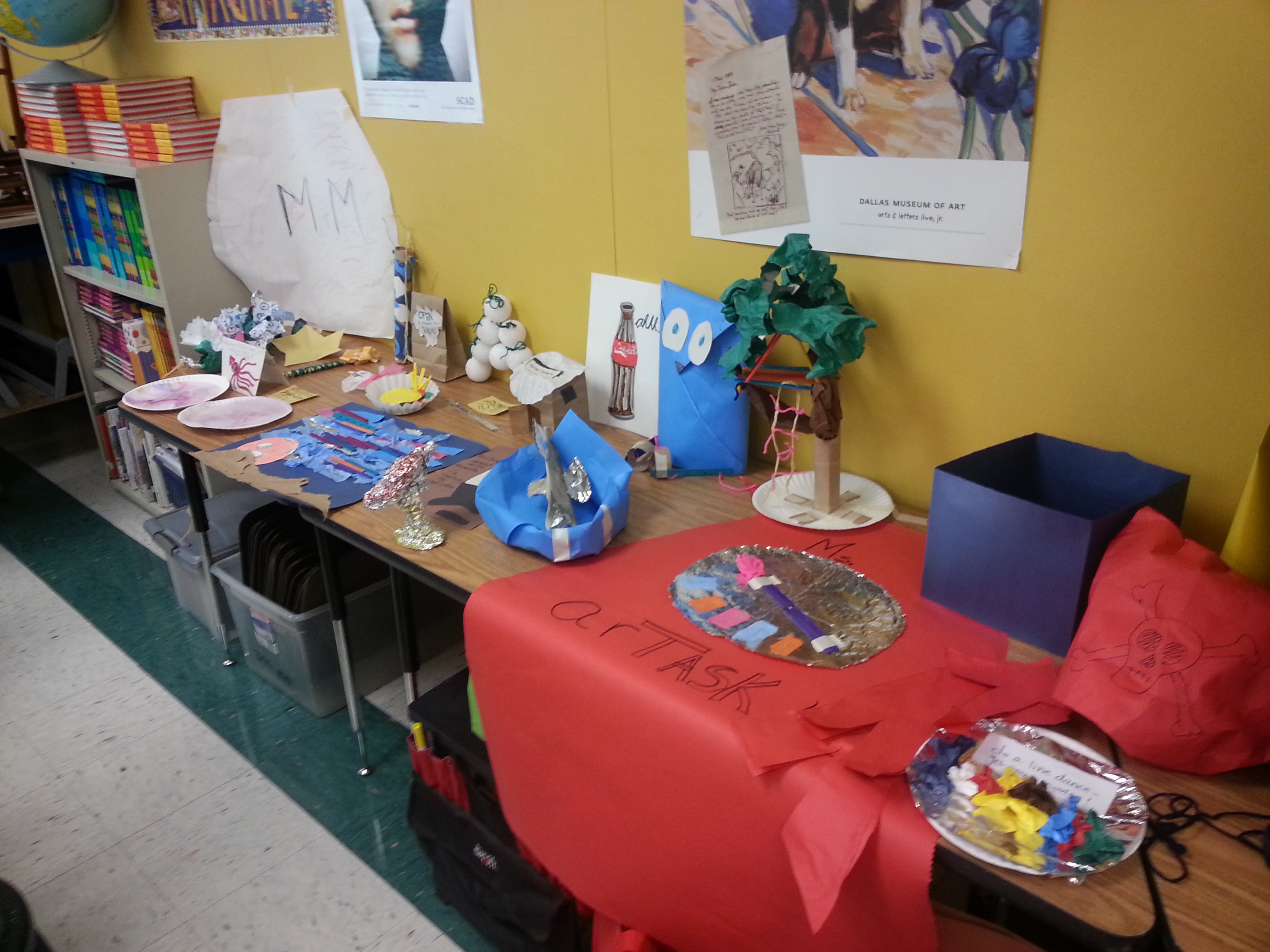
Wha?  In other words, TASK is an activity where artists pull a TASK from the task box which can be interpreted any way the artist chooses.  Then each artist contributes a TASK to the TASK box for others to interpret.  “You take one, you write one”  TASKS can be anything…from build a treehouse to do a line dance, to brush your teeth.  

Materials offered to the artists can vary and include, paper, scissors, cardboard, yarn, string, glue, foil, bubble wrap, paint, crayons, tape….it is really up to the teacher.  And, constraints can be added like time allotted or limiting materials.

I went to the Texas Region 13 Re-Charge mini art conference this summer and unfortunately I was late.  The workshop had started, so I walked into the room with minimal instructions on TASK, but I jumped right in.  I pulled my TASK and it was “Build a Tree House”.  I took a deep breath, looked around at the materials supplied and found an empty spot to proceed.  I completely loved the activity.  I loved being creative with the different materials and I really enjoyed looking around to see what others were doing and how they manipulated the materials.

20140811_092451

My tree house. I am quite pleased with it.

The table where we shared our "artifacts"

The table where we shared our “artifacts”

I plan on bringing task into my classroom this year.  I think I will do it once a 6 weeks so the kids can have a day or two to re-charge and get the juices flowing.  I think it will flow seamlessly into my TAB classroom.  

Jumping in Feet First into Tab

Standard

Today I decided my art 2: painting/drawing was just going to jump in, feet first, into TAB.  Let me tell you, it was nerve wracking.  We started off with a Padlet activity.  I introduced our first theme of man/machine and we brain stormed what they thought of when I said the word “man” and when I said the word “machine”.  This was the most talkative the class was all period.  Next I told them of the facebook art teacher group I am part of and how I asked my fellow teachers what artwork and what artists they thought of when I gave the topic of man/machine the list was so varied.  I showed my students examples from the suggestions.  I wanted them to see that there was no wrong answer.  That everyone has different images when told a theme, and that was okay.  In fact, it was encouraged.

The last thing I did today was a few demos on ways of creating value.  Our first unit based on “Man/Machine” is all about b/w drawing media.  I am excited about the artist dictionary they will be creating over the year from their practice of the demos that I do.  I don’t think I made the right choice in how I went about handing things out and the order of that.  I think next time (and I will have a chance to try again in a week or so with art 1), I will do the demo then hand out the practice sheets because even though I told them not to draw what I was drawing, many of them did.  I really want them to practice something and really try the technique out and not just do the short little “thing” I do.

As I mentioned before the loudest they were was during the brainstorming.  It really was a little freaky how quiet a 9th period class was.  I am really hoping they were just overwhelmed because it wasn’t  “normal” art class and they were trying to take it all in.  I really hope they were not bored.  I hope as we go along and this becomes “routine” they act more comfortable in class.  

I look forward to tomorrow.