Category Archives: Curriculum

Art 1: Informal Balance: Wrap-up and Review

Standard

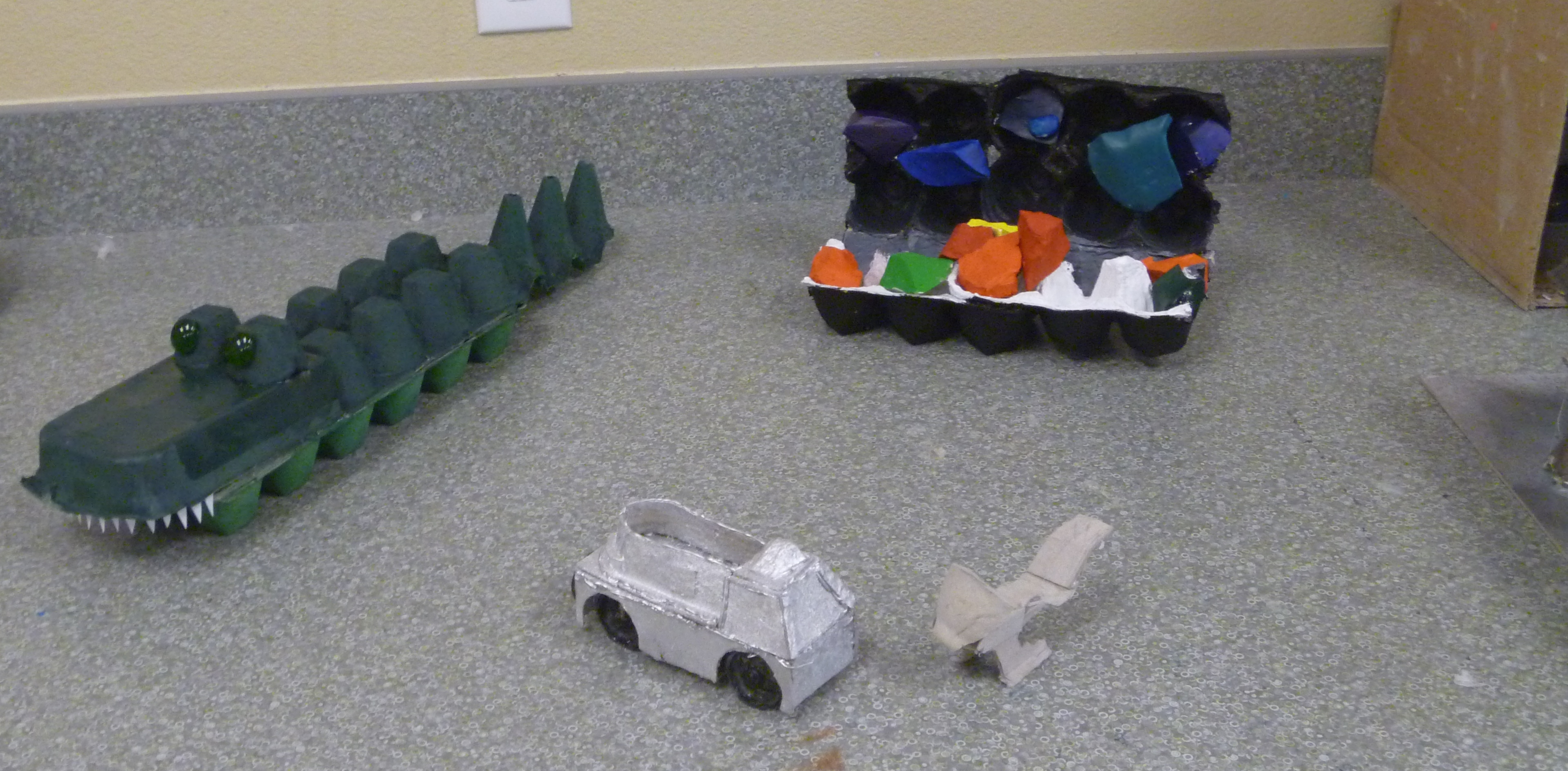
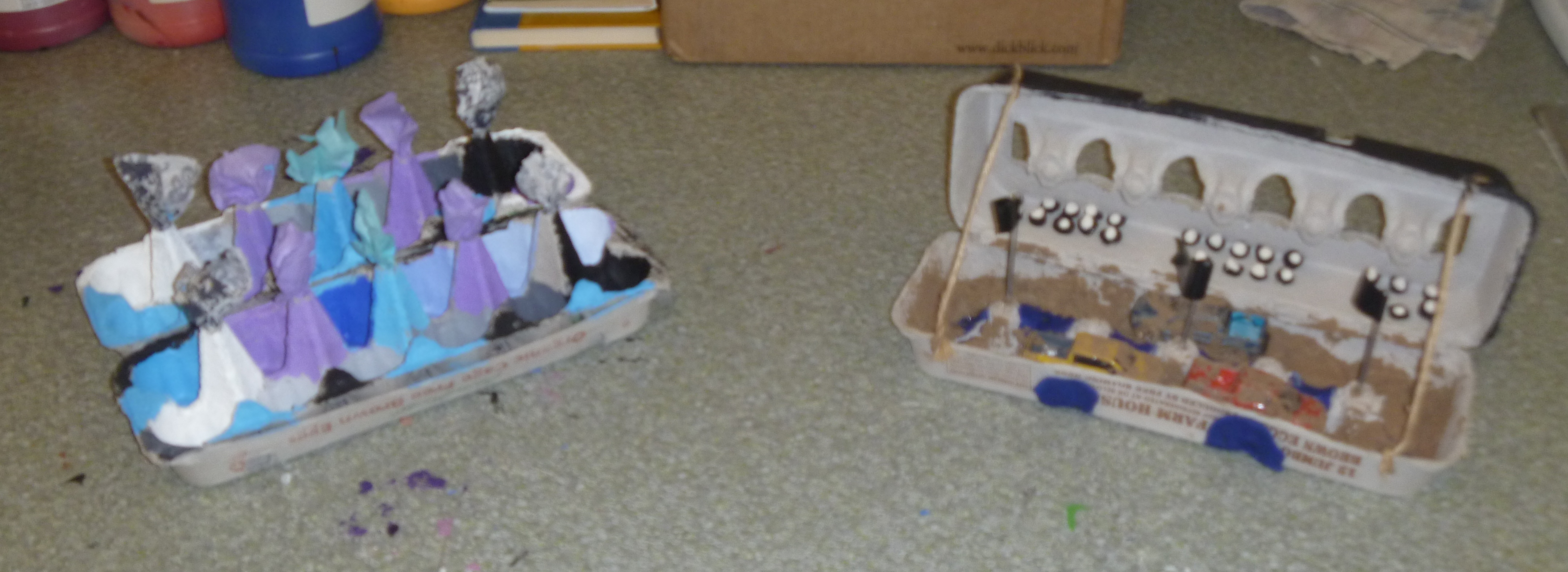
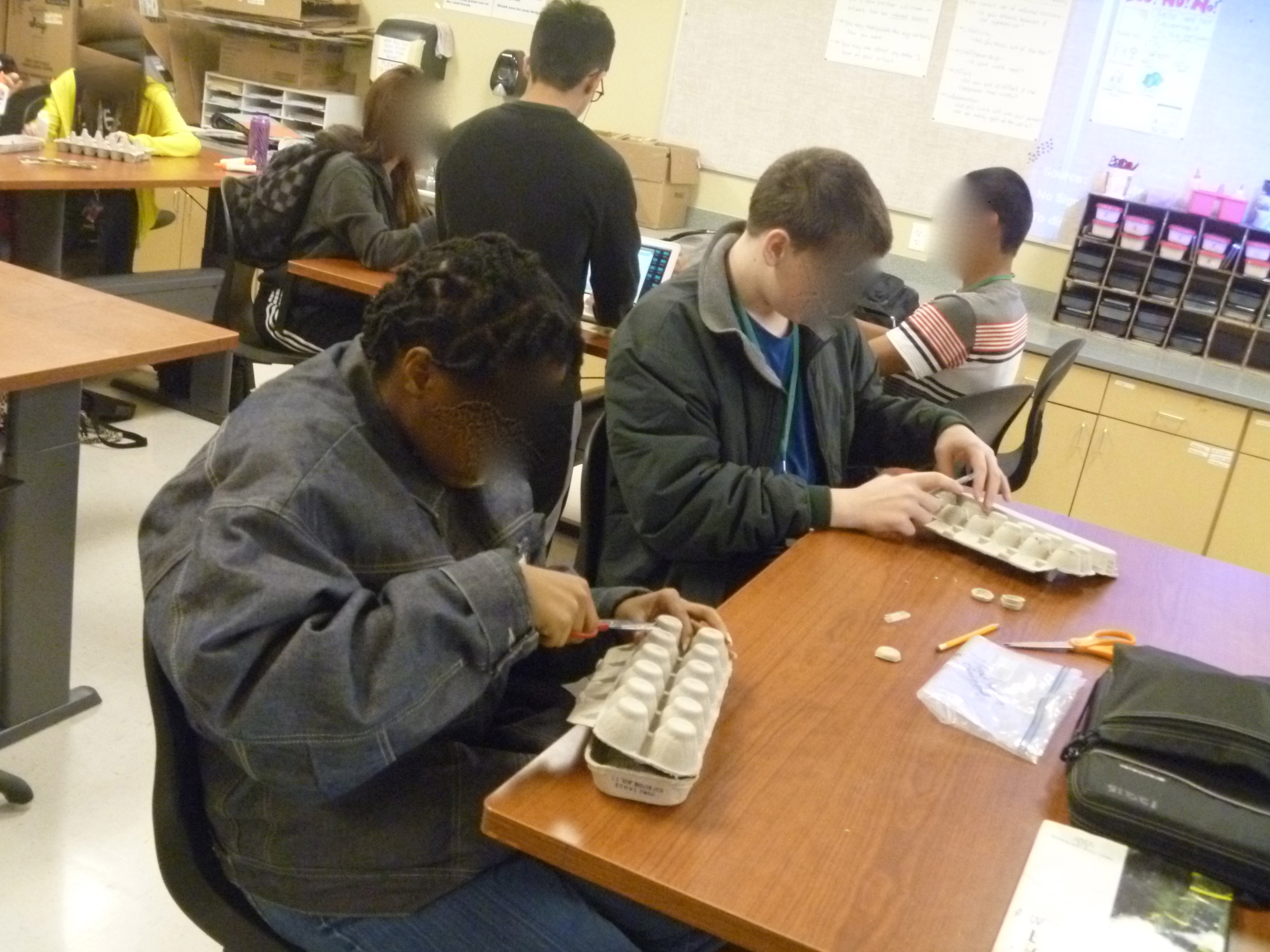
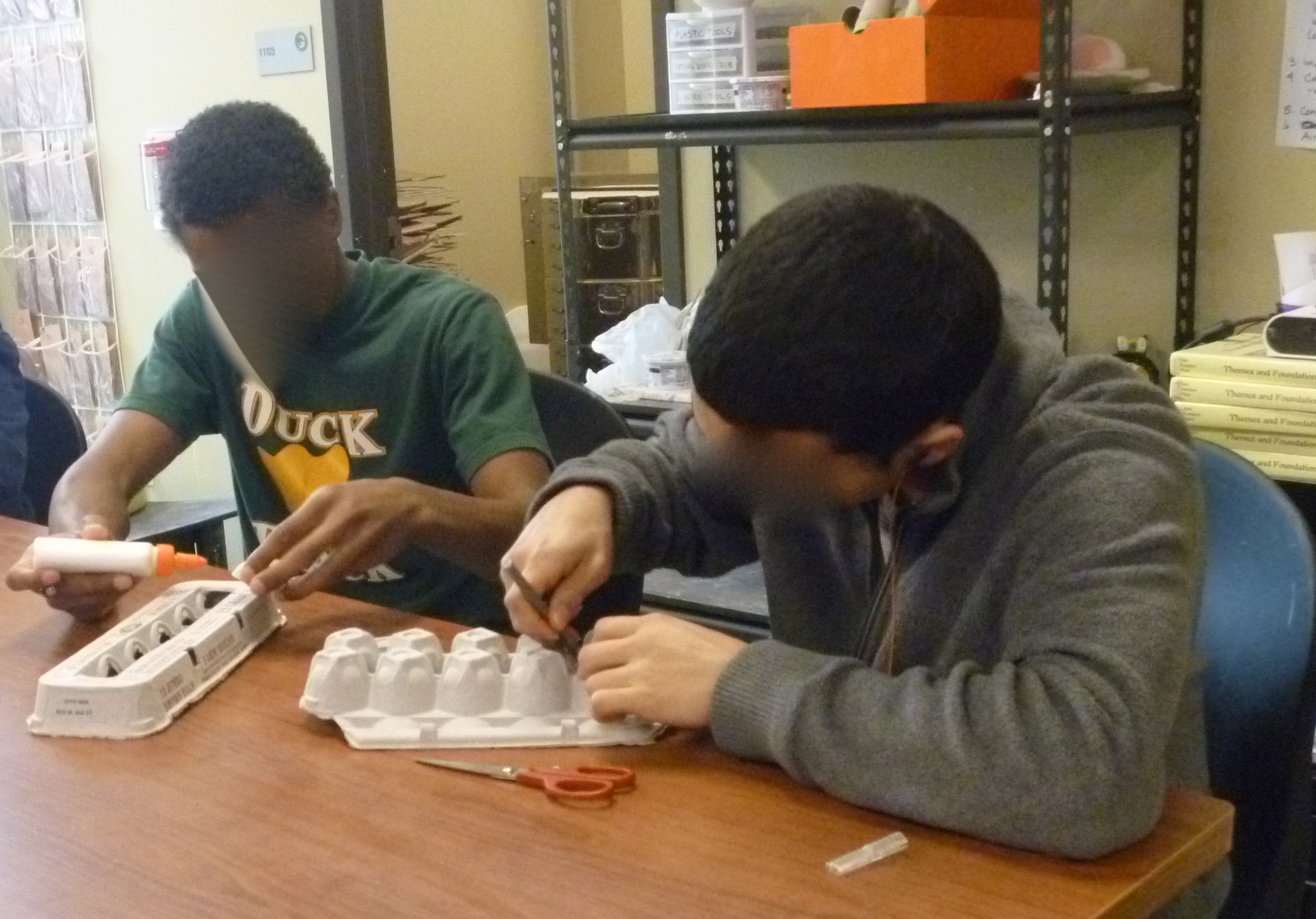
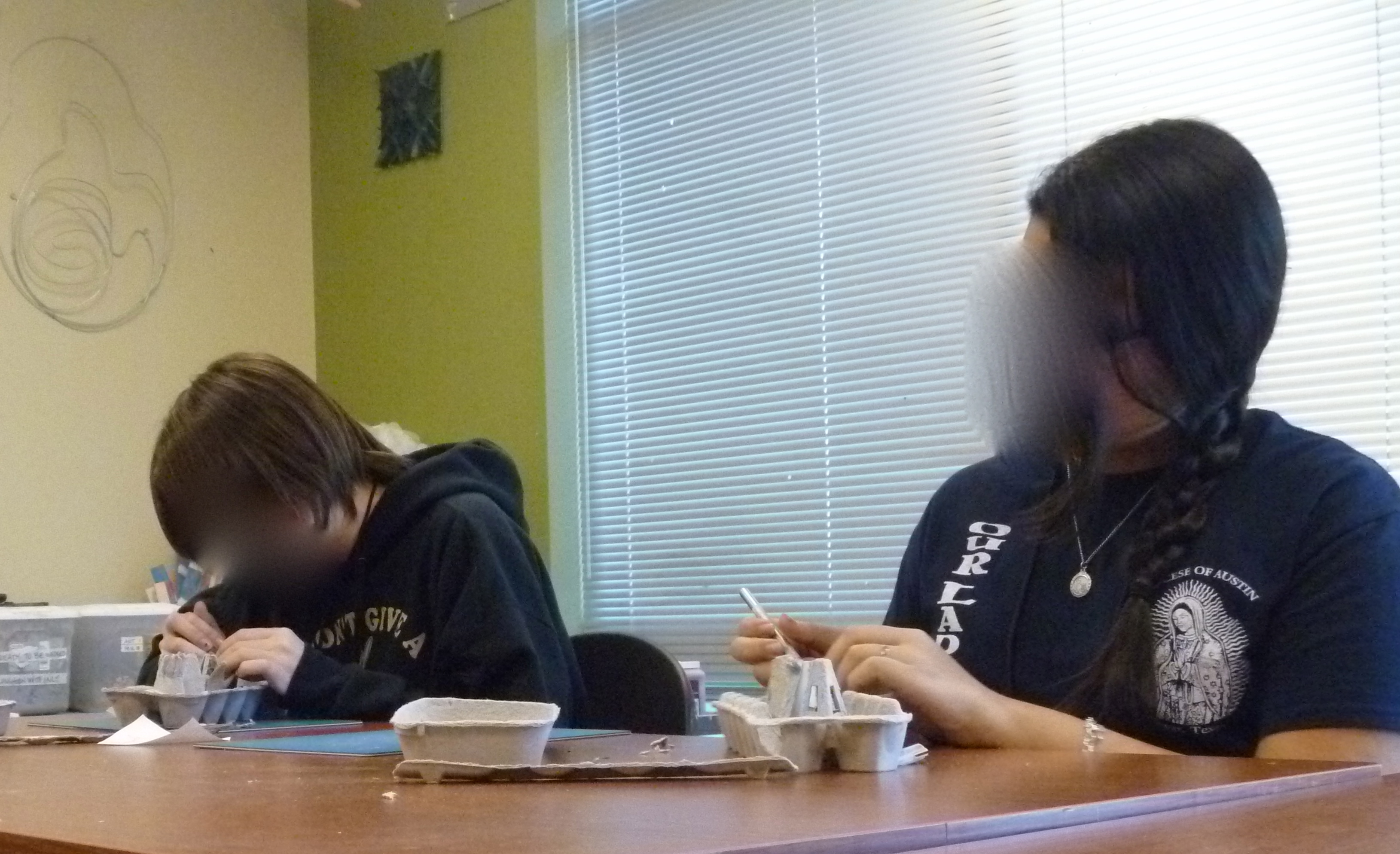
Think back to this post where I talked about bringing in some choice to my art 1 students.  They were able to work in groups and were each given an egg carton to which they could do whatever they liked as long as their final artwork had informal balance.  We worked on the project for about 2 weeks, then we took a week’s break (spring break), and finished up in about 2 or 3 days.  During spring break, I decided not to grade them on the outcome of their project, but instead to grade them on the process and what they had to say about that process.  I had created a list of questions for them to answer.

When it came time to actually figure out a grade, I really had no idea what to do about it.  I didn’t really have a rubric on how to grade what they had written.  They had never done anything like this before, so they had no idea what I was really looking for.  They were honest in their answers.  In the end I gave each student a 100, unless I specifically recalled them spending days not working (which one child did and his partners said something about it in their answers) or they failed to answer all the questions.  The grades ranged from 85-100.

It has taken me a long time to write about the project/process; I’ve been reflecting about it…a lot.  What had I really hoped to gain from this “experiment” of throwing so much choice at the students?  I mean, really, it was all for me.  Yes the kids learned about informal balance.  And I truly believe that many did understand it by the end.  And, of course, there were some that didn’t, but I am not sure they would have gotten it anyway, if I am being honest here.  I had been reading so much about choice that I really wanted to try it out.  I felt the only way to see if I liked it and how I could implement it in my classes was to do a trial run.   I felt this unit was really more for me then for them.  Part of me feels like I shouldn’t admit that, but how am I to know what works and what doesn’t if I don’t try.  Many things look good on paper…

I learned a lot about choice and how to make it work in my classroom and how to make it work for me.  I admittedly am a sort of small control freak.  It is hard for me not to know an outcome.  But, I rolled with this.  I think I need to do some sort of a modified choice.  I think that leaving it so broad was hard for me and for the students.  (Many did say they they didn’t like not knowing what it “should” look like, and that it was hard to come up with an idea.)  I think I would have to slowly bring them into the “choice world”.  It was too much at once.  I think to make it work well, I would need to limit choice to either 2-D or 3-D.  (I have done some choice things in my 2-D and 3-D classes and it has been successful.)  Maybe I should spend some time on different techniques, then go from there where they could expand, explore, and build on things we have already discussed.  I still have a lot to think about.  I like giving them freedom, but I need some sort of control.  I need to find a balance that benefits us both. We (my students and I) need to have a symbiotic relationship if we are all going to thrive.

Overall, it was a fun time in the art room and there was lots of good conversation and exploring going on.  They were doing what I had told them was my motto for the year (stolen from the Frizz of course) “Take Chances, Make Mistakes, Get Messy!”

P1030715

P1030714

P1030713

P1030711

P1030710

P1030707

P1030706

P1030704

P1030703

Artistic Process Reflections

Standard

Our current project in Art 2 is an altered book.  This is one of my favorite projects every year because it introduces some techniques and ways of art making that students may not have thought of.  It really makes them think and make connections.  They have to plan around a theme.  They have to be creative and interpret.  This year I have many kids that are super excited about this project, which makes me super excited about this project.

And, because of the nature of this project, I figured it was a great opportunity to try out a new way of grading…grading the process instead of the product.  I blogged about this in previous posts–here and here.  We are on our third week of altered books, so that means we have reflected twice.  I typed in the questions that Apex HS graciously shared into Socrative.  I asked my students to answer 2 of the questions based on what they did that week in their book.

I finally got around to reading them (I was a little busy with the art show).  I have learned a lot about my students and how they think.  I was nervous that they would just bullshit their way through the questions, and surprisingly I only got a few responses like that.  For the most part, students were very honest about their work and how they get their ideas, what they learn, how they collaborate, etc.  I have never asked many of them before to talk about their art or their choices.  I know I should.   Most jumped right in.  I am proud of them.

Student Response: “My mother nature drawing symbolizes my depiction of what she’d look like. I wasn’t able to add a masquerade mask like I wished I could have. No mask seemed to fit with the face so I just scrapped it. Mother nature is meant to be mysterious and beautiful. All in one. ”

Student Response: “Well my theme is emotions. I’m trying my best to focus more on the happier emotions rather than the sad ones. Because I am one of those “Negative Nelly’s” and with this project im hoping it’ll bring out the positive side of me in some way.”

Student Response:  “Yeah, I always seem to ask James because he sort of see’s things more imaginative/abstract. I usually see the obvious, but I guess thats because I’m a serious person.”

Student Response: “I wanted to convey an image of chaos through unity of concepts on some pages and an image of peace through random markings and chaotic techniques. I had few issues and this mirrors me because I am both peaceful and chaotic.”

Student Response: “I’ve been trying to step back and analyze my work every time I try to add something new to it. I have been really thinking about how to layout each scene in my book. It’s been a little difficult to work on the backgrounds of each scene without having any real plan on where I’m going to put everything.”

I look forward to reading the responses in the upcoming weeks.

Update on Giving Choice

Standard

We are starting on our second week of choice in Art 1 when creating a project about informal balance.  Today I walked around and talked with the different groups to check in on their progress and to make sure they are on the right track.  I want to say that about half understood informal balance and are able to incorporate it into their artworks.  About a third of those who didn’t understand it and were not consciously addressing are now able to once talking through things with me.  And, well, out of those that are left, some just are making things out of egg cartons, and one group basically said they weren’t going to do anymore, and to just give them a 70.  At least they were honest about it.

I am excited and surprised by many.  I have to be honest that there are some students that are surprising me in their art.  Some that I thought would be the ones making the egg carton alligator are thinking outside the box.  While others that I thought would nail this are the ones making the alligator.

Choice hasn’t been easy for me.  Not knowing the outcome is hard for me.  But, I have to learn to go with it.  I will update once the unit comes to an end.

STUDENTS WORKING HARD 🙂

P1030628             P1030631 P1030632            P1030634 P1030639              P1030645P1030643

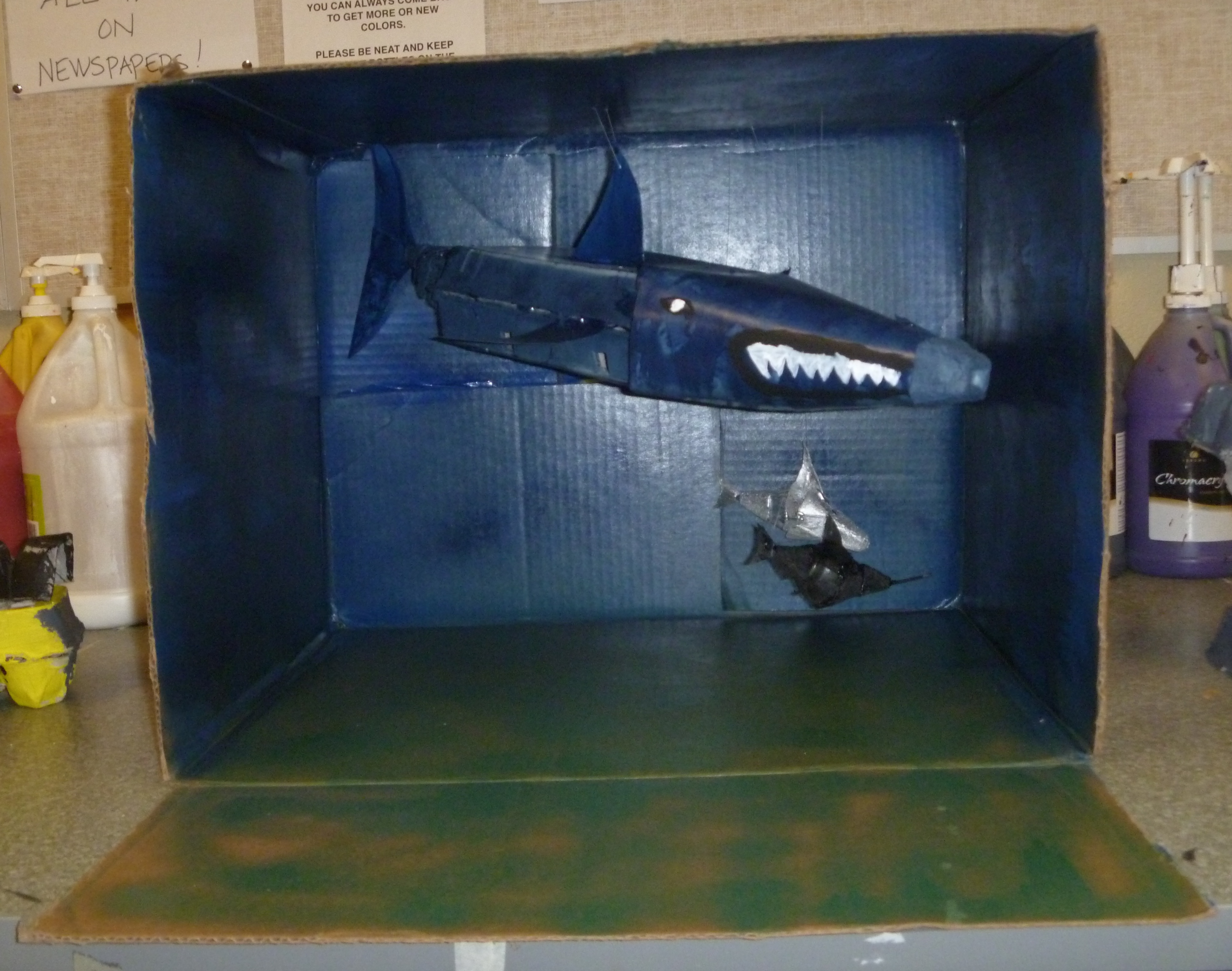
PROMISING ARTWORKS AND OUT OF THE “CARTON” THINKING

shark

shark
beginnings of a truck

beginnings of a truck

plan on using texture to balance

plan on using texture to balance

P1030650

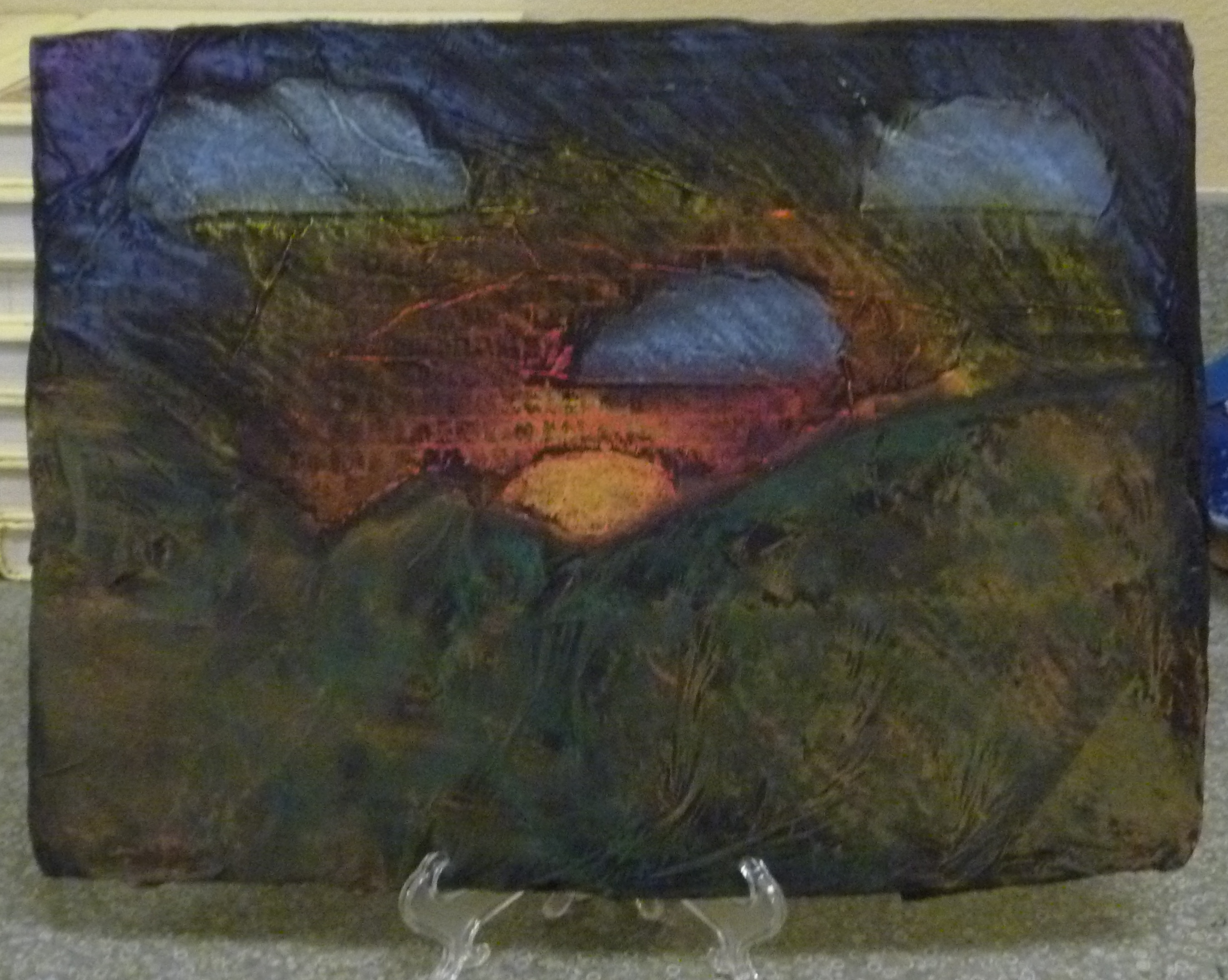
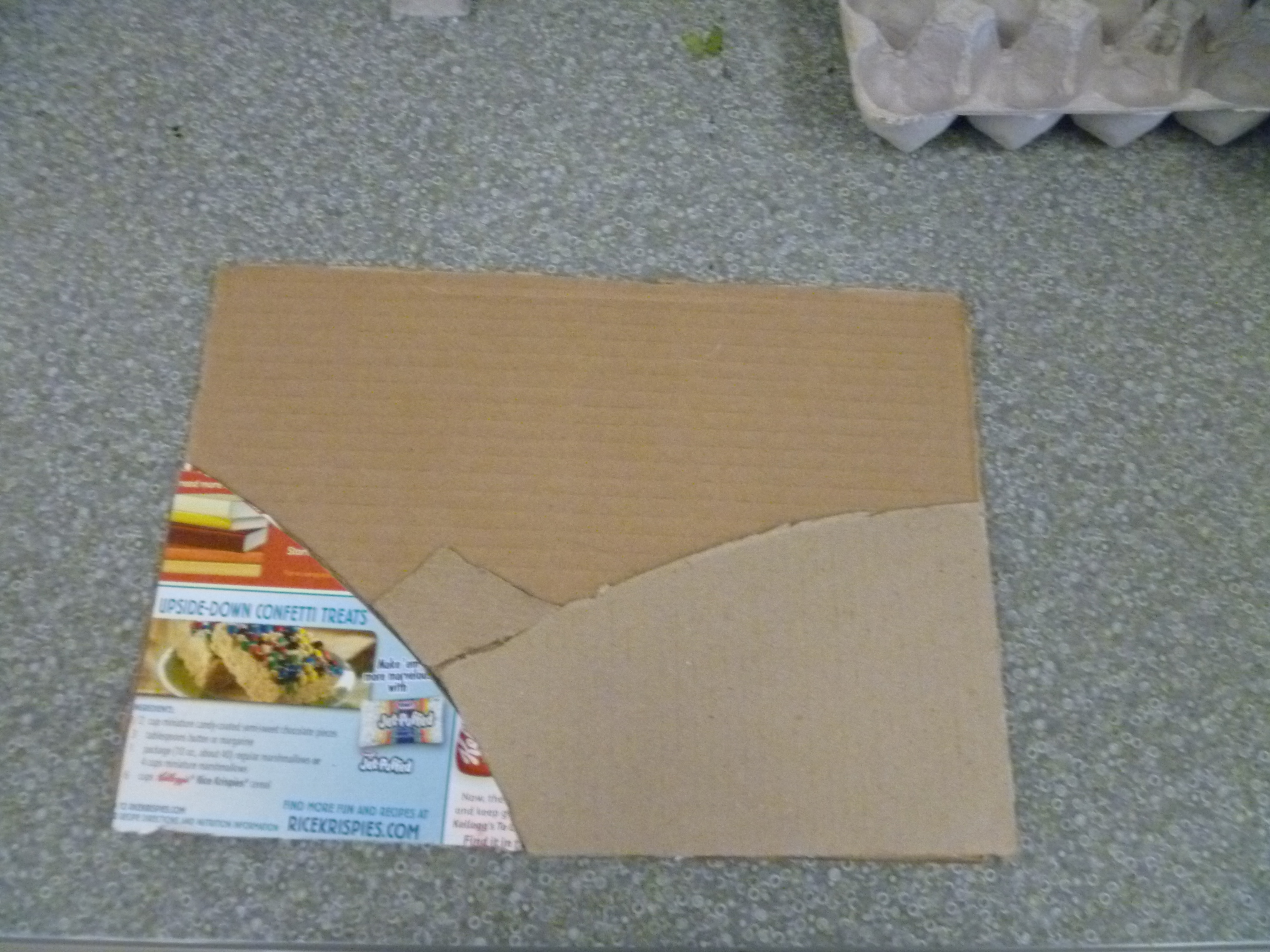
using the egg cartons to make a 2-d work (bas relief)

using the egg cartons to make a 2-d work (bas relief)

will balance with color

will balance with color

Trees

Trees

ARTWORKS THAT ARE “PREDICTABLE” AND NOT OUT OF THE “CARTON”

P1030654        P1030655 P1030656        P1030657

Giving it up to the students

Standard

Art 1 started a new unit this past week.  They are learning about informal balance and ways that artists can created a balanced image that is not symmetrical.  We likened it to being on a see-saw as a child with your much bigger older brother and how much better it would be if both sides weighed the same.  How could you balance out the see-saw if you were stuck with your bigger older brother and not someone your size?  We learned that warm colors are heavier than cool colors, dark values weigh more than light, rough textures over smooth textures, and many others.

From there I introduced the project.  Each student was to be given a cardboard egg carton that I had been saving over the past 2 years.  Then they were to form a group of 2 or 3 students.  Their problem to solve in their group artwork was to create something that was balanced, but not symmetrical.  They needed to use any and/or all of the different techniques that we talked about.

A student asked me, “Is this 2-D or 3-D?”  I turned to him and said, “I don’t know, you tell me.”  I could see the the wheels and gears in their heads start to turn.  I see that some of them were excited.  I could see that some were scared.  I was both.  What would the end products look like?  Would I be able to pull off a choice-based project?  Would the kids be receptive to this?  (I am sure that perhaps you are asking what is choice-based?  You can find out more here and here.  The second  link is to the first part in a 5 part series about choice-based art in the high school classroom.  I invite you to read all 5 parts.)

Today was a crazy day in the art room during my first session of art 1.  I had kids cutting and painting (both traditionally and with spray paint) and gluing and planning.  It was chaos and it was awesome.  Everyone was working (with the exception of one student.)  Their artworks were all different.  They were exploring different things.  They were collaborating.  They were behaving like artists.  I am tired, but I loved it.  Tomorrow I do need to start to walk around and talk with the groups about their plans to make sure they are keeping the problem of informal balance in mind with their artworks.  But until then, I will have a smile on my face as I think about the awesomeness that occurred during period 2 today.  I hope periods 6 and 7 are the same.

New Beginnings

Standard

I have been teaching sculpture for about 5 years now.  It has grown from a 1 year course to 3 courses that you can take once finishing art 1.  I love building things.  I love to explore with different materials and creating sculpture allows for that.  And, because sculpture encompasses so many techniques and materials, it was always hard to choose what was important to teach.  So, I taught as many as I could afford to do.

Because of this, I was feeling disjointed.  My students were learning many different things and creating many different artworks, but no one was really mastering anything.  It was frustrating to me that in my advanced class when I assigned a work that had an overall theme and left the medium up to the students, I had to almost re-teach some basic skills that we learned in beginning sculpture and revisited in intermediate sculpture.  I felt like a failure of a teacher.  It seemed like no one was really growing as an artist and building upon what they knew.

I thought about it and decided to chat with my principal about it.  He understood and he agreed with my plan.  He even suggested that I make the switch at the midterm to “test it out”–to make sure it was really what I wanted to do and that it was what was best for the students.  My plan was to switch my curriculum from the more general subject of “sculpture” to the narrower subject of “ceramics”.  I feel that with ceramics there are some basic techniques that can be built on and honed over 3 years–thus allowing the students to “master” the art of clay by the time they finish up their senior year in advanced sculpture.

I took the plunge and started to do some research.  I talked with other art teachers about their ceramic programs.  I went through all the materials I had about the ceramics classes I took at UT.  I combed the web and pinned things on Pinterest and book marked them onto my Firefox toolbar.  I created a technical reader for my beginning class that the students would carry with them over the course of the 3 sculpture classes.  I bound them with comb binders so that over the summer I could add pages to the books for the next level.  The students in beginning class were aware of the change that was going to occur starting in January and they were 100% behind it.

January came and we jumped right in.  It’s been rocky and somethings have changed as we continue on our journey.  Somethings work, somethings don’t.  We are nearing the end of our second artwork and already I am seeing the growth of the students.  They are learning from their mistakes.  They are building upon things we learned in our first artwork.  It is exactly what I am hoping for.  The students are engaged in the process.

It is still a learning process for me as I figure out the curriculum and how best to run a ceramics program, but I think it was the right choice–for them, and for me.

Standards, standards, and more standards

Standard

Just like every other subject in school, the arts also have standards that we, as art teachers, use to help us plan curriculum.  Each state, or almost each state, has their own set of standards.  Texas follows standards called TEKS (Texas Essential Knowledge and Skills).  The Fine Arts TEKS are currently being revised as they haven’t been revised since 1997.  The world has changed a lot since then, but what is thought we should teach in art has not.  It is an exciting time.  These are slated to go into effect in 2015.

The National Core Arts Standards are also being revised.  Currently, until March 1, art teachers can go and review the standards.  http://nccas.wikispaces.com/