Category Archives: Art 3

Skill vs Creativity

Standard

As a teacher that has embraced the Teaching for Artistic Behavior (TAB) philosophy for almost a decade and a half, I still find myself struggling sometimes with with debate around skill and its importance. I know it’s important for artists to have technical skills and for them to continue building those skills. Buuuutttt…. should that be the most important thing in the high school art room (or any art room for that matter?)

I was doom scrolling the other day, and I came across this reel in my IG feed and I finally felt a little bit of validation. The artist talked about an art teacher he had that pretty much said what I had felt in my art heart all these years.

Gabriel talked about an art teacher he had who said that “technical skill is extremely overrated. And she had visited a school that prioritized the technical ability versus teaching the students creativity. And while their paintings were very technically well done, they were super dead, boring, not inspiring whatsoever.” He goes on to say that he thinks we put technical ability on a pedestal way too much, and that there isn’t enough credit to the creativity. Skill is still important, but it is a means to show that creativity.

I couldn’t agree more. There are times when I go to conferences and see “award winning” art, or I scroll through Facebook looking at other high school programs and I feel a sense of insecurity. I begin to question if I am doing a disservice to my students by focusing on the process, on creativity, and on what they have to say over spending day in and day out just learning and practicing technical skills and realism. But then I pause and picture in my mind’s eye the work my students are producing. Some of my students are very skilled. Others still have ways to go on their journey. But their work is so expressive. It has life. You can tell they explored new things. You can see the energy in their marks. I think of their faces and conversations when they are in our classroom studios creating, and it fills me with joy. I watch them push themselves to be better than the day before.

It’s not that I don’t teach skill. It’s not that I don’t encourage practice to make better. I do those things. I just don’t preach that it’s the pinnacle of art making. I teach new skills for my students to have in their tool boxes. We practice technical skills every time we make in the art room. It’s just that I put the onus on my students to choose which technical skills they want to practice to get better at. There are so many mediums and techniques that I can’t teach them all, and I am not going to choose which ones are more important than others to focus on. I will let my students decide what is important to them. I let them guide me when it’s time to explore new mediums and techniques.
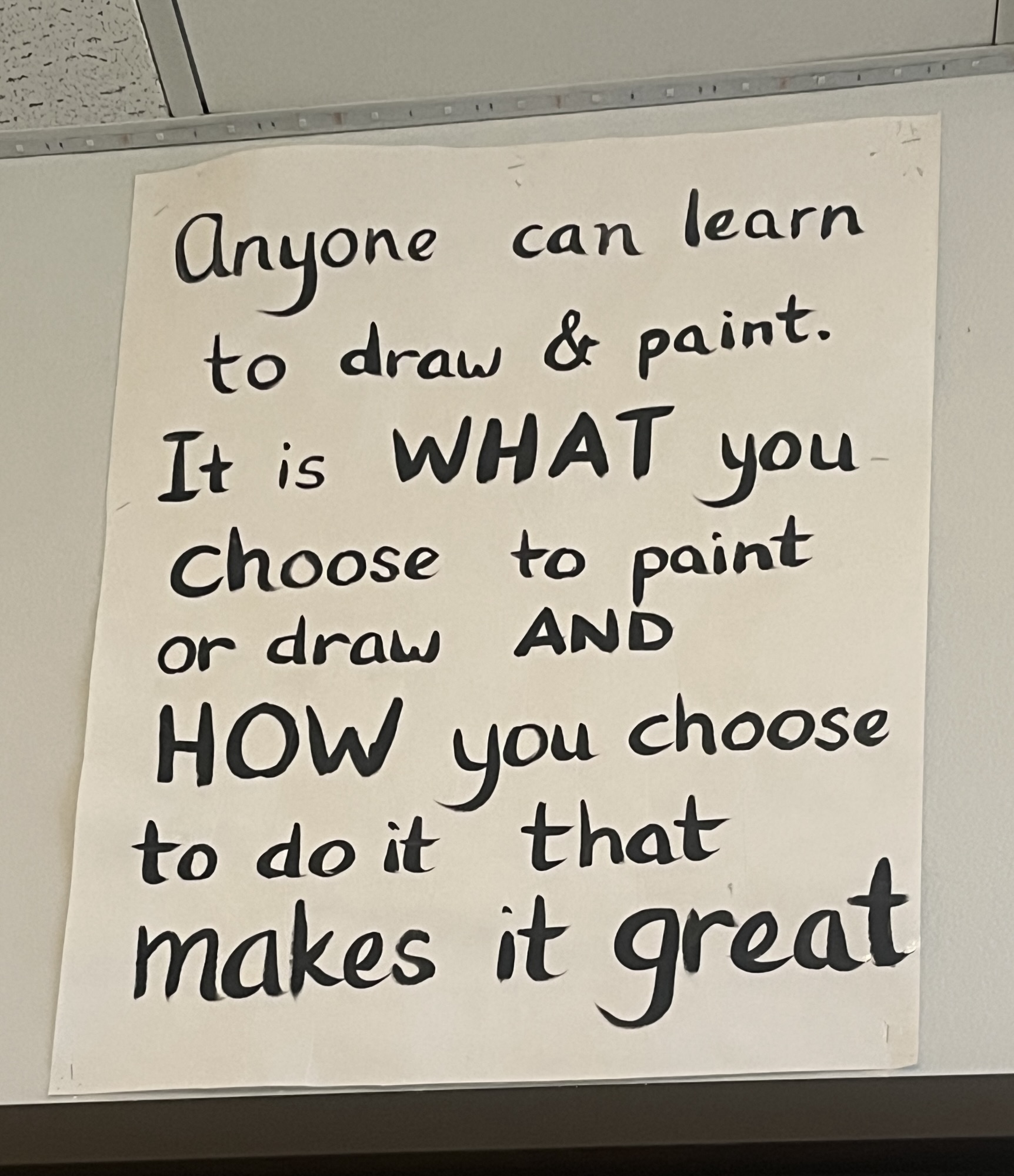
In the end, I am not saying that those classes that focus on technical skill are wrong. If that is what you want your focus to be, then that’s your prerogative. What I am saying is that I am proud of my students and the work they create. I am proud of my program. They are proud of their work and their growth! Personally, I would rather have my students make work that carries their feelings and emotions out to the world, than a bunch of pretty pictures that are technically well done.

Typical Days in the HS TAB Studio

Standard

As we get closer and closer to the start of the year, many people are asking what a typical day in the high school TAB studio/classroom is like. And well, it’s anything but typical. Just kidding. TAB classrooms are just like any other art classroom, just there is more independent thinking happening and less teacher-led projects. But, other than that, it’s pretty normal. We have routines just like any other classroom.

I thought I would create a small post outlining my day and my week as a high school TAB teacher. I see my students daily, all year long. This year we are back up to 50 minute classes. Woo hoo!! I teach Art 1, Art 3, and beginning through advanced Ceramics. Sometimes I teach AP or an Art 4, but those are on case by case bases. Unless it’s AP 3D, then that’s definitely me.

I like to have a routine that my students get used to, so they are comfortable and there’s not huge chaos every day. I have a white board, which when my room is not under construction, the students pass by as they come into class and they are encouraged to read the board so they know what they need to get out.

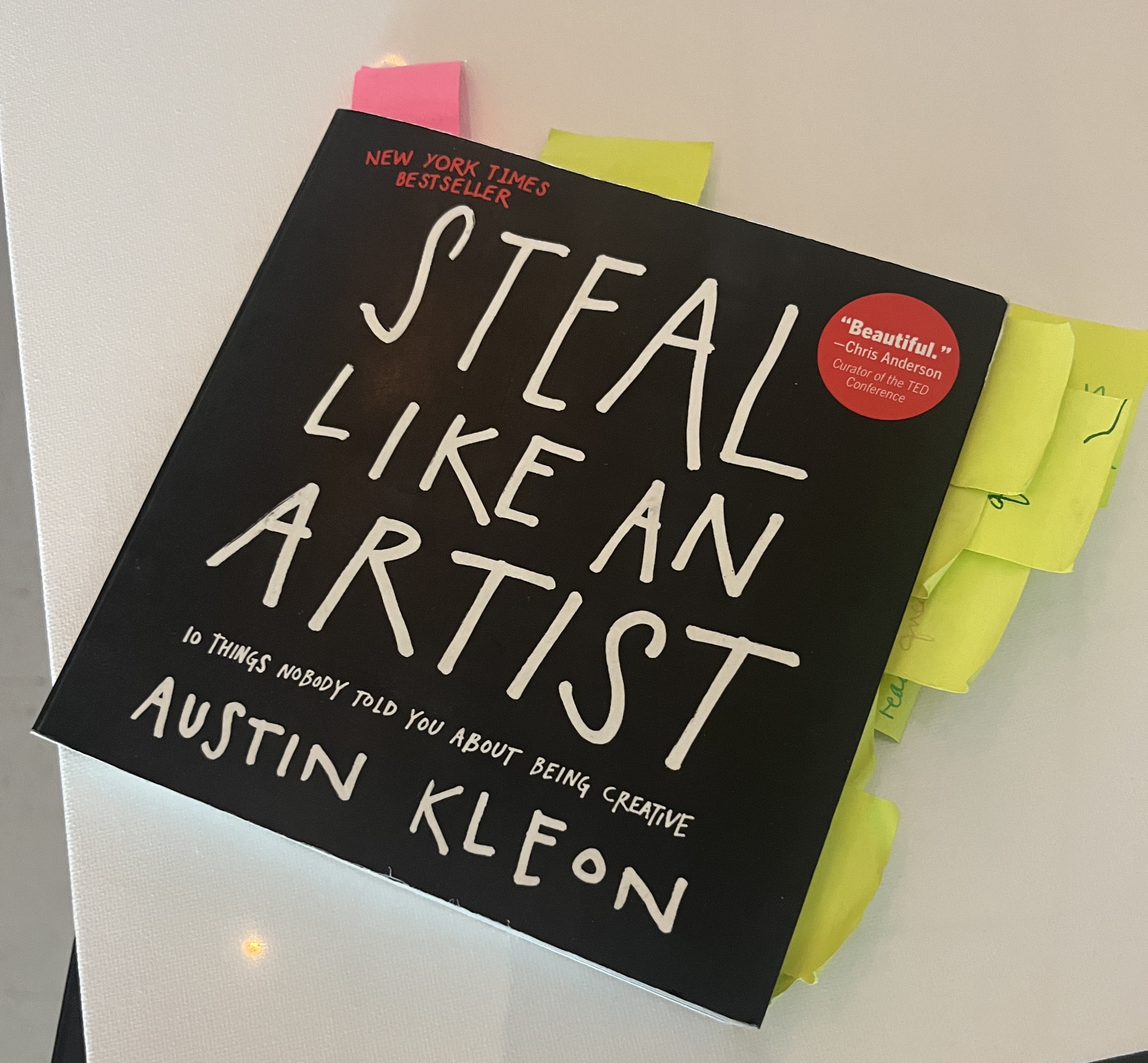
Mondays start off with either Artist Monday or Style/Movement Monday, for all my classes. We come in, watch a video and then the students answers questions, either in their sketchbooks (art 1) or on a slide deck (everyone else). That generally takes about 15 minutes of class total. After that, we go into one of 2 things, we get back to notes/practice of skills or studio time. Every other Wednesday, in art 1, we have a drawing test. Then, similarly to Mondays, the students pick up where they left off the day before. In my upper classes (art 3 and ceramics 2 & 3), I designate a day (usually every other Friday) for digital portfolio time.

Beyond those few fixed things, I typically don’t like to take much of the time away from arting. Kids will ask me what are we doing, and I say to look at the board. At some point, whether they need their sketchbooks or not, art 1 students will come in and grab it before sitting down. It has become a habit. Sometimes I address the class right at the beginning to do some house keeping, like reminding students of who I still need to go over ideas and development or when the last studio day for a unit is. Other times, I just let them get to work and don’t address the whole class until about 7 minutes left when it’s time to come to a convenient stopping point to begin clean-up.

When we do need to learn new skills (composition, perspective, facial features, etc.), we sit and take notes in our sketchbooks. After there is usually a small assignment in their sketchbooks to practice the new skills. New media explorations take about a week, while other smaller skills assignments take between 2-3 days (notes and practice time together.) When I do demos, where we (students and I) aren’t doing them simultaneously, I try to keep them under 10 minutes. That way, they still have at least a half hour of arting time.

There you have it. The biggest difference in my experience between when I was a more “traditional” teacher and a TAB teacher is that there is much more independent art making and exploring time. I circle the room more and talk to students more. There is not magic secret or formula. This is what feels right for my students and for me. It’s relaxed and safe and successful.

Open Studio and Evaluation/Grading

Standard

Some things have changed, for the better I think, in my art department. We have finally split the level by teacher instead of both of us teaching all levels. This is better for both the students and for us. It lessens the amount of preps for each of us, and it really makes sure that each student gets similar experiences after art 1, and the best each of us as teachers have to offer. Art students would have my partner for Art 2 and learn/practice lots of technique (that is his strength). Then when they come over to my room for Art 3, we would focus on the Artistic Process, finding their voices, and developing a studio practice. They return to him for Art 4 / AP, with the hopes that the year in my room really helps prepare them for the next level–especially creating a portfolio for AP. (Just as an aside, it did not lessen my preps this year, I have 7–one of which is AP. Such is life in a growing district with less than the ideal number of teachers. But I digress.)

I usually run my Art 3 like an Open Studio, where students follow their own interests in both subject matter and media. This year, I did find that many students do need help with the ATP (specifically ideation), so I brought in themes to help them. In previous years, it really was an open studio, but you have to adjust to the students you have if you want to be an effective teacher. I also use this studio format in my upper ceramics classes–Art 3: Ceramics still has themes where Art 4: Ceramics is fully student-led.

The biggest hurdle I have run into with these classes is how to evaluate my students and ultimately how to turn that into grading. I decided the main things to be evaluated should be the studio practice habits of each student. I evaluate them bi-weekly on their studio practices. It has taken a lot of trial and error to come up with a rubric that I feel works for what I want them to get from their time in my class. Evaluating their studio practices gives the students a lot of leeway on what and how they want to create.

Photo credit K. Douglas & C. Fralick

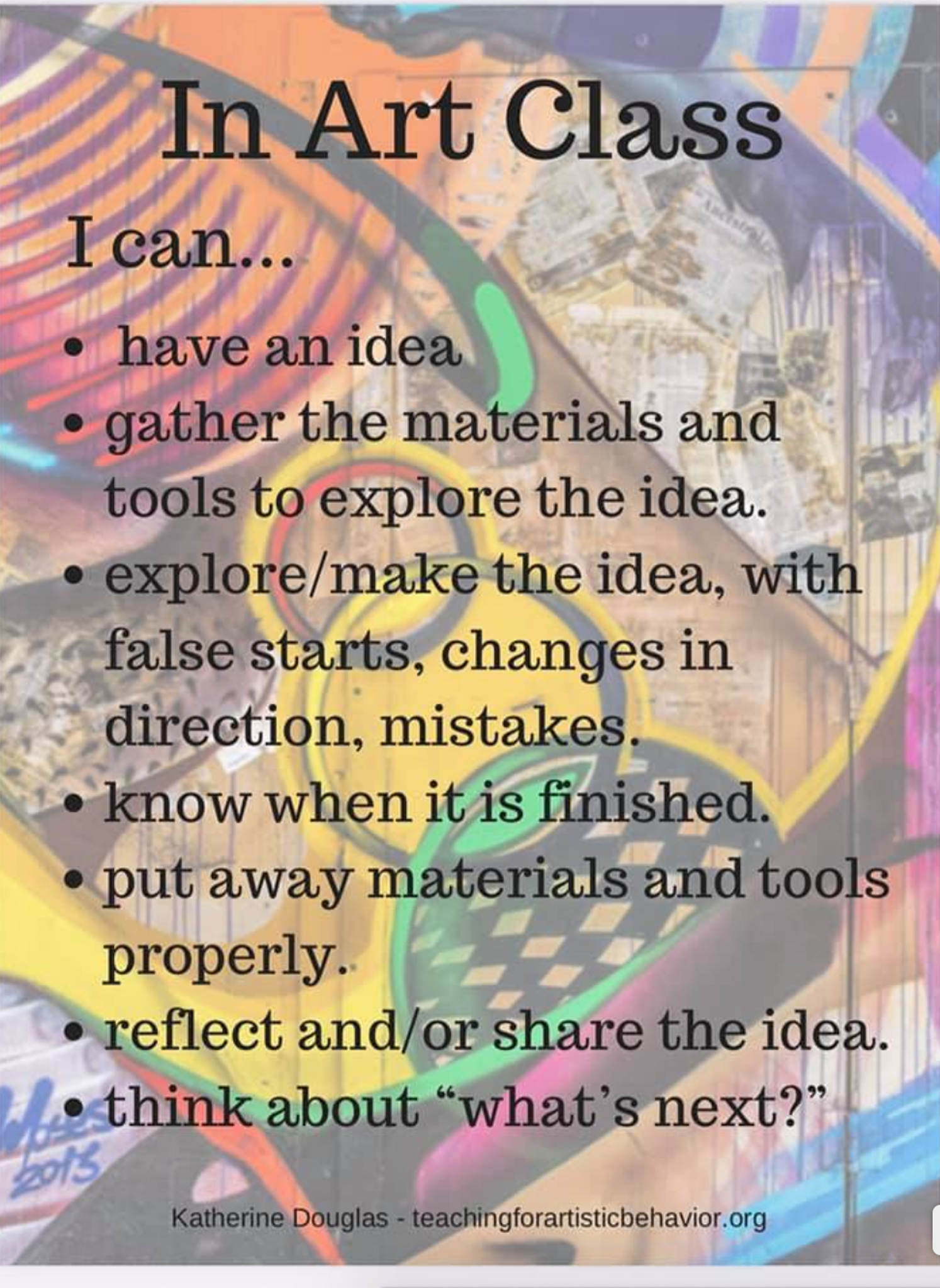
I based my rubric on the 7 Goals of Art Class from Katherine Douglas. I thought that while the goals were created those for elementary students, they apply to any studio practice. I created a rubric that is based on these studio habit goals that are incorporated into the ATP (Artistic Thinking Process) stages. Coming up with a point system was a not so easy task, but I ultimately decided that every habit is equally important. Engagement is the highest because that really reflects their attitudes and productivity during the studio time each week. I use this rubric to determine my bi-weekly major grade for my upper level classes. 

Studio Habits Bi-Weekly Grade

As time goes on and I reflect upon my students and my teaching, I keep tweaking the rubric to be a better reflection of what I hope they are learning and practicing as emerging artists. But so far, this has worked well and I think is an accurate reflection of my students’ studio habits and practices.