Tag Archives: rubrics

Open Studio and Evaluation/Grading

Standard

Some things have changed, for the better I think, in my art department. We have finally split the level by teacher instead of both of us teaching all levels. This is better for both the students and for us. It lessens the amount of preps for each of us, and it really makes sure that each student gets similar experiences after art 1, and the best each of us as teachers have to offer. Art students would have my partner for Art 2 and learn/practice lots of technique (that is his strength). Then when they come over to my room for Art 3, we would focus on the Artistic Process, finding their voices, and developing a studio practice. They return to him for Art 4 / AP, with the hopes that the year in my room really helps prepare them for the next level–especially creating a portfolio for AP. (Just as an aside, it did not lessen my preps this year, I have 7–one of which is AP. Such is life in a growing district with less than the ideal number of teachers. But I digress.)

I usually run my Art 3 like an Open Studio, where students follow their own interests in both subject matter and media. This year, I did find that many students do need help with the ATP (specifically ideation), so I brought in themes to help them. In previous years, it really was an open studio, but you have to adjust to the students you have if you want to be an effective teacher. I also use this studio format in my upper ceramics classes–Art 3: Ceramics still has themes where Art 4: Ceramics is fully student-led.

The biggest hurdle I have run into with these classes is how to evaluate my students and ultimately how to turn that into grading. I decided the main things to be evaluated should be the studio practice habits of each student. I evaluate them bi-weekly on their studio practices. It has taken a lot of trial and error to come up with a rubric that I feel works for what I want them to get from their time in my class. Evaluating their studio practices gives the students a lot of leeway on what and how they want to create.
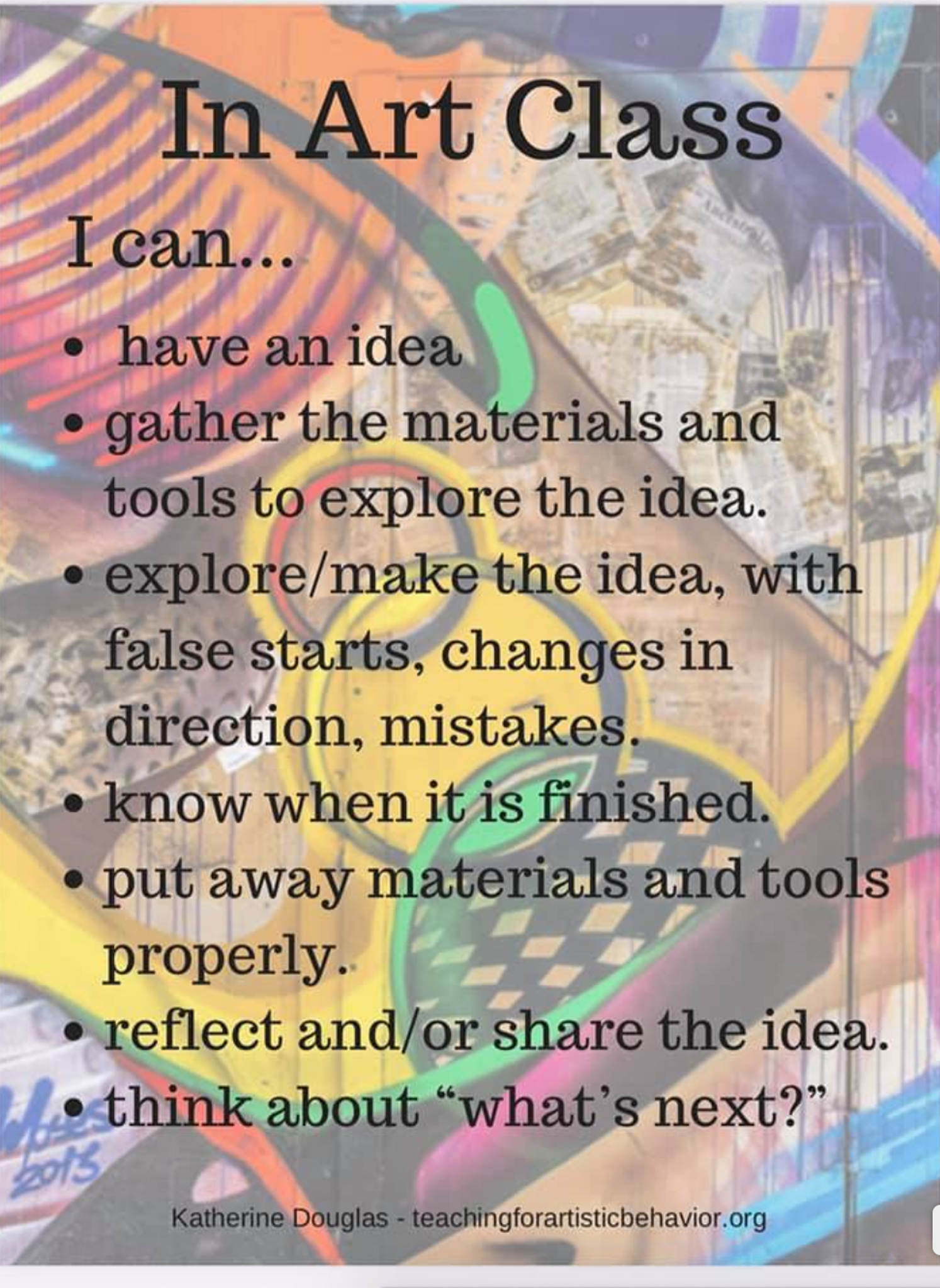
Photo credit K. Douglas & C. Fralick

I based my rubric on the 7 Goals of Art Class from Katherine Douglas. I thought that while the goals were created those for elementary students, they apply to any studio practice. I created a rubric that is based on these studio habit goals that are incorporated into the ATP (Artistic Thinking Process) stages. Coming up with a point system was a not so easy task, but I ultimately decided that every habit is equally important. Engagement is the highest because that really reflects their attitudes and productivity during the studio time each week. I use this rubric to determine my bi-weekly major grade for my upper level classes. 

Studio Habits Bi-Weekly Grade

As time goes on and I reflect upon my students and my teaching, I keep tweaking the rubric to be a better reflection of what I hope they are learning and practicing as emerging artists. But so far, this has worked well and I think is an accurate reflection of my students’ studio habits and practices. 

Artistic Process Reflections

Standard

Our current project in Art 2 is an altered book.  This is one of my favorite projects every year because it introduces some techniques and ways of art making that students may not have thought of.  It really makes them think and make connections.  They have to plan around a theme.  They have to be creative and interpret.  This year I have many kids that are super excited about this project, which makes me super excited about this project.

And, because of the nature of this project, I figured it was a great opportunity to try out a new way of grading…grading the process instead of the product.  I blogged about this in previous posts–here and here.  We are on our third week of altered books, so that means we have reflected twice.  I typed in the questions that Apex HS graciously shared into Socrative.  I asked my students to answer 2 of the questions based on what they did that week in their book.

I finally got around to reading them (I was a little busy with the art show).  I have learned a lot about my students and how they think.  I was nervous that they would just bullshit their way through the questions, and surprisingly I only got a few responses like that.  For the most part, students were very honest about their work and how they get their ideas, what they learn, how they collaborate, etc.  I have never asked many of them before to talk about their art or their choices.  I know I should.   Most jumped right in.  I am proud of them.

Student Response: “My mother nature drawing symbolizes my depiction of what she’d look like. I wasn’t able to add a masquerade mask like I wished I could have. No mask seemed to fit with the face so I just scrapped it. Mother nature is meant to be mysterious and beautiful. All in one. ”

Student Response: “Well my theme is emotions. I’m trying my best to focus more on the happier emotions rather than the sad ones. Because I am one of those “Negative Nelly’s” and with this project im hoping it’ll bring out the positive side of me in some way.”

Student Response:  “Yeah, I always seem to ask James because he sort of see’s things more imaginative/abstract. I usually see the obvious, but I guess thats because I’m a serious person.”

Student Response: “I wanted to convey an image of chaos through unity of concepts on some pages and an image of peace through random markings and chaotic techniques. I had few issues and this mirrors me because I am both peaceful and chaotic.”

Student Response: “I’ve been trying to step back and analyze my work every time I try to add something new to it. I have been really thinking about how to layout each scene in my book. It’s been a little difficult to work on the backgrounds of each scene without having any real plan on where I’m going to put everything.”

I look forward to reading the responses in the upcoming weeks.

Rubrics

Standard

Ah….grading rubrics.  I have a love/hate relationship with grading rubrics.  I love them because they help me to “level” the playing field when trying to grade something that is so subjective.  But I hate them because they are hard to design.

Over the years I have worked with many different rubrics.  I love looking at other people’s rubrics to see if it is something I can work with or steal from to create my own rubric.  I want to include things that are important, but can keep me objective.  I’ve tried some that are wordy and explains every little detail.  I’ve tried different numbering scales.  I’ve got different rubrics for different types of projects.  I don’t know if it is best to have one general one or to be specific for each project.  Is it okay to have a different one for each level of class?  What do you do?  What works best for you?