Tag Archives: choice-based art

Skill vs Creativity

Standard

As a teacher that has embraced the Teaching for Artistic Behavior (TAB) philosophy for almost a decade and a half, I still find myself struggling sometimes with with debate around skill and its importance. I know it’s important for artists to have technical skills and for them to continue building those skills. Buuuutttt…. should that be the most important thing in the high school art room (or any art room for that matter?)

I was doom scrolling the other day, and I came across this reel in my IG feed and I finally felt a little bit of validation. The artist talked about an art teacher he had that pretty much said what I had felt in my art heart all these years.

Gabriel talked about an art teacher he had who said that “technical skill is extremely overrated. And she had visited a school that prioritized the technical ability versus teaching the students creativity. And while their paintings were very technically well done, they were super dead, boring, not inspiring whatsoever.” He goes on to say that he thinks we put technical ability on a pedestal way too much, and that there isn’t enough credit to the creativity. Skill is still important, but it is a means to show that creativity.

I couldn’t agree more. There are times when I go to conferences and see “award winning” art, or I scroll through Facebook looking at other high school programs and I feel a sense of insecurity. I begin to question if I am doing a disservice to my students by focusing on the process, on creativity, and on what they have to say over spending day in and day out just learning and practicing technical skills and realism. But then I pause and picture in my mind’s eye the work my students are producing. Some of my students are very skilled. Others still have ways to go on their journey. But their work is so expressive. It has life. You can tell they explored new things. You can see the energy in their marks. I think of their faces and conversations when they are in our classroom studios creating, and it fills me with joy. I watch them push themselves to be better than the day before.

It’s not that I don’t teach skill. It’s not that I don’t encourage practice to make better. I do those things. I just don’t preach that it’s the pinnacle of art making. I teach new skills for my students to have in their tool boxes. We practice technical skills every time we make in the art room. It’s just that I put the onus on my students to choose which technical skills they want to practice to get better at. There are so many mediums and techniques that I can’t teach them all, and I am not going to choose which ones are more important than others to focus on. I will let my students decide what is important to them. I let them guide me when it’s time to explore new mediums and techniques.

In the end, I am not saying that those classes that focus on technical skill are wrong. If that is what you want your focus to be, then that’s your prerogative. What I am saying is that I am proud of my students and the work they create. I am proud of my program. They are proud of their work and their growth! Personally, I would rather have my students make work that carries their feelings and emotions out to the world, than a bunch of pretty pictures that are technically well done.

Let’s Go? Advice from almost 2 decades of teachering.

Standard

I’m about to start year 19, and man have I had an interesting career. I’ve taught high school for 18 years, AND I’ve done it all in the same place. I can retire in 11 years, but plan on doing at least 12 so I can retire on an even number. But, that’s just an arbitrary date. I’ll see the state of education when I get there. I may be done, I may not be. Who know’s. ::shrug:: But this post isn’t about when I’ll retire. This post is about a few things from my journey that helped to get here…to today…a week and a half before I walk into day one of in-service for year 19.

When I look back on everything, there are a few key things I’ve learned that keep me going, keep it relevant, and have made me into the force I am today. Yes–I said it, I am a force. I haven’t always been so confident in my abilities, but today I am. I am a good, nay, an amazing teacher. I am really good at what I do. Do I have some areas I can work on? Of course–who doesn’t? What makes me so different is that I know there are things I lack and I reflect on that and I learn and continue to grow in this ever changing, but not really changing, world of art education.

I want to share some of what has motivated me, and helped me to believe in my abilities over the years. It always hasn’t been sunshine and puppies (although I don’t really like puppies–come at me bro–so maybe that phrase for me should be sunshine and art supplies. Just sayin’.) I’ve had my fair share of crap days and considering moving districts and not wanting to go to work, but in the end, I show up because deep down, I love teaching and I looooove teaching art to teenagers.

So here we go!

It takes 3 years to build a program. I was told this by Ian Sands at the beginning of my TAB journey. And, he was right. I now say it to everyone who is new to a role or implementing TAB for the first time or even starting at a new school. You may think you have it in the bag and that it’s going to be easy peasy, and that attitude is great. But, as you go along the first year, you will hit bumps and things won’t work. You’ll be learning how your population reacts to you, your goals for both you and them, and your systems that you are trying to implement. You will fail, and THAT IS OKAY. Learn from those failures and revise the next year, or even as you go along that year. Teaching is like making an artwork–we have an idea, we research, we develop plans, we try to implement those plans, we revise, we fail, we reflect, we try again, then we start the whole cycle again. By that third year, you really do understand the relationship between you and your population, and you can see the growth that you’ve made and your program has made. It’s easier in year 4 and beyond. That’s not to say that you stop reflecting and revising, but at that point it’s different. So, don’t give up. Give yourself grace. I needed this “3 -year build” advice when I jumped into TAB. Then I needed to remind myself again when I switched up my sculpture program to a purely ceramics program. Rome wasn’t built in a day. Just sayin’.

Administrators come and go, but good teachers stay. One of my favorite co-workers, and a great friend of mine, said this to me about year 4 when I was struggling with my principal and the differences of opinions we had. And she was right. That principal left, finally, and left space for one of the best principals I have worked under. He wasn’t perfect, but he was perfect for me. He took time to understand me and my program. He knew what I needed both professionally and personally. He supported me. Unfortunately, he had to move onto another district, and my current admin isn’t him, but I know that some things are temporary. When you find your place and find what feels right, even when admin and you just don’t mesh, you stay. I love my program (which I helped to build from very little), and I love my population. I love that I’ve taught all the siblings in a family or am going to. I don’t always agree with my district or the town I teach in, but I know that being a constant in the district is important to what those families love about being ducks.

Remember your why. I know all you reading this just totally cringed at that phrase. I hate it too. I’m not talking about when admin asks you to try and placate you because they aren’t giving you a raise or there is some other stuff thing they are doing. This is super TAB specific. I said this to my secondary cohort this summer at the 2025 TAB Institute. I saw the eye rolls. But then I went on to explain. What are you trying to achieve by implementing a TAB philosophy? What do you want from your students? This isn’t about the methodology and how you will do this, but why you CHOOSE to believe the philosophy? This is my why: Yes I am hoping to make artists, that is my dream goal that everyone of my students will be an artist. And yes, that drives all the decisions about how I implement TAB–from the choice continuum, to themes, to the supply buffet. But let’s be realistic. That is not my population–they are not all going to go to art school and become artists. And while yes, I am trying to make artists, my why is really is about helping my students become creative and become independent thinkers. I am helping them to be able to make choices, informed choices. I am helping them to have an open mind and to see that things do not live in a vacuum and things are cross-curricular. That is my goal. Art making is my vehicle to get there. TAB allows me to do that more than any other art education philosophy I’ve explored. And it allows me to do it in my own way, using my strengths. So, when I am having those days full of doubt and questions, I think of my students and the ones that I have impacted well after they’ve graduated and the ones that are currently making a mess in my office, and it all makes sense again.

I’ll leave you with this. As you go into this new school year, whether it’s your first, your fifth, your nineteenth, or beyond, have confidence in yourself and your ability as a teacher. You’ve got this. I am already facing challenges this year, both personally and professionally. I can go in with an eff this attitude, or I can focus on what is important to me, inside my classroom with my students. I will take what they throw at me and try to see their point of view, but in the end, while I will be compliant with their requests (for the most part–iykyk), I will just do me. I know my program is strong. I know I am strong. I know my students will thrive because of what I am setting up for them. I know I’m not perfect and that I have things to work on, but I don’t have to be perfect, because clearly no one is and the conditions we teach in today clearly aren’t either. I just need to shut my classroom door, have fun, be present for my students, remember my why, and be imperfectly me. Everything else is just noise and in the end doesn’t matter. Have a wonderful year.

Goal Setting

Standard

School’s been in session for just a month now, so of course that means it’s time for me to decide on my yearly goal for my T-Tess. That’s the evaluation system my district in Texas uses. While I’m not sure that the system in general has helped me as a teacher, I did decide to actually take my goal seriously this year.

In the past, I wrote goals that seemed easy to achieve and collect data on so that I could easily check that box off and spend most of my time focusing on the fun part of my job. When we had to work on our goal during our PD earlier this month, I started off with the same attitude and just copied a goal from about 5-6 years ago. But as the month went on and I thought about it, something in my brain switched and I began to take the goal seriously and really figure out ways to help me learn from my goal.

This year’s goal falls under the professionalism domain, as I am going to work on reflecting on my practice. I normally reflect on my practice throughout the year. I make notes. I think about what worked, what didn’t work, and changes I can make. But after 17 years, I think that’s not enough.

I know they say if it’s not broke, don’t fix it. Somehow, that doesn’t seem to apply this year. This year has come with some changes that I didn’t anticipate, and I am struggling with finding my place in our system this year. I know I have been a strong and effective teacher for years, but something feels different this year. I feel I’ve been focusing so much on being a great TAB teacher and being true to the philosophy that I believe in so much, that I’m missing something else. I am hoping to figure what that is.

I have been working on gathering some strategies to really help me reflect on the different facets of being a TAB teacher. I hope to write more reflective posts this year, not just ones that give advice on technique or incorporating TAB. I really want to look closely at how I deliver information, at how I am communicating to students and colleagues, at how I scaffolding the important concepts as I lead my students towards understanding the artistic thinking process and ultimately independent thinking. I plan on watching other teachers teach, from a variety of disciplines. I am essentially an island, in more ways than the obvious. I think seeing how others approach their classrooms can shine many lights on what I do and choose not to do. I have contacted several teachers that I respect and asked if I could come and observe them. I received much enthusiasm and am excited to start. I will go to my first observation next week. I am pretty excited about it.

How do you choose your yearly goals? Is it part of your evaluation process? Do you take it seriously or do you do it to check the boxes? I have just written goals in the past that easily allowed me to look good. But, the longer I teach, I don’t want to get stagnant or stale and just do what has always worked. I am looking forward to learning more about teaching and myself through this process.

PoTAYto, PoTato, Semantics Sometimes Matter

Standard

I will admit, I am a TAB purest and sometimes I get fired up when it comes to spreading the love for TAB and helping teachers understand the philosophy and ways to implement the intricacies of the philosophy into the classroom. Now, I am a high school teacher, so the way I TAB is not going to be the same as the way an elementary teacher TABs. Heck, it won’t be the same as another high school TAB teacher. But, at the heart of the matter, we all believe the core tenets, the guiding principles if you will, of the philosophy, and we build our programs around them.

One thing that I try to combat when I talk about TAB (Teaching for Artistic Behavior) is the misconceptions about what the pedagogy is and isn’t. About 5 years ago, I wrote this post about TAB vs. Modified TAB. I wanted to revisit the meat of that post–TAB, Modified TAB and some of the in between. Again, TAB is a philosophy, meaning it’s an art eduction belief system and is at the heart of the decisions we make when figuring out how to run our curriculum and classes. The TAB philosophy is guided by 3 sentences:

  • What do Artists Do?
  • The Child is the Artist
  • The Classroom is their Studio

How a teacher runs their classroom and sets up their curriculum to help their students become artists (who think of their own ideas and can do all the things artists do) is called the Methodology. This typically comes in the form of choice. There are many levels to choice and why you would vary them. You can read here about the choice continuum. TAB teachers vary how much, when, and what types of choice dependent upon a variety of things. But, they don’t vary how much or how little they believe in the philosophy.

This is where semantics comes in. When someone says they are doing a “Modified TAB” classroom, I believe what they are really talking about is the level of choice they are offering–maybe opening centers slowly, or limiting materials. They are not talking about the philosophy and their only believing in 1 or 2 of the 3 core tenets. But, this becomes confusing to those just starting out as a TAB teacher or someone trying to learn a new way to continue to teach art so that they love their career again. Wording it this way also makes it seem like a Choice-Based classroom and a TAB classroom are one and the same. I like to tell my students that all thumbs are fingers, but not all fingers are thumbs. I think this 100% applies here. All TAB classrooms are Choice-Based, but not all Choice-Based classrooms are TAB. Sometimes choice-based teachers are still doing a lot of the important decisions of art making, thus not really helping their students to become independent artists. So, the semantics do become important here.

I know that some people may think this is “gate keepery” or elitist, and it probably feeds into the stereotype of TAB teachers thinking they are “better” (which is not something we actually think.) I believe that one thing that makes TAB so wonderful is that the philosophy allows for many implementations. It is differentiation at its best. The goal remains the same for all TAB teachers–creating independent thinking artists. But we realize that every student is different, so how we get them to that point will look different for everybody. Therefore, as we spread the TAB love, let’s be sure to help people new to the philosophy understand the difference between being TAB and running a TAB classroom, and our choice of words does matter when it comes to understanding. In the end, it’s okay to have varying levels of choice, but the belief in all the guiding principles of TAB doesn’t vary.

TAB: A Philosophy with a Choice Continuum

Standard

Lately, I’ve been seeing the phrase “I’m not full TAB”, or something similar to that.  And to be honest, at first I would kind of roll my eyes and move on. But then as I started to see it more and more, I thought that maybe some people don’t quite know or understand that TAB is a philosophy with a choice continuum. 

What do artists do? You are the artist. This room is your studio.
Signage from Clyde Gaw’s TAB classroom.

Over the years, there have been many conversations about TAB vs modified TAB / “not full TAB”. And, in the end, the same conclusion ensued–there isn’t really modified/not-full TAB. That would infer that not all 3 core tenets are followed when setting up the program. And asking, which one(s) are you leaving out?

What do I mean by that? Well, TAB (Teaching for Artistic Behavior) is a philosophy that follows 3 core tenants. It asks What do artists do? It believes the child is the artist. And it believes the classroom is their studio.  To put it more simply, as Ian Sands would say, it’s about Making Artists.  The end goal should be helping/teaching our students to behave and think like artists. Obviously there is much more to it, I mean there are many books written about it and have been several theses written about TAB as well. But that would be a longer post for a different day.

How you achieve the end goal of “Making Artists” is the methodology.  And that is where the continuum comes in. TAB teachers offer levels of choice for this.  Good TAB teachers will vary the level of choice on a number of factors, including the individual needs of the students is one of those factors. In fact, there may be varying levels of choice within the same class period, and it can fluctuate over time going from more choice to less choice and back again.  TAB is student-centered after all. I wrote another blog post that includes some reasons why you would vary the level of choice. Below is an image that displays the continuum of choice that can be offered, and there is a time for each level, including teacher directed, although that should probably be employed the least in a TAB practice.

continuum of choice chart by Diane Jaquith
Douglas, K. and Jaquith, D., 2018. Engaging Learners Through Artmaking. 2nd ed. New York: Teachers College Press, p.21.

In the end, if you believe in the philosophy and you arrange your program with the goal of making artists/teaching to think and behave like artists, you are a TAB teacher. What you modify is the amount of choice. And that will change as you learn about your student population and their needs, and it will vary from class to class, and student to student. At some point, students will be 100% self-directed, and that’s a beautiful thing.

Corona and Remote Teaching

Standard

I see it has been over 2 months since my last post. And, quite frankly, I’m not surprised. I had some ideas in the works for new posts on the exciting stuff and things happening in the Duck Art Room since January, but then Corona hit, and my spirits plummeted.

I tried with all I had in me to look the “new normal” in the eye and take it on. And by new normal, I mean remote teaching or distance learning or “homeschooling” 🙄🙄🙄. (Don’t get me started on how none of this is homeschooling. I know people that homeschool for a living, and this is not it folks. But I digress.) It was hard. I wanted to be the best teacher I could be, but in truth, I wanted to just paint and drink coffee and play with clay. And I’ve done all that. In fact, by the end of this, I will have a full kiln load of just stuff I made.

One week away from school turned to two weeks; then to three weeks. And now, I’m pretty sure we won’t be back this school year. And at this point, while I want to see all my kids more than anything, I don’t know how we could make the switch one more time with 7 weeks (in my district anyway) of school left — 3 of which we are definitely out for Shelter-In-Place orders.

My district has been remote teaching/distance learning for 3 weeks now. I feel it has all been one big trial and error session. My district finally came to a decision about grading and GPA and class rank–which for those of you who teach high school know that these things are currently important in the world of education and higher education. I won’t go into everything, but we are going to a pass/fail system for the second marking period of the 2019-20 school year. Grades will be assigned with “prominent emphasis on completion and effort”. So, that sounds good right. It sounds as about as equitable as they can get. We are trying very hard to make sure we can meet accommodations and reach students without internet and give grace to those struggling with home issues (siblings, work, etc.) that affect them being able to do school work. Could more be done? Probably. But I know we are trying.

What does this all have to do with Art and Teaching for Artistic Behavior and Duck Art? A lot actually. I said that my spirits had plummeted, and that included my spirit for facilitating meaningful art making situations for my students. Instead, I assigned what I felt was going to be the easiest thing for me to do. Currently, I have about 50-65% participation from my students–some do all of it, most pick and choose and turn in a thing here or a thing there. It made me sad to say the least. I was missing seeing my kids make and create and all those other things that go with being artists.

Earlier this week, I was looking at Facebook, like all who are at home do, and I finally clicked on my friend Melissa Purtee’s post about what she was doing remotely with her kids, and it sparked something in me. I was then reminded of a post another friend had put in the main TAB Facebook group about not forgetting our purpose as TAB teachers–those 3 main tenets of the philosophy. I knew I had to change what I was doing. I couldn’t sustain it anyway. So, I borrowed from Melissa, as she so graciously lets us do, and made a new website for my students–all of my students, no matter the level or the class type. It gives them choice. It lets them decided how to spend their time during the week–instead of a daily assignment, they know what they need to do for the week on Monday and can plan their schedule to meet their needs. It makes them think and decide and research and plan and all those behaviors we have been talking and learning about for months or years. I have full belief in my students and I am hoping that it is what is right for them, and for their situations. I hope they can see art making not as a thing they have to do, but they want to do–because the freedom is in their hands now.

I’ll leave you with this. I’m not sure how I feel about our “New Normal”. I just hope I am bringing a sense of comfort to my students thru art and choice as we navigate this together.

Screen Shot 2020-04-11 at 10.08.03 AM

Click image for website

TAB, Modified TAB, and Other TABby things

Standard

TAB is a huge buzzword these days. I see it thrown around in many Facebook groups. But what is TAB exactly? TAB is an acronym for Teaching for Artistic Behavior. It is a philosophy that has three core values. It asks “What do Artists do?” It believes the child is the artist. And, it believes the art room is her/his studio. It is these three ideas that drive a TAB teacher’s curriculum…how they run their studio.

That brings me to my next topic, Modified TAB. This isn’t really a thing. A teacher either believes in the philosophy or doesn’t. They don’t really pick and choose which of the values they want to believe. What confuses people is the misunderstanding that being a TAB teacher means you are balls to the wall full choice, all day long. Like I said…this is a misconception of the philosophy. When running a TAB studio, no matter the level, there is a spectrum of choice. The amount of choice a teacher will allow has several variables.

  • Campus/district expectations
    • Some teachers are expected to do x, y, and z. And most of us do like to be in compliance.
  • How “on board” a principal is with the change in the art program.
  • Bootcamp vs studio time
    • bootcamps are short amounts of time where the full class will explore a specific topic such as acrylic paints and color theory or copyright. Bootcamps should last a few days to a week tops. Studio time is where the students create their artwork.
  • Needs of the child
    • Each child is different in their learning styles and how comfortable they are with freedom. TAB is differentiation at its best.
  • Have to’s
    • There are certain things that teachers believe every student needs to know. This could be doing an attachment test to be able to use the sculpture center or biweekly drawing tests that have kids focus on the eye/brain/hand connection.
  • Teacher comfortability with giving up control.

Basically, a TAB teacher utilitizes varying degrees of choice throughout the year, for various reasons. But, they don’t utilize varying degrees of the philosophy.

Teaching in a “TAB-like” way isn’t a thing, but using varying levels of choice is. You can offer choice without being TAB, but you can’t be TAB without offering choice. You are a TAB teacher or you are not. There is not a formula as to how to run a TAB studio. There are as many ways to run the studio as there are TAB teachers. That’s the beauty of it. Believe the philosophy and do what works for you, your population, and your admin…as long as you have student Artistic autonomy as a goal for your students.

For more information about Teaching for Artistic Behavior, visit teachingforartisticbehavior.org

20171027_1535122129426906.jpg

A High School TAB studio with multiple mediums being worked on at the same time.

TAB vs Choice

Standard

As TAB (Teaching FOR Artistic Behavior ) and Choice both gain traction in art rooms across the country, I have been reading more and more posts on various Facebook Groups about teachers’ experiences, questions, queries, and various other complaints.  One thing that I have been noticing lately is that some people think TAB and Choice are one in the same and they are interchangeable…like tissue and Kleenex or Xerox and  a photocopier.  I am writing this post to say they are not the same.  I am going to be short and sweet, and get right to it.

While they have similarities and while there is much choice in a TAB classroom, just because a teacher offers choice in his/her classroom, it doesn’t make her or him a TAB teacher.

What makes TAB different from choice is the purpose of what is being taught.  It is not about letting students choose what materials to use in an artwork.  It is about teaching students how to think.  It is about teaching an understanding of the artistic process and the design process, AND about how to use them.  It is about letting the students be the artists, letting them make the decisions, and letting them fail and figure out how to grow/move on from there.

And, while sometimes a TAB teacher may set limitations such as theme or a big idea or what stations are open, the student is still the main artist.  The student is the one who interprets things, does the research, does the exploration, creates the artworks, reflects, revises, and then decides when it is finished, and even it is successful.

Offering your students some choices, but still not letting them actually drive the boat doesn’t mean you are TAB.  If you don’t have those thinking and behaving goals in mind for you students, you aren’t TAB, yet.

Now, this isn’t to say that you can’t become TAB.   And, I am not trying to exclude anyone who is TAB interested.  I think it would be wonderful to have as many TAB teachers as possible teaching and leading our students.  That would be, as they say, amazeballs.  But, I also feel that if the pedagogy is going to spread, what is and what isn’t TAB should be understood.  TAB is not something you can decide to do on a whim.  You need to do your research on it.  You need to do your homework.  And, the site I linked above, and again now (TAB) is a good place to start.  I also recommend the book Engaging Learners Through Artmaking by Katherine Douglas and Diane Jaquith, and the eBook  Choice without Chaos by Anne Bedrick.  These are great books.  Coming soon is a book called The Open Artroom by Melissa Purtee and Ian Sands (I think that is their title.)  This book will be geared towards secondary art TAB teachers.

I do hope you will join us on this wonderful journey of helping students navigate the road to becoming artists.  The more the merrier.


NAEA 17: New York City Reflections

Standard

When I arrived in the city, it had been too long…almost 7 years….and so much had changed.  Even though I had lived in the city for many years, I had never actually stayed in Manhattan, so I was pretty psyched for that.  And, to stay in midtown…oh the excitement. I arrived at JFK, and took the airtrain to the subway to get to our hotel.  The first thing we did that day was check into the conference so I could get my badge and the bag of crap that I didn’t need or want.  I mean really, who needs a paper-thin bag full of magazines and other things that weren’t eco-friendly.  Unfortunately, I had to carry that around for the rest of the afternoon, but I digress.

imag9930.jpg    We then headed over to the MOMA.  I was a little bummed that I didn’t get a discount with my badge like I did last year in Chicago. (And if I was supposed to…. ::sad face::) But, no big deal…the MOMA was fantastic.  I hadn’t been to the museum since it was in its old location, many moons ago.  The new location is great, and so much bigger.  I am a fan of modern art, so I really enjoyed this visit.  It even sparked a discussion between my friend and fellow TABber, Hillary, about craftsmanship.  We were both noticing the same things about the paintings and sculptures of famous artists; things that made us question why we ask our students to paint/color/draw a certain way when these artists wouldn’t pass that “craftsmanship poster” that is floating around.  We are in the midst of discussion of a proposal about it for Seattle…

That evening we ate Mexican outside.  Made me long for the days I lived in the city.  I am glad we had a chance to eat outside because this would be the almost the last time we could…thanks Obama for inventing global warming.  It turned imag9974.jpgwicked cold while we were there.  This Texan implant wasn’t having it.  Anyway, that night we went to Times Square.  Man, totally not the same as I remembered.  When did it turn into a 24-hour sunlight extravaganza?!
Enough about all that touristy stuff.  I really should be writing about the conference and sessions and all that artsy stuff. Thursday morning started off as a dud.  We went to the first general session, which was the keynote speaker, Jeff Koons.  Boring.  I don’t like his work, and I find he is so boring to listen to.  He was quiet toned and just wasn’t what an estimated crowd of 7000 members needed to jump-start their conference.  We left.  If only Tim Gunn could come and speak again….

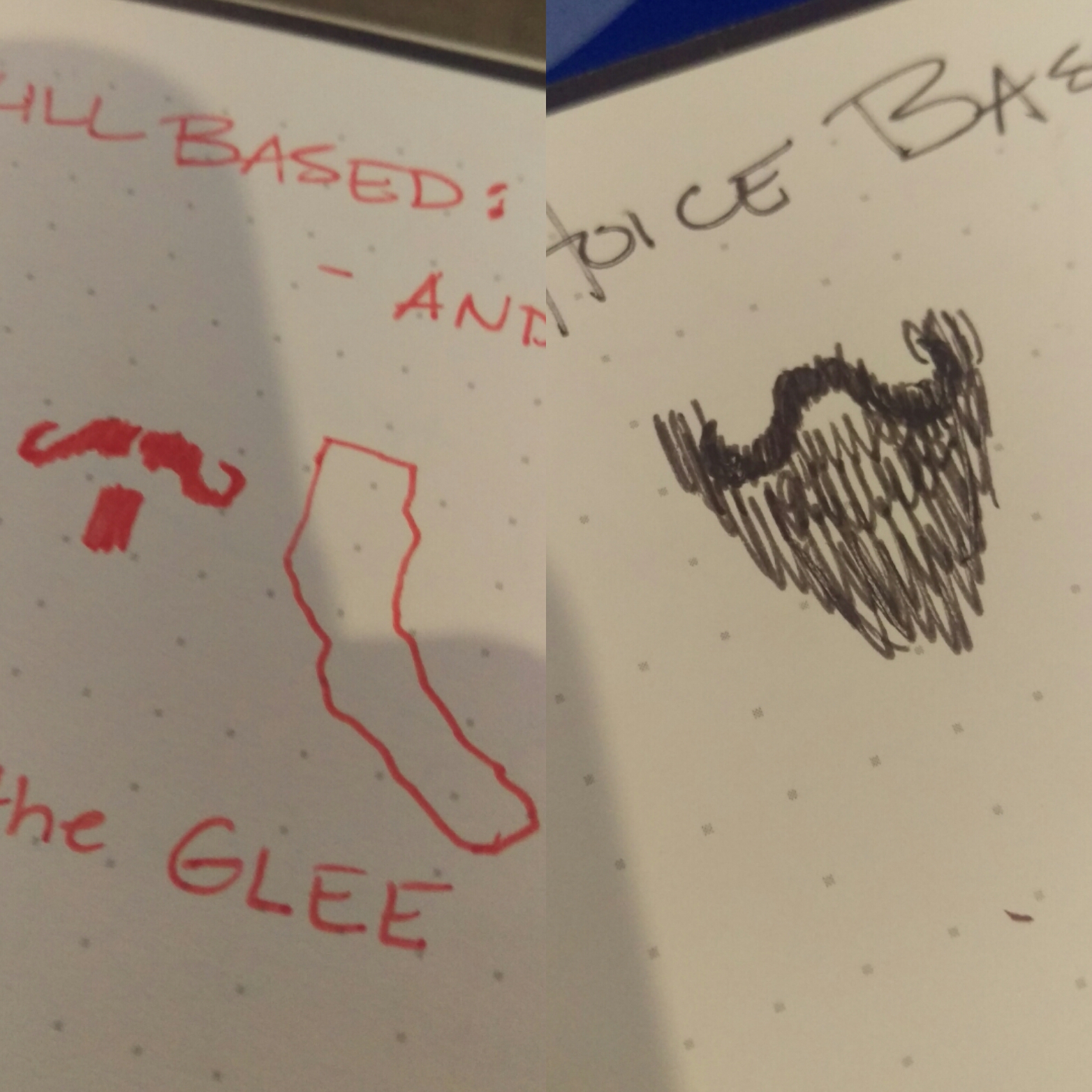
Over the next three days I went to several sessions on TAB/choice. img_20170316_173427.jpgTwo were by 2 different men, both with wicked cool mustaches.  In fact, I scribbled their mustaches in my notes.  Both men were interesting and full of information that I already knew.  I guess that is what happens as you move up the high school TAB ladder.  One thing that I did take away from Andrew McKee’s (red mustache) presentation was the “style book”.  It’s basically a place to save ideas, get ideas of what they like, are into, etc.  So the students can pull from that when they create their work.  I mean I have my Pinterest page that I refer to often when I create my work, but I don’t “require” my students to do that.  I think it might be helpful to incorporate something like this in my art 2 classes next year…and also maybe my ceramics classes.
imag9966.jpg

I went to a very interesting Raku session, which of course now has me wanting to write a grant for a raku kiln.  Thursday afternoon I went to an MCAD session on drawing as thinking.  We basically spent the 50 minute session doing a bunch of drawing warm-ups. It was a nice break, and it left me with some great exercises to bring into my classes next year as we move into block schedule.

The rest of my session were, like I stated above, choice/TAB sessions.  While the sessions were fabulous, (I’m looking at you Cynthia Gaub, Joy Schulz, and Melissa Purtee), I felt a little empty.  And, it’s nothing against my colleagues.  I am just looking for something more…something more than what I already know and am 100% agreement with.  I am looking for more than an intro to what TAB/choice is. I want something for those of us who have been doing it a while.  I hope that makes sense.  I did have an “a-ha moment” during Joy’s session.  For years, I thought Joy had this magical way of pulling greatness from her students.  After sitting through her session, I get it now.  She is so organized and her analytical side really affects how she works with her students.

The final session I want to talk about was a super-session.  It starred Katherine Douglas, Anne Thulson, Sharif Bey, and Olivia Gude.  It was amazing.  These four leaders really hit it out of the park.

These were my lasting thoughts from the session:

~Do we intervene: how, where, when, why, how much (OG)
~concept=something we use; not something to possess (OG)
~2 sentence curriculum: what do artists do? the child is the artist (KD)
~art supplies are materials; concepts are materials (can’t remember if this was OG, I think so)
~How do we keep students in that magical place as they get older? (OG)
~we have the capacity to exist in many art worlds (OG) [personally for me, this meant a lot]
~Sometimes LESS can be liberating (OG)
~We’re getting lost….ON PURPOSE (OG)

I know it seems that Olivia gave me much to think about, but Kathy always gives me much to think about…I wouldn’t be here without her.  Anne gave an activity to try for next year when we talk about “artists observe”.  It will get my students out of my classroom and really looking at the small, mundane details around them.  And Sharif…oh Sharif….we are kindred souls and I think we should totally hang out.

imag9999.jpgWhile I enjoyed the sessions I went to, I did think the selection, for me anyway, was limited.  I don’t understand how imag9987_1.jpgsessions are selected.  I don’t understand how they choose to schedule which ones and when.  I also don’t understand why so few TAB/choice sessions are offered, when clearly, year after year, the sessions offered are packed–which was another downside to conference in NYC…small rooms…or at least those rooms that held popular topics were small.  And, rooms that held research sessions (no offense to research) were in these huge rooms with few attendees.  And when I say TAB sessions were packed, I mean, way over room/safety capacity, on the floor seating, out the door, room temp went up 15 degrees packed.  NAEA needs to work on this.  It is just ridiculous.  I pay a lot of money, out-of-pocket, to attend the national conference.  I want to get my money’s worth.

imag0028.jpgMy favorite part of the conference is always the part where I get to see and hang out with my TAB/Choice mentors, colleagues, and friends.  I even got to meet some new friends whom I have only seen on the interwebs.  I want to thank Kathy and Diane for setting up the amazing dinner we had Friday night.  And, thanks Diane for making me not sit with Hillary and Liz.  It was fabulous to get to chat with Melissa, Joy,Cynthia, and Anne for a while.  Spending time with those that get it, and get me, is always a good time.

17038748_10210664539683656_3379946926746923205_o

I hope to make it to Seattle next year.  Cynthia promises it will be a fabulous time.  So, hopefully, at least one of the sessions I propose or co-propose will be accepted.  And, maybe someone will help me write a grant and/or convince my school to pay for it…I just can’t afford another year.