Many years ago I discovered the book Steal Like an Artist by Austin Kleon. I fell in love with it. It is one of my favorite books of all time. While Kleon’s main focus is that of a writer, his advice on how to be influenced by other artists and “improve” your art practice is practical for all types of artists. Before Covid, I thought that I should somehow bring the book to my art students. It aligned with what I was teaching them as a TAB teacher, so it just made sense. I wrote a grant for a class set of books, and luckily, even though we were not at school due to the Covid shutdown, I was still awarded the grant. I purchased the set and at the beginning of the next school year, I went full force with the book study.
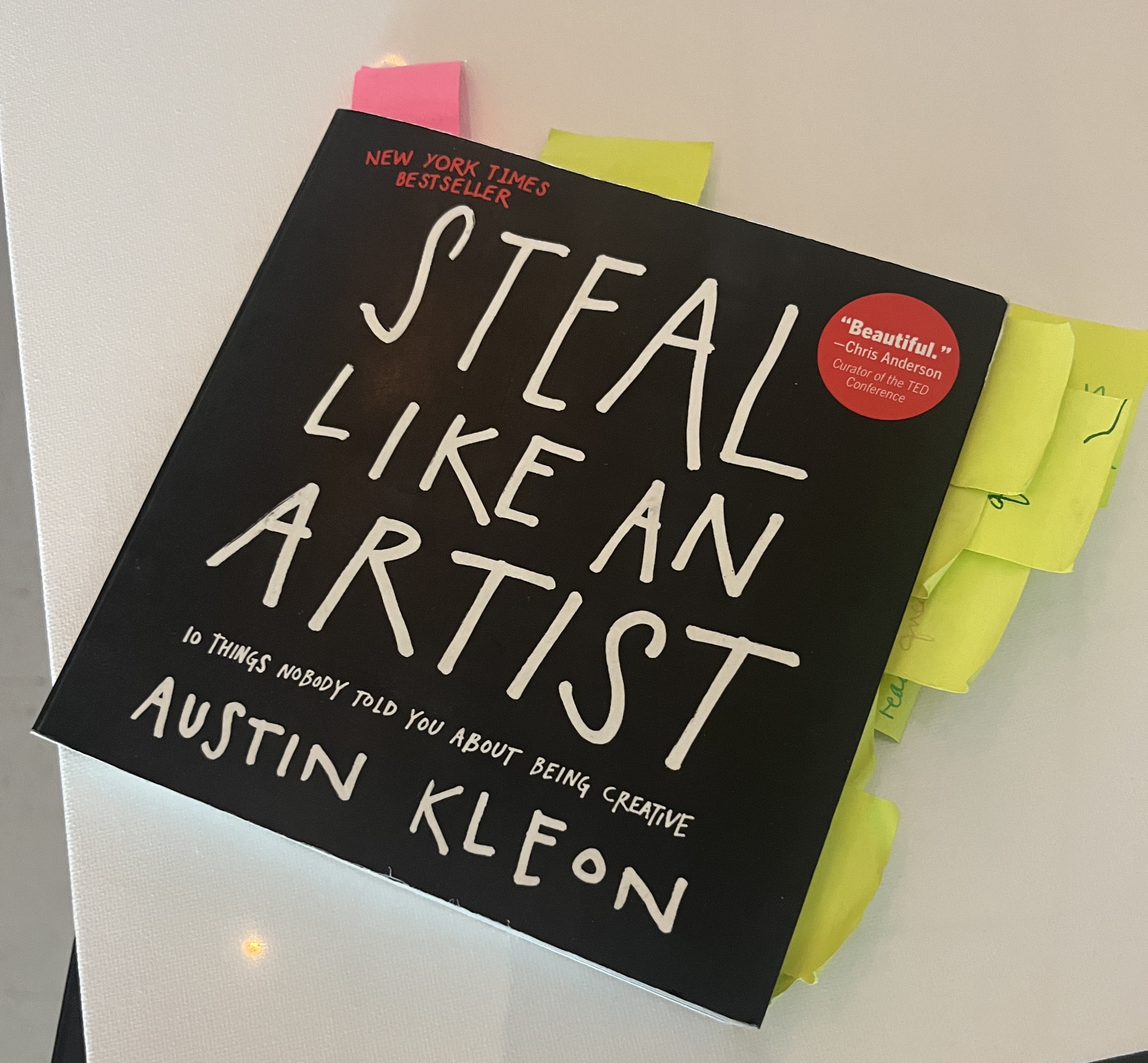
I spent the summer going through the book, placing post-it after post-it on pages with notes about what I thought was important to highlight for my students. I eventually narrowed it down and came up with questions and activities for each chapter. I also created a Google Slides template for the book study to make it easy for my students to participate in the study.
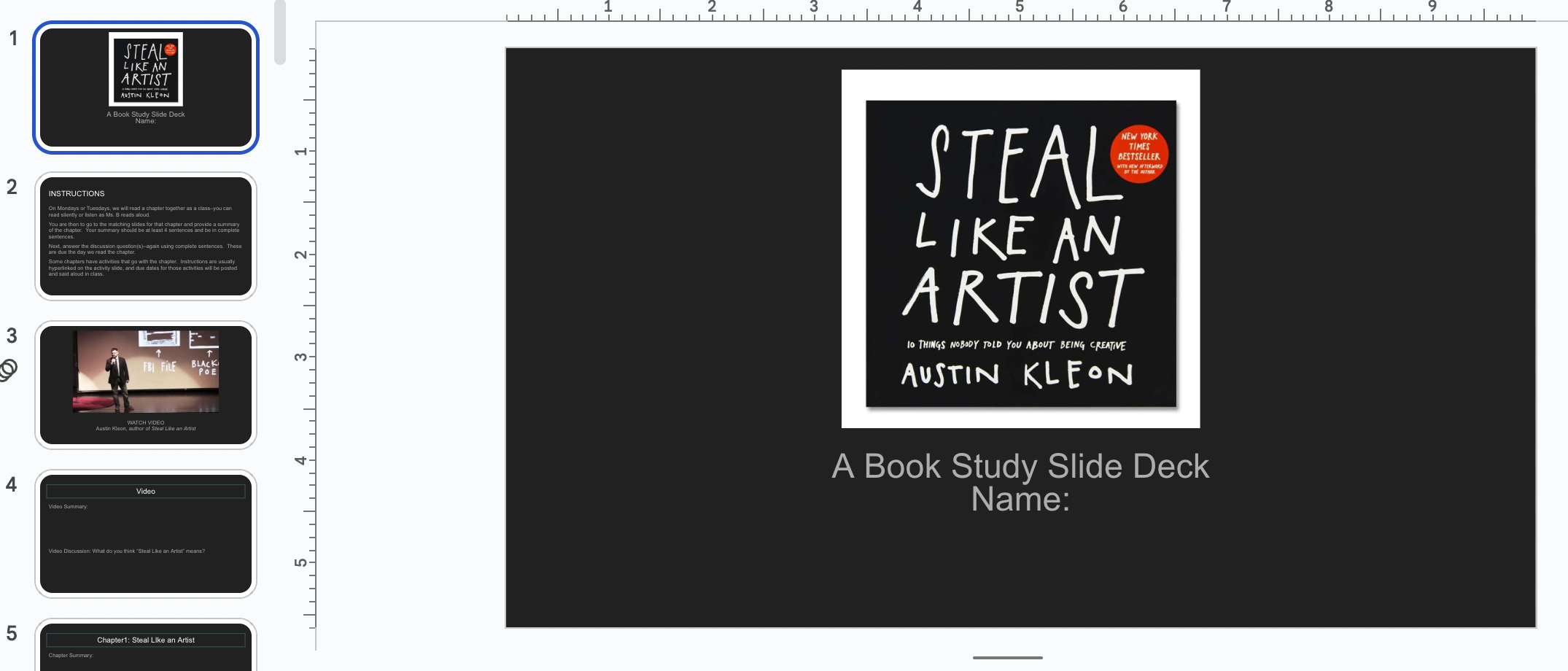
My art 3 classes do the book study. These are mostly juniors and seniors. It is a class they choose to take, as they have fulfilled their fine art requirement with Art 1. My big focus in the class is context in their art and encouraging them to begin to find their own voice and practice. So, it made sense to have the book study in this level. I think for the most part it has been helpful to many of my students. Some don’t put it together until later in Art 4 or even after they graduate, but they do eventually get it. I think it’s important for students to learn about more than just art making and art history. There are concepts in Kleon’s book that they can apply to other areas of their lives, even if they don’t continue to make art after high school.
This year, I began to read the chapters aloud to my class. This was something I picked up on from one of the greatest teachers I’ve ever worked with. She is an English teacher at my school, AcDec coach, and the HEB Lifetime Teaching Achievement Recipient for the 2024-25 school year. I observed her class one day and she was reading Beowulf aloud to her scholars. I figured if she was doing it, I could too. Maybe it would help some of my students who might have issues reading. As we concluded the first 5 chapters, it allowed me to clarify concepts the students may not have known and I can add anecdotal stories about how I relate to the concepts in the chapters. I know I made a good decision.
Over the past 4 years I have tweaked the questions and activities. I’ve added questions to each chapter to help the student apply what they are reading and learning to their own artistic practices. One of the more important questions that I added this year to each chapter was “How does this chapter apply to you as an artist?” I don’t know what took me so long to add it. Every year I made the note of how to get the students to apply the information to their practice, but didn’t put 2 & 2 together that I just needed to straight up ask it after every chapter, not just at the end of the entire book when they do the final reflection. I think it helps the students to make connections better and hopefully begin to apply it now to their practice.
We still have half the book to read and reflect on at the publishing of this post, but I can confidently say that if you are considering something similar with your upper art classes, I highly recommend–10 out 10. It shows students there is more to art than just making. It helps to make connections between subjects and lets students know they aren’t mutually exclusive. It gives them a chance to write outside of core classes such as English and History. And finally, it gives you some further insight into who your students are as artists and as people.
 TAB Studio with Mrs. B