I’m about to start year 19, and man have I had an interesting career. I’ve taught high school for 18 years, AND I’ve done it all in the same place. I can retire in 11 years, but plan on doing at least 12 so I can retire on an even number. But, that’s just an arbitrary date. I’ll see the state of education when I get there. I may be done, I may not be. Who know’s. ::shrug:: But this post isn’t about when I’ll retire. This post is about a few things from my journey that helped to get here…to today…a week and a half before I walk into day one of in-service for year 19.
When I look back on everything, there are a few key things I’ve learned that keep me going, keep it relevant, and have made me into the force I am today. Yes–I said it, I am a force. I haven’t always been so confident in my abilities, but today I am. I am a good, nay, an amazing teacher. I am really good at what I do. Do I have some areas I can work on? Of course–who doesn’t? What makes me so different is that I know there are things I lack and I reflect on that and I learn and continue to grow in this ever changing, but not really changing, world of art education.
I want to share some of what has motivated me, and helped me to believe in my abilities over the years. It always hasn’t been sunshine and puppies (although I don’t really like puppies–come at me bro–so maybe that phrase for me should be sunshine and art supplies. Just sayin’.) I’ve had my fair share of crap days and considering moving districts and not wanting to go to work, but in the end, I show up because deep down, I love teaching and I looooove teaching art to teenagers.
So here we go!
It takes 3 years to build a program. I was told this by Ian Sands at the beginning of my TAB journey. And, he was right. I now say it to everyone who is new to a role or implementing TAB for the first time or even starting at a new school. You may think you have it in the bag and that it’s going to be easy peasy, and that attitude is great. But, as you go along the first year, you will hit bumps and things won’t work. You’ll be learning how your population reacts to you, your goals for both you and them, and your systems that you are trying to implement. You will fail, and THAT IS OKAY. Learn from those failures and revise the next year, or even as you go along that year. Teaching is like making an artwork–we have an idea, we research, we develop plans, we try to implement those plans, we revise, we fail, we reflect, we try again, then we start the whole cycle again. By that third year, you really do understand the relationship between you and your population, and you can see the growth that you’ve made and your program has made. It’s easier in year 4 and beyond. That’s not to say that you stop reflecting and revising, but at that point it’s different. So, don’t give up. Give yourself grace. I needed this “3 -year build” advice when I jumped into TAB. Then I needed to remind myself again when I switched up my sculpture program to a purely ceramics program. Rome wasn’t built in a day. Just sayin’.
Administrators come and go, but good teachers stay. One of my favorite co-workers, and a great friend of mine, said this to me about year 4 when I was struggling with my principal and the differences of opinions we had. And she was right. That principal left, finally, and left space for one of the best principals I have worked under. He wasn’t perfect, but he was perfect for me. He took time to understand me and my program. He knew what I needed both professionally and personally. He supported me. Unfortunately, he had to move onto another district, and my current admin isn’t him, but I know that some things are temporary. When you find your place and find what feels right, even when admin and you just don’t mesh, you stay. I love my program (which I helped to build from very little), and I love my population. I love that I’ve taught all the siblings in a family or am going to. I don’t always agree with my district or the town I teach in, but I know that being a constant in the district is important to what those families love about being ducks.
Remember your why. I know all you reading this just totally cringed at that phrase. I hate it too. I’m not talking about when admin asks you to try and placate you because they aren’t giving you a raise or there is some other stuff thing they are doing. This is super TAB specific. I said this to my secondary cohort this summer at the 2025 TAB Institute. I saw the eye rolls. But then I went on to explain. What are you trying to achieve by implementing a TAB philosophy? What do you want from your students? This isn’t about the methodology and how you will do this, but why you CHOOSE to believe the philosophy? This is my why: Yes I am hoping to make artists, that is my dream goal that everyone of my students will be an artist. And yes, that drives all the decisions about how I implement TAB–from the choice continuum, to themes, to the supply buffet. But let’s be realistic. That is not my population–they are not all going to go to art school and become artists. And while yes, I am trying to make artists, my why is really is about helping my students become creative and become independent thinkers. I am helping them to be able to make choices, informed choices. I am helping them to have an open mind and to see that things do not live in a vacuum and things are cross-curricular. That is my goal. Art making is my vehicle to get there. TAB allows me to do that more than any other art education philosophy I’ve explored. And it allows me to do it in my own way, using my strengths. So, when I am having those days full of doubt and questions, I think of my students and the ones that I have impacted well after they’ve graduated and the ones that are currently making a mess in my office, and it all makes sense again.
I’ll leave you with this. As you go into this new school year, whether it’s your first, your fifth, your nineteenth, or beyond, have confidence in yourself and your ability as a teacher. You’ve got this. I am already facing challenges this year, both personally and professionally. I can go in with an eff this attitude, or I can focus on what is important to me, inside my classroom with my students. I will take what they throw at me and try to see their point of view, but in the end, while I will be compliant with their requests (for the most part–iykyk), I will just do me. I know my program is strong. I know I am strong. I know my students will thrive because of what I am setting up for them. I know I’m not perfect and that I have things to work on, but I don’t have to be perfect, because clearly no one is and the conditions we teach in today clearly aren’t either. I just need to shut my classroom door, have fun, be present for my students, remember my why, and be imperfectly me. Everything else is just noise and in the end doesn’t matter. Have a wonderful year.

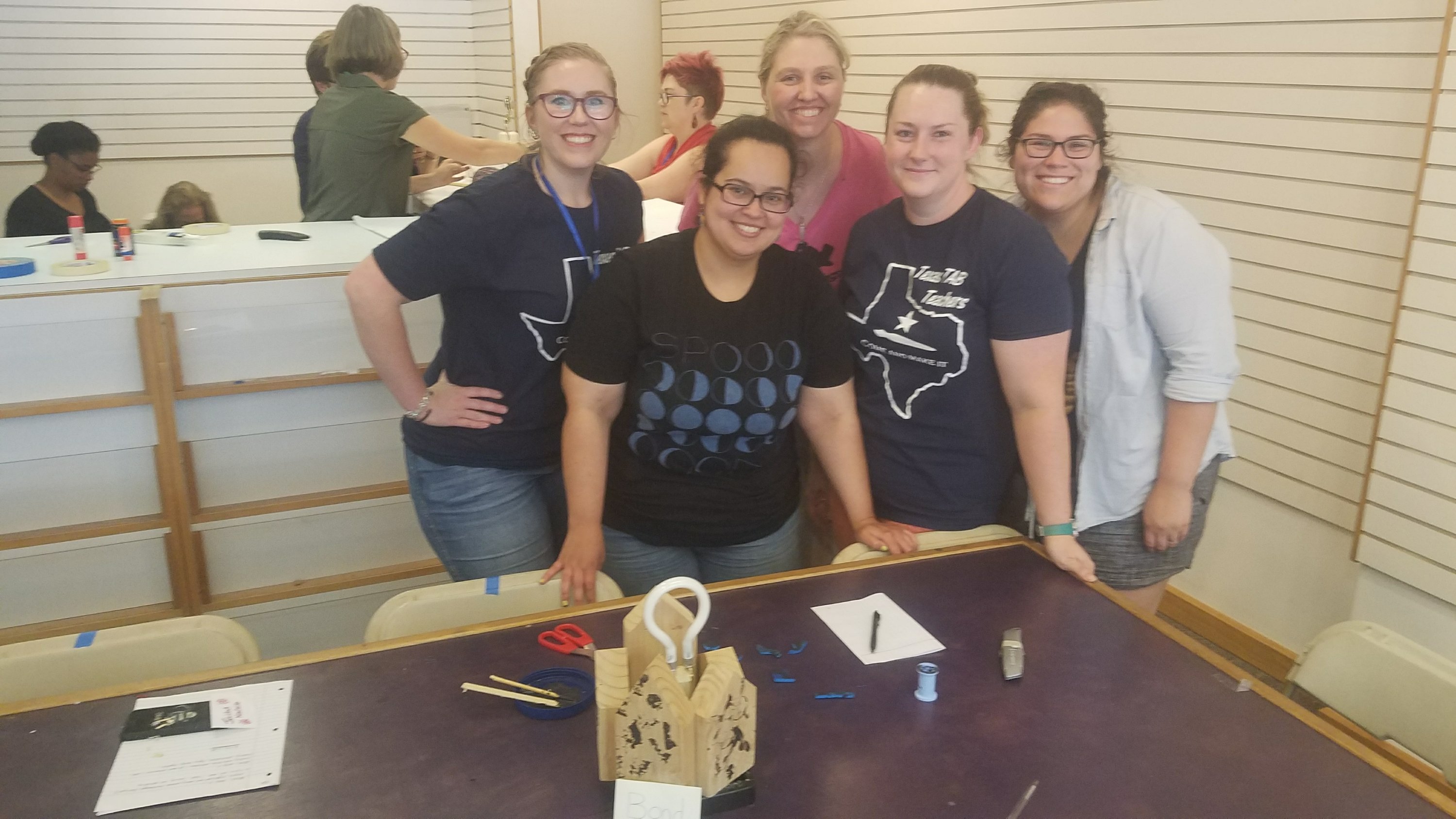
 honored me months ago by asking me to help out with this year’s mini-conference, by heading up the secondary portion of the conference. This year was our second event. At our first meet-up, there were about 30 of us tops in this small conference room in a hotel in Waco, TX. Ginger Tapia set the whole thing up and it was wonderful. It was there that an event was born. This year, TAB Lab was definitely the place to be, as we more than doubled the attendance with 67 teachers. And, I am happy to say that the secondary peeps went from about 7 or 8 to almost 20. It’s a good time to be a Tx TAB teacher.


 his presentation, he told us of his journey–his life journey–from the train tracks by where he grew up to his current job as a high school TAB teacher in Indiana. It was interesting to me to hear how and when he met people I know (or know of), like Clark Fralick, Diane Jacquith, Kathy, NanHathaway, and John Crowe. My biggest take away from Clyde that morning was the rhizome. He likened things to it and called us rhizomatic. (




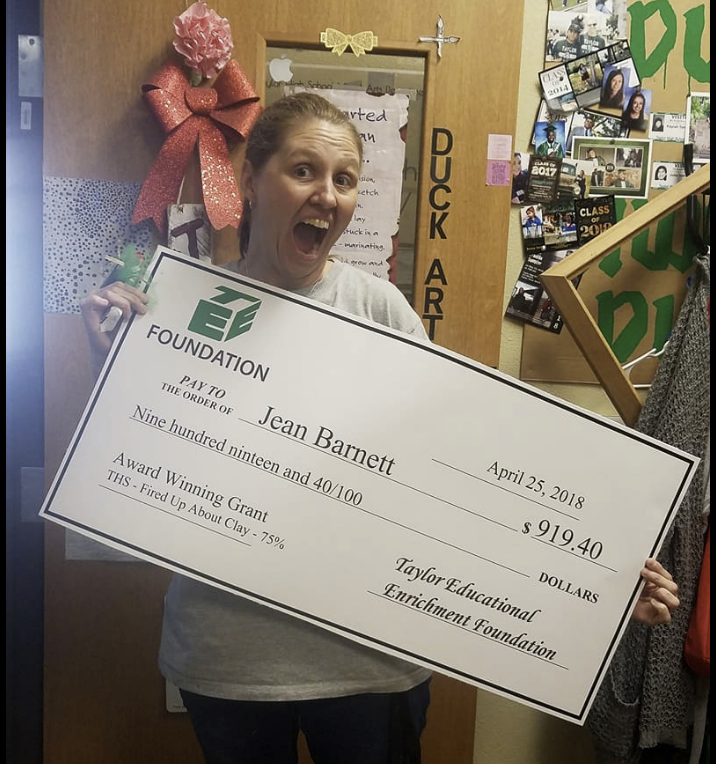 foundation called the Taylor Educational Enrichment Foundation (TEE) that offers thousands of dollars in grants annually. I finally got the courage to write a grant proposal for a raku kiln kit. When the day finallyarrived when we would find out who would be awarded, I’ll admit, I was nervous. I heard the band and the cheerleaders coming down the hall. I kept hoping they were coming to me and not going to walk on by. My principal ducked his head into my office and told me to come out into the hallway. I was so excited. I was dancing around my classroom. I have since ordered and received the kit and I can’t wait to set it up and teach my students how to raku this fall.




 I hadn’t planned on spending the conference going to so few sessions. I had hoped there would be a ton for me to learn. Unfortunately, when I looked through the program, not much stood out to me. There were TAB sessions, but many were for elementary or they were sessions to get you excited about TAB. I already am excited about TAB. I don’t need to be convinced how amazing it is–for both my students and for me. I know this is going to sound a bit egotistical, and that is not my intention. I felt there wasn’t much for teachers, TAB teachers specifically, at my level in the ways of development. Things I want to discuss and think about are above the beginning levels. Don’t get me wrong, those types of beginning level sessions are of extreme importance. And, I love presenting and giving. I just need to be getting something too.


 We then headed over to the


 wicked cold while we were there. This Texan implant wasn’t having it. Anyway, that night we went to Times Square. Man, totally not the same as I remembered. When did it turn into a 24-hour sunlight extravaganza?!
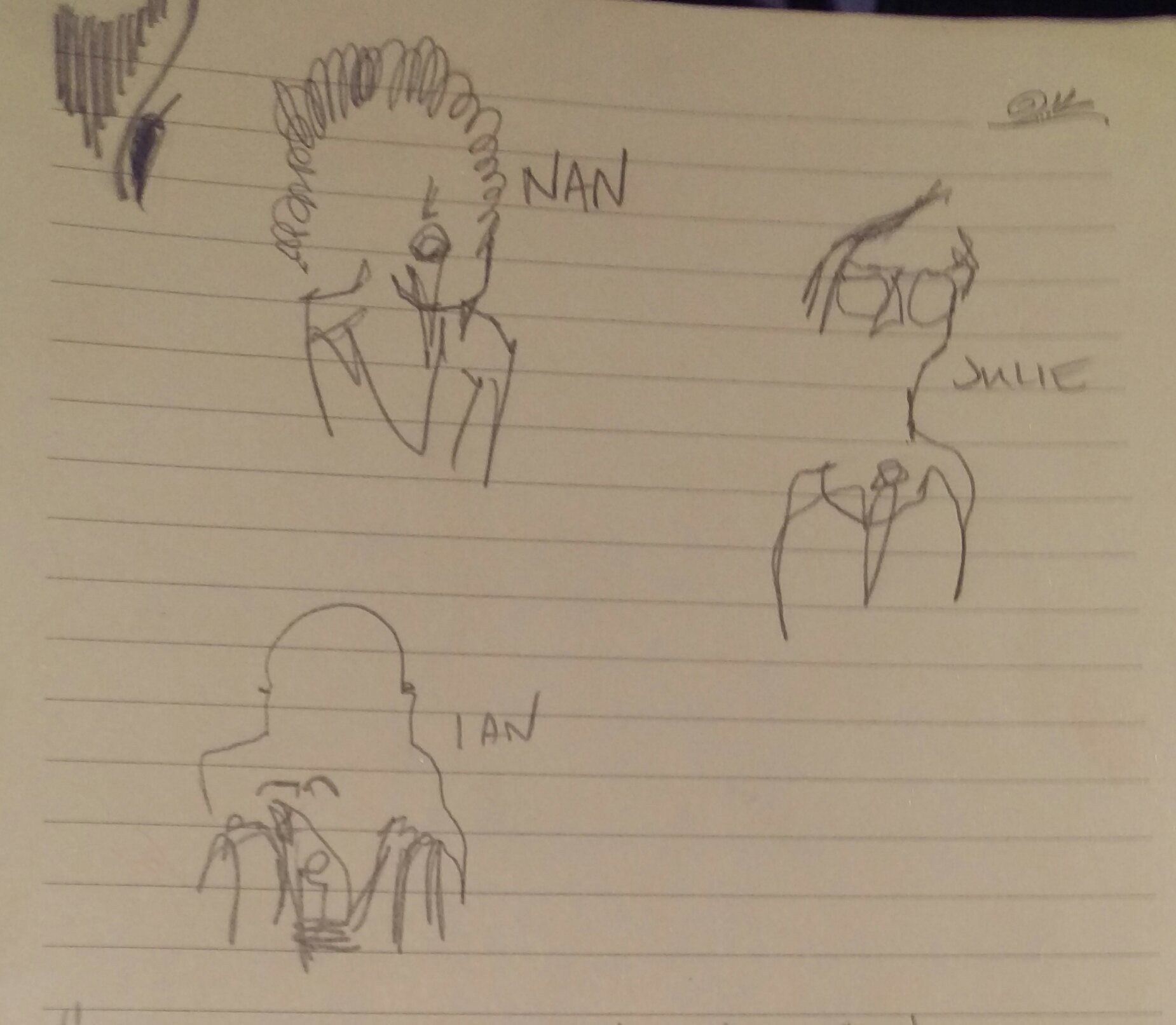
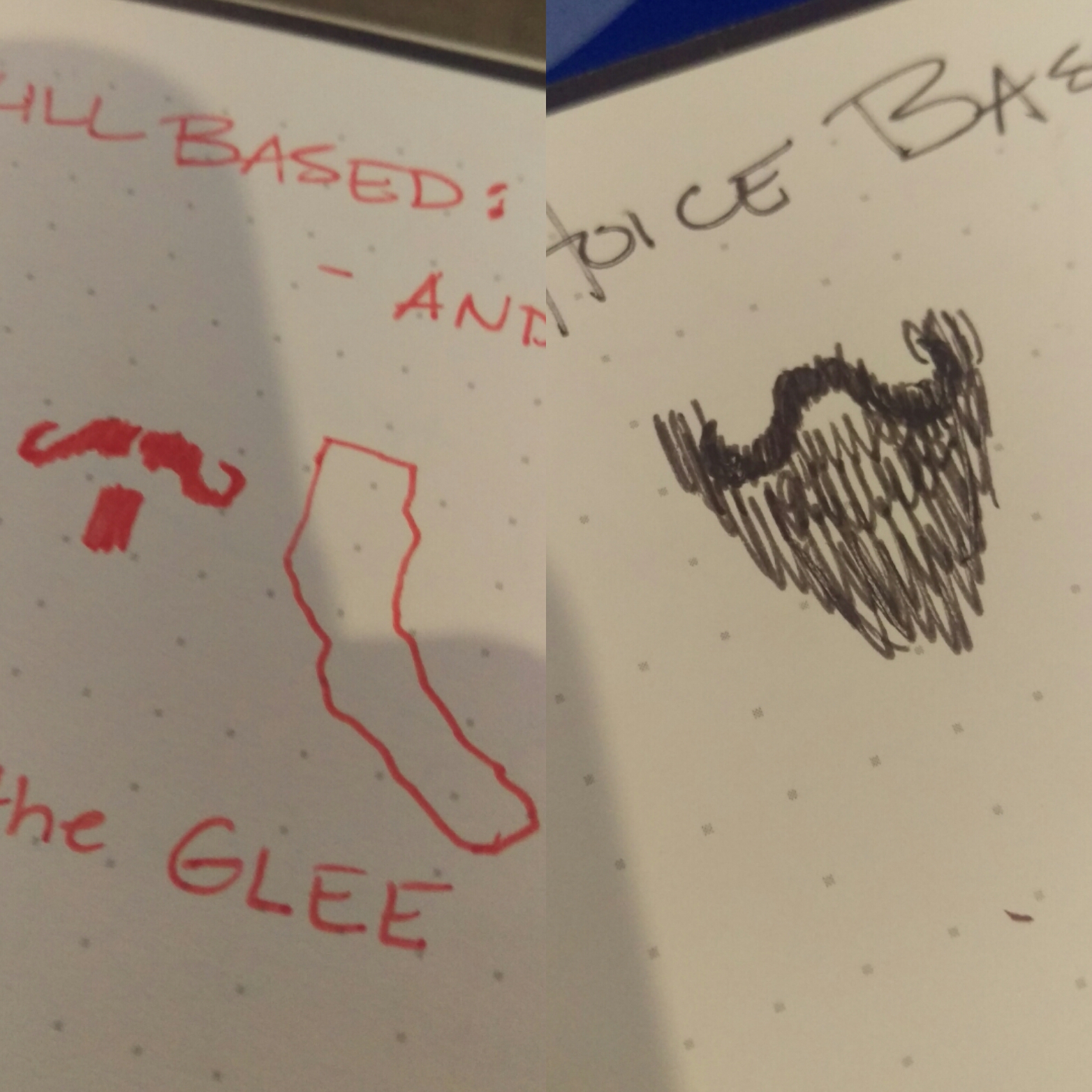 Two were by 2 different men, both with wicked cool mustaches. In fact, I scribbled their mustaches in my notes. Both men were interesting and full of information that I already knew. I guess that is what happens as you move up the high school TAB ladder. One thing that I did take away from Andrew McKee’s (red mustache) presentation was the “style book”. It’s basically a place to save ideas, get ideas of what they like, are into, etc. So the students can pull from that when they create their work. I mean I have my Pinterest page that I refer to often when I create my work, but I don’t “require” my students to do that. I think it might be helpful to incorporate something like this in my art 2 classes next year…and also maybe my ceramics classes.


 While I enjoyed the sessions I went to, I did think the selection, for me anyway, was limited. I don’t understand how
  sessions are selected. I don’t understand how they choose to schedule which ones and when. I also don’t understand why so few TAB/choice sessions are offered, when clearly, year after year, the sessions offered are packed–which was another downside to conference in NYC…small rooms…or at least those rooms that held popular topics were small. And, rooms that held research sessions (no offense to research) were in these huge rooms with few attendees. And when I say TAB sessions were packed, I mean, way over room/safety capacity, on the floor seating, out the door, room temp went up 15 degrees packed. NAEA needs to work on this. It is just ridiculous. I pay a lot of money, out-of-pocket, to attend the national conference. I want to get my money’s worth.
 My favorite part of the conference is always the part where I get to see and hang out with my TAB/Choice mentors, colleagues, and friends. I even got to meet some new friends whom I have only seen on the interwebs. I want to thank Kathy and Diane for setting up the amazing dinner we had Friday night. And, thanks Diane for making me not sit with Hillary and Liz. It was fabulous to get to chat with Melissa, Joy,Cynthia, and Anne for a while. Spending time with those that get it, and get me, is always a good time.


 What is the most important part of going to a National Art Ed Conference? If judging by my first post,
 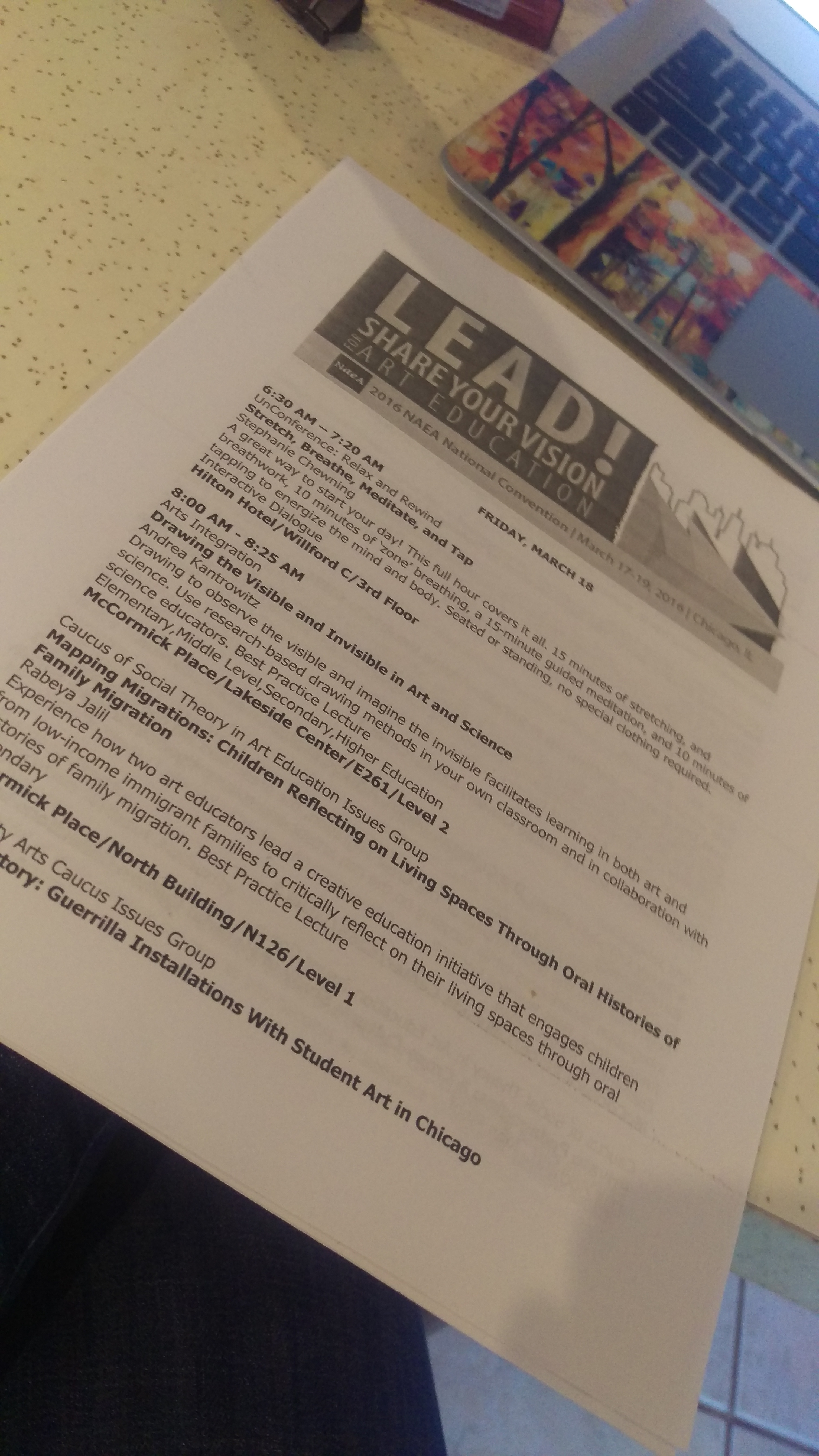 Since I am somewhat old school, I wasted a whole bunch of trees and printed out a copy of the sessions. Yes, I know that I would get a program once in Chicago, but that’s not very helpful to a planner like me. (Don’t be too mad, I did print them double-sided.) I sat down in my kitchen with my coffee, my stack of papers, my yellow marker, and my phone. As I read thru the sessions, I circled the ones that were interesting to me. Then I would fire up the conference app on my phone and add them to my agenda. Is this a little more work, maybe, but who wants to carry a quarter ream of paper around the McCormick? Not me.
 I opted against most because I would rather give up my seat to someone who needs to learn about TAB/choice and their awesomeness. And, I am glad I did because those sessions were packed. I mean, standing room only, out the door packed. This makes my heart happy, by the way.
 I started off the conference with a great session called “Break the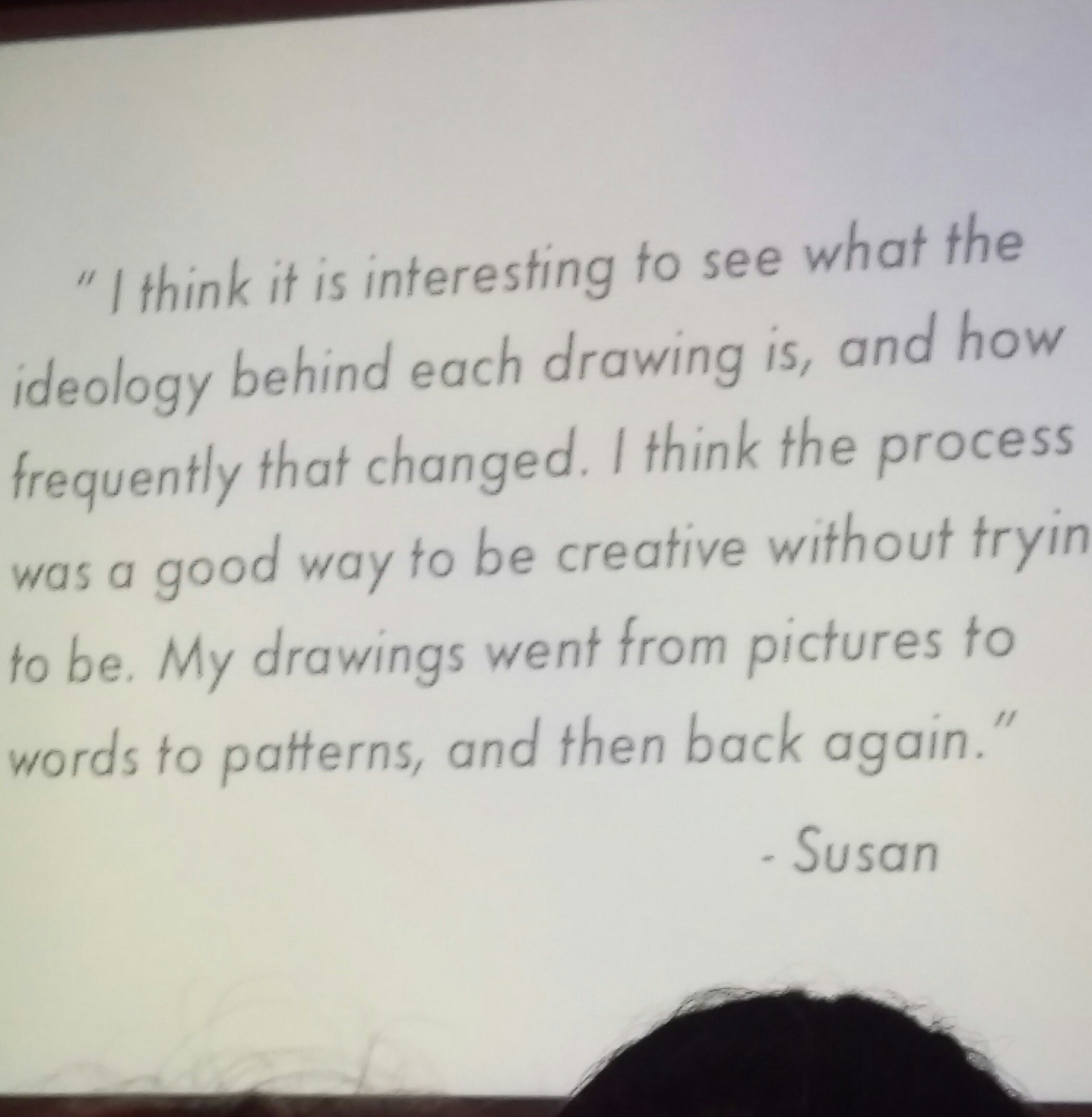
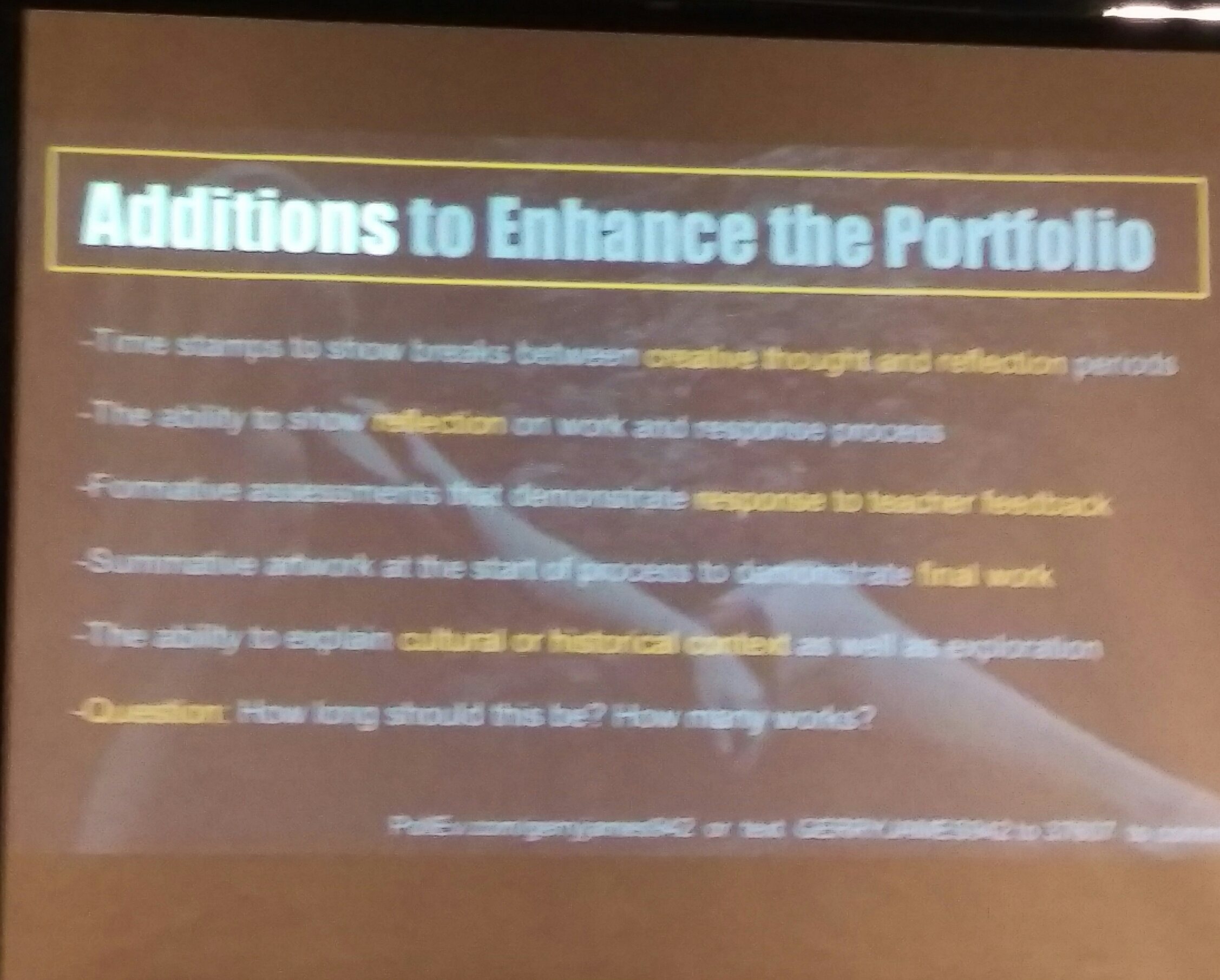 capture the day to day…which is something I am working on in my classroom. There is so much more to artwork than just the final product, and wouldn’t it be great to allow our students to showcase the process instead of just the end of it?
 notebook, your head would be swimming too. I took a lot away from this conference–things I want to bring to my program, things to stay away from, ways to enhance the process more and to bring the kids to “buy in” sooner. Overall, the sessions I went to and the buzz I heard about other “popular” sessions made me realize that I am on the right path in my teaching philosophy. I look forward to hopefully presenting next year at both the TAEA [Texas] conference and the NAEA17 conference. ::hint, hint:: I promise my sessions won’t disappoint.
 TAB Studio with Mrs. B